Keeping Residential Ductless Systems Clean and Efficient
Advanced self-cleaning features reduce service needs, but routine cleaning is still required

REDUCING MOISTURE: LG’s residential ductless systems incorporate self-cleaning features designed to help manage internal moisture.
Residential ductless HVAC systems have built a reputation as efficient, low-maintenance solutions, but keeping them clean remains essential for long-term performance and proper IAQ. Manufacturers have introduced a range of self-cleaning features designed to reduce buildup on critical components like the evaporator coil, helping prevent airflow restrictions, moisture issues, and odors.
Even with these innovations, ductless systems still require regular attention. Components such as filters, blower wheels, and drain pans need periodic cleaning, and neglecting routine maintenance can lead to reduced efficiency, higher energy use, and premature wear. For contractors, understanding proper cleaning practices is key to ensuring these systems deliver on their performance promises.
Self-Cleaning Options
One of the biggest advances in ductless design has been the integration of self-cleaning technologies. These features are intended to reduce dust accumulation, manage moisture, and improve IAQ without constant manual intervention.
Samuel Vivar, ductless residential product portfolio manager at Bosch Home Comfort Group, pointed to the growing sophistication of these systems: “Our patented FrostWash technology provides automated self-cleaning for both the indoor and outdoor Hitachi units to trap and freeze accumulated dust, dirt, and odor-causing particles and remove them from the system.”
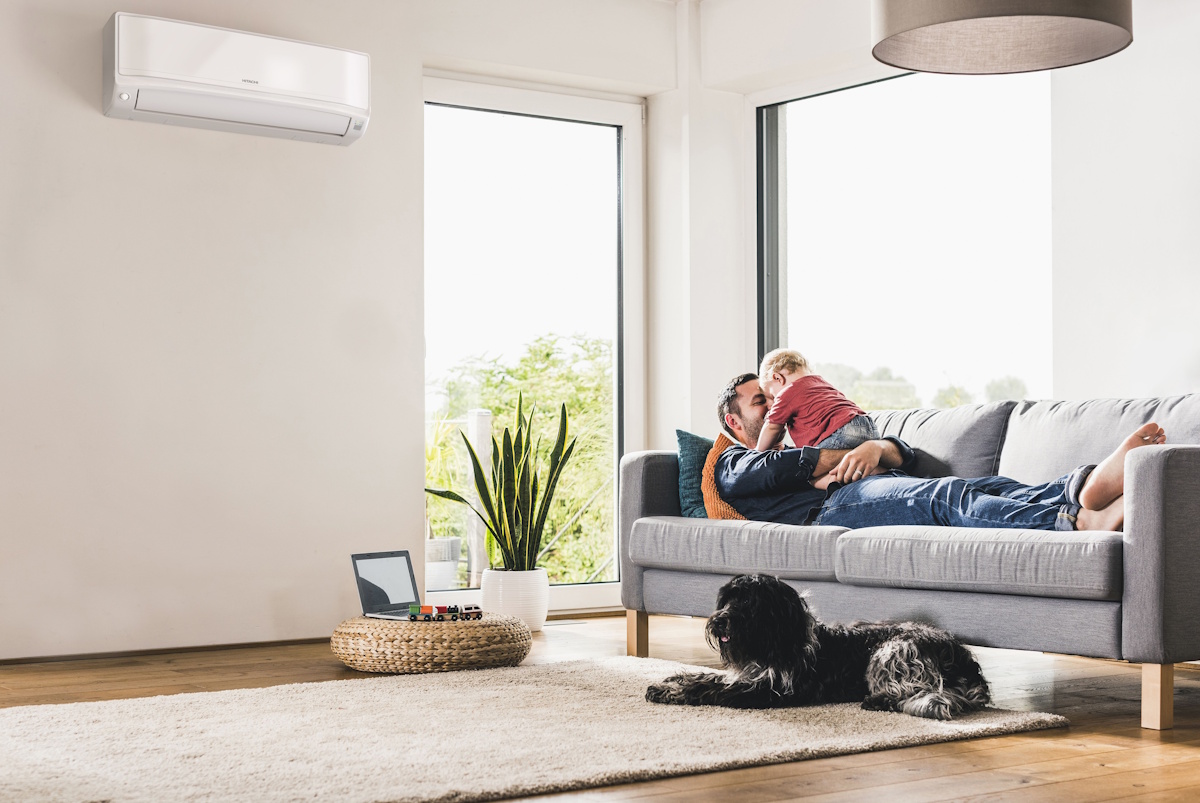
TRAP AND FREEZE: Hitachi’s FrostWash technology traps and freezes accumulated dust and dirt, while advanced filtration captures fine particles and pet hair. (Courtesy of Bosch Home Comfort Group)
Vivar added that indoor units are also equipped with embedded Mold Guard sensors that continuously monitor humidity and temperature conditions for potential mold growth.
“If a risk of mold is detected, the coil automatically heats up and dries components to remove all mold and prevent new mold from forming,” he said. PM 2.5 activated carbon filters and stainless steel prefilters are also included.
Fredrick Elizondo, head of national training at Hisense HVAC, also emphasized the role of built-in maintenance features in preserving system performance.
Looking for quick answers on air conditioning, heating and refrigeration topics? Try Ask ACHR NEWS, our new smart AI search tool. Ask ACHR NEWS
“The self-cleaning feature is designed to clean the indoor evaporator coil by removing the buildup of dust and debris that can accumulate over time. This helps maintain proper airflow and system performance while reducing the potential for moisture-related issues such as mold growth and odors.”
LG’s residential ductless systems incorporate self-cleaning features primarily through what they call the Auto Clean or Self-Clean function, which is specifically designed to help manage internal moisture, said Sean Foster, director of unitary sales at LG Air Conditioning Technologies.
“Following a cooling or dehumidification cycle, this feature typically continues to run the fan to dry the evaporator coil, an action intended to help remove residual moisture from within the indoor unit,” he said. “This process can help reduce the potential for moisture accumulation on the coil; the potential growth of mold, mildew, or biofilm on the coil and blower; and the development of musty odors often associated with damp internal surfaces.
“It may also help reduce the potential for bacteria and microbial formation in the drain pan and coil area, associated with moisture retention.”
Certain LG models may also include multi-stage filtration, specialized coil coatings, and smart diagnostics that alert users to maintenance needs or filter status via an app.
Manual Cleaning
While integrated self-cleaning features can help create a cleaner internal environment, they do not eliminate the need for ongoing professional maintenance or routine cleaning. As Foster noted, “Their primary purpose is moisture management, and they are not a substitute for debris removal.”
He added that internal components such as the evaporator coil and blower wheel can still accumulate dust and biofilm, noting that the blower area “is often not fully addressed by automated self-cleaning processes.” The drain pan and condensate line may also require periodic service to prevent clogs and microbial growth. Additionally, the outdoor coil can collect debris such as dirt or cottonwood, which may require cleaning to maintain proper heat transfer and system efficiency, said Foster. LG also recommends cleaning or replacing air filters at least monthly, or more often in environments with heavy usage or higher particulate levels.
Elizondo agreed that certain components, such as the blower wheel and drain pan, will still require manual cleaning over time.
“The frequency of cleaning depends on the environment in which the indoor unit is installed, including factors such as dust levels, usage, and overall air quality,” he said.
Although FrostWash helps minimize buildup on the blower wheel, it’s still a good rule of thumb to manually clean and maintain it about once a year, said Vivar. He added that “the carbon filter will still need to be replaced every one to two years and the stainless-steel filter should be cleaned every two to three months.” In addition, homeowners should clean the filters every one to two months and run FrostWash regularly.
Failing to clean units regularly can have significant consequences, including decreased system performance and efficiency, said Elizondo. This can lead to “higher energy consumption, reduced capacity, improper temperature control, and potential premature component failure.” Poor maintenance can also impact IAQ, allowing contaminants and odors to circulate throughout the conditioned space.
Best Practices
When deeper cleaning is required, contractors should follow manufacturer-recommended procedures to ensure safe and effective service. Hisense, for example, recommends that outdoor units be washed with water from both sides to ensure proper heat transfer and airflow.
“For indoor units, components such as the blower wheel should be removed and cleaned as needed to maintain optimal performance and prevent buildup,” said Elizondo.

OUTDOOR CARE: Hisense recommends washing outdoor units with water from both sides to ensure proper heat transfer and airflow. (Courtesy of Hisense)
He added that Hisense indoor units are designed with minimal screws, allowing technicians quicker and easier access to internal components for service and cleaning.
When manual attention is needed for Hitachi systems, compressed air or nitrogen can be used on the indoor motors and blower and outdoor heat exchanger, said Vivar. A light-pressure water stream can also be used on the outdoor unit.
“When cleaning the indoor unit, some contractors may prefer using an indoor cleaning kit with a tent or cover,” he said. “These are generally low-cost and help to protect the home from messes that can happen during the cleaning process.”
To simplify maintenance, the front panel on Hitachi units pops off easily, providing quick access to internal components, said Vivar. From there, the control board and sensors can be removed with minimal effort. For deeper maintenance, the motor can be taken out by removing a few screws and can be hand-turned, while the blower wheel also slides out quickly. He added that all of these components can be removed within five to 10 minutes.
LG recommends powering off the system before servicing the indoor unit, then removing and cleaning the filters and allowing them to fully dry before reinstalling. When cleaning the evaporator coil, Foster advised using “a non-acidic coil cleaner followed by a low-pressure rinse,” cautioning that care should be taken to avoid delicate electronic components. He added that the blower wheel may need to be disassembled and thoroughly cleaned, and the drain line flushed periodically to help prevent clogs and microbial growth.
For the outdoor unit, debris should first be cleared to maintain airflow.
“Cleaning the outdoor coil typically involves using low-pressure water, without employing a high-pressure washer, to avoid potential damage to the delicate fins,” said Foster. “Straightening bent fins can also help optimize airflow.”
After completing the cleaning process for both units, Foster recommends performing a system check to verify proper airflow, assess the temperature split, and confirm that there are no restrictions in the drain system.
Ductless system design continues to evolve, making units easier to maintain. Improvements such as better filter access, modular components, smart diagnostics, and antimicrobial coatings are helping streamline service and reduce buildup.
Still, the fundamentals haven’t changed. As Foster put it: “It is important to remember that automated self-cleaning features are primarily designed for moisture management and typically do not address the removal of accumulated physical debris, making routine manual cleaning and professional servicing complementary to ensuring the system’s long-term performance, efficiency, and overall indoor air quality.”
Looking for a reprint of this article?
From high-res PDFs to custom plaques, order your copy today!