Guest Column
Save an Hour on Every Install: The Case for EIM + Smart Thermostats
From older brick homes to modern heat pump retrofits, EIMs help contractors solve wiring challenges without added hassle.
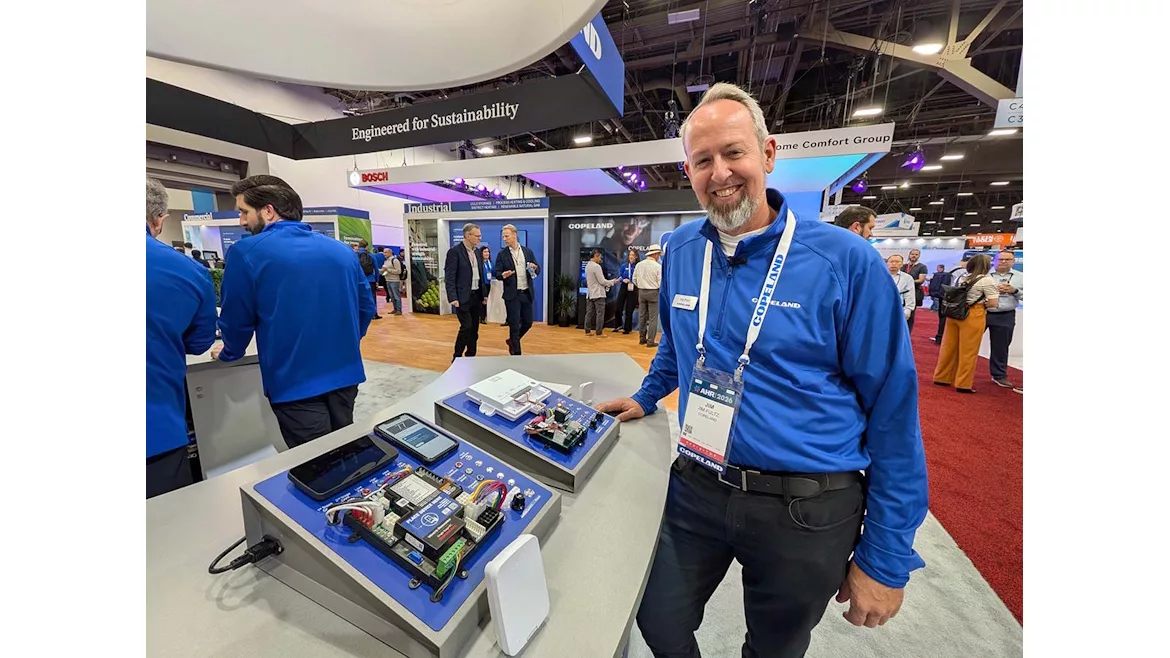
TRANSITION TO WIRELESS: As better-quality products come to market and their benefits keep adding up, contractor and consumer trust and adoption rates will only increase.
You head to a house for an upgrade installation and realize there aren’t enough wires to do it. You’ll need to run new wires, which means cutting into a wall — more time, money, and hassle. Or worse: It’s an older brick home in the city, and you can’t pull new wires. In either case, neither you nor the homeowner is happy.
How often can you relate to this scenario?
The solution to both scenarios is an equipment interface module (EIM) + smart thermostat.
Using an EIM + smart thermostat kit eliminates the need to run additional wires, cut into walls, or turn down a job in most cases. It’s perfect for contractors dealing with limited wiring, system upgrades, and heat pump installations.
Benefits of an EIM + Smart Thermostat
From an immediate, installation-based standpoint, using an EIM kit has many benefits: You’ll have fewer parts to carry around and install (no more running inside and outside or up and down). There’s no wall disruption; all you need are two wires to power the thermostat. The simplicity of the kit also offers you fewer chances for errors.
EIMs should come preassembled with reliable connections and clearly organized layouts, so you’ll be able to commission, troubleshoot, and perform maintenance faster. You’ll save an estimated hour per installation. (That may not seem like much, but if you saved an hour per job, per year, how many more jobs could you fit into your schedule?)
EIMs should also take the guesswork out of quoting, which will save you and your customers more time and frustration. No more showing up at a job and realizing you don’t have enough wires for the quoted system upgrade. You’ll know exactly where you stand, regardless of what awaits you.
Looking for quick answers on air conditioning, heating and refrigeration topics? Try Ask ACHR NEWS, our new smart AI search tool. Ask ACHR NEWS
Besides simplifying thermostat wiring challenges, an EIM + smart thermostat should make heat pump and indoor air quality (IAQ) system upgrades easier than ever. That matters beyond saving time on installs: As homes move toward electrification, heat pumps will provide energy-efficient heating and cooling, reducing emissions and supporting a greener future. IAQ solutions also improve ventilation, humidity control, and long-term system performance.
Choosing an EIM + Smart Thermostat
Switching to an EIM shouldn’t be a trade-off, solving one problem while adding others. So it pays to be choosy.
A worthwhile EIM is developed with contractor input. It should not have nonintuitive features or bloated functionality. It should be obvious that it was based on what contractors specifically asked for. The main indicator of contractor input is ease of use: no pairing buttons to press. The EIM should be able to automatically look for and find the system. It should also support complex system methods for controlling dual-fuel options in heat pumps (using adaptive logic, live weather data, or using the EIM built-in sensor).
A quality EIM will also be compatible with all major IAQ manufacturers. You’ll need fewer products/SKUs on your truck to get the job done and be able to do the same work using one unit as you would using two or three other products through other brands.
One of the most common complaints of older Bluetooth thermostat technology was poor range/signal strength. If you were working in a brownstone with a furnace in the basement and the thermostat was on the third floor, it was a given that the customer would be plagued by poor connectivity. To avoid this, choose an EIM + smart thermostat with a strong wireless sub-GHz connection that connects through walls, with a 900 MHz frequency, and a range of at least 100 feet.
Durability is another important consideration. Some EIMs have flimsy enclosures with covers that pop off regularly. Pick one that’s rated for indoor and outdoor (waterproof) applications: tightly sealed, with a cover that screws down so rainwater and a leaky humidifier can’t get inside. It should have a built-in outdoor temperature sensor, so you don’t have to wire in a sensor or use a battery-powered one.
The last suggested feature might seem minor, but it’s a matter of passive marketing, and that’s always valuable. Your EIM should provide the perfect place for highlighting your logo or company name — right on the front of the product. This prominent branding will keep you top of mind whenever service is needed.
Communicating Benefits to Homeowners
It’s easy to overlook the impact of using an EIM on homeowners since most of the benefits apply directly to you. But you should be prepared to communicate EIM benefits to your customers. This will help you establish the product as a greater value in their minds. It will also empower your clients with relevant information — beyond basic user instructions. That’s an easy way to demonstrate that you’re a comprehensive expert who has their best interests in mind. Who doesn’t want to work with smart people who proactively have their backs?
That said, a few homeowner benefits worth clarifying or reinforcing before and during an install are the EIM’s clean, sleek design; the absence of unsightly messes or wall repairs; with a Wi-Fi connection, remote access; convenient humidifier, dehumidifier, and ventilation setpoint controls (vs. crawling around their ductwork); and simplified operation. Depending upon their setup, it’s also worth mentioning that a good EIM can work with up to 15 temperature sensors. For environmentally conscious customers, hitting on the benefits of better energy efficiency and emissions reduction is worthwhile. For those who mention allergies or air pollution concerns, make sure to highlight the improvements in ventilation and air quality. If your EIM features any easy place for them to reference your contact information, make sure to point that out before leaving as well.
Quality + good communication + convenience is a winning combination, one that creates repeat customers.
Preparing for the Industry Transition to Wireless
There’s one final reason for switching to an EIM + smart thermostat. The industry is progressively transitioning to wireless products. As better-quality products come to market and their benefits keep adding up, contractor and consumer trust and adoption rates will only increase.
Change can be intimidating, especially when you’re already working hard and feeling maxed out. But when you choose change for the sake of simplifying your work and offering your customers better options, it’s bound to be worth it.
Looking for a reprint of this article?
From high-res PDFs to custom plaques, order your copy today!