Four Questions Facing Commercial Contractors Right Now
Industry leaders tackle some of the current trends shaping the HVACR industry
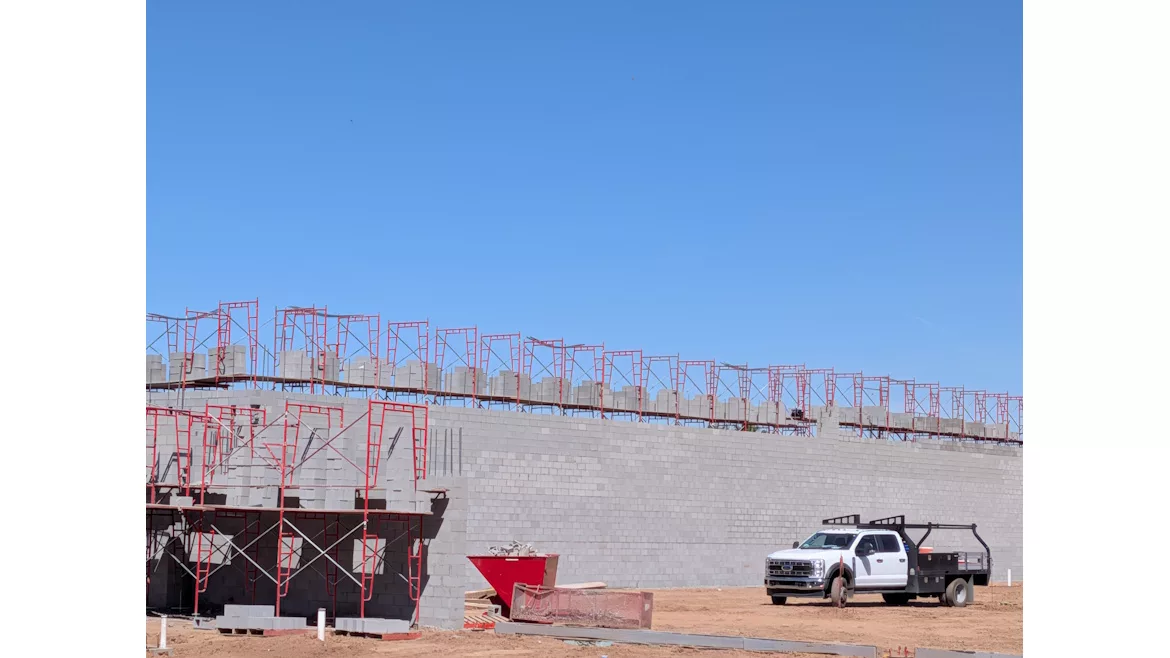
MEGAPROJECTS: Megaprojects such as data centers and pharmaceutical facilities are no longer isolated opportunities for commercial HVAC contractors.
At the recent Mechanical Contractors Association of America (MCAA) convention, a panel of industry leaders tackled four defining forces shaping commercial mechanical contracting today: megaprojects, industry consolidation, workforce development, and what success will look like in the years ahead. Moderated by Mark Rogers of West Chester Mechanical Contractors, the discussion featured Curtis Harbour of Southland Industries, Robert Beck of John W. Danforth Company, and Brian Helm of The Helm Group — each offering candid insights from across the country.
What Is Your View On Megaprojects?
Rogers opened by asking about megaprojects — large-scale jobs like data centers, energy developments, and pharmaceutical facilities — which panelists said are no longer isolated opportunities. They are becoming a dominant trend across the U.S., often appearing in remote locations, which creates ripple effects in local labor markets.
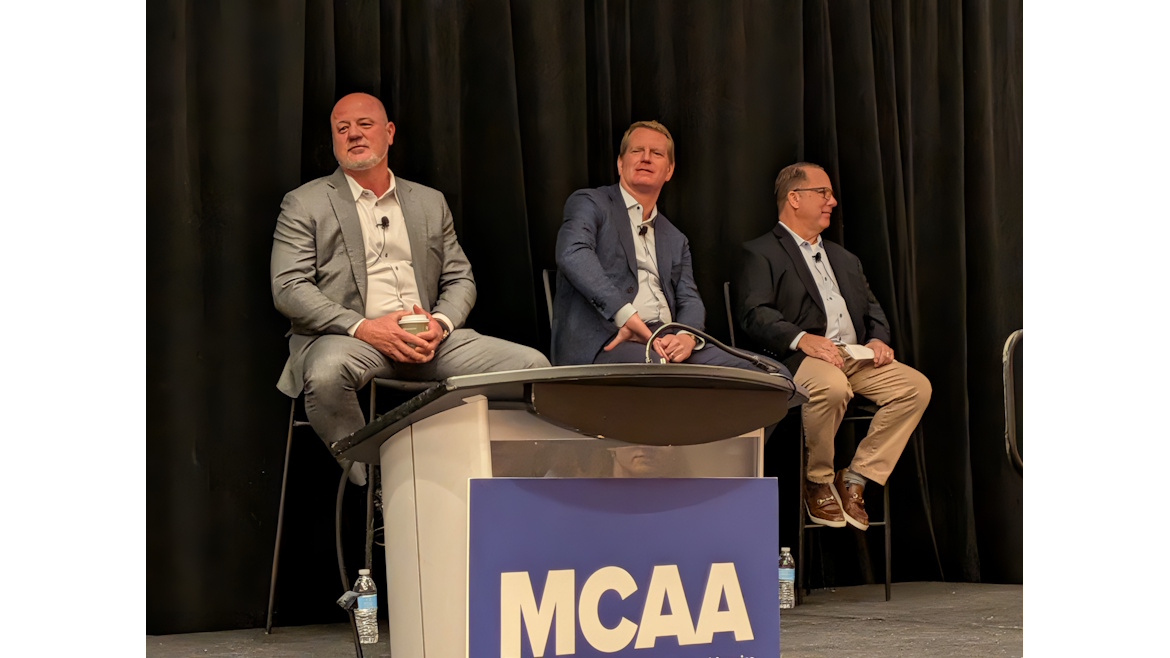
COMMERCIAL TRENDS: Commercial contractors (from left to right) Curtis Harbour, Brian Helm, and Robert Beck discussed the current trends in the HVACR industry. (Staff photo)
“I think we just really have to embrace that idea and try to figure out how to capitalize and learn things from it,” said Harbour. “It's not going away. And in fact, everything I'm hearing from clients is that we've just scratched the surface on these megaprojects.”
But with opportunity comes disruption. Contractors are being forced to rethink how they attract labor, manage travel assignments, and structure incentives. Long hours and extended time away from home are placing new strains on the workforce — particularly on field personnel.
“These are not machines. These are humans that have families and children and commitments at home and in their communities,” said Harbour. “We’re asking them to leave their families behind and work very long days. We have to find ways to better support them,” pointing to the growing importance of mental health and supportive work environments.
While many contracting firms are pursuing megaprojects, Beck warned that going after them too aggressively can come at a cost.
“We lose market share when it’s busy, not when it’s slow,” he said, stressing the need to protect core, community-based work, such as schools, hospitals, and local utilities, which has sustained his company for 140 years.
Looking for quick answers on air conditioning, heating and refrigeration topics? Try Ask ACHR NEWS, our new smart AI search tool. Ask ACHR NEWS
Beck said the challenge is finding the right balance in supporting megaprojects without neglecting core work. “How do we get individuals who could maybe earn more on those mega jobs to take on [local] projects like schools or hospitals — especially when that work needs to be done in the summer?” he asked.
How Is Consolidation Affecting The Industry?
The panel agreed that consolidation is rapidly reshaping the mechanical contracting industry. What was once dominated by family-owned firms now increasingly consists of private equity and large corporate ownership. Helm noted that 20 years ago, the mechanical contracting industry was 95% family-owned, and now it’s closer to 33%. He noted that he was the only panelist on stage who still worked for a family-owned company.
“That's not good or bad — it’s just reality that more consolidation is happening,” said Helm. “Family businesses are getting together and teaming up. Private equity is buying businesses. Public companies are buying businesses, and that leads to a few things, from a competitive standpoint.”
While consolidation can bring resources, scale, and operational support, it also introduces risks. Helm highlighted concerns about decision-making becoming more distant and short-term financial pressures influencing long-term strategy. He also raised a critical issue for union contractors: how consolidation affects local governance structures like JATCs (Joint Apprenticeship and Training Committees) and labor negotiations.
“If a company comes in for a two-year job, should they be shaping a five-year labor agreement?” asked Helm.
Beck agreed that consolidation may be happening but emphasized that contractors are still competing for work in their local markets, where maintaining market share remains critical. He warned that firms risk losing ground if they lose focus or drift from the principles that define the union construction industry.
“If we take our eye off the ball, if we allow our core values as a union construction industry to shift, that’s not good,” he said. “But if we consolidate the right way, if we continue to stay true to those core values that continue to make this industry so great, we can really take advantage of the opportunity.”
How Can Contractors Recruit Talent?
If one theme united all three panelists, it was that the future of mechanical contracting depends on people.
“It has never been more competitive for talent,” said Beck, noting that his employees are being recruited constantly. He added that the industry needs to take an innovative and a more collaborative approach on recruiting talent, rewarding it, and retaining it in ways that are sustainable.
Finding talent goes beyond just technicians, as the mechanical contracting industry also faces a shortage of project managers, engineers, and leaders capable of managing increasingly complex work. To address this, Beck said the industry must do a better job attracting talent by highlighting its wide range of career paths — from trades to office roles — because “there is something in this industry for everybody, from the boiler room to the board room.”
Beck added that companies need both short-term hiring efforts and long-term outreach, including engaging students early through programs and partnerships. He also stressed that recruiting and retention must go beyond wages, noting the importance of training, career development, and making employees “feel relevant … [and] that we have a plan for them. Make them feel special.”
Helm highlighted several effective recruiting strategies, including hiring international engineering graduates and investing in AI and emerging technologies. He said bringing in international graduates through visa pathways has been particularly successful, noting they’ve had “a dozen or maybe even two dozen people with work visas who get filtered into our project engineering program and keep moving up like that.”
In addition, Helm said that investing in AI has not only improved efficiency but also helps attract younger talent by showing the industry can compete with tech companies. Equally important, Helm emphasized offering multiple career paths, calling it “a game changer” for retaining employees who may not follow a traditional project management track.
What Does Success Look Like For Mechanical Contractors?
Looking ahead, Helm outlined what may be the most critical strategic challenge facing contractors: maintaining control of the construction process. As competition increases, general contractors, construction managers, and even owners are beginning to encroach on traditional mechanical contracting roles.
“We need to control the entire build chain, so that we're able to control the design, then the fabrication, then the install, then material procurement, then the commissioning, then maintaining the building,” said Helm. If contractors fail to do so, others will step in — particularly during downturns when companies look for new revenue streams.
At the same time, Harbour reinforced that no amount of technology will replace the industry’s reliance on skilled people.
“This is a people business. It always will be,” he said. “It’s recruiting, it's getting the smartest and most talented people out of college to come into our industry,” he said. “It's about getting the smartest and most talented craft workers into our industry. To me, the greatest way to be successful as an MCAA contractor is to go get the brightest and most talented away from our non-union competitor. We have to get them on our team.”
Despite the challenges, the panel struck an optimistic tone. Demand is strong, opportunities are abundant, and the industry is evolving. As Helm noted, “There’s never been a better time to be a mechanical contractor.”
Looking for a reprint of this article?
From high-res PDFs to custom plaques, order your copy today!