HARDI Warns of Refrigerant Supply Disruptions in New York
On April 1, the state will prohibit the sale of certain virgin refrigerants used in commercial refrigeration
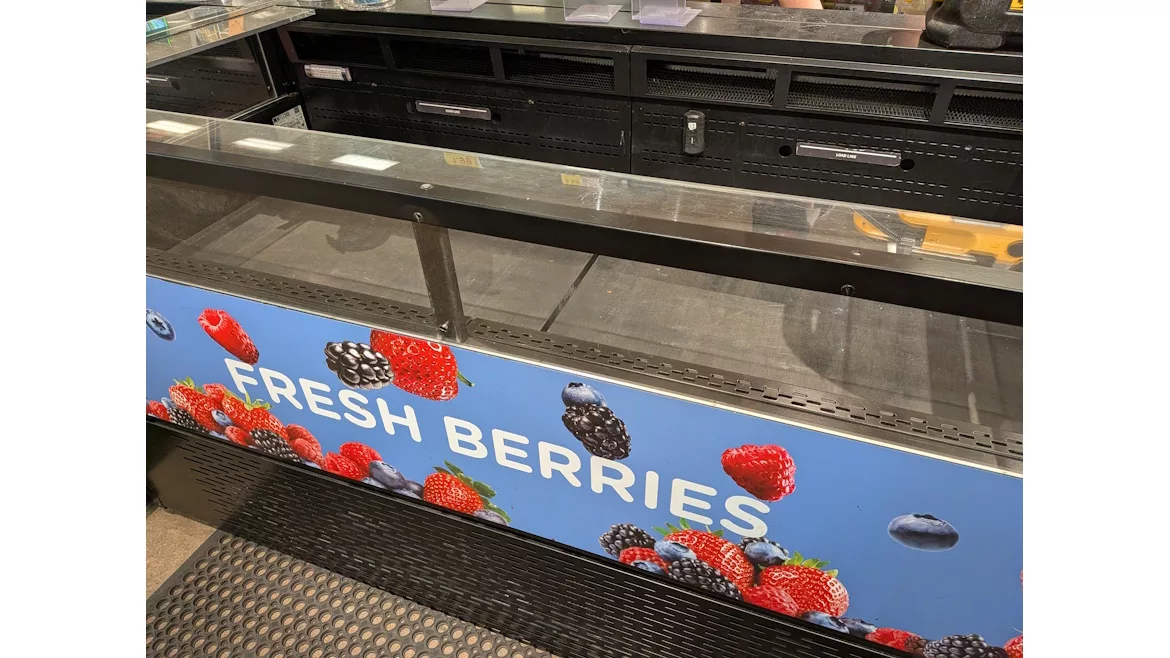
EMPTY CASES: NY grocers say empty refrigeration cases could become the norm, if they can’t obtain the refrigerant to service them.
Update: HARDI announced that on March 27, 2026, a New York appellate court temporarily blocked NYSDEC from enforcing its ban on R-404A and R-507A, which are used to maintain commercial refrigeration systems. The ruling extends current enforcement discretion beyond the March 31 deadline while the court considers HARDI’s request for a preliminary injunction.
A growing clash between New York regulators and the HVACR industry is raising concerns about refrigerant availability, rising costs, and potential impacts on food access across the state.
In a March 20 press release and press conference, Heating, Air-conditioning & Refrigeration Distributors International (HARDI) warned that the New York State Department of Environmental Conservation’s (DEC’s) decision to reject a request for enforcement flexibility under Part 494 could trigger near-term supply disruptions of refrigerants.
“DEC’s decision puts New York businesses in an impossible position,” said Alex Ayers, HARDI’s vice president of government affairs. “Without an adequate supply of compliant refrigerants, essential businesses like neighborhood grocery stores and restaurants will struggle to operate and serve their communities.”
HARDI and other industry stakeholders had urged the state to extend enforcement discretion — a temporary measure that would have eased the transition — arguing that current timelines do not align with available refrigerant supply or federal regulations. The DEC declined that request, setting the stage for enforcement beginning April 1.
Part 494 Concerns
New York’s 6 NYCRR Part 494 regulation is part of the state’s broader climate strategy to reduce emissions from high-GWP HFC refrigerants that are commonly used in refrigeration and air conditioning equipment. As of April 1, the rule will effectively prohibit the sale, distribution, or purchase of virgin refrigerants greater than 2,200 GWP in New York State. This includes R-404A and R-507A, which are still widely used in supermarkets, restaurants, and other food-service operations. While reclaimed refrigerant can still be used, industry groups say the supply is insufficient to meet ongoing service needs.
Grocers speaking at the press conference said more than 18,000 refrigeration systems across New York still rely on these refrigerants, requiring over one million pounds annually for maintenance and repairs. However, the available supply of reclaimed refrigerant is roughly half that amount, raising concerns about a serious and immediate shortage.
Looking for quick answers on air conditioning, heating and refrigeration topics? Try Ask ACHR NEWS, our new smart AI search tool. Ask ACHR NEWS
Industry representatives warn that restricting access to these refrigerants before adequate alternatives are fully scaled could create supply shortages with broader economic consequences. HARDI estimates that the refrigerant restrictions alone could lead to a decrease of over $106 million in the overall economic output of New York State. The organization also warned that shortages could ripple through the food supply chain, leading to higher consumer prices, reduced availability of fresh and frozen foods, and added strain on businesses already navigating tight margins.
In rejecting the request for enforcement flexibility, DEC is forcing the industry into what will be a crisis in the coming weeks, said Ayers.
“Once service technicians' inventories are depleted, the nationwide availability of reclaimed refrigerants is not enough to meet statewide demand,” he said. “That is a major issue for this state, where we will not be able to keep the refrigeration systems that all of these businesses rely on running. Refrigeration is not optional for these businesses. It's necessary whether it is selling fresh food, serving food to customers, or it being in the hospitality business.”
Food retailers say higher costs are already materializing, citing significant new expenses tied to compliance and warning of far greater costs if systems must be replaced prematurely. Replacing commercial refrigeration systems can cost anywhere from hundreds of thousands to millions of dollars per location, depending on the size and configuration.
Ron Smith, store facilities maintenance manager at Tops Friendly Markets, which operates 130 stores in New York State, said the company has already incurred more than $1 million in new expenses due to the Part 494 regulation enacted last year. He added that this only scratches the surface of the long-term financial burden the regulations will impose.
“Businesses will be weighed down by mandatory reporting on both servicing and equipment, and the upcoming HFC refrigerant ban will significantly increase operating costs,” he said. “Unfortunately, this will all result in higher costs for New York State consumers.”
To address this, Smith urged state leaders to update regulations to align with the federal EPA refrigerant guidelines in the AIM Act. “This will help us all work toward a common environmental goal without placing additional financial strain on communities,” he said.
Proposed Legislation
Responding to industry concerns, State Senator Christopher Ryan has introduced legislation (S.9066) designed to modify New York’s approach. The bill would require that state regulations governing HFCs align with federal standards and not exceed them, effectively bringing Part 494 in line with the AIM Act’s phasedown schedule.
Ryan said the legislation is intended to balance environmental goals with practical implementation.
“Over the past year, I’ve spent a lot of time listening to manufacturers, contractors, and businesses across this sector, and the message has been consistent — they’re already doing the work to transition to next-generation technologies, but they need certainty and coordination from government, not a patchwork of conflicting rules.”
HARDI backs the legislation, warning that without action, the state risks a self-inflicted supply crunch.
“New York is on the verge of creating a completely avoidable supply crisis that will impact hundreds of grocery stores, small businesses, and the communities they serve,” said Ayers. “The legislature has the opportunity to act now, align the state with the federal phasedown, and still achieve their environmental goals without disrupting food access or driving up costs for consumers.”
With enforcement set to begin April 1, uncertainty remains over whether legislative action will come in time to alter the current trajectory. In the meantime, food retailers across New York are preparing for potential refrigerant shortages, along with rising costs.
Looking for a reprint of this article?
From high-res PDFs to custom plaques, order your copy today!