Smarter Rooftops: How Connected RTUs Are Changing HVAC
Real-time data, predictive diagnostics, and BAS integration are reshaping RTUs
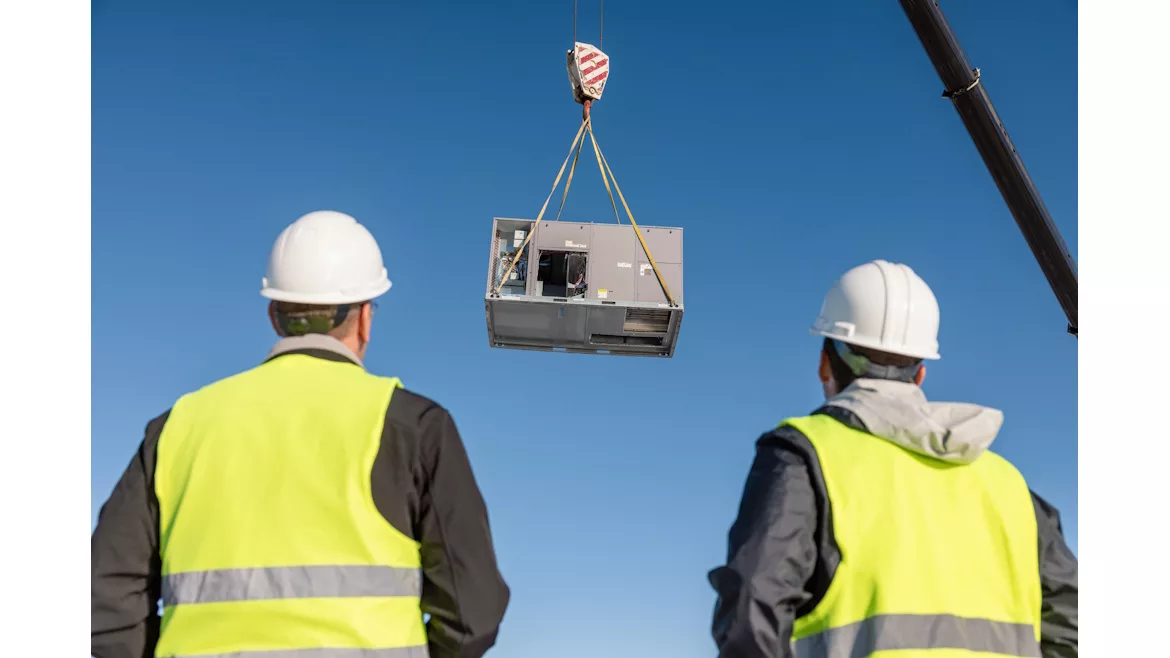
FROM SKY TO CONNECTIVITY: Connected solutions offer a digital platform that enables real-time, data-based results, helping to make buildings more efficient and responsive.
Once upon a time, rooftop units (RTUs) were one of the most straightforward pieces of HVACR equipment out there — designed to only heat, cool, and ventilate. Today, that isn’t the case. Some of these systems now possess the same type of connectivity as a smart thermostat, heat pump, or even an integrated workflow software. They’re more intelligent. Predictive. Monitored remotely. Connected to the total building in which they operate and integrated with building automation systems (BAS).
It's a different world now, and it’s changing how RTUs are designed, commissioned, serviced, bought, and sold.
As that realization grows and manufacturers work within it to innovate for contractors, RTUs have become — in what feels like the blink of an eye — an essential part of a building's digital HVAC infrastructure.
Real-Time Monitoring: The New Standard
One of the biggest changes in RTUs is embedded sensors with tracking capabilities.
Randy Speights, CEM, technical product manager at Lennox Commercial, said Lennox's Core Control System RTUs come standard with sensors that can, in real-time, monitor outside air, supply air, and return air, while also measuring the pressure/temperature in refrigeration circuits.
In turn, equipment operation can be adjusted as needed. This type of capability has been adopted by manufacturers across the industry.
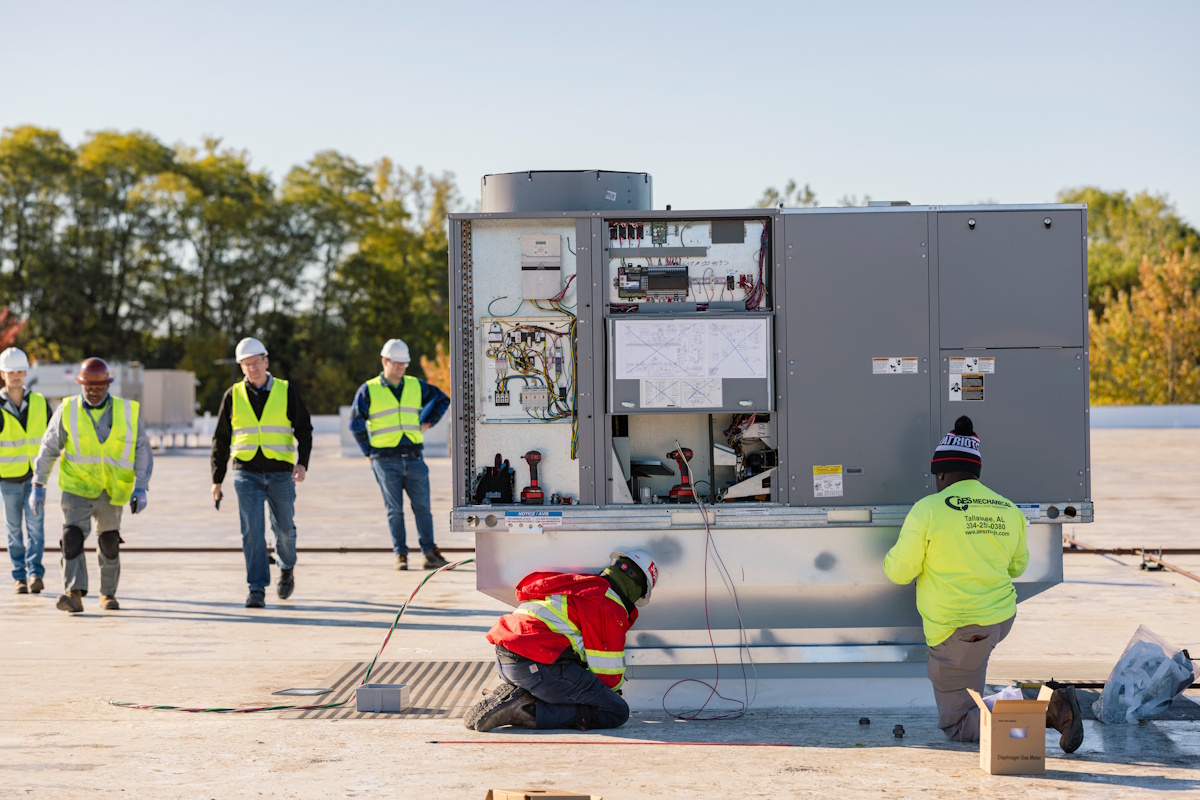
TECHNICIAN ADAPTATION: Manufacturers of today’s RTUs remain committed to making intelligent solutions that integrate digital tools simple and intuitive enough to help customers achieve their goals for performance, comfort, and energy efficiency. (Courtesy of Carrier)
“Daikin Applied [RTUs] can be monitored, analyzed, and adjusted remotely through standard BACnet communication protocols,” said Kevin Greiber, senior director of solutions offerings at Daikin Applied. “Standard onboard sensors such as temperature, humidity, CO₂, indoor air quality (IAQ), energy meters, and vibration sensors provide a steady flow of operational data. … With this level of visibility, technicians can assess system health before ever arriving onsite, reducing unnecessary truck rolls and enabling them to bring the right parts and expertise the first time.”
Looking for quick answers on air conditioning, heating and refrigeration topics? Try Ask ACHR NEWS, our new smart AI search tool. Ask ACHR NEWS
Carrier also leverages real-time data across its portfolio of RTUs — including safety controls designed to help protect the unit/contribute to a longer lifespan. According to Heidi Gehring, managing director of light commercial solutions at Carrier, its integrated SystemVu RTU has allowed for temperature and pressure data to automatically adjust unit behavior to support more optimal performance, efficiency, and reliability.
Predictive Maintenance’s Necessity
For HVACR contractors, what these capabilities mean is access to weeks of backed data, allowing them to show up to a jobsite a few steps ahead.
"Building owners have the option to use the full suite of BACnet diagnostics that provide diagnose-before-dispatch abilities and the knowledge to know which component a technician may need to arrive with to repair a concern on the first visit," said Speights.
But connected RTUs go far beyond basic alerts.
"They deliver detailed fault codes paired with probable root causes, real-time system diagnostics, automated fault detection, energy use insights, historical performance trends, and structured digital inspection reports," said Greiber.
This not only speeds up troubleshooting but also allows for a more proactive service approach.
"By preventing small problems from escalating, connected platforms help optimize equipment performance, minimize downtime, and extend the overall life expectancy of HVAC systems," said Greiber. “As adoption grows, these tools will become central to modern service strategies, driving greater efficiency and reliability for both contractors and customers."
The ability to view live operating conditions (temperature, airflow, the status of system components like fans or compressors, etc.) means that maintenance is no longer prolonged.
"They also provide data logs, diagnostic alerts, and fault codes that highlight specific performance issues, allowing those servicing the unit to more quickly identify and address any problems," said Gehring. "These modern, digital platforms are aimed at accelerating the speed of service, designed to help reduce troubleshooting time, and thus supporting efforts to reduce downtime."
RTUs: The Building Brain
As RTUs become more connected, they ultimately are more integrated with broader BAS.
"Rooftop systems typically integrate with broader building automation systems via standard building communication protocols such as BACnet IP or BACnet MS/TP," said Greiber. "Units are ordered with an appropriate communication card to connect to the BAS system. The communication card is typically configured at the customer site during startup and commissioning after the equipment is delivered and powered up."
That being said, contractors are bound to run into connectivity or integration challenges.
"The market is flooded with building systems and control options, all with their own unique installation process and settings," said Gehring.
The bright side: the design of today’s RTUs has already taken this into account — but it doesn't mean contractors are off the hook: there's some definite legwork involved.
"With the amount of information and flexibility of control offered with [integration options], it is always a great idea to connect with [training and support teams] to ensure that integration partners are utilizing the best methods to control the equipment to meet a building’s requirements," said Speights.
Due to security concerns, one common challenge contractors may face is securing IT approval to connect to a customer's network, which Greiber said often requires early communication.
"Another common challenge is knowing which setpoints can be commanded or changed and what alarms are available,” he said.
So, to ensure RTUs communicate properly and perform as intended, commissioning becomes as critical as the actual installation.
The Skill Gap: How HVAC Service Becomes Data-Driven
With the RTUs of today, technicians may find themselves servicing systems that increasingly resemble software rather than actual HVAC equipment.
"As [RTUs] become more software-driven, the challenge isn’t a lack of capability among contractors, but that the technology has evolved faster than traditional training models," said Speights. "Many technicians are being asked to troubleshoot systems that now behave more like integrated control platforms, where understanding software logic, data trends, and control intent is just as important as mechanical expertise."
In this, an opportunity presents itself for the industry to better align training, commissioning practices, and tools around system-level diagnostics, rather than component replacement, said Speights.
“Contractors who adapt to that shift are already seeing better first-time fix rates, fewer callbacks, and stronger customer relationships,” he said.
Daikin sees similar challenges and outcomes around contractors fully leveraging the growth volume of data produced by these connected systems.
"Many lack the time, resources, or specialized expertise needed to interpret the growing volume and variety of data streaming from modern equipment,” said Greiber. "As buildings become more digitized, these disparate data sources only increase in complexity, making it even more difficult for contractors to extract meaningful insights."
All the more reason to train, which is where manufacturers intentionally bridge the gap.
"As units become more intelligent, there is an increased need to train technicians on how to use the data and tools now available to them," said Gehring.
What's Next?
Looking ahead, manufacturers expect the systems to become even more evolved, intelligent, integrated, and self-sufficient.
Speights said that RTU systems will move toward IP-based and wireless communication, resulting in both a richer exchange of data and simpler installation.
"Instead of acting as standalone equipment, units will increasingly share performance data, support remote diagnostics, and respond dynamically to building demand," said Speights. "For contractors, the shift is from basic point mapping to proper commissioning and validation of how the unit interacts with the overall system. Those who adapt will deliver better performance, reliability, and long-term value to customers."
Other manufacturers foresee a similar evolution.
"Future systems will offer plug-and-play functionality, simplifying both initial setup and ongoing, continuous commissioning," said Greiber. "This shift will enable equipment to automatically optimize performance, detect anomalies, and adjust to changing building conditions without heavy manual intervention."
If current trends continue, RTU cloud-connected solutions will only continue to gain traction, with analytics as a tool that turns raw equipment data into tangible insights.
"These platforms will support open, yet secure, digital architectures, making it easier to integrate HVAC equipment with broader building management ecosystems," said Greiber. "As a result, organizations will benefit from greater operational visibility, enhanced reliability, and more agile control strategies that better support energy efficiency and evolving sustainability goals."
Looking for a reprint of this article?
From high-res PDFs to custom plaques, order your copy today!