FROSTlines
The Rising Threat of Noncompliant Refrigerant Cylinders
Primarily used for A2Ls, these cylinders pose serious risks to HVACR professionals
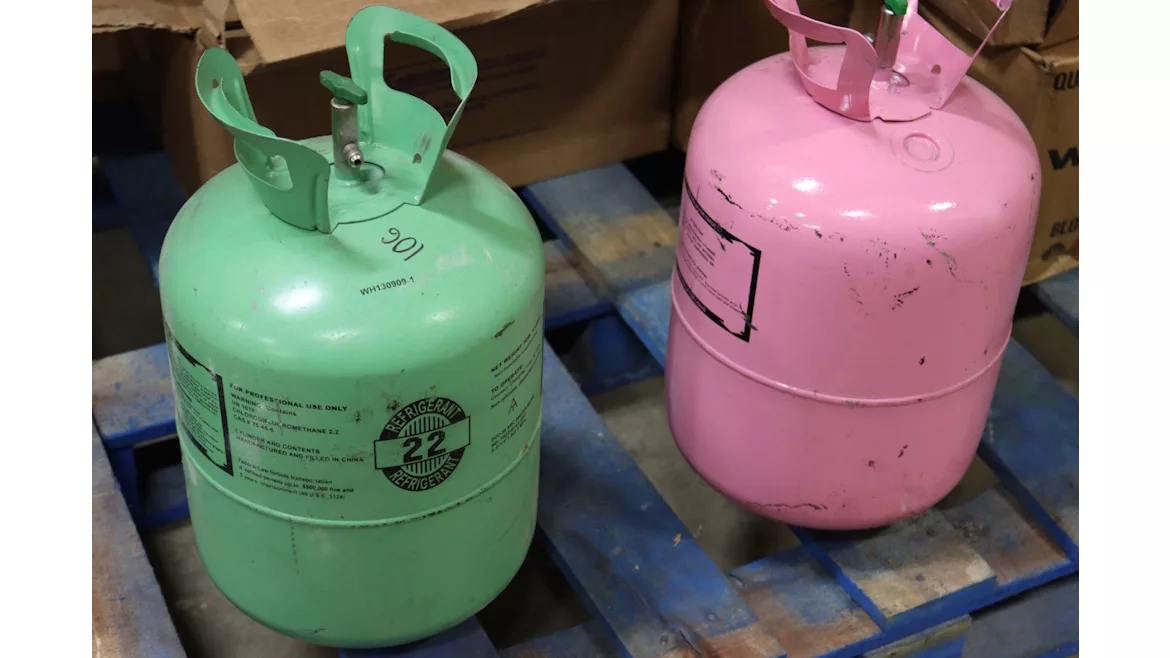
FULL RELEASE: Cylinders of R-22 and R-410A use rupture discs, which release the full contents of the cylinder and cannot reclose once ruptured.
As the HVACR industry navigates the transition to low-GWP A2L refrigerants, a troubling trend has emerged: the proliferation of noncompliant, disposable refrigerant cylinders. These A2L cylinders, many imported from overseas manufacturers, use rupture discs rather than the required pressure relief devices (PRDs), and their growing presence in the U.S. supply chain poses serious risks to contractors, distributors, and the public at large.
A Growing Problem
Reports of unsafe cylinders are no longer isolated, said Brad Kivlan, chief operating officer at FluoroFusion Specialty Chemicals, adding that his company has seen a “significant and concerning” uptick in noncompliant cylinders. He stressed that the issue goes far beyond paperwork and involves fundamental safety failures that put technicians and the public at risk.
“While compliance issues can exist with any refrigerant, this recent wave is primarily tied to the EPA’s Technology Transitions Rule, which phased out R-410A equipment in favor of equipment utilizing mildly-flammable A2L refrigerants like R-32 and R-454B,” said Kivlan. “A2L refrigerants have specific packaging and handling requirements that, in these cases, are being completely ignored.”
Worthington Enterprises has observed the same trend, said Joe Giannetti, general manager for cooling, construction, and fire suppression for the refrigerant cylinder manufacturer. He noted that inquiries about A2L cylinders without the proper safety valves have increased, with the most common concern involving R-32 cylinders shipped with CG-1 rupture discs rather than the required CG-7 valves.
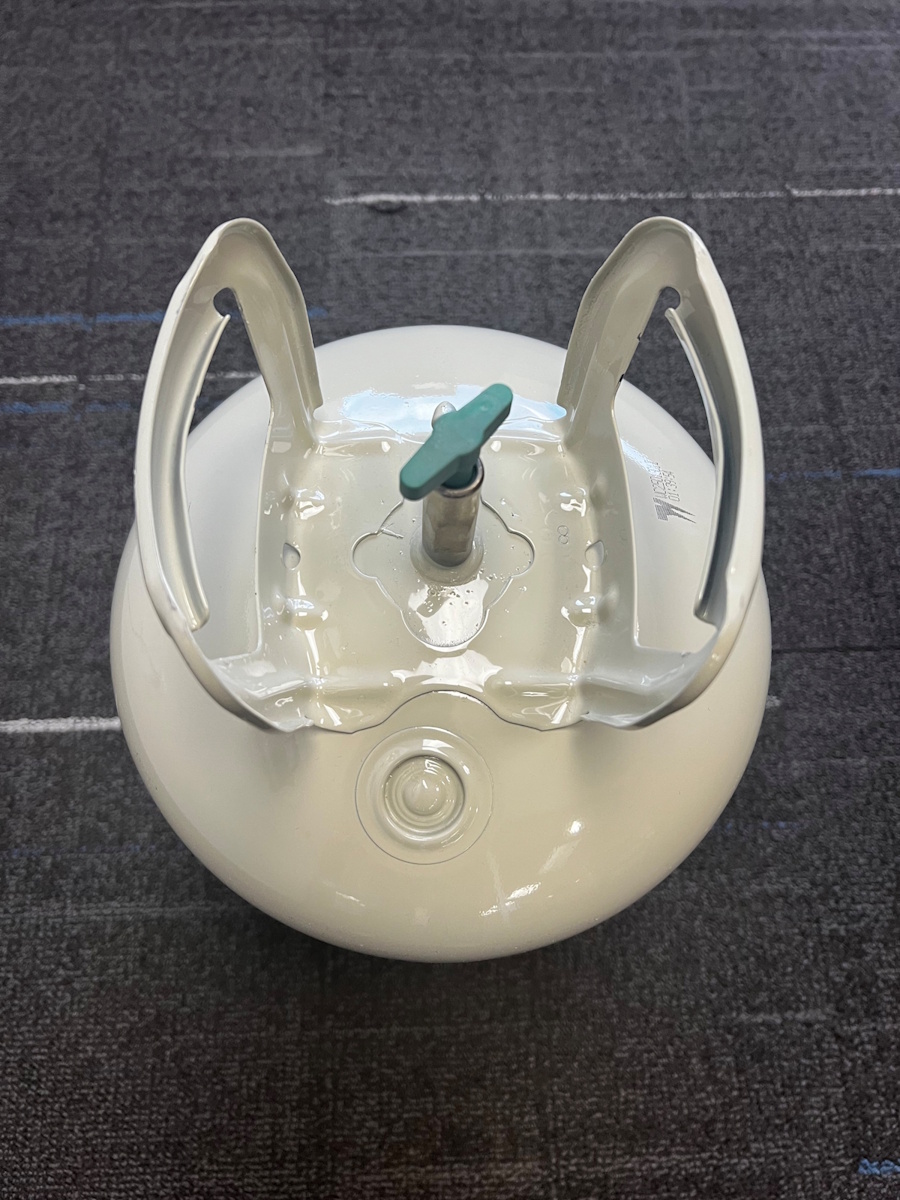
RUPTURE DISCS: CG-1 rupture discs are used on DOT-39 cylinders containing nonflammable refrigerants, such as R-410A. (Courtesy of Worthington Enterprises)
“While technically permitted under the currently referenced 2011 CGA S-1.1 standard, we believe that all Division 2.1 flammable gases packaged in DOT-39 cylinders should be designed with CG-7 PRDs to help ensure the highest level of safety and compliance for our customers and the HVACR industry,” he said.
Worthington Enterprises is working closely with regulators and industry partners to push for standardization on CG-7 pressure relief devices, Giannetti said, a move that would end the marketplace confusion created by outdated regulations. He noted that the Compressed Gas Association (CGA) petitioned the Department of Transportation (DOT) in March 2024 to adopt the 2022 16th edition of S-1.1, which requires CG-7 PRDs for many A2L refrigerants. DOT has since acknowledged the petition and confirmed it merits future rulemaking.
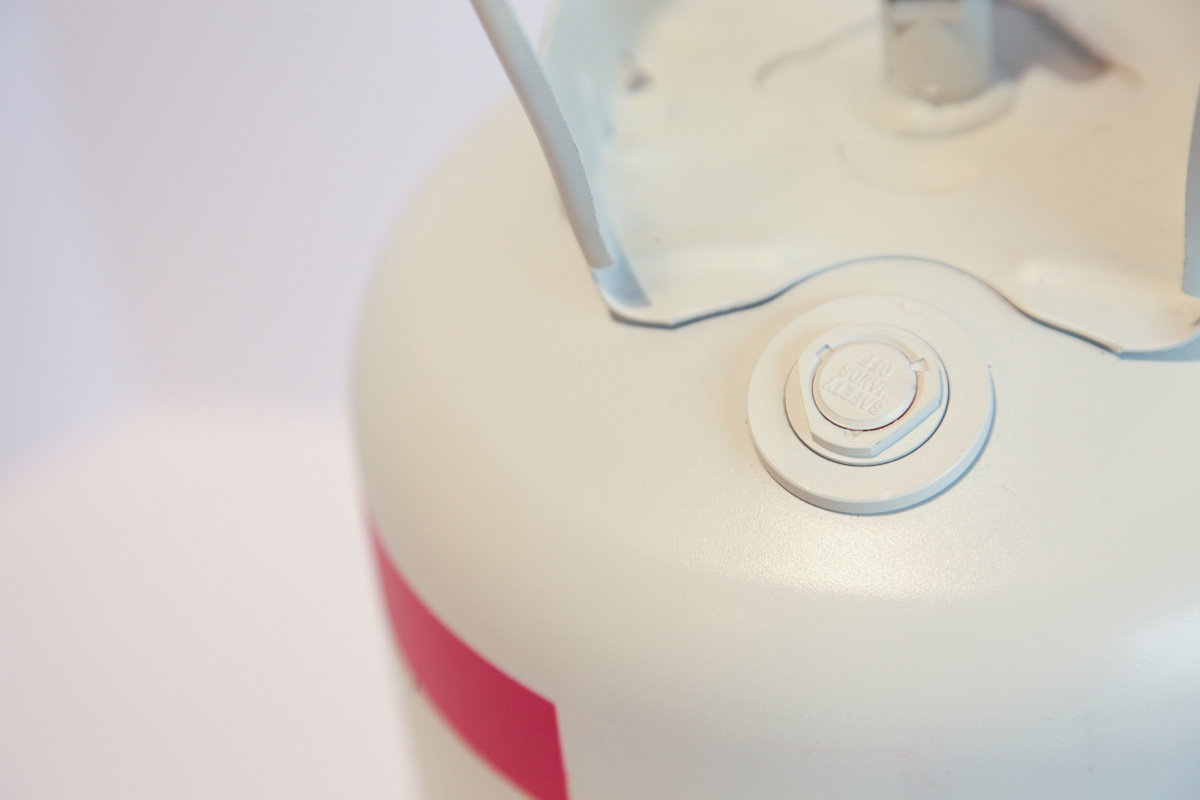
PRESSURE RELIEF: CG-7 pressure relief valves are specifically designed for DOT-39 cylinders containing A2Ls like R-32 and R-454B. (Courtesy of Worthington Enterprises)
Kris Crosby, senior business development engineer at Arkema, noted that the issue of non-compliant cylinders is not new, nor is it tied only to A2Ls. For decades, he said that overseas manufacturers — particularly those from China and India — have supplied questionable cylinders to the U.S.
Looking for quick answers on air conditioning, heating and refrigeration topics? Try Ask ACHR NEWS, our new smart AI search tool. Ask ACHR NEWS
“Some of these companies produce fully DOT-compliant cylinders, but it appears that many produce cylinders that have not been qualified and tested to comply with DOT regulations,” he said. “In our view, those cylinders should never enter the U.S. market. However, companies pursuing the cheapest cylinder options possible may attempt to use cylinders from those suppliers to gain a substantial cost advantage in the marketplace.”
In order to mitigate any safety risks associated with the mild flammability of A2L products, Crosby said that Arkema only supports the use of DOT-39 cylinders with these products when utilizing a resealable PRD carrying the CGA CG-7 designation.
PRDs And Safety
At the heart of the compliance problem is the type of PRD installed on cylinders containing flammable refrigerants. CG-7 reseating valves are specifically designed for A2Ls like R-32 and R-454B, while rupture discs are suitable for use with A1 refrigerants, such as R-410A.
“Our understanding is that these [CG-7] pressure relief valves are designed to prevent an overpressurization of the cylinder by releasing only an amount of material from the cylinder that is required to lower the pressure to an acceptable level,” said Crosby. “In contrast, our understanding is that rupture discs, which are used on DOT-39 cylinders containing non-flammable refrigerants … release the full contents of the cylinder. Once they rupture, they cannot reclose.”
This could create a dangerous situation, Kivlan warned, noting that if an A2L cylinder with a rupture disc is left in a hot service van, pressure can build until the disc bursts.
“When it does, it releases the entire flammable contents of the cylinder. This could potentially result in an ignitable mixture within the enclosed space, and if an ignition source is present, the result could be catastrophic.”
The dangers of noncompliant cylinders ripple through every level of the HVACR supply chain. For contractors and technicians, transporting or using them puts employees and customers at risk of fire or explosion. For distributors, selling them opens the door to lawsuits and regulatory penalties if an incident occurs. Even end users may face exposure if a technician unknowingly installs refrigerant from an unsafe container.
Liability is an issue, too, as Giannetti warned that A2L cylinders with rupture discs “create potential risks of uncontrolled release of flammable gas if pressure thresholds are exceeded. Contractors and distributors who sell or use these cylinders may also face liability exposure if unsafe cylinders contribute to an incident.”
That is why contractors should only buy refrigerants and refrigerant cylinders from a reputable, well-known brand that is sold through a reputable distributor or dealer, said Crosby.
“Refrigerants purchased from online retailers or social media sources should only be used with caution. Companies offering refrigerants at extremely low prices are generally a giveaway of a company selling noncompliant products of questionable quality.”
Non-Compliant Recovery Cylinders
The problem doesn’t end with disposable cylinders. A2L recovery cylinders have also raised compliance concerns, though signs point to gradual improvement.
“As an EPA-certified reclaimer, we see that most of the smaller, 30- and 50-pound recovery cylinders for A2Ls now have the correct yellow top over a gray body and the proper left-hand threads,” said Kivlan. “However, the larger format cylinders, like 240-pound and 1,000-pound tanks, are still lagging. The good news is that all the steel recovery cylinders we encounter have the correct pressure relief devices (CG-7 reseating device) for A2L refrigerants and are safe for transport. Contractors should always verify that their recovery cylinders have the correct markings, are within their hydrotest date, and are sourced from a reputable supplier.”
Giannetti added that contractors and distributors should also verify that all recovery cylinders are DOT or UN certified and carry the manufacturer’s name and country of origin. Cylinders missing those markings may be unsafe. He also pointed to AHRI Guideline N, which provides additional safeguards for A2L recovery and reclamation. The key, he said, is to “avoid purchasing recovery cylinders from unknown or unverified sources.”
Best Practices
For contractors, the process of ensuring that cylinders are compliant starts at the point of purchase, said Crosby. He recommends reviewing purchases with a trusted dealer, checking that cylinders come from reputable brands with the proper valves and markings — including a red band around the top for A2L cylinders — and inspecting them at the time of purchase.
“Inspection before taking ownership of the cylinder should help avoid the potential of having a noncompliant cylinder in your possession.”
Inspection of A2L cylinders is critical, Kivlan emphasized, urging contractors and distributors to train their teams to recognize these four key indicators immediately:
- Pressure relief device. Look at the top of the cylinder for a compliant CG-7 reseating valve, which is a small, raised valve that looks like it has a spring mechanism. A noncompliant CG-1 rupture disc is a simple, flat, or slightly domed metal circle.
- Hazard label: The DOT diamond-shaped placard must say "FLAMMABLE GAS." If it says "INFLAMMABLE GAS," it is a clear violation of DOT regulations.
- Valve threads: For flammable gases like R-32, left-handed threads are required to prevent accidental connection to the wrong equipment. If the threads are standard right-handed, it's noncompliant.
- DOT markings: DOT 39 cylinders must have markings that include the manufacturer's registration number, also known as the M number, which corresponds to the manufacturer's DOT number. The service and test pressures (400/500 psig) must also be marked on the cylinder. If these markings are not present, it's a red flag.
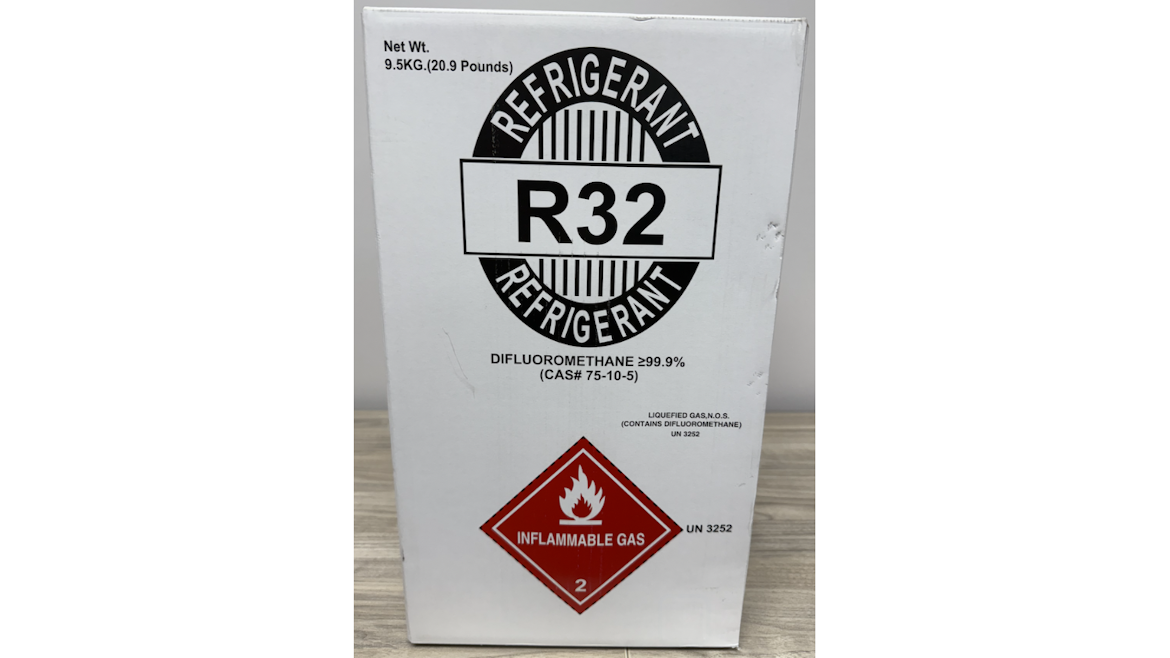
INSPECT LABEL: This box is improperly labeled with “Inflammable Gas” instead of “Flammable Gas.” (Courtesy of FluoroFusion Specialty Chemicals)
If a cylinder is suspected to be noncompliant, it should be isolated immediately and not used or distributed. Empty, unauthorized cylinders can be returned to the point of sale, while filled ones should be handled and disposed of by a licensed HVAC technician, according to a PHMSA safety advisory. Giannetti said that any confirmed noncompliant cylinders should be reported to PHMSA or the DOT, adding that transporting them when filled with A2L refrigerant is illegal, creating both serious safety hazards and the risk of enforcement action.
The bottom line is that contractors should only buy refrigerant from trusted, reputable suppliers. Crosby cautioned, “Refrigerants or refrigerant cylinders should never be purchased from online or social media retailers, who often advertise extremely low prices far outside current market prices.”
Kivlan agreed, noting that, “While everyone wants a good deal, an unusually low price is one of the biggest red flags for a noncompliant or poor-quality product. Prioritizing safety and quality over a few dollars is always the right call.”
Looking for a reprint of this article?
From high-res PDFs to custom plaques, order your copy today!