HARDI: A2L A/C, Heat Pump Sales Outstrip Sales of Non-A2L Units
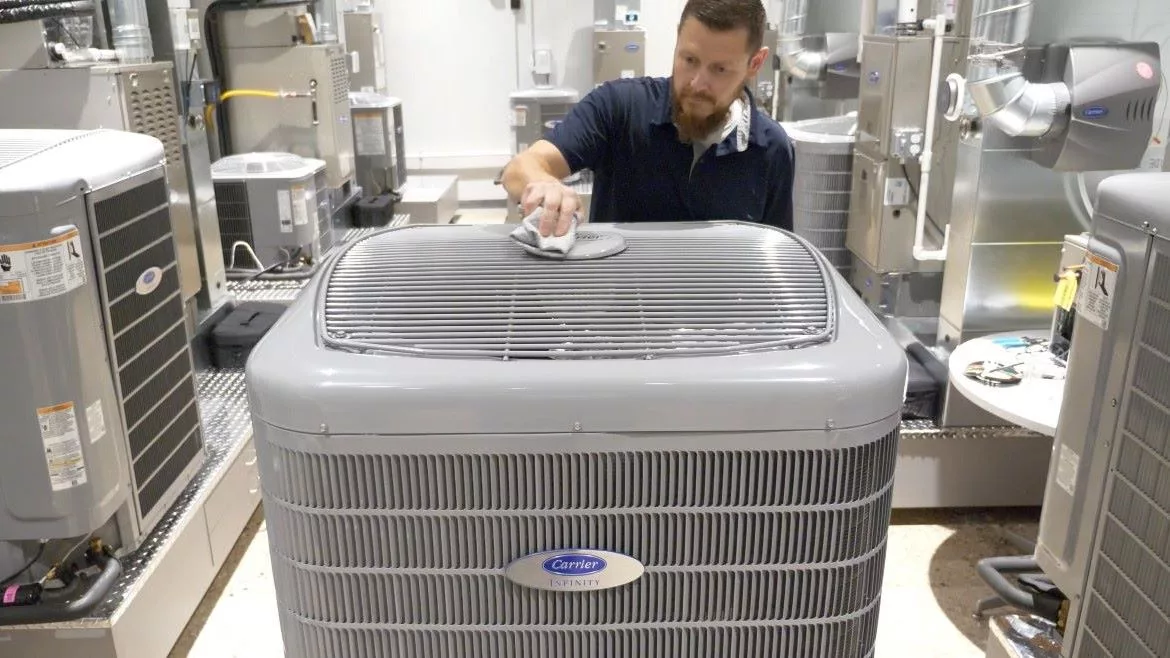
OUTSIDE THE BOX: A worker shines up the outdoor unit of a Carrier Infinity Variable-Speed Ultimate Cold-Climate Heat Pump at the company’s Technical Training Center in Indianapolis, Indiana. The Infinity uses the A2L refrigerant R-454B (Carrier's Puron Advance), and Heating, Air-conditioning & Refrigeration Distributors International reports that sales of A2L products are beginning to outstrip sales of products that use higher-GWP refrigerants. (Courtesy of Carrier Global Corp.)
COLUMBUS, Ohio — The HVACR industry reached a significant milestone this spring in its transition to lower-GWP refrigerants, according to Heating, Air-conditioning & Refrigeration Distributors International (HARDI).
HARDI’s Unitary Market Intelligence Report for April says that central ducted a/c and air-source heat pump systems using A2L refrigerants accounted for 51% of all a/c and air-source heat pump sales that month, and preliminary May data indicates further growth to 60%, a press release from HARDI said.
“This milestone confirms that the industry is embracing the new A2L refrigerants,” said HARDI CEO Talbot Gee. “Despite facing price volatility and ongoing shortages of R-454B cylinders, distributors and contractors are adopting the next generation of HVAC systems at a rate no one anticipated.”
The Unitary Market Intelligence Report uses automated submissions of distributor sales data to model the national, regional, and state-level HVAC markets. The transition has accelerated since November 2024, when A2L-based equipment made up less than 5% of the market.
Even with rapid adoption, the transition has been complicated by a rule from the Environmental Protection Agency (EPA) that links compliance deadlines to installation dates instead of the date of manufacture or import. This regulatory structure unnecessarily burdens distributors unable to sell their R-410A inventory, adding unwanted complexity, inefficiency, and risk to the supply chain, HARDI’s press release said.
“This installation date requirement is bad policy,” said Alex Ayers, vice president of government affairs at HARDI. “It creates significant uncertainty for businesses without delivering any additional environmental benefit. We urge Congress to ensure that future regulations avoid this flawed approach. No agency should be able to punish businesses over political pressure from outside groups.”
As the industry adapts to new regulatory requirements, HARDI continues to support a stable, market-based transition that preserves consumers’ ability to repair existing systems while efficiently filling the supply chain with new systems for installation, the press release said.
Looking for quick answers on air conditioning, heating and refrigeration topics? Try Ask ACHR NEWS, our new smart AI search tool. Ask ACHR NEWS
Looking for a reprint of this article?
From high-res PDFs to custom plaques, order your copy today!