ACHR News
search
Ask ACHR NEWS AI
cart
facebook twitter instagram linkedin youtube
  • Sign In
  • Subscribe
  • Sign Out
  • My Account
ACHR News
  • NEWS
    • Breaking News
    • New HVAC Products
    • Featured Products
    • Manufacturer Reports
    • HVAC Data
    • Legislation
    • ACHR NEWS Centennial
  • RESIDENTIAL
    • Air Conditioners
    • Furnaces
    • Residential Heat Pumps
    • Ductless
    • Residential IAQ
    • Testing, Monitoring, Tools
    • Components & Accessories
  • COMMERCIAL
    • Air Handlers
    • Rooftop Units
    • Chillers and Cooling Towers
    • Commercial Heat Pumps
    • Boilers and Hydronics
    • VRF/Ductless
    • Commercial IAQ
  • REFRIGERATION
    • Refrigerants
    • Refrigerant Regulations
    • Leak Management
  • CONTRACTOR PRO
    • Geothermal
    • Homeowner Study
    • VRF and VRV Ductless
    • Unitary Trends
  • EDUCATION
    • Training and Education
    • Business Management
    • Service and Maintenance
    • Continuing Education
    • Market Research >
      • HVAC Brand Awareness Report
      • VRV, VRF, VRVZ Report
      • Unitary Trends Report
      • Water Heat Professionals Report
    • Webinars
    • Sponsor Insights
    • eProducts Info
    • White Papers
  • EVENTS
    • HVAC Contractor Forum
    • Industry Events and Webinars
  • MEDIA
    • Videos
    • AHR Expo 2025 Videos
    • Podcasts >
      • ACHR News Podcast
      • HARDI Podcasts
      • AHR Expo Podcasts
      • ACCA Podcasts
    • Interactive Spotlights
    • Quizzes
    • eBooks
    • HVAC Talkback
  • HVAC GROUP
    • ACHR NEWS >
      • Current Issue
      • Digital Edition
      • Subscribe
    • Distribution Trends
    • SNIPS NEWS >
      • Join SNIPS NEWS
    • Engineered Systems News >
      • Join ES News
    • HVACR Directory
    • Contests
    • Newsletters
    • Contact
    • Advertise
    • My Account
NewsRefrigerationGuest ColumnRefrigerantsNew Construction Market

New Refrigerants are (Almost) Here - What You Need to Know
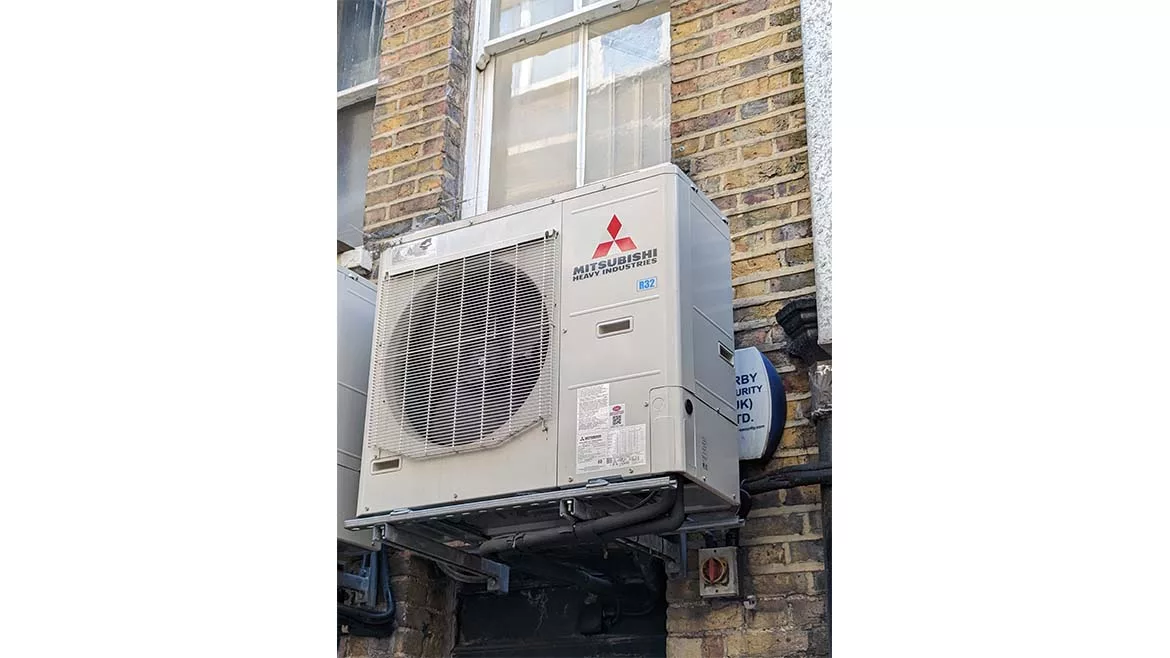
Wall Mounted Air Conditioner
THE A2L UNIT: As part of the transition, the EPA has set transition dates for new equipment required to use new refrigerants, commonly referred to as A2Ls. (Staff photo)
June 17, 2024

The HVAC industry is beginning to transition to new refrigerants required by the American Innovation and Manufacturing Act of 2020, which gradually phases down the use of existing classes of refrigerants and establishes new requirements for the refrigerants used in air conditioners and heat pumps. The new class of refrigerants has a lower global warming potential (GWP) than the current ones.

As part of this transition, the U.S. Environmental Protection Agency (EPA) has set transition dates for new equipment required to use new refrigerants, commonly referred to as A2Ls.

Residential and light commercial air conditioners and heat pumps manufactured after Jan. 1, 2025, must use the new refrigerant. The equipment manufactured prior to this date has a one-year grace period to be installed — a Jan. 1, 2026, installation deadline.

For products that do not require field assembly, such as window air conditioning units, the rules establish the final date of sale as three years after the manufacture compliance date — a Jan. 1, 2028, sale deadline — without a compliance date for installation.

The EPA is evaluating an extension of transition dates by one year only for Variable Refrigerant Flow (VRF) systems with capacities of 65,000 BTU/h (19 kW) or more.

Existing air conditioning and heat pump equipment is not subject to EPA regulations and can continue to be used through equipment end-of-life. Components used for servicing and repair also are not subject to EPA regulation. The supply of R-410A, R-134a, and other refrigerants to meet servicing needs will remain available for the foreseeable future even as overall production and imports decline through the middle of the next decade, as was the case in prior refrigerant transitions in the 1990s and early 2000s.


How A2Ls are Different

All refrigerants are required to be classified by toxicity and flammability. A2Ls retain the same toxicity designation — non-toxic — as their predecessor (R-410A). However, the flammability has been reclassified as Class 2L (lower flammability), compared to Class 1 (no flame propagation) for R-410A.

Looking for quick answers on air conditioning, heating and refrigeration topics? Try Ask ACHR NEWS, our new smart AI search tool. Ask ACHR NEWS →

A2L refrigerants require a redesign of the HVAC equipment. It is important that home builders actively begin to plan for the transition and engage with their suppliers and installers to ensure an adequate pipeline of equipment in the upcoming months and to avoid potential bottlenecks, delays, and last-minute change orders. Each equipment manufacturer will have their own roll-out strategy and timeline, but these changes are imminent and will happen over the coming months.

To address the slight increase in flammability, equipment manufacturers are adding safety features to equipment, revising transportation and handling procedures, and updating installation instructions.

Primary mitigation measures for the building include:

  1. Minimizing the risk of refrigerant leaks by requiring enhanced testing of refrigerant lines using both pressure and vacuum methods, requiring specific joint types, and requiring nail plates at framing members where lines run through, and
  2. Controlling the refrigerant concentration in the building in a potential leakage scenario to levels below the flammability limit.

In many cases, equipment manufacturers will add a leak detection sensor installed in the air handler unit and programmed to activate the main fan to quickly circulate the air throughout the home to reduce refrigerant concentration. Other safety strategies can include the use of shut-off valves also activated by leak sensors and designed to limit the quantity of refrigerant that can leak out. For systems without leak detection sensors, the quantity of the refrigerant in the system, including the lines, will need to be sized more carefully such that a refrigerant leak into the smallest space (e.g., bathroom) directly served by the system would not exceed the established concentration limit.

Additional documentation requirements include a permanent label on the equipment listing the company that installed the system and the weight of the installed refrigerant.

Although there are several A2L refrigerants approved for use, the primary two refrigerants that you should expect in the market are R-32 and R-454B. Each equipment manufacturer will specify which refrigerant is used for their equipment.


Multifamily Buildings

For multifamily buildings where refrigerant lines penetrate fire-rated floor assemblies, the building code may require that the refrigerant lines be placed in a fire-rated shaft or other fire safety measures be implemented. Developers should coordinate designs with their MEP firms. The shaft requirements can impact plan layouts and architectural designs.


Centrally Ducted System vs. Mini-Splits

Different mitigation strategies will be specified for centrally ducted systems vs. mini splits. Again, builders should reach out to their vendors for information and follow installation instructions to make sure all required safety measures are implemented so that concentration limits are not exceeded in case of a refrigerant leak.


Design Software

Software programs for sizing equipment and energy modeling should use updated specifications for the new equipment with A2L refrigerants.


What Should Home Builders Do Right Now

Have a transition plan in place that achieves the following goals:

  • Coordinate a switch-over timeline with vendors and installers
  • Ensure a sufficient pipeline of existing equipment before the switch-over and new equipment after the switch-over (old and new equipment will not be compatible unless specifically stated by the manufacturer)
  • Coordinate with your mechanical system designer (for multifamily buildings, evaluate if a fire-rated shaft is required)
  • Make sure your HVAC contractor is knowledgeable on the new installation requirements and safety measures for the specific equipment that will be installed in your homes
  • Ensure that installation instructions are available from the manufacturer for the specific units to be installed in your homes
  • Coordinate between all involved parties throughout the process and establish a direct feedback loop


Building Code Updates

Information about the status of building codes regarding A2L refrigerants in each state can be found using this interactive map from the Air-Conditioning, Heating, and Refrigeration Institute (AHRI).


Additional Resources from EPA, AHRI, and ICC

  • Technology Transitions HFC Restrictions by Sector | US EPA
  • Frequent Questions on the Phasedown of Hydrofluorocarbons | US EPA
  • Safe Refrigerant Transition | AHRI (ahrinet.org)
  • A2L Refrigerants Transition | ICC (iccsafe.org)


By the National Association of Home Builders.

This article was republished with permission from https://www.nahb.org/blog/2024/05/new-refrigerants-hvac.

KEYWORDS: AIM (American Innovation and Manufacturing) Act alternative refrigerants building codes refrigerant leaks Refrigerant Phasedown refrigerant regulations

Share This Story

Looking for a reprint of this article?
From high-res PDFs to custom plaques, order your copy today!


Recommended Content

JOIN TODAY
To unlock your recommendations.

Already have an account? Sign In

  • HVAC-enrollment

    The Trades Are Back: HVACR Programs See Nearly 30% Enrollment Spike

    A new wave of future technicians is entering the pipeline.  
    News
    By: Matt Jachman
  • 2025 Top 40 Under 40

    2025 Top 40 Under 40 HVACR Professionals List

    The 11th annual Top 40 Under 40 list highlights those...
    HVAC Contracting
    By: Hannah Belloli-Oster
  • LG Ductless Mini-Split Systems

    The 9 Types of Heat Pumps

    As the U.S. moves toward electrification, heat pumps are...
    Ground Source Heat Pumps
    By: Joanna R. Turpin
Subscription Center
  • Create an Account
  • Start a Subscription
  • Manage My Account
  • Sign Up for Newsletters
  • Visit Customer Service
  • Update Preferences

More Videos

Sponsored Content

Sponsored Content is a special paid section where industry companies provide high quality, objective, non-commercial content around topics of interest to The News audience. All Sponsored Content is supplied by the advertising company and any opinions expressed in this article are those of the author and not necessarily reflect the views of The News or its parent company, BNP Media. Interested in participating in our Sponsored Content section? Contact your local rep!

close
  • Piggy Bank
    Sponsored byWatercress Financial

    Energy Prices, Inflation, and HVAC: What Today’s Homeowners Care About

  • Refrigerated Food
    Sponsored bySolstice Advanced Materials

    R-455A Refrigeration: A Cold Storage Solution for the Future

  • Airex Rooftop Units
    Sponsored byAirex Manufacturing Inc

    Consolidating Roof Penetrations: A Growing Trend in Multifamily HVAC Design

Popular Stories

HVAC-Price-Increase-graphic

HVAC Price Increase List: June 2026

Trump-Section-232.jpg

Trump Reduces Section 232 Tariffs on HVAC Equipment to 15%

R410A-Refrigerant-Cylinder.jpg

Refrigerant Recovery is a Revenue Opportunity

Heat-pump-cutaway.jpg

PFAS Rules and A2L Building Codes Continue to Evolve

Kroger.jpg

Kroger to Spend $100 Million to Reduce Refrigerant Leaks

View The ACHR NEWS
Centennial Anniversary Timeline

The ACHR News Timeline Chart
Submit a Letter
Submit a letter to our editors.

Events

November 6, 2025

Next-Gen Data Center Cooling: HVAC Innovation and Real-World Solutions

On Demand As AI workloads and high-density computing push traditional cooling methods to their limits, the data center industry is accelerating the adoption of next-generation HVAC technologies.

June 17, 2026

Decarbonization Without Disruption

This webinar will explore practical HVAC decarbonization strategies that minimize disruption while maximizing long-term performance and ROI.

View All Submit An Event

Poll

Summer Staff

Are you fully staffed for the summer season?
View Results Poll Archive

Products

BNI Mechanical/Electrical Square Foot Costbook, 2026 Edition

BNI Mechanical/Electrical Square Foot Costbook, 2026 Edition

See More Products
Decarbonization Without Disruption - Free Webinar - 6/17/2026

Related Articles

  • Cheese case.jpg

    New York’s HFC Phasedown: What You Need to Know

    See More
  • Refrigerants

    The 2023 Refrigerant Transition: What You Need to Know

    See More
  • Boilers

    What You Need to Know About The EPA’s New Boiler Rules

    See More

Related Products

See More Products
  • new cover.jpg

    Profit is An Attitude: The Strategies You Need to Optimize Profits

  • Troubleshooting Tips for Servicing Refrigeration Systems

  • quick guide.png

    Quick Guide to Refrig Cycle, Refrigerants, Components

See More Products

Events

View AllSubmit An Event
  • April 14, 2026

    Inside HVAC Lending: What Contractors Need to Know to Close More Sales

    On Demand From this webinar, attendees will learn how to use financing as a strategic sales tool for growth in a repair market. 
View AllSubmit An Event
×

Sign Up. Stay Informed.

The #1 trusted source for the HVACR industry since 1926

SUBSCRIBE
  • RESOURCES
    • Advertise
    • Contact Us
    • Advisory Board
    • Classifieds
    • Submit a Letter
    • Directories
    • Store
  • ACCOUNT CENTER
    • Create an Account
    • Start a Subscription
    • Manage My Account
    • Sign Up for Newsletters
    • Visit Customer Service
    • Update Preferences
  • SERVICES
    • Marketing Services
    • Reprints
    • Market Research
    • List Rental
    • Survey/Respondent Access
  • STAY CONNECTED
    • LinkedIn
    • Facebook
    • Instagram
    • YouTube
    • X (Twitter)
  • PRIVACY
    • PRIVACY POLICY
    • TERMS & CONDITIONS
    • DO NOT SELL MY PERSONAL INFORMATION
    • PRIVACY REQUEST
    • ACCESSIBILITY

Copyright ©2026. All Rights Reserved BNP Media, Inc. and BNP Media II, LLC.

Design, CMS, Hosting & Web Development :: ePublishing