ACHR News
search
Ask ACHR NEWS AI
cart
facebook twitter instagram linkedin youtube
  • Sign In
  • Subscribe
  • Sign Out
  • My Account
ACHR News
  • NEWS
    • Breaking News
    • New HVAC Products
    • Featured Products
    • Manufacturer Reports
    • HVAC Data
    • Legislation
    • ACHR NEWS Centennial
  • RESIDENTIAL
    • Air Conditioners
    • Furnaces
    • Residential Heat Pumps
    • Ductless
    • Residential IAQ
    • Testing, Monitoring, Tools
    • Components & Accessories
  • COMMERCIAL
    • Air Handlers
    • Rooftop Units
    • Chillers and Cooling Towers
    • Commercial Heat Pumps
    • Boilers and Hydronics
    • VRF/Ductless
    • Commercial IAQ
  • REFRIGERATION
    • Refrigerants
    • Refrigerant Regulations
    • Leak Management
  • CONTRACTOR PRO
    • Geothermal
    • Homeowner Study
    • VRF and VRV Ductless
    • Unitary Trends
  • EDUCATION
    • Training and Education
    • Business Management
    • Service and Maintenance
    • Continuing Education
    • Market Research >
      • HVAC Brand Awareness Report
      • VRV, VRF, VRVZ Report
      • Unitary Trends Report
      • Water Heat Professionals Report
    • Webinars
    • Sponsor Insights
    • eProducts Info
    • White Papers
  • EVENTS
    • HVAC Contractor Forum
    • Industry Events and Webinars
  • MEDIA
    • Videos
    • AHR Expo 2025 Videos
    • Podcasts >
      • ACHR News Podcast
      • HARDI Podcasts
      • AHR Expo Podcasts
      • ACCA Podcasts
    • Interactive Spotlights
    • Quizzes
    • eBooks
    • HVAC Talkback
  • HVAC GROUP
    • ACHR NEWS >
      • Current Issue
      • Digital Edition
      • Subscribe
    • Distribution Trends
    • SNIPS NEWS >
      • Join SNIPS NEWS
    • Engineered Systems News >
      • Join ES News
    • HVACR Directory
    • Contests
    • Newsletters
    • Contact
    • Advertise
    • My Account
NewsHVAC Commercial MarketChillers and Towers

How Low-Temperature Absorption Chillers Can Optimize Food and Beverage Processing

Have you ever considered the carbon footprint of a cookie or maybe your mid-afternoon latte?
By Dmitrij Gorlovsky
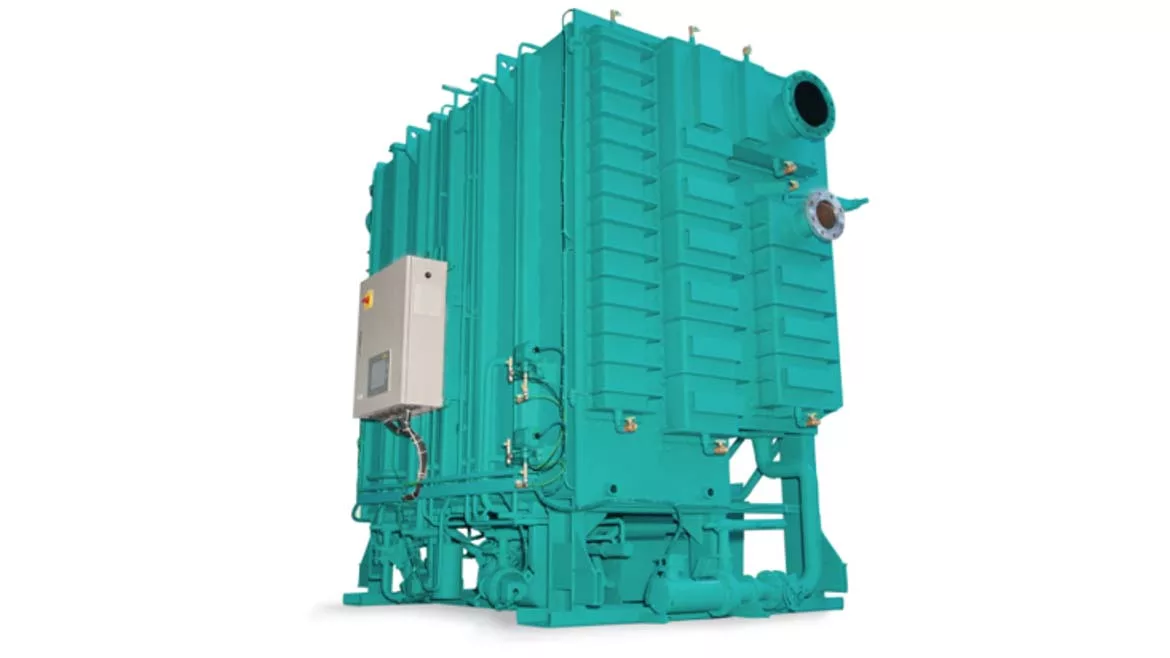
Johnson Controls Absorption Chiller
An absorption chiller. The value of the global absorption chiller market will reach $2.64 billion in 2034, according to an updated market study.

Photo courtesy of Johnson Controls

October 13, 2023
✕
Image in modal.

Have you ever considered the carbon footprint of a cookie or maybe your mid-afternoon latte? This is the question now being asked of many food and beverage processing companies. Accounting for 6% of total industrial emissions,i the U.S. Department of Energy (DOE) has identified food and beverage manufacturing as one of the most energy- and emissions-intensive industries in the country. As part of the DOE Industrial Decarbonization Roadmap, the Biden-Harris administration has implored the industry to increase energy efficiency, switch to low- and no-carbon fuel sources, and electrify their systems to help lower global carbon emissions.ii

READ MORE ABOUT

• Chillers and Towers

• Absorption Chillers

• Energy Efficiency

Food and beverage manufacturing typically involves a combination of process heating; cooling; and temperature-controlled, energy-intensive protocols that often rely on combustion fuel-powered boilers, high-demand electrical chillers, and large water reserves. As food and beverage manufacturers seek solutions to reduce operational costs and decarbonize the brewing, baking, canning, and cooking methods necessary to ensure quality and safety, they may be surprised to find the answer in a solution that’s nearly a century old: absorption cooling.


Advancements in Absorption Chillers

Historically, absorption chiller selection was driven by the type of refrigerant used, the available heat source, and the cooling capacity required. Innovations in today’s absorption chillers have enabled a broader range of heat source compatibility and can produce sub-zero temperatures without the use of high-global warming potential (high-GWP) refrigerants or even ammonia.

Conventional absorption chillers commonly produce chilled water output around 39°F. Any lower and the risk for refrigerant freezing greatly increases. Today’s innovative chillers can reach temperatures as low as 23°, an ideal temperature for producing brine water using only a water-based refrigerant cycle. This advancement enables processing facilities to transition away from electric chillers that often yield higher operational costs and eliminate the use of ammonia-based refrigerants that can pose potential health and safety risks.

At the core of this innovation is a two-step evaporator-absorber design that integrates dual evaporators and absorbers to control the concentration of a water-lithium bromide mixed refrigerant. By splitting the absorption process into two steps, lithium bromide solution concentrations are lower in the system, enabling lower hot water temperatures within the generator, lower hot water flow rates, and the elimination of crystallization risk within the chiller. Additionally, the water-lithium bromide mixed refrigerant enables low-temperature absorption chillers to operate under a vacuum instead of under pressure — a common component of conventional ammonia-based systems. As a result, the low-temperature absorption chiller does not fall into high-pressure safety gas regulations or require a qualified operator.


Benefits to Food and Beverage

Waste heat is a common byproduct of food and beverage processing, yet this valuable energy source is often wasted. In fact, the DOE estimates that 56% of process heating energy is lost in food and beverage production processes.iii This creates a situation that can benefit from combined heat and power (CHP) systems that include a high-performance absorption chiller, a model the DOE has identified as a critical component in driving industrial decarbonization.iv

Waste heat can be harvested from a variety of sources, such as steam, co-generation exhaust, and exhaust methane gas. Although waste heat streams are often abundant within food and beverage applications, sources typically must reach temperatures of 200F or higher to effectively power boiler operation.v In contrast, advanced absorption chillers that utilize a two-step evaporator and absorber cycle can operate utilizing waste heat as low as 70F. In these systems, chilled water flows through the tubes in series through the two evaporators while the concentrated lithium-bromide solution is distributed in the absorber shell side in the opposite direction. This enhances absorption of the refrigerant into the concentrated solution, reducing solution concentrations and overall pressure.

Looking for quick answers on air conditioning, heating and refrigeration topics? Try Ask ACHR NEWS, our new smart AI search tool. Ask ACHR NEWS →

Two-Step Evaporator and Absorption Chiller Cycle Design Diagram.

Click diagram to enlarge

TWO-STEP EVAP: An example of a two-step evaporator and absorption chiller cycle design. (Courtesy of Johnson Controls)


Final Considerations for Absorption Chillers

Today’s low-temperature absorption chillers are more reliable and more flexible than ever before. They can be used to optimize an existing CHP system or tailored to utilize a broad range of waste heat sources, such as turbine steam or boiler exhaust gas. Because waste heat is a common byproduct of many areas of food and beverage processing, these energy-efficient systems create an ideal solution to lower operational costs and achieve decarbonization goals.

When comparing the ROI between fuel-driven or electric systems and a thermal-driven absorption chiller, it is important to consider more than COP alone to understand the complete cost-saving advantages that can be achieved. For example, local utility costs will play an integral role in determining an accurate value between electric and absorption chillers, and an absorption chiller utilizing waste heat will yield even greater cost-savings.

Low-temperature absorption chillers can also improve energy efficiency and reduce emissions by optimizing waste heat instead of consuming fuel or electricity. Additionally, modern chiller absorption designs eliminate the use of ammonia and refrigerants, providing long-term compliance as EPA regulations change rapidly. Some facility managers may find helpful resources and incentives through local and state programs designed to support industrial decarbonization which can be used to help offset initial investment costs.


  1. U.S. Department of Energy, Research Areas: Food and Beverage Products
  2. U.S. Depart of Energy, Industrial Decarbonization Roadmap (2022)
  3. U.S. Department of Energy, “Innovating clean energy technologies in advanced manufacturing” (2015)
  4. U.S. Department of Energy, “Combined heat and power technology fact sheet series” (2017)
  5. U.S. Environmental Protection Agency (EPA) Combined Heat and Power (CHP) Partnership (2022)
KEYWORDS: absorption chillers chillers market energy efficiency food service and HVACR GWP (Global Warming Potential) refrigerants

Share This Story

Looking for a reprint of this article?
From high-res PDFs to custom plaques, order your copy today!


By Dmitrij Gorlovsky, product manager, Johnson Controls.

Recommended Content

JOIN TODAY
To unlock your recommendations.

Already have an account? Sign In

  • HVAC-enrollment

    The Trades Are Back: HVACR Programs See Nearly 30% Enrollment Spike

    A new wave of future technicians is entering the pipeline.  
    Training and Education
    By: Matt Jachman
  • 2025 Top 40 Under 40

    2025 Top 40 Under 40 HVACR Professionals List

    The 11th annual Top 40 Under 40 list highlights those...
    HVAC Residential Market
    By: Hannah Belloli-Oster
  • LG Ductless Mini-Split Systems

    The 9 Types of Heat Pumps

    As the U.S. moves toward electrification, heat pumps are...
    Ground Source Heat Pumps
    By: Joanna R. Turpin
Subscription Center
  • Create an Account
  • Start a Subscription
  • Manage My Account
  • Sign Up for Newsletters
  • Visit Customer Service
  • Update Preferences

More Videos

Sponsored Content

Sponsored Content is a special paid section where industry companies provide high quality, objective, non-commercial content around topics of interest to The News audience. All Sponsored Content is supplied by the advertising company and any opinions expressed in this article are those of the author and not necessarily reflect the views of The News or its parent company, BNP Media. Interested in participating in our Sponsored Content section? Contact your local rep!

close
  • Piggy Bank
    Sponsored byWatercress Financial

    Energy Prices, Inflation, and HVAC: What Today’s Homeowners Care About

  • Refrigerated Food
    Sponsored bySolstice Advanced Materials

    R-455A Refrigeration: A Cold Storage Solution for the Future

  • Airex Rooftop Units
    Sponsored byAirex Manufacturing Inc

    Consolidating Roof Penetrations: A Growing Trend in Multifamily HVAC Design

Popular Stories

HVAC-Price-Increase-graphic

HVAC Price Increase List: June 2026

Trump-Section-232.jpg

Trump Reduces Section 232 Tariffs on HVAC Equipment to 15%

Heat-pump-cutaway.jpg

PFAS Rules and A2L Building Codes Continue to Evolve

Refrigerants-and-gauge.jpg

HVAC Industry Warns of Counterfeit Refrigerants Entering U.S. Supply Chain

Midea-training.jpg

HVAC Workforce Crisis Expands Beyond Technicians to Instructor Shortages

View The ACHR NEWS
Centennial Anniversary Timeline

The ACHR News Timeline Chart
Submit a Letter
Submit a letter to our editors.

Events

November 6, 2025

Next-Gen Data Center Cooling: HVAC Innovation and Real-World Solutions

On Demand As AI workloads and high-density computing push traditional cooling methods to their limits, the data center industry is accelerating the adoption of next-generation HVAC technologies.

June 17, 2026

Decarbonization Without Disruption

This webinar will explore practical HVAC decarbonization strategies that minimize disruption while maximizing long-term performance and ROI.

View All Submit An Event

Poll

Summer Staff

Are you fully staffed for the summer season?
View Results Poll Archive

Products

BNI Mechanical/Electrical Square Foot Costbook, 2026 Edition

BNI Mechanical/Electrical Square Foot Costbook, 2026 Edition

See More Products
Decarbonization Without Disruption - Free Webinar - 6/17/2026

Related Articles

  • Using Low-Grade Waste Steam to Power Absorption Chillers

    See More
  • Absorption Chillers For Institutional Occpancies

    Absorption Chillers For Institutional Occupancies

    See More
  • Scroll and Absorption Chillers Market Worth $7.13 Billion by 2022

    See More

Related Products

See More Products
  • new cover.jpg

    Profit is An Attitude: The Strategies You Need to Optimize Profits

  • Manual Q.jpg

    Manual Q - Low Pressure, Low Velocity Duct System Design

  • low grade.png

    Low GWP Refrigerant Safety: Flammable & Mildly Flammable Refrigerants Manual

See More Products

Related Directories

  • Johnson Controls (Manufacturer)

    As the global leader in smart, healthy and sustainable building technology, we are reimagining building performance to better serve people, places and the planet.
  • Cold Shot Chillers

    Cold Shot Chillers manufactures reliable, efficient industrial process chillers, offering air-cooled and water-cooled solutions for diverse industries, ensuring precise temperature control and durability.
  • Chiller Tube Sales Inc.

    Stocking supplier of chiller tubes used in Trane, York, Carrier and Daikin/Mcquay chillers. In stock inventory includes tubes used in Centrifugal, Absorption and Screw chillers. Over 30 years of experience.
×

Sign Up. Stay Informed.

The #1 trusted source for the HVACR industry since 1926

SUBSCRIBE
  • RESOURCES
    • Advertise
    • Contact Us
    • Advisory Board
    • Classifieds
    • Submit a Letter
    • Directories
    • Store
  • ACCOUNT CENTER
    • Create an Account
    • Start a Subscription
    • Manage My Account
    • Sign Up for Newsletters
    • Visit Customer Service
    • Update Preferences
  • SERVICES
    • Marketing Services
    • Reprints
    • Market Research
    • List Rental
    • Survey/Respondent Access
  • STAY CONNECTED
    • LinkedIn
    • Facebook
    • Instagram
    • YouTube
    • X (Twitter)
  • PRIVACY
    • PRIVACY POLICY
    • TERMS & CONDITIONS
    • DO NOT SELL MY PERSONAL INFORMATION
    • PRIVACY REQUEST
    • ACCESSIBILITY

Copyright ©2026. All Rights Reserved BNP Media, Inc. and BNP Media II, LLC.

Design, CMS, Hosting & Web Development :: ePublishing