The Art of Troubleshooting Compressors
Technicians must act quickly to figure out why a compressor is struggling to perform
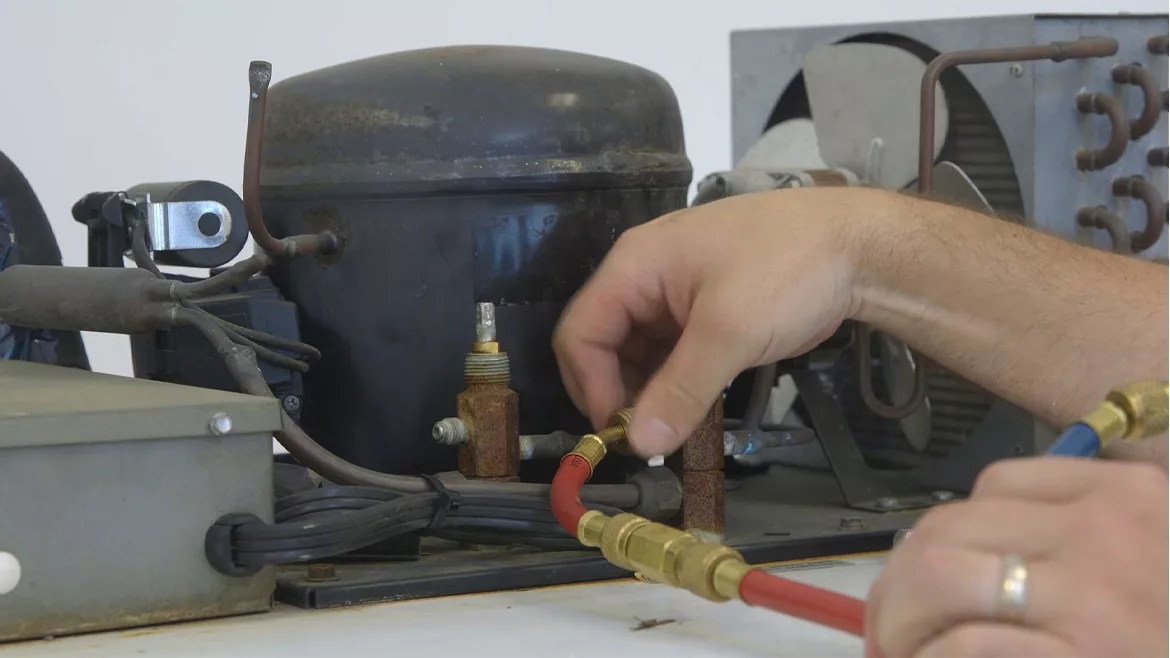
The compressor is the heart of any air conditioning or refrigeration system, so when it starts showing signs of not working correctly, technicians must act quickly in order to find out what is wrong. But identifying the reason behind why a compressor is not performing optimally can be a challenge, because there are a variety of reasons why a problem may occur, and by the time the problem is discovered, it may be too late for the compressor.
For systems showing signs of compressor trouble, technicians should employ comprehensive troubleshooting techniques in order to isolate the problem.
Signs of Distress
Systems showing signs of a compressor problem may exhibit a variety of symptoms, said Jamie Kitchen, account manager at Danfoss, including:
- Compressor not starting when the start contacts close;
- Excessively low/high evaporator pressures (compressor/condensing unit over or undersized for evaporator/metering device;
- Loud noises generated by compressor; and/or
- Lack of pressure differential between the suction and discharge pressures.
If any of these symptoms occur, then Kitchen recommends performing the following troubleshooting steps:
- On both single- and three-phase compressors, verify if start contacts are closed. Check voltage at compressor to ensure it is within the correct range and ensure wires are connected properly at compressor. On single-phase compressors, make sure the start capacitor and relay are functioning as required, and if there is an internal overload, test it to ensure it is closed.
- Check the compressor model against the unit nameplate and evaporator to make sure it is correct. Also verify the compressor voltage rating is the same as the supply voltage.
- Three-phase scrolls will reverse-rotate if the incorrect phase sequence is connected to it. If scroll is running backwards, it will be very loud and will not build pressure.
- Check reciprocating compressor valves by pumping down system and determining if refrigerant is leaking past the valves. If it does, valves are not sealing properly.
Michael Robertson, senior account manager at LG Electronics USA Component Solutions Business, added that a locked rotor, poor cooling/heating (if heat pump), and of course, a compressor not running are all signs of compressor distress. Although technicians should follow the system manufacturer’s instructions and guidance, basic troubleshooting steps for these symptoms typically include:
- For a locked rotor, measure locked rotor amps (LRA) and check capacitor, if single-phase.
- For poor cooling/heating, resist the urge to add refrigerant. Oil washout can lead to seized bearings and bearing failure, so when in doubt, recover and weigh in the charge.
- When a compressor isn’t running, determine the root cause. Patience is key. A good volt-ohm meter is necessary, and alligator clips certainly help in the troubleshooting process (techs can clip on a terminal and work back in the control circuit).
“LG routinely performs teardown and root cause analysis on compressors returned and covered under manufacturer’s warranty, and typical problems include oil washout causing bearing failure, and scroll sets destroyed due to liquid entering entering the scrolls,” said Robertson. “Scrolls weren’t designed to pump liquid, only vapor.”
Randy Tebbe, application and service engineering manager at Emerson, notes that some common symptoms that are likely caused by other system issues and might interfere with a compressor operating properly are:
- A no-start condition when the compressor control is calling for its operation;
- Compressor cycles off on one of its controls or protection devices;
- Abnormal noise from the compressor;
- Poor or low system performance;
- High amps; and
- High heat at compressor or discharge line.
“Each of the above conditions can be caused by faulty system components or control set points, which is why it is critically important to correctly identify the actual cause of the improper operation before installing a replacement compressor and exposing it to the same conditions that resulted in operational issues with the first compressor,” said Tebbe.
Electrical of Mechanical
Compressor problems are usually either mechanical or electrical in nature. On the electrical side, Kitchen said that voltage can be out of allowable range, resulting in excess current draw, which will overheat the motor and cause premature insulation failure.
“Conductors may also not be connected properly or corroded,” he said. “This can cause overheating at the compressor terminals both inside and outside of the compressor shell, and the terminal and/or conductors can be damaged and insulation burned away.”
On the mechanical side, Kitchen noted that the most common problems can include:
- Liquid refrigerant returning to the compressor, which can dilute oil and reduce lubrication of bearing, resulting in premature failure;
- A large amount of liquid returning at once (slugging), which can damage reciprocating compressor pistons and valves; and
- Loss of refrigerant charge, which will reduce the ability of the suction gas to cool the compressor motor and can result in a motor burn out. The reduced suction pressure increases the compression ratio, resulting in an increase of the discharge temperature to the point that oil starts to break down.
Isolating the problem will require specific troubleshooting steps based on the compressor type, but there are procedures that are universal for all types, said Kitchen. For example, reciprocating compressors are not affected by running backwards, but scroll compressors are and will not compress refrigerant — they will eventually overheat and cycle on the internal overload.
Looking for quick answers on air conditioning, heating and refrigeration topics? Try Ask ACHR NEWS, our new smart AI search tool. Ask ACHR NEWS
“Failure to build pressure with a reciprocating compressor can result from failure of the valves, so the compressor will run but not build pressure,” said Kitchen. “Current will be low as well, since the compressor is not working to compress the refrigerant. The lack of pressure differential and loud noise will indicate a scroll running backwards. A reciprocating compressor with a valve failure may not sound that different from one that is operating correctly. Checking the pressure differential and current draw will indicate the valve failure.”
Kitchen added that when starting up a scroll compressor system or a replacement scroll for the first time, it is important to note that for compliant scroll designs, it can take up to 70 hours of run time for the compressor to operate as stated in the manufacturer’s literature. This will mostly affect the current draw and, to a lesser extent, the cooling performance of the compressor, he said.
Account manager, Danfoss
Misdiagnosed
Finding the specific issue associated with a compressor problem can be challenging, which is why it is so important for service technicians to understand the system, how it was designed to operate, what the parameters are that it needs to be operating within, and how the system is being controlled, said Tebbe.
“More than one-third of compressors returned to Emerson for warranty analysis are determined to have nothing found wrong — they were simply misdiagnosed in the field as being defective,” he said. Replacing working compressors unnecessarily costs everyone, he added, so before replacing or returning a compressor, technicians should be certain that the compressor is defective by following these steps:
- Troubleshoot system using any alarm codes if applicable.
- Verify proper unit voltage.
- Check that the compressor is correctly wired.
- Normal motor winding continuity and short to ground checks will determine if the inherent overload motor protector has opened or if an internal short to ground has developed. If the protector has opened, the compressor must cool sufficiently to reset.
- With service gauges connected to suction and discharge pressure fittings, turn on the compressor. If suction pressure falls below normal levels, the system is either low on charge or there is a flow blockage.
- Single-phase scroll and hermetic reciprocating compressors: if the suction pressure does not drop and the discharge pressure does not rise to normal levels, the compressor is faulty.
- Semi-hermetic compressors: perform a head inspection to verify the valving and gaskets
- Three-phase scroll compressors: if the suction pressure does not drop and the discharge pressure does not rise, reverse any two of the compressor power leads and reapply power to make sure the compressor was not wired to run in the reverse direction.
- The compressor current draw must be compared to published compressor performance curves at the compressor operating conditions (pressures and voltages). Significant deviations (±15%) from published values may indicate a faulty compressor.
- Replace filter driers every time the refrigeration circuit is opened, pull a vacuum on the system below 500 microns, and hold 25 minutes below 1,000 microns.
If the compressor has already failed, it can be challenging to isolate the problem, because with an inoperable system, gathering temperature and pressure readings is not possible. However, Kitchen noted that the technician can still:
- Recover the refrigerant from the system and weigh it to compare to the manufacturer’s required charge weight;
- Run the fans to measure airflow;
- Check the power supply voltage values and make sure start hardware such as capacitors and contactors are in good working order; and
- Measure the internal winding resistance and compare to the compressor data sheet while also ensuring the internal overload, if present, is closed.
“A failed compressor does not necessarily mean it was the compressor’s fault, which is why the technician must determine why the compressor failed,” said Kitchen. “This can often be done when replacing the compressor and starting up the system. Proper electrical checks, measuring airflow values, component capacity matching, and proper evacuation and charging can catch and eliminate the majority of causes of compressor failure.”
Robertson added, “The simple fact is that the cause of a compressor failure isn’t always apparent. The technician needs to put on his or her detective hat and investigate thoroughly to pinpoint the problem — mainly because the issue might not be the compressor at all.”
Looking for a reprint of this article?
From high-res PDFs to custom plaques, order your copy today!