Coronavirus Prompts Response in HVAC Industry
Contractors can take steps to cut down on airborne transmission
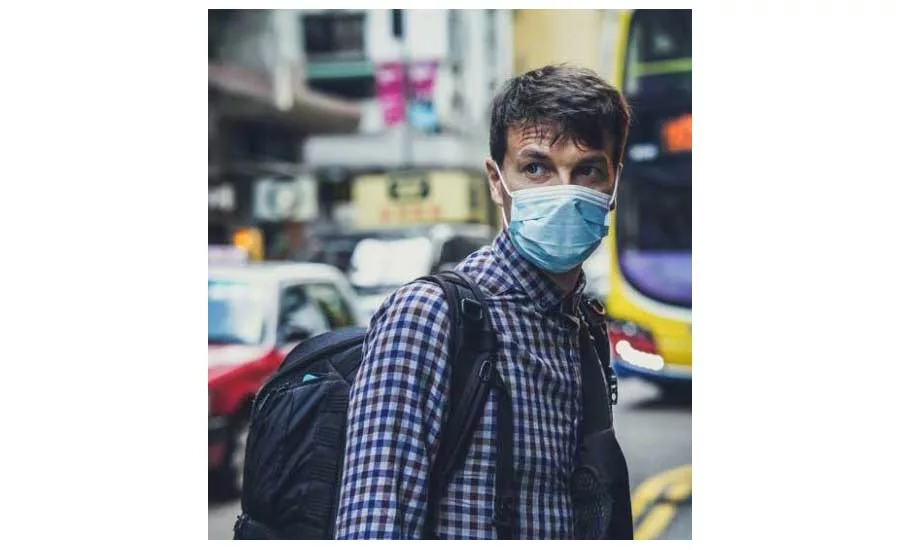
As guardians of the indoor air we breathe, HVAC contractors and technicians stand alongside public health workers in the fight against coronavirus (COVID-19). As with the SARS outbreak in 2003, the airborne nature of the new coronavirus (part of the same family of viruses as SARS) puts the epidemic — and its prevention and containment — front and center for HVAC professionals.
For concerned clients, the priority will be keeping their employees, their facilities, and their families safe. Contractors should be aware of what the available technologies are and represent them in an honest and transparent way while noting that disease prevention cannot be solved by HVAC alone.
“You can't guarantee that because you've installed a certain product, you've prevented infections from occurring, because there are multiple ways that they can be transmitted,” said William Bahnfleth, ASHRAE presidential member. “If I were a contractor, I’d be prepared to suggest to a homeowner other things they might do that are not necessarily HVAC-related that would reduce infection risk.”
ALL ABOUT AIRBORNE TRANSMISSION
One of the big questions about coronavirus — especially from an HVAC perspective — is how significant of a role airborne transmission plays in its spread. As professor of architectural engineering at the Pennsylvania State University and founding director of its Indoor Environment Center, Bahnfleth is well versed in what’s been published recently on that topic.
“The current consensus is that it's predominantly large droplet transfer,” he reported. This means droplets too large to remain airborne that are spread through coughing and sneezing within a fairly close range of other people. The Center for Disease Control (CDC) puts this range at about six feet.
“If I were to cough or sneeze in your direction unprotected, some of the virus-containing droplets coming out of my mouth or nose might enter your mouth, eyes, or nose and cause an infection,” he said.
Another mode of transmission involves intermediate surfaces. For example, an infected person might cough or sneeze into their hand and then leave infective material on a door knob that someone else might touch and then transfer it to their own mouth or eye.
Looking for quick answers on air conditioning, heating and refrigeration topics? Try Ask ACHR NEWS, our new smart AI search tool. Ask ACHR NEWS
“But there's also the potential for airborne transmission,” Bahnfleth said. “And if viruses that are viable are in those droplets that you're producing, some of them will be small enough that they will stay airborne for a long time. So, it's not impossible that infectious particles in the air could stay aloft long enough to be collected, say at the return grille of an HVAC system, go through a duct, and infect someone in a different space.”
“Because there are three distinct ways of transmitting an infection,” he added, “even perfect control of airborne pathogens would not eliminate all risk.”
A PRIMER ON PREVENTION
The recently reaffirmed ASHRAE position document on airborne infectious diseases, available along with other references here, identifies three demonstrated methods of controlling airborne infection that have proof of efficacy: ventilation, particle filtration, and UV.
Filters
According to Bahnfleth, any air cleaner that removes particles from the air has some potential to reduce exposure to coronavirus. The question lies in what efficiency of filter is required to be effective enough to have a significant impact on how likely people are to get infected by the airborne route.
Aaron Engel is vice president of business development, Fresh-Aire UV.
“Filters are an exceptional means to trap particulates and sub micron contaminants including PM2.5 (particles that have a diameter of less than 2.5 microns),” he said. “The smaller the contaminant’s diameter, the denser the filter media must be to capture.”

HEPA (high-efficiency particulate arrestance) filters, commonly used in critical care environments within healthcare facilities, are 99.97 percent effective at trapping particles down to 0.3 microns in size, he said.
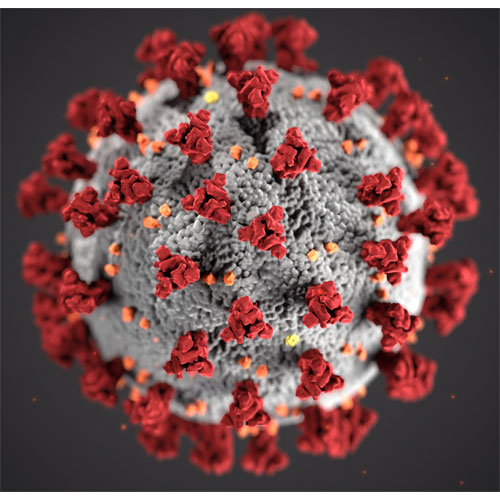
However, like many viruses, coronavirus is very small, measuring between 0.06 and 0.14 microns in size.
“Even HEPA filters that have been tested in the laboratory with viruses will have some level of penetration,” said Bahnfleth. “Not much — a few percent. But if anything gets through and if it's a very virulent pathogen, that means you're not perfectly protected against infection by that filter.”
UV
UV disinfection systems for HVAC complement conventional filtration, Engel said, by addressing microorganisms that are small enough to pass through filters.
“Contractors are now learning that filters are designed to capture larger particulates in the air … [while] surface ultraviolet disinfection and airstream UV disinfection are effective at inactivating pathogens,” he said. “UV germicidal systems have also been shown to reduce microbial load and pathogens that are found within the HVAC system and drain pan that would otherwise be introduced and distributed throughout the envelope of the building.”
Since coronaviruses are transmitted via air and direct contact, it could be presumed that HVAC systems can inadvertently spread the infection, said Daniel Jones, president, UV Resources.

Upper-air UV-C fixtures can destroy microbes when they are exposed to the UV-C energy in a matter of seconds.
“Airborne droplets containing infectious agents can remain in room air for six minutes and longer,” he said. “Scientists have found that COVID-19 can remain infectious on surfaces at room temperature for up to nine days. Upper-air UV-C fixtures can destroy those microbes when they are exposed to the UV-C energy in a matter of seconds.” Kill ratios up to 99.9 percent on a first-pass basis have been modeled, and concentrations are further reduced each time the air circulates.
Surface-cleaning UV-C systems, Jones continued, provide 24/7 irradiation of HVACR components to destroy bacteria, viruses, and mold that settle and proliferate on coils, air filters, ducts, and drain pans, preventing the growth of pathogens that can eventually become airborne and get circulated by HVAC systems. A system installed for HVAC surface irradiation, while not specifically designed for it, can also provide first-pass kill ratios of airborne pathogens of up to 30 percent.
According to ASHRAE, the germicidal wavelength can kill 90 percent of all microorganisms living on HVAC air ducts and evaporator coils, depending on wavelength intensity and length of exposure.
“Although the germicidal wavelength was effective in killing other varieties of coronaviruses, such as SARS and MERS, scientists do not yet know about the impact of UV-C on COVID-19,” Jones noted.
“However,” added Engel, “we have no reason to believe it will be much different than other similar type viruses.”
CUSTOMER CALLS AND CONCERNS
Solutions like UV and filters can help contractors address coronavirus concerns that their clients may bring up as news and new cases of coronavirus continue to surface.
“Contractors, I’m sure, are just as anxious as their customers,” said Engel. “End users are looking for peace of mind, and contractors want to provide the best for their customers. But when so many variables play a factor, we would never want the installer to overpromise.”
Commercial contractors, Jones advised, can suggest that facility managers consider employing both upper-air UV and HVAC germicidal fixtures to mitigate the potential spread of airborne diseases in communal areas. Immunocompromised individuals in emergency waiting rooms, urgent care centers, doctor’s offices, or senior living centers create an environment where potentially undiagnosed or untreated patients are in close proximity to others
“People can spread the virus before anyone knows they are contagious — and, more importantly, before anyone can take precautions,” he said. “Therefore, it's incumbent on facility managers to use preventative infection control measures.”
Using a dedicated outdoor air system also cuts down on contaminated air, Bahnfleth added, because these systems don’t recirculate the air from one space to others.
If homeowners bring up the topic, Bahnfleth suggested recommending better filters, humidity control, room air cleaners, and home UV products, the latter of which can be installed on a residential furnace or air conditioner.
“It’s basically the same solutions as we would use in other types of buildings, but packaged for the residential market,” he said.
Bahnfleth installed MERV 13 filters on his own home system. While this might increase pressure drop a bit with a corresponding reduction in air flow, it simply means the system runs a little longer to satisfy the thermostat. He also suggested to continue running the fan when the cooling is off in order to remove particles.
“The big problem with the filters in home air conditioning equipment is that the systems are not doing anything when they're off, so you have to intentionally make it run to circulate air if you want it to be a whole house air cleaner,” he said. “Filtration can be done in the room, too; local air filtration may be a better way to deal with this large droplet kind of stuff.”
He also advised paying attention to a home’s relative humidity.
“The recommendation for a long time has been to try to keep minimum relative humidity between 40 and 60 percent, because viruses are least viable in that range,” he said. “Many commercial buildings have humidity control to keep conditions in this range, but in a home in the winter — especially if it's leaky and in a cold climate —humidity drops into the 20s or lower. A well-maintained home humidifier that keeps your relative humidity at the recommended level is a good idea.”
While HVAC is part of the disease prevention equation, Bahnfleth advised contractors to brush up on other, non-HVAC-related strategies to share with their clients as well.
“From my experience, the important thing to keep in mind is that infection control usually doesn't have a silver bullet,” he said. “Risk reduction involves doing a number of different things, and engineering controls — like putting in better filters or putting UV into your building — is not the only thing you should do. Things like hygiene, being careful about whether you touch your face, whether you're shaking hands with people, whether you're washing your hands frequently … those, in many ways, are just as important.”
Looking for a reprint of this article?
From high-res PDFs to custom plaques, order your copy today!