ACHR News
search
Ask ACHR NEWS AI
cart
facebook twitter instagram linkedin youtube
  • Sign In
  • Subscribe
  • Sign Out
  • My Account
ACHR News
  • NEWS
    • Breaking News
    • New HVAC Products
    • Featured Products
    • Manufacturer Reports
    • HVAC Data
    • Legislation
    • ACHR NEWS Centennial
  • RESIDENTIAL
    • Air Conditioners
    • Furnaces
    • Residential Heat Pumps
    • Ductless
    • Residential IAQ
    • Testing, Monitoring, Tools
    • Components & Accessories
  • COMMERCIAL
    • Air Handlers
    • Rooftop Units
    • Chillers and Cooling Towers
    • Commercial Heat Pumps
    • Boilers and Hydronics
    • VRF/Ductless
    • Commercial IAQ
  • REFRIGERATION
    • Refrigerants
    • Refrigerant Regulations
    • Leak Management
  • CONTRACTOR PRO
    • Geothermal
    • Homeowner Study
    • VRF and VRV Ductless
    • Unitary Trends
  • EDUCATION
    • Training and Education
    • Business Management
    • Service and Maintenance
    • Continuing Education
    • Market Research >
      • HVAC Brand Awareness Report
      • VRV, VRF, VRVZ Report
      • Unitary Trends Report
      • Water Heat Professionals Report
    • Webinars
    • Sponsor Insights
    • eProducts Info
    • White Papers
  • EVENTS
    • HVAC Contractor Forum
    • Industry Events and Webinars
  • MEDIA
    • Videos
    • AHR Expo 2025 Videos
    • Podcasts >
      • ACHR News Podcast
      • HARDI Podcasts
      • AHR Expo Podcasts
      • ACCA Podcasts
    • Interactive Spotlights
    • Quizzes
    • eBooks
    • HVAC Talkback
  • HVAC GROUP
    • ACHR NEWS >
      • Current Issue
      • Digital Edition
      • Subscribe
    • Distribution Trends
    • SNIPS NEWS >
      • Join SNIPS NEWS
    • Engineered Systems News >
      • Join ES News
    • HVACR Directory
    • Contests
    • Newsletters
    • Contact
    • Advertise
    • My Account
HVAC Commercial MarketRefrigerationRefrigerants

IEC Approves Higher Charge Limits for Flammable Refrigerants

Change applies to self-contained refrigeration equipment, but U.S. may not accept increased limit
By Joanna R. Turpin
IEC Approves Higher Charge Limits for Flammable Refrigerants

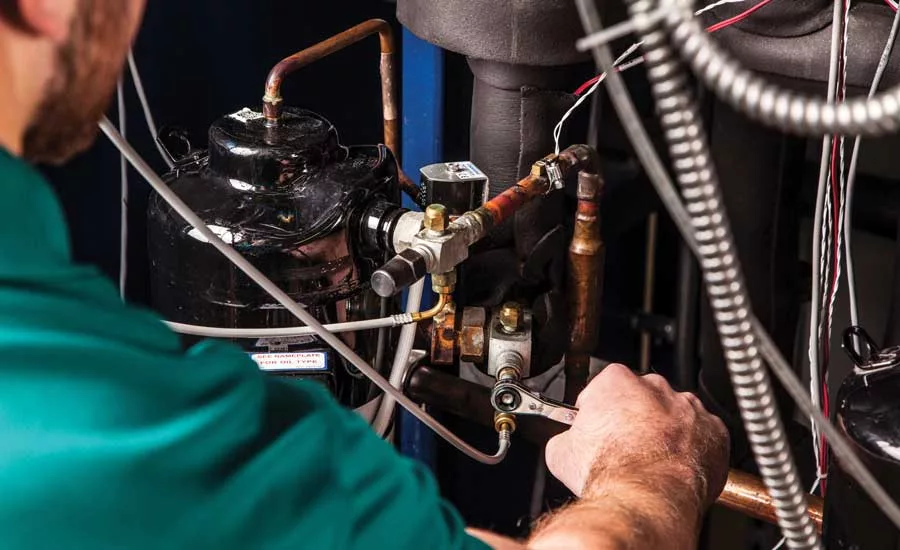
DESIGN FLEXIBILITY: The larger charge limits for both A3s and A2Ls provide manufacturers with more design flexibility to remain in compliance with IEC standards. PHOTO COURTESY OF EMERSON

August 12, 2019

The International Electrotechnical Commission (IEC) surprised many earlier this year when it rejected a proposal to increase the charge limit for A3 refrigerants (e.g., propane) from 150 to 500 grams in self-contained commercial refrigeration equipment. A few weeks later, a vote processing error was discovered, and the IEC reversed itself and ultimately approved the measure, which also included a charge limit increase of A2 and A2L refrigerants from 150 to 1,200 grams in self-contained refrigeration equipment.

The refrigeration industry is excited about the reversal, noting that it could potentially open the door to a wider range of equipment that utilizes low-GWP refrigerants.

“We were thrilled by the outcome,” said Danielle Wright, executive director of the North American Sustainable Refrigeration Council (NASRC). “For many of our food retailer members, propane self-contained cases offer an ideal solution to increasing regulations, and a higher charge limit opens up a lot of new opportunities for energy efficiency, cost savings, and new technologies.”


WHAT HAPPENS NEXT?

While there is much excitement about IEC’s reversal, it is important to note that its decision will not have an immediate effect on refrigeration equipment in the U.S. That’s because the IEC is an international body, and while its standard 60335-2-89 is the basis for all other standards for commercial refrigeration equipment, the U.S. has its own guidelines to follow as well.

Rajan Rajendran, vice president of systems innovation center and sustainability at Emerson Commercial and Residential Solutions.

CONSERVATIVE APPROACH: Rajan Rajendran, vice president of systems innovation center and sustainability at Emerson Commercial and Residential Solutions, believes the U.S. will take a more conservative approach to A3 and A2L charge increases.

“Now that the IEC has approved a higher charge limit, it will prompt CANENA, the Council for Harmonization of Electrotechnical Standards of the Nations in the Americas, to form a technical committee to decide on whether to approve the new charge limit,” said Wright. “From there, it will need to move through Underwriters Laboratories (UL), ASHRAE, EPA’s SNAP [Environmental Protection Agency’s Significant New Alternatives Policy] program, and finally be incorporated into the building codes. Unfortunately, the IEC U.S. National Committee voted ‘no’ and is likely to push for a charge limit below 500 grams in the U.S.”

Rajan Rajendran, vice president of systems innovation center and sustainability at Emerson Commercial and Residential Solutions, agrees that we are likely to see a more conservative approach to A3 and A2L charge increases in the U.S.

“The U.S. relies on UL’s codes and standards to establish guidelines on safe refrigerant use,” he said. “Currently, they are conducting tests with A3s and A2Ls to help evaluate their safety in self-contained equipment. The UL’s process of updating their UL 60335-2-89 standard is slated to begin later this year. While some charge increases are anticipated, we do not expect that they will be as high as the IEC’s recent update.”

Looking for quick answers on air conditioning, heating and refrigeration topics? Try Ask ACHR NEWS, our new smart AI search tool. Ask ACHR NEWS →

Richard Gilles, senior product leader of distributed solutions at Hussmann Corp.

NO IMPACT: The change in the IEC standard has no immediate impact on equipment produced for the U.S. market, said Richard Gilles, senior product leader of distributed solutions at Hussmann Corp.

That means the change in the IEC standard has no immediate impact on equipment produced for the U.S. market, and the 150-gram charge limit for hydrocarbon refrigerants remains in place for now, said Richard Gilles, senior product leader of distributed solutions at Hussmann Corp.

“After revisions are made to UL 60335-2-89, ASHRAE Standard 15, and EPA’s SNAP program, the changes have to be adopted by the model codes that regulate the requirements for the safety of buildings and the design and installation of mechanical systems, including refrigeration,” he said. “Due to the three-year code cycle process, this work will likely not be complete until at least 2024.”


SAFETY FIRST

Because these refrigerants are flammable, technician familiarity with A3 refrigerants such as propane (R-290) and mildly flammable A2L refrigerants is essential for ongoing support of these systems and to prevent danger to end users and customers. Rjendran said this is particularly true in the use of R-290 in remote equipment applications, which is governed by a completely different standard than that of the recent IEC update.

“The IEC generally treats these systems as if they were charged from the factory with an A1 refrigerant, in that they are intended to be used ‘as is’ without restrictions (or, in some cases, minimal restrictions),” he said. “AHRI [Air-Conditioning, Heating and Refrigeration Institute] has begun a task force to work on developing guidelines and training for the safe handling and use of A3 and A2L refrigerants in the U.S. Ultimately, it is important for manufacturers to consider not just any applicable UL or IEC standards, but also conduct their own evaluation of potential safety issues that could impact the systems being manufactured in the context of how they will be handled and used.”

It will be important for all technicians to undertake training prior to servicing hydrocarbon or A2L-based equipment to properly understand the safety considerations, said Gilles.

“Training is already offered through the Refrigeration Service Engineers Society (RSES),” he said. “Additionally, Hussmann Corp. is working closely with Lincoln Tech, which also provides training to those who are entering the refrigeration maintenance and repair industry.”

As far as leaks are concerned, Wright noted that a lot of research has been conducted around proper mitigation in the case of a flammable refrigerant leak.

“It’s important to remember that risk is a factor of both the severity and the likelihood of an event,” she said. “In the case of hydrocarbons in self-contained cases, the likelihood of a catastrophic leak is virtually zero.”


OPPORTUNITIES

Even though the U.S. may not see higher charge limits of flammable and mildly flammable refrigerants in self-contained refrigeration equipment for a few years, manufacturers are excited about the opportunities this could bring.

“We believe that increased charge limits for these A2Ls and A3s will allow for a broader application of very low-GWP refrigerants in self-contained type equipment,” said Gilles. “Larger charge sizes will reduce the number of compressors required for use in a water-loop, self-contained system, making it more cost effective.”

Supermarket coolers.

BROADER APPLICATION: Hussmann believes that increased charge limits for A2L and A3s refrigerants will allow for a broader application of very low GWP refrigerants in self-contained equipment.

In the U.S., Hussmann already offers microDS systems, which are self-contained and hermetically sealed units that utilize R-290 refrigerant. In Europe, equipment that complies with the European (EN) version of IEC 60335-2-89 could appear in the market as early as 2020, said Gilles.

By increasing the charge limits in A2L and A3 refrigerants, the IEC is offering some flexibility for manufacturers as they continue evolving toward lower-GWP and more environmentally friendly systems, said Rajendran.

“There are many concerns about the flammability of A3s, and A2Ls provide many of the same performance and environmental benefits, but with lower flammability risks,” he said. “The larger charge limits — for both A3s and A2Ls — provide manufacturers with more design flexibility to remain in compliance with IEC standards while potentially creating bigger cases and improved solutions for customers seeking a low-GWP refrigeration system.”

While it is difficult to know how long it will be until manufacturers can start offering self-contained refrigeration equipment that uses higher charge limits for A2L and A3 refrigerants in the U.S., the industry is working hard to expedite the process.

“Our goal is to accelerate the process for codes and standards while ensuring safety, but it will take significant support from the industry to make that happen,” said Wright.

Want to read more? See more articles from this issue here!

KEYWORDS: Commercial refrigeration flammable refrigerants FROSTlines GWP (Global Warming Potential) refrigerants refrigerant regulations refrigerant safety

Share This Story

Looking for a reprint of this article?
From high-res PDFs to custom plaques, order your copy today!


Tn joanna 2017
Joanna Turpin is a Senior Editor at The ACHR NEWS. She can be contacted at 248-786-1707 or joannaturpin@achrnews.com. Joanna has been with BNP Media since 1991, first heading up the company’s technical book division before moving over to The ACHR NEWS, where she frequently writes about refrigerants and commercial refrigeration. She obtained her bachelor’s degree in English from the University of Washington and worked on her master’s degree in technical communication at Eastern Michigan University.

Recommended Content

JOIN TODAY
To unlock your recommendations.

Already have an account? Sign In

  • HVAC-enrollment

    The Trades Are Back: HVACR Programs See Nearly 30% Enrollment Spike

    A new wave of future technicians is entering the pipeline.  
    News
    By: Matt Jachman
  • 2025 Top 40 Under 40

    2025 Top 40 Under 40 HVACR Professionals List

    The 11th annual Top 40 Under 40 list highlights those...
    HVAC Light Commercial Market
    By: Hannah Belloli-Oster
  • LG Ductless Mini-Split Systems

    The 9 Types of Heat Pumps

    As the U.S. moves toward electrification, heat pumps are...
    News
    By: Joanna R. Turpin
Subscription Center
  • Create an Account
  • Start a Subscription
  • Manage My Account
  • Sign Up for Newsletters
  • Visit Customer Service
  • Update Preferences

More Videos

Sponsored Content

Sponsored Content is a special paid section where industry companies provide high quality, objective, non-commercial content around topics of interest to The News audience. All Sponsored Content is supplied by the advertising company and any opinions expressed in this article are those of the author and not necessarily reflect the views of The News or its parent company, BNP Media. Interested in participating in our Sponsored Content section? Contact your local rep!

close
  • Piggy Bank
    Sponsored byWatercress Financial

    Energy Prices, Inflation, and HVAC: What Today’s Homeowners Care About

  • Refrigerated Food
    Sponsored bySolstice Advanced Materials

    R-455A Refrigeration: A Cold Storage Solution for the Future

  • Airex Rooftop Units
    Sponsored byAirex Manufacturing Inc

    Consolidating Roof Penetrations: A Growing Trend in Multifamily HVAC Design

Popular Stories

Refrigerants-and-gauge.jpg

HVAC Industry Warns of Counterfeit Refrigerants Entering U.S. Supply Chain

U.S. Supreme Court building

95% Furnace Efficiency Rule to Get New Hearing

Midea-training.jpg

HVAC Workforce Crisis Expands Beyond Technicians to Instructor Shortages

Data_Center_facility.jpg

HVAC Manufacturers Respond to Growing Data Center Backlash

HVAC Minute retail refrigeration system

EPA Final Rule’s Impact on R-410A Deadlines

View The ACHR NEWS
Centennial Anniversary Timeline

The ACHR News Timeline Chart
Submit a Letter
Submit a letter to our editors.

Events

November 6, 2025

Next-Gen Data Center Cooling: HVAC Innovation and Real-World Solutions

On Demand As AI workloads and high-density computing push traditional cooling methods to their limits, the data center industry is accelerating the adoption of next-generation HVAC technologies.

June 23, 2026

HVAC Duct Sealing Mastics: Why Selection Matters

In this webinar we will detail what HVAC material buyers and technicians need to know when selecting duct mastics, including matching mastic to substrate, alternatives to liquid mastic, and where UL 181 Listings fit into real world installations.

View All Submit An Event

Poll

Summer Staff

Are you fully staffed for the summer season?
View Results Poll Archive

Products

BNI Mechanical/Electrical Square Foot Costbook, 2026 Edition

BNI Mechanical/Electrical Square Foot Costbook, 2026 Edition

See More Products
HVAC Duct Sealing Mastics: Why Selection Matters - Free Webinar - 6/23/2026

Related Articles

  • IEC’s Draft Proposal Increases Charge Limit For Flammable Refrigerants

    See More
  • IndustryNews

    Bids solicited for ASHRAE Flammable Refrigerants Research Program

    See More
  • open-refrigeration

    UL Approves Increased R-290 Charge Limits

    See More

Related Products

See More Products
  • low grade.png

    Low GWP Refrigerant Safety: Flammable & Mildly Flammable Refrigerants Manual

  • quick guide.png

    Quick Guide to Refrig Cycle, Refrigerants, Components

See More Products

Related Directories

  • Control Instruments Corp.

    Manufacturer of advanced hazardous gas detection and solvent vapor monitoring systems for lower flammable limit (LFL), heating value (BTU) & total hydrocarbon monitoring.
  • SCP Limited

    Leading manufacturer providing silicon carbide and silicon nitride hot surface igniters for over 27 years offering HVAC ignition solutions for gas furnaces, boilers, and heaters.
×

Sign Up. Stay Informed.

The #1 trusted source for the HVACR industry since 1926

SUBSCRIBE
  • RESOURCES
    • Advertise
    • Contact Us
    • Advisory Board
    • Classifieds
    • Submit a Letter
    • Directories
    • Store
  • ACCOUNT CENTER
    • Create an Account
    • Start a Subscription
    • Manage My Account
    • Sign Up for Newsletters
    • Visit Customer Service
    • Update Preferences
  • SERVICES
    • Marketing Services
    • Reprints
    • Market Research
    • List Rental
    • Survey/Respondent Access
  • STAY CONNECTED
    • LinkedIn
    • Facebook
    • Instagram
    • YouTube
    • X (Twitter)
  • PRIVACY
    • PRIVACY POLICY
    • TERMS & CONDITIONS
    • DO NOT SELL MY PERSONAL INFORMATION
    • PRIVACY REQUEST
    • ACCESSIBILITY

Copyright ©2026. All Rights Reserved BNP Media, Inc. and BNP Media II, LLC.

Design, CMS, Hosting & Web Development :: ePublishing