ACHR News
search
Ask ACHR NEWS AI
cart
facebook twitter instagram linkedin youtube
  • Sign In
  • Subscribe
  • Sign Out
  • My Account
ACHR News
  • NEWS
    • Breaking News
    • New HVAC Products
    • Featured Products
    • Manufacturer Reports
    • HVAC Data
    • Legislation
    • ACHR NEWS Centennial
  • RESIDENTIAL
    • Air Conditioners
    • Furnaces
    • Residential Heat Pumps
    • Ductless
    • Residential IAQ
    • Testing, Monitoring, Tools
    • Components & Accessories
  • COMMERCIAL
    • Air Handlers
    • Rooftop Units
    • Chillers and Cooling Towers
    • Commercial Heat Pumps
    • Boilers and Hydronics
    • VRF/Ductless
    • Commercial IAQ
  • REFRIGERATION
    • Refrigerants
    • Refrigerant Regulations
    • Leak Management
  • CONTRACTOR PRO
    • Geothermal
    • Homeowner Study
    • VRF and VRV Ductless
    • Unitary Trends
  • EDUCATION
    • Training and Education
    • Business Management
    • Service and Maintenance
    • Continuing Education
    • Market Research >
      • HVAC Brand Awareness Report
      • VRV, VRF, VRVZ Report
      • Unitary Trends Report
      • Water Heat Professionals Report
    • Webinars
    • Sponsor Insights
    • eProducts Info
    • White Papers
  • EVENTS
    • HVAC Contractor Forum
    • Industry Events and Webinars
  • MEDIA
    • Videos
    • AHR Expo 2025 Videos
    • Podcasts >
      • ACHR News Podcast
      • HARDI Podcasts
      • AHR Expo Podcasts
      • ACCA Podcasts
    • Interactive Spotlights
    • Quizzes
    • eBooks
    • HVAC Talkback
  • HVAC GROUP
    • ACHR NEWS >
      • Current Issue
      • Digital Edition
      • Subscribe
    • Distribution Trends
    • SNIPS NEWS >
      • Join SNIPS NEWS
    • Engineered Systems News >
      • Join ES News
    • HVACR Directory
    • Contests
    • Newsletters
    • Contact
    • Advertise
    • My Account
Indoor Air QualityVentilationStandards and LegislationResidential Indoor Air QualityFans

Air Movement Technologies, Regulations Shape Market Trends

FEI regulations could cause a paradigm shift in this sector

By Angela D. Harris
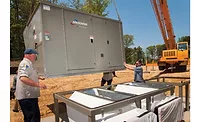
Advances are being made to air movement and ventilation systems, especially in highefficiency variable air volume (VAV) systems. - The ACHR News

ADVANCING TECHNOLOGY: Advances are being made to air movement and ventilation systems, especially in highefficiency variable air volume (VAV) systems.

May 13, 2019

Conditioned air needs to be moved. That hasn’t changed since 1842, when Dr. John Gorrie initially discovered mechanical refrigeration in an effort to cool the rooms of his yellow fever patients. Forty years later, Dr. Schuyler Wheeler was credited with the invention of the electric fan. High-efficiency air movement and ventilation have come a long way since then, though, and current trends are pointing toward unprecedented technological advances in this sector.


TECHNOLOGY ADVANCEMENTS

Driven by increased consumer awareness and the demand for high IAQ, advances have been made to air movement and ventilation systems, especially in high-efficiency variable air volume (VAV) systems, according to the Air Movement and Control Association Intl. (AMCA). Referred to by AMCA as high-performance air systems (HPAS), the association said that in the past 10 years, it doesn’t think that any other type of ventilation system has seen more innovation or greater advances than VAV.

Michael Ivanovich, senior director, Global Affairs, Air Movement and Control Association Intl. - The ACHR News

REDUCED ENERGY CONSUMPTION: Michael Ivanovich, senior director, Global Affairs, Air Movement and Control Association Intl., said, “Static pressure and supply-air-temperature reset, along with significant improvements in economizer control and reliability, have slashed energy consumption.”

“Through application of best practices and the use of modern components — such as electronically commutated motors (ECMs) — a new generation of VAV system has emerged: one that includes fan-powered VAV terminal units with modulating fans that track cooling demand in a space and automatically reset based on changes,” said Michael Ivanovich, senior director, Global Affairs, AMCA. “For example, static-pressure and supply-air-temperature reset, along with significant improvements in economizer control and reliability, have slashed energy consumption.”

Ivanovich also pointed out that part-load efficiencies have increased 50 percent with the addition of variable-speed technology for fans and compressors in chiller and rooftop equipment.

“Fan arrays, direct-drive fans, and advanced motors have reduced air-handler maintenance and unit size and driven up efficiency, while pretreatment, series energy recovery, bypass, and heat recovery have cut the amount of primary energy used for reheat to nearly zero.”
—Michael Ivanovich, senior director Global Affairs, AMCA

“Fan arrays, direct-drive fans, and advanced motors have reduced air-handler maintenance and unit size and driven up efficiency, while pretreatment, series energy recovery, bypass, and heat recovery have cut the amount of primary energy used for reheat to nearly zero,” he said. “What’s more, dehumidification of outside air before it is introduced to the mixed airstream provides the energy advantage of separated treatment with the maintenance advantages of a central filtration and cooling system.”

Increased awareness of the fan system effect is expected in this market sector as well. AMCA defines this as a result of insufficient duct length before transitions at the inlet and/or outlet of a fan. It has negative effects on energy, acoustics, and service life.

“AMCA is working with the International Organization for Standardization, the Sheet Metal and Air Conditioning Contractors’ National Association (SMACNA), and stakeholders to turn recent research into new guidance, education, and tools to quantify inlet and outlet fan system effect at the design phase,” said Ivanovich.

Looking for quick answers on air conditioning, heating and refrigeration topics? Try Ask ACHR NEWS, our new smart AI search tool. Ask ACHR NEWS →


CHANGING REGULATIONS

As the ever-changing building environment concentrates further on IAQ, proper ventilation and air quality are under scrutiny by regulatory bodies. Ola Wettergren, chairman of the board, Home Ventilating Institute (HVI), has a rule of thumb: Build tight and ventilate right.

“Improved building codes are already resulting in very tight, comfortable, and energy-efficient homes,” he said. “Between the tighter residencies and the increased awareness of the importance of healthy indoor air, effective mechanical ventilation is necessary and will be demanded by customers.”

Wettergren explained that the main trends in residential ventilation are driven by ASHRAE 62.2 and 90.1, as well as Energy Star, the International Residential Code, the International Energy Conservation Code (IECC), and state codes (especially in states like Washington and California).

“In the next year or so, for example, we will see higher-grade MERV-13 filters included in the ventilation systems in heavily polluted areas,” he said. “This is already becoming required in California.”

Michael Ivanovich, senior director, Global Affairs, Air Movement and Control Association Intl. - The ACHR News

FAN ENERGY INDEX: The fan energy index (FEI) is a wire-to-air metric covering fans, motors, and drives, and it considers the duty point where fans are sized/selected.

Another regulatory change comes in regard to a transition from the fan efficiency grade (FEG) metric to the fan energy index (FEI) metric in energy codes and standards. According to Ivanovich, addendum ao to ANSI/ASHRAE/IES 90.1, “Energy Standard for Buildings Except Low-Rise Residential Buildings,” contains proposed FEI requirements and is expected to be considered for publication by ASHRAE in June of this year.

“As with FEG provisions, the language targets stand-alone fans, not fans embedded in packaged equipment,” he said. “However, the size range goes down from 5 hp to 1 hp, and power roof ventilators are covered for the first time.”

AMCA is encouraging states referencing the FEG provisions in IECC and ASHRAE standards to remove the FEG language and add the language for FEI.

“The FEI metric will gain ground as more manufacturers release FEI ratings for fans and sizing/selection software is updated to include FEI ratings,” Ivanovich said. “Fan-efficiency regulations based on FEI will increase interest in system-level regulations, as opposed to more product-centric regulations. FEI is a wire-to-air metric covering fans, motors, and drives, and it considers the duty point where fans are sized/selected.”

He described this change as revolutionary. AMCA is watching closely, as it believes these changes could represent a paradigm shift in efficiency regulation.


STILL AHEAD

The future of high-efficiency air movement and ventilation will be formed by multiple factors that are trending now, as well as by those that are off on the horizon. One of those two-fold trends are sensors combined with ECMs, according to Wettergren.

“Sensors combined with EC motors allow smart and efficient control of ventilation rates,” he explained. “By sensing the indoor air quality and regulating ventilation rates to meet demand, we can provide healthy indoor air and high efficiency.”

Wettergren expects to see more smart and responsive ventilation systems controlled by sensors in the next three to five years. He even mentioned the possibility of artificial intelligence evaluating the amount and location of fresh air required for healthy indoor air.

“With increased awareness of the importance of IAQ on peoples’ health, and the availability of IAQ sensors, consumers will demand — and be ready to pay for — more advanced residential ventilation,” Wettergren predicted.

AMCA is expecting to see an increase in VAV system adoption stemming from educational and advocacy efforts.

“Together, the associations will provide more education and resources for HPAS, system effect, air system leakage, and more,” said Ivanovich.

AMCA is currently developing professional-development-hour-earning educational resources on system effect, fan sizing/selection, and HPAS. These are scheduled to be in place sometime within the next 12 to 24 months.

Publication date: 5/13/2019

Want more HVAC industry news and information? Join The NEWS on Facebook, Twitter, and LinkedIn today!

KEYWORDS: Air movement Air Movement and Control Association (AMCA) AMCA standard regulations for HVACR VAV (Variable Air Volume)

Share This Story

Looking for a reprint of this article?
From high-res PDFs to custom plaques, order your copy today!


Angela harris 400x400

Angela Harris is the Technology Editor. She can be contacted at 248-786-1254 or angelaharris@achrnews.com. Angela is responsible for What’s New and Technology articles for The NEWS. She obtained her bachelor’s degree in English from Oakland University and has nine years of professional journalism experience.   

Recommended Content

JOIN TODAY
To unlock your recommendations.

Already have an account? Sign In

  • HVAC-enrollment

    The Trades Are Back: HVACR Programs See Nearly 30% Enrollment Spike

    A new wave of future technicians is entering the pipeline.  
    News
    By: Matt Jachman
  • 2025 Top 40 Under 40

    2025 Top 40 Under 40 HVACR Professionals List

    The 11th annual Top 40 Under 40 list highlights those...
    HVAC Commercial Market
    By: Hannah Belloli-Oster
  • LG Ductless Mini-Split Systems

    The 9 Types of Heat Pumps

    As the U.S. moves toward electrification, heat pumps are...
    News
    By: Joanna R. Turpin
Subscription Center
  • Create an Account
  • Start a Subscription
  • Manage My Account
  • Sign Up for Newsletters
  • Visit Customer Service
  • Update Preferences

More Videos

Sponsored Content

Sponsored Content is a special paid section where industry companies provide high quality, objective, non-commercial content around topics of interest to The News audience. All Sponsored Content is supplied by the advertising company and any opinions expressed in this article are those of the author and not necessarily reflect the views of The News or its parent company, BNP Media. Interested in participating in our Sponsored Content section? Contact your local rep!

close
  • Piggy Bank
    Sponsored byWatercress Financial

    Energy Prices, Inflation, and HVAC: What Today’s Homeowners Care About

  • Refrigerated Food
    Sponsored bySolstice Advanced Materials

    R-455A Refrigeration: A Cold Storage Solution for the Future

  • Airex Rooftop Units
    Sponsored byAirex Manufacturing Inc

    Consolidating Roof Penetrations: A Growing Trend in Multifamily HVAC Design

Popular Stories

HVAC-Price-Increase-graphic

HVAC Price Increase List: June 2026

Trump-Section-232.jpg

Trump Reduces Section 232 Tariffs on HVAC Equipment to 15%

ACHR NEWS Editor Chris Gray Presenting HVAC Minute 5-18-2026

HVAC Manufacturers Fight Pricing Lawsuits

R410A-Refrigerant-Cylinder.jpg

Refrigerant Recovery is a Revenue Opportunity

Heat-pump-cutaway.jpg

PFAS Rules and A2L Building Codes Continue to Evolve

View The ACHR NEWS
Centennial Anniversary Timeline

The ACHR News Timeline Chart
Submit a Letter
Submit a letter to our editors.

Events

November 6, 2025

Next-Gen Data Center Cooling: HVAC Innovation and Real-World Solutions

On Demand As AI workloads and high-density computing push traditional cooling methods to their limits, the data center industry is accelerating the adoption of next-generation HVAC technologies.

June 9, 2026

Before You Go All In on AI: Set Up Your Business to Actually Win

In this webinar, we'll walk you through exactly what to get in place before you add AI to your business. You'll leave with a clear picture of where you stand today and a practical action plan to set yourself up for real results.

View All Submit An Event

Poll

Summer Staff

Are you fully staffed for the summer season?
View Results Poll Archive

Products

BNI Mechanical/Electrical Square Foot Costbook, 2026 Edition

BNI Mechanical/Electrical Square Foot Costbook, 2026 Edition

See More Products
A2L Refrigerants - Free Webinar - May 21, 2026

Related Articles

  • Bitzer’s two-stage reciprocating compressors can now be run with R-448A and R-449A refrigerants and thermostatic expansion valves.

    Regulations, Efficiency Demands Shape Compressor Market

    See More
  • High-end heating connectivity graphic - The ACHR News

    Find Out What’s New With the Current High-End Heating Market Trends

    See More
  • Dedicated outdoor air systems like this one are becoming more common in commercial settings. - The ACHR News

    Comfort and Efficiency Challenge the Air Movement Industry

    See More

Events

View AllSubmit An Event
  • July 31, 2025

    Air Handler Innovation for a Shifting Housing Market

    On Demand Explore how air handler applications are adapting to meet the needs of traditional single-family homes as well as the growing multi-family and manufactured housing market.
View AllSubmit An Event

Related Directories

  • Air Movement and Control Assn. International Inc.

    A not-for-profit, international manufacturers association and certifier of air system equipment, including fans, dampers, louvers, air curtains and more.
×

Sign Up. Stay Informed.

The #1 trusted source for the HVACR industry since 1926

SUBSCRIBE
  • RESOURCES
    • Advertise
    • Contact Us
    • Advisory Board
    • Classifieds
    • Submit a Letter
    • Directories
    • Store
  • ACCOUNT CENTER
    • Create an Account
    • Start a Subscription
    • Manage My Account
    • Sign Up for Newsletters
    • Visit Customer Service
    • Update Preferences
  • SERVICES
    • Marketing Services
    • Reprints
    • Market Research
    • List Rental
    • Survey/Respondent Access
  • STAY CONNECTED
    • LinkedIn
    • Facebook
    • Instagram
    • YouTube
    • X (Twitter)
  • PRIVACY
    • PRIVACY POLICY
    • TERMS & CONDITIONS
    • DO NOT SELL MY PERSONAL INFORMATION
    • PRIVACY REQUEST
    • ACCESSIBILITY

Copyright ©2026. All Rights Reserved BNP Media, Inc. and BNP Media II, LLC.

Design, CMS, Hosting & Web Development :: ePublishing