Crankcase Heaters Can Help to Prevent Refrigerant Migration
Automatic pump-down systems offer definitive solution
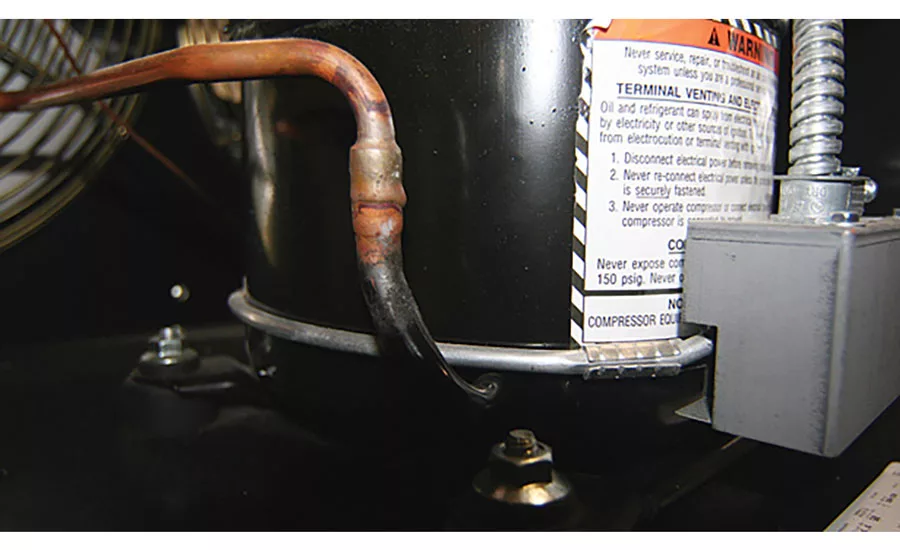
FIGURE 1 — RESISTANCE HEATER: The crankcase heater is an electric resistance heater that is usually strapped on, clamped to the crankcase bottom, or inserted into a well within the compressor’s crankcase.
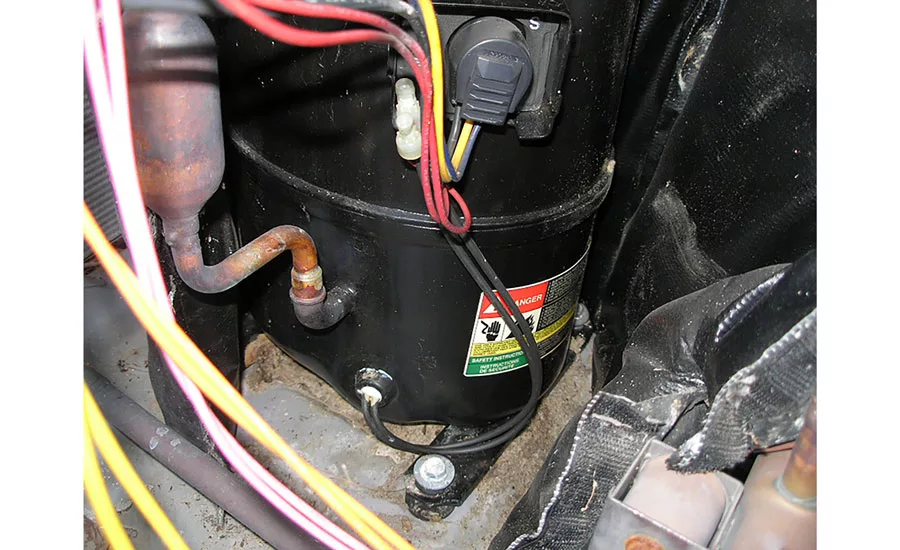
FIGURE 2 — MIGRATION PREVENTION: The function of the crankcase heater is to hold the oil in the compressor’s crankcase at a temperature higher than the coldest part of the system, thus preventing refrigerant migration.
Many air conditioning and refrigeration systems have their condensing units located outdoors for two main reasons. First, this takes advantage of the cooler outdoor ambient temperatures to reject the heat absorbed in the evaporator section, and second, to reduce noise pollution.
The condensing unit usually consists of a compressor, condenser coil, outdoor condenser fan, contactor, starting relay, capacitors, and a solid state board with circuitry. Receivers are often incorporated into refrigeration system condensing units. Within the condensing unit, the compressor will often have a heater connected in some way to its bottom section or crankcase. This heater is often referred to as a crankcase heater (see Figures 1 and 2).
The crankcase heater is an electric resistance heater that is usually strapped on, clamped to the crankcase bottom, or inserted into a well within the compressor’s crankcase. The crankcase heater is often seen on compressors that operate in ambient temperatures lower than the system’s operating evaporator temperature.
The compressor’s crankcase lubricant, or oil, has many important functions. Even though the refrigerant is the working fluid required for cooling, oil is needed to lubricate the compressor’s moving mechanical parts. Under normal conditions, there will always be a small amount of oil that escapes a compressor’s crankcase and circulates with the refrigerant throughout the system. The proper refrigerant velocity traveling through the system’s tubing will return this escaped oil to the crankcase over time, and it is for this reason that oil and refrigerant must be soluble in one another. At the same time, however, the solubility of the oil and refrigerant can cause another system problem. That problem is refrigerant migration.
REFRIGERANT MIGRATION
Migration is an off-cycle phenomenon. It is a process where either liquid and/or vapor refrigerant migrates or returns to the compressor’s crankcase and suction line during the compressor’s off cycle. During a compressor’s off cycle, and especially during a long shutdown period, refrigerant will want to travel, or migrate, to a place where the pressure is the lowest. In nature, fluids travel from a place of higher pressure to a place of lower pressure. The crankcase usually has a lower pressure than the evaporator because of the oil it contains. A cold ambient temperature will amplify the lower vapor pressure phenomenon and help condense the refrigerant vapor to a liquid inside the crankcase.
Refrigerant oil itself has a low vapor pressure and will flow to it whether the refrigerant is in the vapor or liquid state. In fact, refrigerant oil has such a low vapor pressure, it will not vaporize even when a 100-micron vacuum is pulled on the refrigeration system. Some refrigeration oils have a vapor pressure as low as 5-10 microns. If the oil did not have such a low vapor pressure, it would vaporize every time a low pressure existed in the crankcase or when a vacuum was pulled on it.
Because refrigerant migration can occur with refrigerant vapor, the migration can occur either uphill or downhill. When the refrigerant vapor reaches the crankcase, it will be absorbed and condense in the oil because of the refrigerant/oil miscibility.
Looking for quick answers on air conditioning, heating and refrigeration topics? Try Ask ACHR NEWS, our new smart AI search tool. Ask ACHR NEWS
On long off cycles, the liquid refrigerant will be on the bottom of the oil, forming a striated layer in the crankcase. This happens because liquid refrigerant is heavier than oil. On short compressor off cycles, the migrated refrigerant does not have a chance to settle under the oil but will still mix with the oil in the crankcase.Residential homeowners often turn off the electrical disconnect to their air conditioner’s outdoor condensing unit during the heating season and/or cooler months when air conditioning is not needed. This will cause the compressor to be without crankcase heat because of a de-energized crankcase heater. Migration of refrigerant to the crankcase is sure to take place during this long off cycle.
Once the cooling season begins, if the homeowner doesn’t turn the breaker back on at least 24-48 hours before starting the air conditioning unit, serious crankcase foaming and pressurization will occur from the long off-cycle refrigerant migration.
This can rob the crankcase of a proper oil level as well as score bearings and cause other mechanical failures within the compressor.
CRANKCASE HEATERS
The crankcase heater is designed to help combat refrigerant migration. The function of the crankcase heater is to hold the oil in the compressor’s crankcase at a temperature higher than the coldest part of the system. This will cause the crankcase to have a slightly higher pressure than the rest of the system. Refrigerant entering the crankcase will then be vaporized and driven back into the suction line.
Migration of refrigerant to the compressor’s crankcase during an off cycle is a serious problem. Severe compressor damage can result if the problem is not remedied. If refrigerant migration does occur, when the compressor starts for its next on cycle, there will be an immediate drop in crankcase pressure from the startup. This will cause violent foaming in the crankcase. The striated refrigerant and oil mixture will explode, causing rich refrigerant/oil foam to form in the crankcase. This pressurized refrigerant and oil foam will seep through the cavities of the compressor, causing broken discharge valves and reeds. The oil level in the crankcase will then drop, and mechanical parts will be scored from inadequate lubrication. With the high crankcase pressure, the mixture of refrigerant and oil foam can now be forced around piston rings and be pumped by the compressor into the refrigeration system. Not only does this situation cause loss of oil from the crankcase, it also can cause a mild form of oil and/or refrigerant slugging in the compressor’s cylinders.
Slugging is when liquid refrigerant or liquid refrigerant and oil enter the compressor’s cylinder during the compressor’s on cycle. High compressor current draw, which will lead to motor overheating, usually follows. Also, broken or warped valves can occur as a result of overheating and/or slugging.
REMEDY
The only sure remedy for refrigerant migration to a compressor is an automatic pump-down system. One must clear all of the refrigerant from the evaporator and suction line before every off cycle. Automatic pump-down is accomplished with a thermostat controlling a liquid line solenoid in combination with a low-pressure controller terminating the on cycle once the evaporator and suction lines are void of any refrigerant. This will ensure there is no refrigerant in the evaporator or suction line to migrate toward the compressor.
Some control schemes pump down the evaporator and suction line before each off cycle and, at the same time, energize a crankcase heater during the off cycle. Others employ both a crankcase heater and a properly sized suction line accumulator to protect the compressor from liquid returning to the compressor. However, in severe cases, a suction line accumulator can also be flooded with refrigerant.
Crankcase heaters can be energized continuously or during the on cycle. However, in order to avoid carbonizing of the oil from excessive heat, the wattage input of the crankcase heater must be limited. In ambient temperatures approaching 0°F, or when exposed to cold winds, the crankcase heater may be overpowered, and refrigerant migration to the compressor’s crankcase may still occur.
The crankcase heater is also a safety precaution in case the liquid line solenoid on an automatic pump-down system leaks refrigerant during the off-cycle. The crankcase heater will prevent any refrigerant from getting to the crankcase and causing oil flash at start-up. However, it will not prevent slugging or flooding of liquid refrigerant from the suction line or evaporator at startups. This is because the next compressor on cycle could draw this refrigerant from the suction line, and liquid slugging of the compressor can occur. Again, crankcase heaters do help in combating refrigerant migration to the compressor’s crankcase but do not prevent compressor slugging at startups or liquid floodback to compressors once the compressor is running.
It is often thought that a crankcase heater will prevent migration. Crankcase heaters will keep the compressor’s crankcase warm and prevent refrigerant migration to the compressor’s oil in the crankcase. However, condensed migrated refrigerant can sit in the suction line near the compressor, waiting for the next on cycle. If excessive liquid refrigerant has been driven to the suction line, severe liquid slugging may occur during startups. Frequently, compressor damage, such as broken valves and damaged pistons, will occur.
Crankcase heaters can be effective in combating refrigerant migration to the compressor’s oil in the crankcase, but they will not remedy slugging at startups from liquid floodback unless used in conjunction with a properly sized suction line accumulator. And, the only sure way to prevent refrigerant migration is with an automatic pump-down system.
Publication date: 4/2/2018
Want more HVAC industry news and information? Join The NEWS on Facebook, Twitter, and Link
Looking for a reprint of this article?
From high-res PDFs to custom plaques, order your copy today!