The NEWS’ Trainer Panel Examines Ductwork Insulation
Insulating ductwork can provide numerous aesthetic and comfort benefits
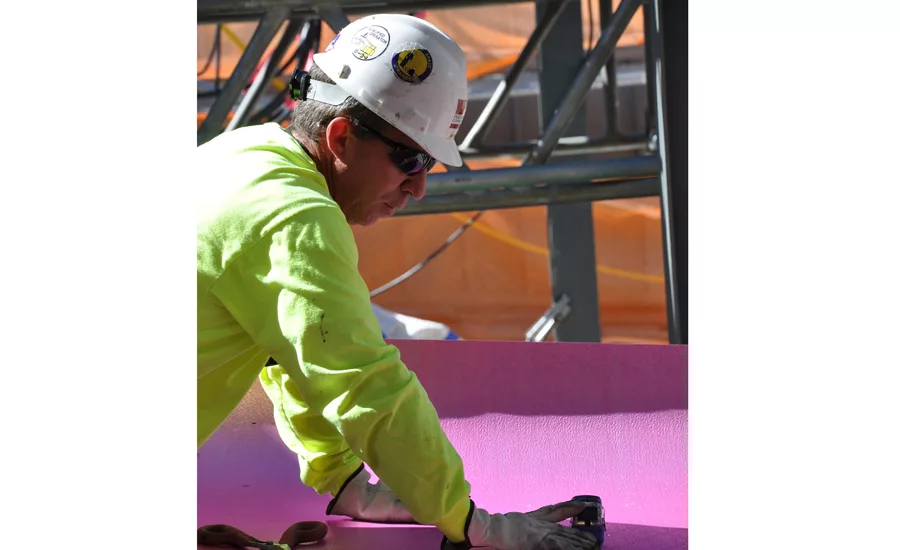
INSULATED ALUMINUM: A Blue Grass Chemical Agent-Destruction Pilot Plant (BGCAPP) worker measures aluminum prior to making a cut. The aluminum will serve as an insulated jacket for ductwork at BGCAPP. Photo courtesy of PEO ACWA: http://bit.ly/DUCT1
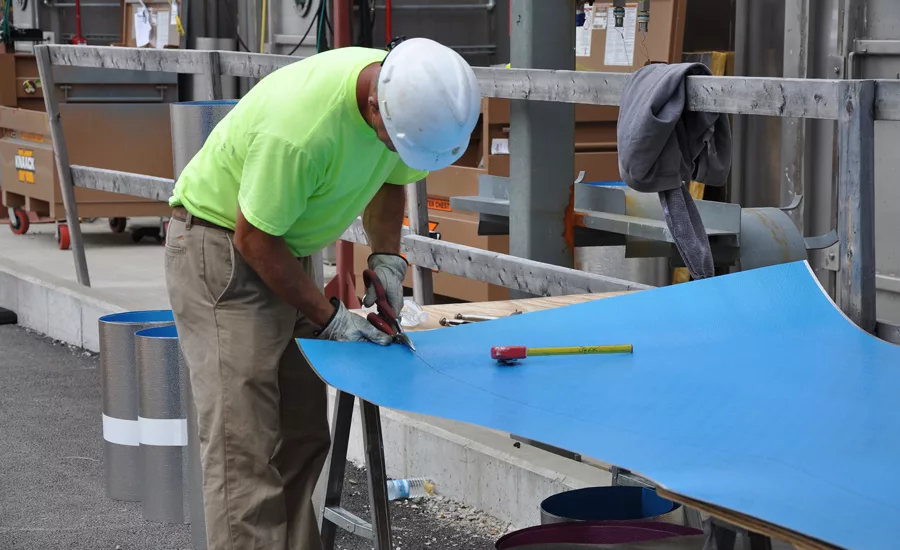
STAYING DRY: A BGCAPP worker cuts insulation for placement around the Munitions Demilitarization Building Filter Bank ducts. This insulation will prevent condensation from forming on the ductwork. Photo courtesy of PEO ACWA: http://bit.ly/DUCT10
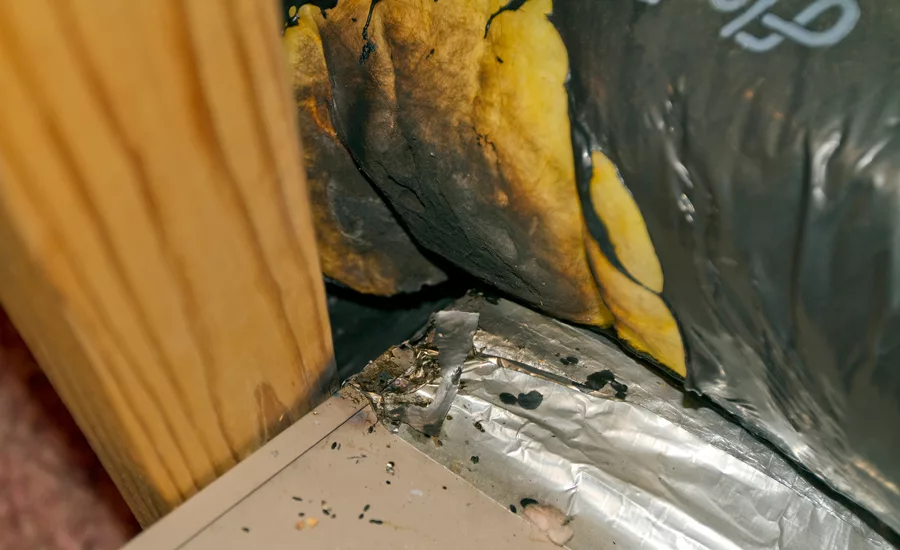
LIGHTNING STRIKE: This HVAC insulation recently endured lightning damage. Photo courtesy of Mark Taylor: http://bit.ly/DUCT4
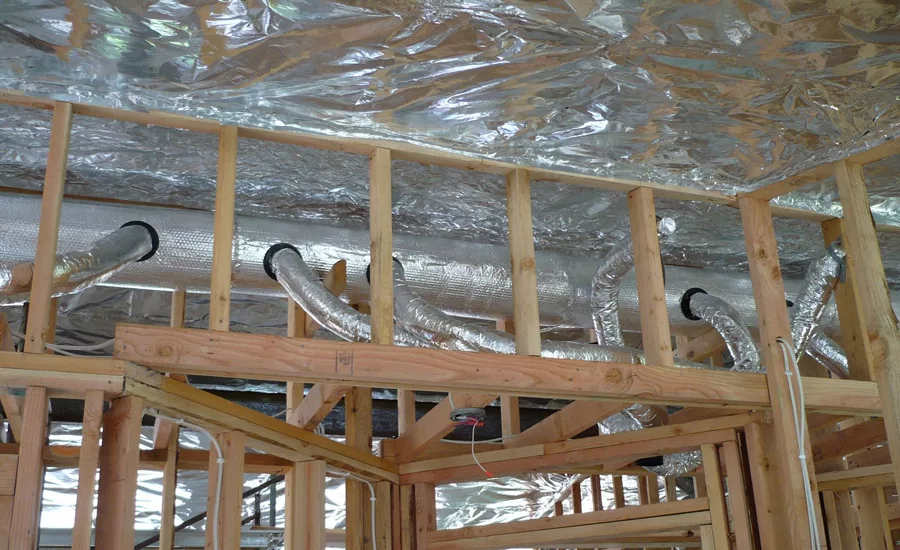
FOIL AND FIBER: David Richardson, curriculum developer and trainer, National Comfort Institute (NCI), said his favorite type of insulation is foil-backed fiberglass because the reflective surface helps reduce radiant gains when installed in attic locations. Photo courtesy of deedavee easyflow: http://bit.ly/DUCT9
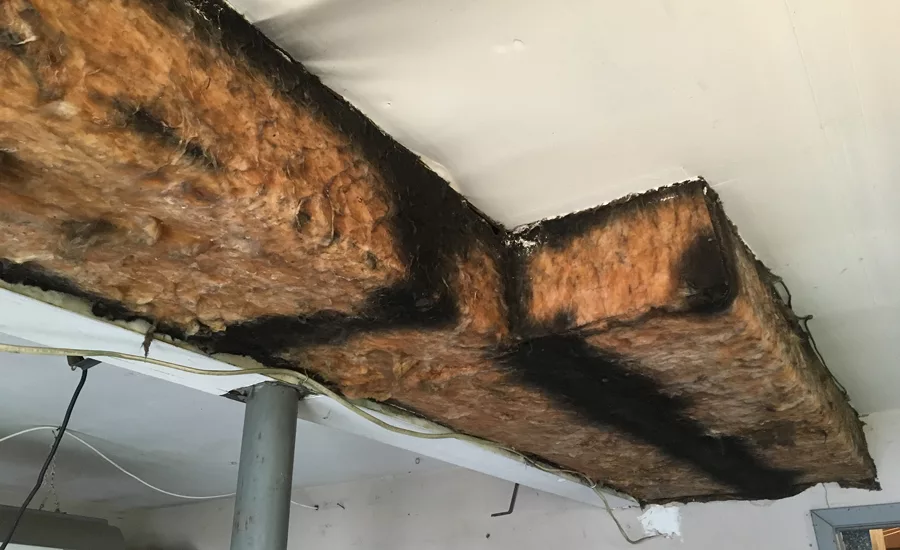
BAD EXAMPLE: Richardson provided this example of a poorly executed ductwork insulation job.
“Forward-thinking contractors keep duct insulation in the forefront as they understand the impact it has on temperature loss through the duct system,” said David Richardson, curriculum developer and trainer, National Comfort Institute (NCI). “It’s almost always a focal point of any duct renovation or upgrade they perform.”
Richardson, along with a few other members of The NEWS’ Trainer Panel, recently discussed the benefits and drawbacks of insulating ductwork. They explored what applications are best suited to it, common mistakes that can be avoided, and where they are seeing ductwork insulation being used most often.
THE PROS AND CONS
The insulation of ductwork is not always necessary, but there are plenty of situations where it makes sense for HVACR contractors.
“First, I would not even consider uninsulated ducts in an unconditioned space, so my answers only pertain to ducts within the conditioned area,” said Nicholas Griewahn, associate professor of HVACR, Northern Michigan University, Marquette, Michigan. “If I were to ask a customer [the positives and negatives of insulating ductwork], the two negative answers that would inevitably come up are cost and aesthetics. The positives of insulating are the advantages of placing the heating or cooling exactly where it needs to go without losing too much along the way.”
Griewahn added that insulation makes for more accurate control of temperature and a more moderate temperature swing.
“The other advantage is condensation control,” he said. “You can design a commercial air distribution system serving a cooling system to be condensation-free, but you cannot absolutely guarantee the system will not drip without insulating it. This is especially true in humid climates, where ducts must be located overhead near building entrances.”
Dennis Silvestri, lead instructor, MRS Educational Training, New Haven, Connecticut, said many residential building energy assessments recommend insulation as one method to help with heating and cooling system efficiencies, especially in older systems.
Looking for quick answers on air conditioning, heating and refrigeration topics? Try Ask ACHR NEWS, our new smart AI search tool. Ask ACHR NEWS
“Here in Connecticut, Energize CT offers low-cost home energy assessments,” he said. “Insulating the supply ducts is one of their many energy-efficiency recommendations. In addition, many heating and cooling contractors will also recommend this procedure to their residential customers when replacement of the existing older [heating] units is not possible, many times due to its cost.”
Silvestri believes that one of duct insulation’s biggest positives is that it actually eliminates condensation and sweating on the outside of the duct when the duct system is located up in a hot attic or in another unconditioned space.
“It is also possible in a basement setting for the ducts to sweat and the basement to get cooler,” he added. “We do have current building and energy codes that require ducts to be insulated when located in unconditioned spaces.”
WHAT TO USE
Once a decision has been made to insulate ductwork, a tech must decide on the type of insulation to use.
Griewahn said there are many variables that go into such a choice.
“It depends on the type of ductwork installed,” he said. “Fiberglass is the most common material I see and use. If the ducts are concealed, and looks are not an issue, I would definitely go with insulated fiberglass sleeves for round and oval ducts because of the ease of installation. If the customer wants to see the spiral duct or exterior surface, pre-insulated (internal insulation) spiral and round ductwork is available, but it costs significantly more. For rectangular ducts, external fiberglass wrap is effective but is messy and harder to work with. I prefer internal, cut-to-fit fiberglass insulation pinned to the insides of the duct. Internal insulation may produce more of a static pressure loss, but I prefer to design around that and keep the attractive look of the finished galvanized duct. I don’t work with fiberboard duct much, but it has the advantage of being duct and insulation in one and would probably be a big time saver.”
Richardson’s personal favorite is foil-backed fiberglass.
“The reflective surface helps reduce radiant gains when installed in attic locations,” he said. “We see it used pretty frequently in both residential and commercial applications.”
Silvestri is also partial to foil-back fiberglass.
“Insulation of duct systems requires insulation designed specifically for this type of insulating,” he said. “For duct wrapping, a foil-faced fiberglass insulation with an R-6 value — a measure of thermal resistance — works well. Use the recommended metallic foil-type duct tape. Be sure the foil surface of the insulation is clean and free of dust or dirt before applying the tape. Also available for wrapping is vinyl-face fiberglass insulation, which requires the insulation overlap to be stapled with a specific type of hand-held stapling device. Duct lining is a fiberglass type of insulation. The side that is exposed to the heated or cooled air, moving through the duct system, has a smoother finish to it.”
COMMON MISTAKES
The unfortunate reality with insulating ductwork, especially for those largely unfamiliar with the practice, is that mistakes are easy to make.
“Two of the biggest mistakes I see are assuming the rated R-value is achieved in the field and the improper application of the insulation,” said Richardson. “These issues go hand in hand and directly impact one another.”
According to Silvestri, there are many mistakes made and seen when insulating ductwork.
“Loose-fitting duct wrap allows for gaps between the duct and the insulation,” he said. “Condensation will occur, and over time, moisture builds up, and insulation gets wet. Some will rely on regular duct tape to hold the duct wrap together as the tape will dry out. Also with duct wrapping, a big mistake is not taking the time to properly cut, place, seam, and overlap the insulated sections. When rushing and not paying attention, the insulation job will look messy.”
Griewahn’s advice here is direct and simple: Take your time and be thorough.
“I’ve seen very neatly insulated ductwork that could probably hold a gallon of water without leaking, and I’ve seen other duct-insulating jobs that look like the installer just lobbed a fiberglass blanket over the top of a plenum and called it good,” he said. “If the duct system serves a cooling system, you’ve always got to be concerned about vapor barriers and moisture infiltration. Any moisture that gets through a gap in the insulation will condense to any metal surfaces inside. Dark, damp environments can breed some nasty things over the years, even if the moisture never gets into the airstream.”
A LOOK AHEAD
When assessing the future of ductwork insulation, Griewahn said he doesn’t see it trending much up or down.
“I don’t know a lot about duct insulating standards in the southern half of the country, but, in the northern areas, duct insulating is pretty well standardized for every contractor,” he said. “Many duct products used in this area come pre-insulated anyway. Again, for ducts in unconditioned spaces, there shouldn’t ever be the option not to insulate.”
Richardson said with the attention of efficiency shifting from the equipment to the field-installed system, you’re going to see a lot more attention on duct insulation because without it, true efficiency doesn’t happen.
Silvestri believes over the next several years, insulating of existing duct systems will only come from contractors who are called to customers’ homes for whatever reasons.
“Service techs on the job who see issues with existing insulated ducts, such as ripped, loose, and falling off insulation, should be talking to customers about it as well as informing their companies about it,” he said. “Unless there is a lot of media advertising, any growth for the field of insulating existing duct systems will be slow in coming.”
Publication date: 9/18/2017
Want more HVAC industry news and information? Join The NEWS on Facebook, Twitter, and LinkedIn today!
Looking for a reprint of this article?
From high-res PDFs to custom plaques, order your copy today!