ACHR News
search
Ask ACHR NEWS AI
cart
facebook twitter instagram linkedin youtube
  • Sign In
  • Subscribe
  • Sign Out
  • My Account
ACHR News
  • NEWS
    • Breaking News
    • New HVAC Products
    • Featured Products
    • Manufacturer Reports
    • HVAC Data
    • Legislation
    • ACHR NEWS Centennial
  • RESIDENTIAL
    • Air Conditioners
    • Furnaces
    • Residential Heat Pumps
    • Ductless
    • Residential IAQ
    • Testing, Monitoring, Tools
    • Components & Accessories
  • COMMERCIAL
    • Air Handlers
    • Rooftop Units
    • Chillers and Cooling Towers
    • Commercial Heat Pumps
    • Boilers and Hydronics
    • VRF/Ductless
    • Commercial IAQ
  • REFRIGERATION
    • Refrigerants
    • Refrigerant Regulations
    • Leak Management
  • CONTRACTOR PRO
    • Geothermal
    • Homeowner Study
    • VRF and VRV Ductless
    • Unitary Trends
  • EDUCATION
    • Training and Education
    • Business Management
    • Service and Maintenance
    • Continuing Education
    • Market Research >
      • HVAC Brand Awareness Report
      • VRV, VRF, VRVZ Report
      • Unitary Trends Report
      • Water Heat Professionals Report
    • Webinars
    • Sponsor Insights
    • eProducts Info
    • White Papers
  • EVENTS
    • HVAC Contractor Forum
    • Industry Events and Webinars
  • MEDIA
    • Videos
    • AHR Expo 2025 Videos
    • Podcasts >
      • ACHR News Podcast
      • HARDI Podcasts
      • AHR Expo Podcasts
      • ACCA Podcasts
    • Interactive Spotlights
    • Quizzes
    • eBooks
    • HVAC Talkback
  • HVAC GROUP
    • ACHR NEWS >
      • Current Issue
      • Digital Edition
      • Subscribe
    • Distribution Trends
    • SNIPS NEWS >
      • Join SNIPS NEWS
    • Engineered Systems News >
      • Join ES News
    • HVACR Directory
    • Contests
    • Newsletters
    • Contact
    • Advertise
    • My Account
RefrigerationStandards and LegislationRefrigerants

Addressing the Flammability of HC Refrigerants

Low charges combined with awareness and simple safety steps minimize risk

By Ron Rajecki
December 7, 2015

Manufacturers of hermetic compressors are turning their attention to alternative refrigerants that could represent a long-term solution to ongoing to government regulation. Although it’s commonly acknowledged that there is no one-size-fits-all answer, natural refrigerants, such as carbon dioxide (R-744), ammonia (R-717), and the hydrocarbon (HC) refrigerants propane (R-290) and isobutane (R-600), have been garnering attention.

According to John Prall, technical support, North American region, Embraco, propane appears to hold the greatest potential for widespread use in self-contained refrigeration systems. He noted ammonia is highly toxic; carbon dioxide operates at very high pressures and does not condense well in hot environments; and, although propane and isobutane have similar properties, propane is better suited for hermetic compressors with larger displacements. Both propane and isobutene, however, are flammable, and that has been a major cause for concern among refrigeration contractors and their technicians. But, through proper training, good awareness, and some basic safety procedures, the risk of working with flammable refrigerants is very manageable, said Prall.

SAFELY USING PROPANE

In a presentation at a recent meeting of the Refrigeration Service Engineers Society (RSES), Prall offered the following safety tips for working with equipment that uses propane as a refrigerant.

Look for the label — Systems that use HC refrigerants are required to have a yellow warning sticker that identifies the refrigerant and states, “Caution, risk of fire.”

“The yellow sticker says there is an element of risk, and, even though the risk is low, you must be cognizant of it,” Prall said. “You must be aware of the risks and treat the equipment with respect and caution, and that’s true every time — even after you’ve become comfortable working with flammable refrigerants.”

• Conduct a risk assessment — Determine whether it’s appropriate to use a flammable gas refrigerant in a particular workplace. The work area must be free from sources of ignition. Fire-extinguishing equipment should be present and easily accessible.

• Monitor for leaks — Monitor the work area using an HC detector located at a low level, because HCs are heavier than air. The detector should provide an audible and visual alarm well before there is enough HC in the air to form a flammable mixture (approximately 2 percent of HC by volume).

Looking for quick answers on air conditioning, heating and refrigeration topics? Try Ask ACHR NEWS, our new smart AI search tool. Ask ACHR NEWS →

• Sparks are the enemy — When replacing or servicing electrical components in a system that uses an HC refrigerant, make sure all of the components comply with IEC/EN60079-15. Starting devices and overload protectors need to be sealed, and the fan motor needs to be spark-free (brushless).

“This is really critical,” Prall said. “In any kind of switch or relay you have two electric contacts coming together, and there’s always the risk of sparking or arcing. They must be sealed so that none of the HCs can possibly get into the area where there’s the potential for a spark.”

This is particularly important in devices that have a large number of electronic switches, controls, and motors, such as vending machines and ice machines.

• Use the right tools and equipment — Use only tools and apparatus certified for use in hazardous areas, and wear an anti-static electricity tag.

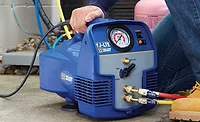
Although HCs can be vented into the atmosphere, in cases where a recovery machine is going to be used, it should be specifically designed for HCs. Standard recovery machines for HFC refrigerants can’t be used because of inbuilt sources of ignition, such as relays and high- and low-pressure switches. In addition, recovery cylinders must be specific for HCs and must carry the proper markings.

A MANAGEABLE RISK

Although HC refrigerants are flammable, to a well-trained technician who uses due diligence and understands the workplace, they’re far less dangerous than servicing other items, such as high-voltage equipment, Prall said. “There’s risk, and then there’s manageable risk. Keep in mind that refrigeration circuits using R-290 are limited to 150 grams of charge. Meanwhile, we think nothing of having a canister containing 15 pounds of propane attached to the grill on our deck. The level of risk with these refrigeration systems, when approached properly by a trained technician, is very low. We in the industry have to communicate the risks and make sure they’re understood and kept in perspective.”

For more information, visit http://www.rses.org/hydrocarbons.aspx

Publication date: 12/7/2015

Want more HVAC industry news and information? Join The NEWS on Facebook, Twitter, and LinkedIn today!

KEYWORDS: flammable refrigerants hydrocarbon refrigerants propane refrigerant refrigerant safety training technicians

Share This Story

Looking for a reprint of this article?
From high-res PDFs to custom plaques, order your copy today!


Ron Rajecki is the marketing content specialist for Aquatherm North America. 

Recommended Content

JOIN TODAY
To unlock your recommendations.

Already have an account? Sign In

  • HVAC-enrollment

    The Trades Are Back: HVACR Programs See Nearly 30% Enrollment Spike

    A new wave of future technicians is entering the pipeline.  
    Training and Education
    By: Matt Jachman
  • 2025 Top 40 Under 40

    2025 Top 40 Under 40 HVACR Professionals List

    The 11th annual Top 40 Under 40 list highlights those...
    HVAC Light Commercial Market
    By: Hannah Belloli-Oster
  • LG Ductless Mini-Split Systems

    The 9 Types of Heat Pumps

    As the U.S. moves toward electrification, heat pumps are...
    News
    By: Joanna R. Turpin
Subscription Center
  • Create an Account
  • Start a Subscription
  • Manage My Account
  • Sign Up for Newsletters
  • Visit Customer Service
  • Update Preferences

More Videos

Sponsored Content

Sponsored Content is a special paid section where industry companies provide high quality, objective, non-commercial content around topics of interest to The News audience. All Sponsored Content is supplied by the advertising company and any opinions expressed in this article are those of the author and not necessarily reflect the views of The News or its parent company, BNP Media. Interested in participating in our Sponsored Content section? Contact your local rep!

close
  • Piggy Bank
    Sponsored byWatercress Financial

    Energy Prices, Inflation, and HVAC: What Today’s Homeowners Care About

  • Refrigerated Food
    Sponsored bySolstice Advanced Materials

    R-455A Refrigeration: A Cold Storage Solution for the Future

  • Airex Rooftop Units
    Sponsored byAirex Manufacturing Inc

    Consolidating Roof Penetrations: A Growing Trend in Multifamily HVAC Design

Popular Stories

HVAC-Price-Increase-graphic

HVAC Price Increase List: June 2026

Trump-Section-232.jpg

Trump Reduces Section 232 Tariffs on HVAC Equipment to 15%

Heat-pump-cutaway.jpg

PFAS Rules and A2L Building Codes Continue to Evolve

Midea-training.jpg

HVAC Workforce Crisis Expands Beyond Technicians to Instructor Shortages

Refrigerants-and-gauge.jpg

HVAC Industry Warns of Counterfeit Refrigerants Entering U.S. Supply Chain

View The ACHR NEWS
Centennial Anniversary Timeline

The ACHR News Timeline Chart
Submit a Letter
Submit a letter to our editors.

Events

November 6, 2025

Next-Gen Data Center Cooling: HVAC Innovation and Real-World Solutions

On Demand As AI workloads and high-density computing push traditional cooling methods to their limits, the data center industry is accelerating the adoption of next-generation HVAC technologies.

June 17, 2026

Decarbonization Without Disruption

This webinar will explore practical HVAC decarbonization strategies that minimize disruption while maximizing long-term performance and ROI.

View All Submit An Event

Poll

Summer Staff

Are you fully staffed for the summer season?
View Results Poll Archive

Products

BNI Mechanical/Electrical Square Foot Costbook, 2026 Edition

BNI Mechanical/Electrical Square Foot Costbook, 2026 Edition

See More Products
Decarbonization Without Disruption - Free Webinar - 6/17/2026

Related Articles

  • RSESFrost

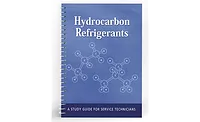
    RSES Releases Third Edition of HC Refrigerants Study Guide and Course

    See More
  • hydrocarbon

    Working Safely with HC Refrigerants

    See More
  • Refrigerant recovery is likely to remain a part of the industry, even in the age of naturals and hydrocarbons. Photo courtesy of Ritchie Engineering Co.

    Natural, HC Refrigerants Spell Change — Not Doom

    See More

Related Products

See More Products
  • quick guide.png

    Quick Guide to Refrig Cycle, Refrigerants, Components

  • low grade.png

    Low GWP Refrigerant Safety: Flammable & Mildly Flammable Refrigerants Manual

  • EHEP002028.jpg

    Principles of Heating, Ventilation, and Air Conditioning in Buildings, 1st Edition

See More Products

Related Directories

  • The Chemours Co., Refrigerants by Chemours

    Trade NamesFreon™ RefrigerantsISCEON™ RefrigerantsOpteon™ RefrigerantsRefrigetants by Chemours™Suva™ Refrigerants
  • Choice Refrigerants

    Choice Refrigerants is a leading manufacturer of alternative refrigerants, a pioneer in refrigerant reclaiming and now offering 410A alternative air-conditioners.
×

Sign Up. Stay Informed.

The #1 trusted source for the HVACR industry since 1926

SUBSCRIBE
  • RESOURCES
    • Advertise
    • Contact Us
    • Advisory Board
    • Classifieds
    • Submit a Letter
    • Directories
    • Store
  • ACCOUNT CENTER
    • Create an Account
    • Start a Subscription
    • Manage My Account
    • Sign Up for Newsletters
    • Visit Customer Service
    • Update Preferences
  • SERVICES
    • Marketing Services
    • Reprints
    • Market Research
    • List Rental
    • Survey/Respondent Access
  • STAY CONNECTED
    • LinkedIn
    • Facebook
    • Instagram
    • YouTube
    • X (Twitter)
  • PRIVACY
    • PRIVACY POLICY
    • TERMS & CONDITIONS
    • DO NOT SELL MY PERSONAL INFORMATION
    • PRIVACY REQUEST
    • ACCESSIBILITY

Copyright ©2026. All Rights Reserved BNP Media, Inc. and BNP Media II, LLC.

Design, CMS, Hosting & Web Development :: ePublishing