ACHR News
search
Ask ACHR NEWS AI
cart
facebook twitter instagram linkedin youtube
  • Sign In
  • Subscribe
  • Sign Out
  • My Account
ACHR News
  • NEWS
    • Breaking News
    • New HVAC Products
    • Featured Products
    • Manufacturer Reports
    • HVAC Data
    • Legislation
    • ACHR NEWS Centennial
  • RESIDENTIAL
    • Air Conditioners
    • Furnaces
    • Residential Heat Pumps
    • Ductless
    • Residential IAQ
    • Testing, Monitoring, Tools
    • Components & Accessories
  • COMMERCIAL
    • Air Handlers
    • Rooftop Units
    • Chillers and Cooling Towers
    • Commercial Heat Pumps
    • Boilers and Hydronics
    • VRF/Ductless
    • Commercial IAQ
  • REFRIGERATION
    • Refrigerants
    • Refrigerant Regulations
    • Leak Management
  • CONTRACTOR PRO
    • Geothermal
    • Homeowner Study
    • VRF and VRV Ductless
    • Unitary Trends
  • EDUCATION
    • Training and Education
    • Business Management
    • Service and Maintenance
    • Continuing Education
    • Market Research >
      • HVAC Brand Awareness Report
      • VRV, VRF, VRVZ Report
      • Unitary Trends Report
      • Water Heat Professionals Report
    • Webinars
    • Sponsor Insights
    • eProducts Info
    • White Papers
  • EVENTS
    • HVAC Contractor Forum
    • Industry Events and Webinars
  • MEDIA
    • Videos
    • AHR Expo 2025 Videos
    • Podcasts >
      • ACHR News Podcast
      • HARDI Podcasts
      • AHR Expo Podcasts
      • ACCA Podcasts
    • Interactive Spotlights
    • Quizzes
    • eBooks
    • HVAC Talkback
  • HVAC GROUP
    • ACHR NEWS >
      • Current Issue
      • Digital Edition
      • Subscribe
    • Distribution Trends
    • SNIPS NEWS >
      • Join SNIPS NEWS
    • Engineered Systems News >
      • Join ES News
    • HVACR Directory
    • Contests
    • Newsletters
    • Contact
    • Advertise
    • My Account
HVAC ContractingService and Maintenance

Caring for a Small Motor's Sleeve Bearing System
By Neil Simon
July 7, 2008
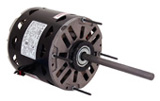
Here is an example of a PSC design that is more efficient than a previous design, and uses about 14 percent few amps. If the two motors were compared just based on amps, it might be incorrectly concluded that the previous design was a stronger motor, which is not the case.

When it comes to assuring that a motor provides consistent service for the longest time possible, it’s important to pay attention to the bearing system. Bearing system failures are one of the most common mechanical breakdowns in the field.

A sleeve bearing’s entire purpose in life is to maintain a continuous layer of lubricating oil on the surface of the motor shaft. In operation, the oil flows from a reservoir to the feeder wick which rides right on the shaft. As the shaft rotates, the feeder wick pumps a microscopically thin layer of oil from the reservoir down onto the shaft. The oil flows down the shaft until it hits the “flinger” on the end which returns the oil to the reservoir.

At the same time, the sleeve bearing circulates that oil to remove any contaminants from the lubricant. Even under the best of circumstances, there are moments when the shaft is rotating that metal-to-metal contact occurs. Infinitesimal fragments of metal break off, and the oil helps move those contaminants into the bearing’s reservoir where they are filtered out by the wicking material.

So what causes mechanical breakdowns in what is essentially a closed lubricating system? The most common enemies of bearings are water (that can interrupt the flow of oil to the shaft), solvents, or the wrong lubricant.

As a rule of thumb, any type of oil that is labeled “motor oil” is okay to use as a lubricant. Detergent oils are acceptable as well; the detergents will not harm the motor’s windings. Avoid other lubricants - and tell your customers not to attempt to lubricate their motor with anything but motor oil.

You would be amazed at the types of lubrication well-meaning but untrained people try to use in electric motors. One of our quality managers once received a failed motor from a health spa that smelled strongly of coconut. No one could figure out the source of failure until they began testing the lubrication. Turns out the customer had attempted to use BenGay® cream (coconut scented of course) to lube the bearings. Smelled great - didn’t work. Other equally unsuccessful lubricants I’ve seen have included petroleum jelly, transmission fluid, and cooking oil.

Another thing to remember to tell your customers is to avoid using chlorinated solvents or industrial degreasers such as WD-40® as lubricants. The solvents can attack and destroy the insulation in the windings leading to motor failure.

Water or moisture will often get into the bearing system if the flinger is damaged or left out of the bearing. The flinger, in case you’re unfamiliar with the term, is the little plastic piece that is always left over when you take apart a motor and put it back together again. Seriously, this little piece of plastic is essential in maintaining the controlled trap system and keeping oil in circulation in the bearing system.

It may seem totally illogical, but a common form of field failure is from applying too much lubrication to a motor. Factory-fresh motors with sleeve bearing systems are always properly lubricated. Since it is essentially a closed system, there is no chance the oil will leak out during shipping or installation, so avoid the temptation to oil the motor when you put it in. When you apply too much lubrication (especially to the sleeve bearing systems in smaller electric motors), the oil bypasses the bearing flinger and dissipates throughout the motor. Too much lubrication causes oil circulation to exit the “closed loop” within the bearing system, and the bearing “freezes up.”

Another potential problem you may encounter in the field is bearing stress caused by excess tension on the belts used in belt-driven applications. The excessive tension tends to pull the shaft in the direction of the bearing window. If the belt happens to cover the bearing window, it decreases the bearing surface area (and its ability to circulate oil) by up to two-thirds. The result is increased risk of overload. In addition to decreasing the belt tension, you can also rotate the motor to keep the bearing window away from the belt.

Remember that heat kills motors, and sleeve bearings help to reduce the amount of heat the motor generates. Proper care and maintenance of sleeve bearings can help to prolong the life and service of your customers’ motors.

Publication date: 07/07/2008

Links

  • A.O. Smith Electrical Products Co.

Share This Story

Looking for a reprint of this article?
From high-res PDFs to custom plaques, order your copy today!


Neil Simon aka the Motor Doctor, is regional sales manager for A.O. Smith Electrical Products Co. For more information, visit www.aosmithmotors.com.

Recommended Content

JOIN TODAY
To unlock your recommendations.

Already have an account? Sign In

  • HVAC-enrollment

    The Trades Are Back: HVACR Programs See Nearly 30% Enrollment Spike

    A new wave of future technicians is entering the pipeline.  
    News
    By: Matt Jachman
  • 2025 Top 40 Under 40

    2025 Top 40 Under 40 HVACR Professionals List

    The 11th annual Top 40 Under 40 list highlights those...
    HVAC Residential Market
    By: Hannah Belloli-Oster
  • LG Ductless Mini-Split Systems

    The 9 Types of Heat Pumps

    As the U.S. moves toward electrification, heat pumps are...
    News
    By: Joanna R. Turpin
Subscription Center
  • Create an Account
  • Start a Subscription
  • Manage My Account
  • Sign Up for Newsletters
  • Visit Customer Service
  • Update Preferences

More Videos

Sponsored Content

Sponsored Content is a special paid section where industry companies provide high quality, objective, non-commercial content around topics of interest to The News audience. All Sponsored Content is supplied by the advertising company and any opinions expressed in this article are those of the author and not necessarily reflect the views of The News or its parent company, BNP Media. Interested in participating in our Sponsored Content section? Contact your local rep!

close
  • Piggy Bank
    Sponsored byWatercress Financial

    Energy Prices, Inflation, and HVAC: What Today’s Homeowners Care About

  • Refrigerated Food
    Sponsored bySolstice Advanced Materials

    R-455A Refrigeration: A Cold Storage Solution for the Future

  • Airex Rooftop Units
    Sponsored byAirex Manufacturing Inc

    Consolidating Roof Penetrations: A Growing Trend in Multifamily HVAC Design

Popular Stories

HVAC-Price-Increase-graphic

HVAC Price Increase List: June 2026

Trump-Section-232.jpg

Trump Reduces Section 232 Tariffs on HVAC Equipment to 15%

Heat-pump-cutaway.jpg

PFAS Rules and A2L Building Codes Continue to Evolve

Midea-training.jpg

HVAC Workforce Crisis Expands Beyond Technicians to Instructor Shortages

Refrigerants-and-gauge.jpg

HVAC Industry Warns of Counterfeit Refrigerants Entering U.S. Supply Chain

View The ACHR NEWS
Centennial Anniversary Timeline

The ACHR News Timeline Chart
Submit a Letter
Submit a letter to our editors.

Events

November 6, 2025

Next-Gen Data Center Cooling: HVAC Innovation and Real-World Solutions

On Demand As AI workloads and high-density computing push traditional cooling methods to their limits, the data center industry is accelerating the adoption of next-generation HVAC technologies.

June 17, 2026

Decarbonization Without Disruption

This webinar will explore practical HVAC decarbonization strategies that minimize disruption while maximizing long-term performance and ROI.

View All Submit An Event

Poll

Summer Staff

Are you fully staffed for the summer season?
View Results Poll Archive

Products

BNI Mechanical/Electrical Square Foot Costbook, 2026 Edition

BNI Mechanical/Electrical Square Foot Costbook, 2026 Edition

See More Products
Decarbonization Without Disruption - Free Webinar - 6/17/2026

Related Articles

  • Numbers-and-Finances_feature_1.jpg

    Tax Reference for Starting a Small Business

    See More
  • Caring for Commercial Customers

    See More
  • Caring for Your Customers

    See More

Related Products

See More Products
  • Manual LLH Cover_Final.jpg

    Manual LLH - 2019 (HVAC System Design for Low Load Homes)

  • compressormotorwindingsdvd.jpg

    UNDERSTANDING COMPRESSOR MOTOR WINDINGS

  • The ACHR News - June 30, 2025

    ACHR NEWS June 30, 2025, Issue

See More Products
×

Sign Up. Stay Informed.

The #1 trusted source for the HVACR industry since 1926

SUBSCRIBE
  • RESOURCES
    • Advertise
    • Contact Us
    • Advisory Board
    • Classifieds
    • Submit a Letter
    • Directories
    • Store
  • ACCOUNT CENTER
    • Create an Account
    • Start a Subscription
    • Manage My Account
    • Sign Up for Newsletters
    • Visit Customer Service
    • Update Preferences
  • SERVICES
    • Marketing Services
    • Reprints
    • Market Research
    • List Rental
    • Survey/Respondent Access
  • STAY CONNECTED
    • LinkedIn
    • Facebook
    • Instagram
    • YouTube
    • X (Twitter)
  • PRIVACY
    • PRIVACY POLICY
    • TERMS & CONDITIONS
    • DO NOT SELL MY PERSONAL INFORMATION
    • PRIVACY REQUEST
    • ACCESSIBILITY

Copyright ©2026. All Rights Reserved BNP Media, Inc. and BNP Media II, LLC.

Design, CMS, Hosting & Web Development :: ePublishing