Should Your HVAC Company Have a Mascot?
The difference between memorable branding and a marketing gimmick comes down to strategy
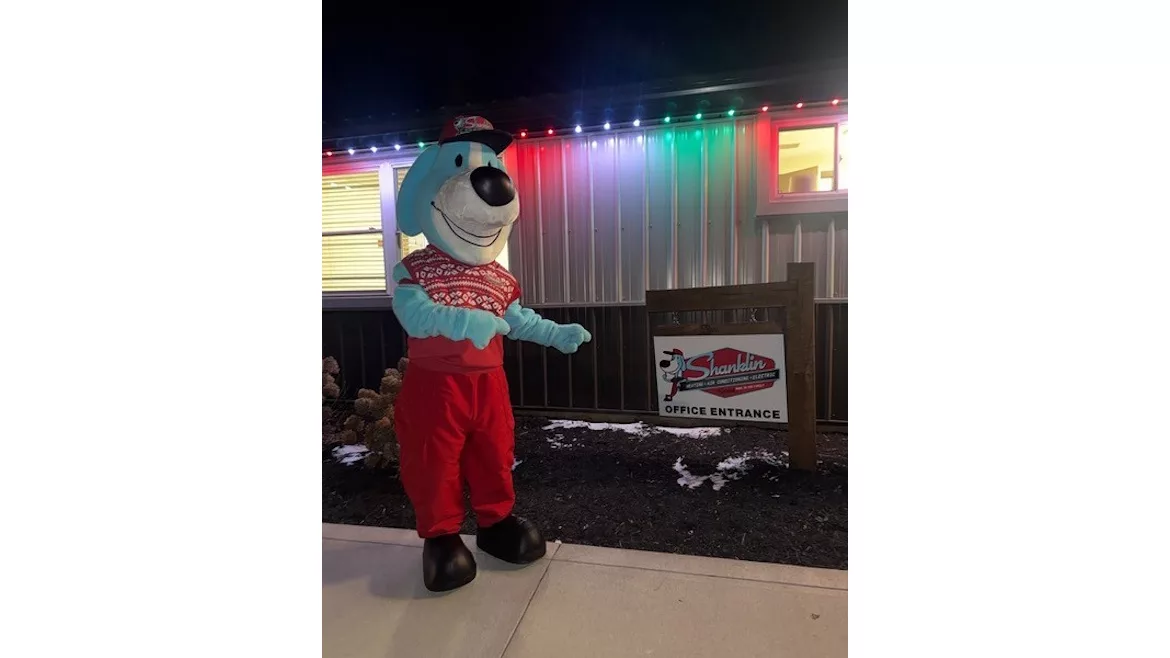
HI HANK: Say hello to Hank, the blue dog mascot showing the more personable side of an Ohio HVAC outfit.
My sister-in-law Nikki loves two things about sports: dogs catching Frisbees at halftime (or really anything involving animals performing tricks) and mascots.
They’re arguably the cutest part of any sporting event — and both engage every type of attendee: old, young, sports-loving, non-sports-loving. Crowds go wild for an acrobatic dog, and a good mascot can unite fans and players alike.
While no HVACR contractors are (yet) known for animal performances, lucky for Nikki, mascots are popping up everywhere in the HVAC industry — on service trucks, across social media feeds, and at community events — as a way for contractors to stand out in an increasingly crowded marketplace and offer something traditional marketing can struggle to deliver: instant recognition and human connection.
Why Mascots, Why Now?
A well-designed mascot can aid contractors in brand differentiation, one of the toughest challenges facing HVAC service providers today.
“Since contractors usually sell intangible promises like comfort, safety, and reliability, a mascot provides a tangible face for those promises,” said Crystal Williams, CEO of Lemon Seed Marketing. “When executed effectively, it also fosters approachability and trust, particularly for companies entering customers' homes.”
Mascots can communicate personality before a company ever says a word.
“Mascots immediately lower our inhibitions, whether we're adults or kids, instantly conveying personality traits such as friendliness, reliability, local charm, premium quality, or playfulness,” Williams continued. “I’ve observed mascots significantly enhance recall and referral rates because homeowners can easily associate a company with a memorable mascot.”
Looking for quick answers on air conditioning, heating and refrigeration topics? Try Ask ACHR NEWS, our new smart AI search tool. Ask ACHR NEWS
Beyond attracting customers, mascots can also strengthen company culture and even recruitment efforts by giving employees a visible symbol to rally around.
The Difference Between Memorable And Gimmicky
I’ve seen some of the mascots out there — and a lot of them scare me. Unlike Nikki, I have a weird aversion to mascots. I’m working through it, but if I ever came face-to-face with Pat Patriot, I’d run.
In other words, mascots can be a double-edged sword.
Done poorly, they can feel gimmicky, juvenile, completely disconnected from the professionalism homeowners expect from someone entering their home, or for some of us, straight-up creepy.
Williams said mascots become problematic when they conflict with a company’s desired positioning.
“For example, if a company wants to be perceived as high-end or technical but uses a cartoonish or juvenile character, it can undermine credibility,” Williams said. “The mascot must reinforce, not contradict, the brand promise.”
Two contractors who have successfully integrated mascots into their brands are Royal Air Systems and Shanklin Heating, Air Conditioning, & Electric.
Royal Air, which has served Boston’s North Shore for over 40 years, introduced its mascot, Reggie the Royal Lion, in 2024 to stay remain-top-of mind.
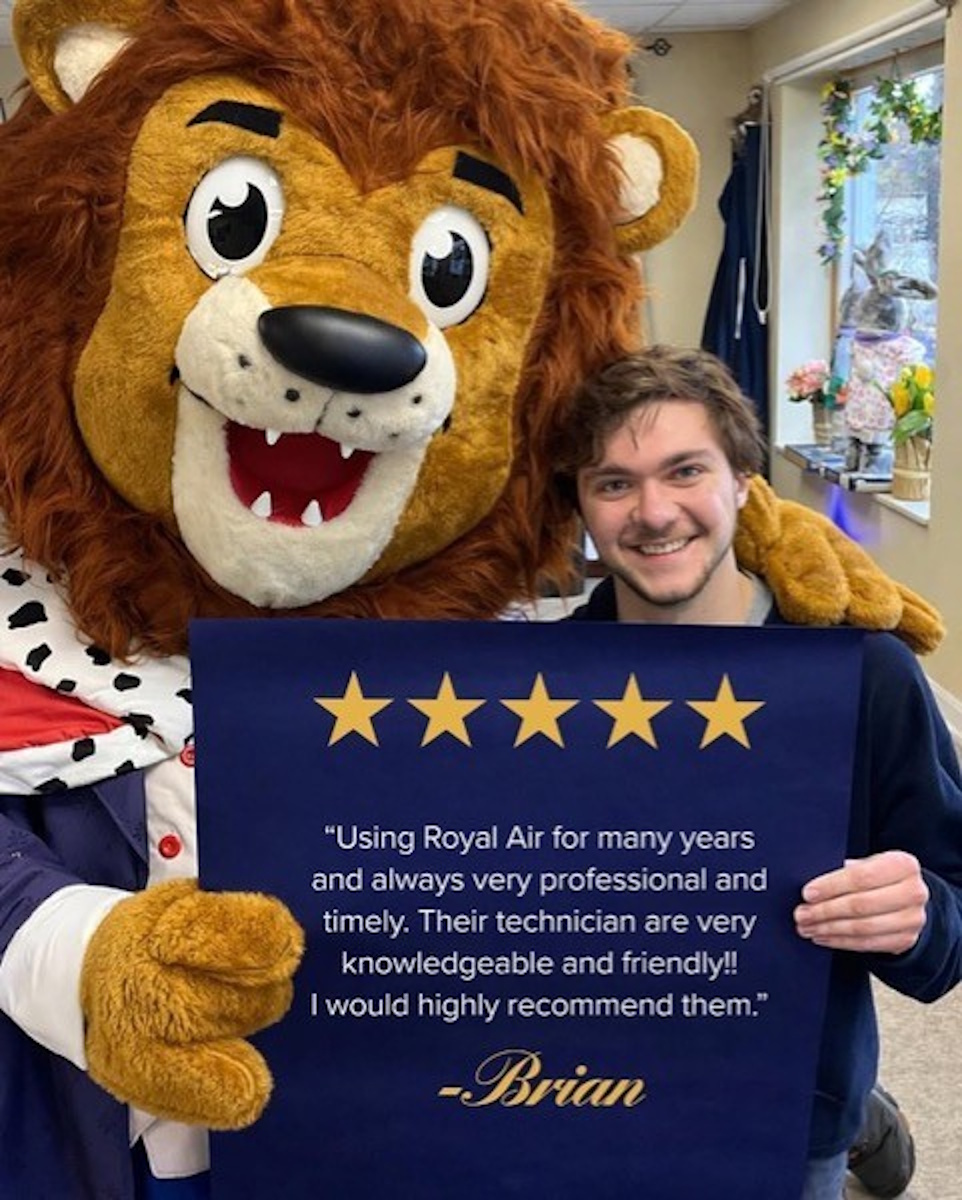
ROYAL AND LOYAL: Reggie the Royal lion and a happy customer. (Courtesy of Royal Air Inc.)
“Our hope was to highlight our connection to our local market and differentiate our team as the family that takes care of your family,” said Kate Mahoney, vice president of Royal Air. “We have sponsored community events in the past and seemed to just blend in with every other business. Reggie creates a stir that doesn't ask for money, information, or apply any pressure. He simply interacts with children and families.”
With a mascot, people tend to notice Royal Air more. Just last summer, a mother even thanked the company while her family interacted with Reggie nearby.
“She told me she saw Reggie everywhere,” Mahoney said.
Royal Air had done sponsorships for years — but now, with Reggie the Royal Lion, you can’t miss ‘em.
In Dalton and Massillon, Ohio, there’s a mascot designed with a similar approach: Hank — a blue dog (Nikki would like Hank) that belongs to Shanklin Heating, Air Conditioning, & Electric.
“The main challenge that we set out to address by adding a mascot was crossing the barrier of standing out in a crowded marketplace while reinforcing the family-oriented culture that defines who we are,” said Derek Shanklin, owner of Shanklin Heating, Air Conditioning, & Electric.
The dog concept felt natural for a company whose customers love talking about their dogs when technicians enter their homes. Children love to see Hank out and about, and Shanklin said it distinguishes them from competitors.
“For existing customers, it reinforces the familiarity and trust they already have in our brand, adding another layer of connection rather than introducing something entirely new,” Shanklin said.
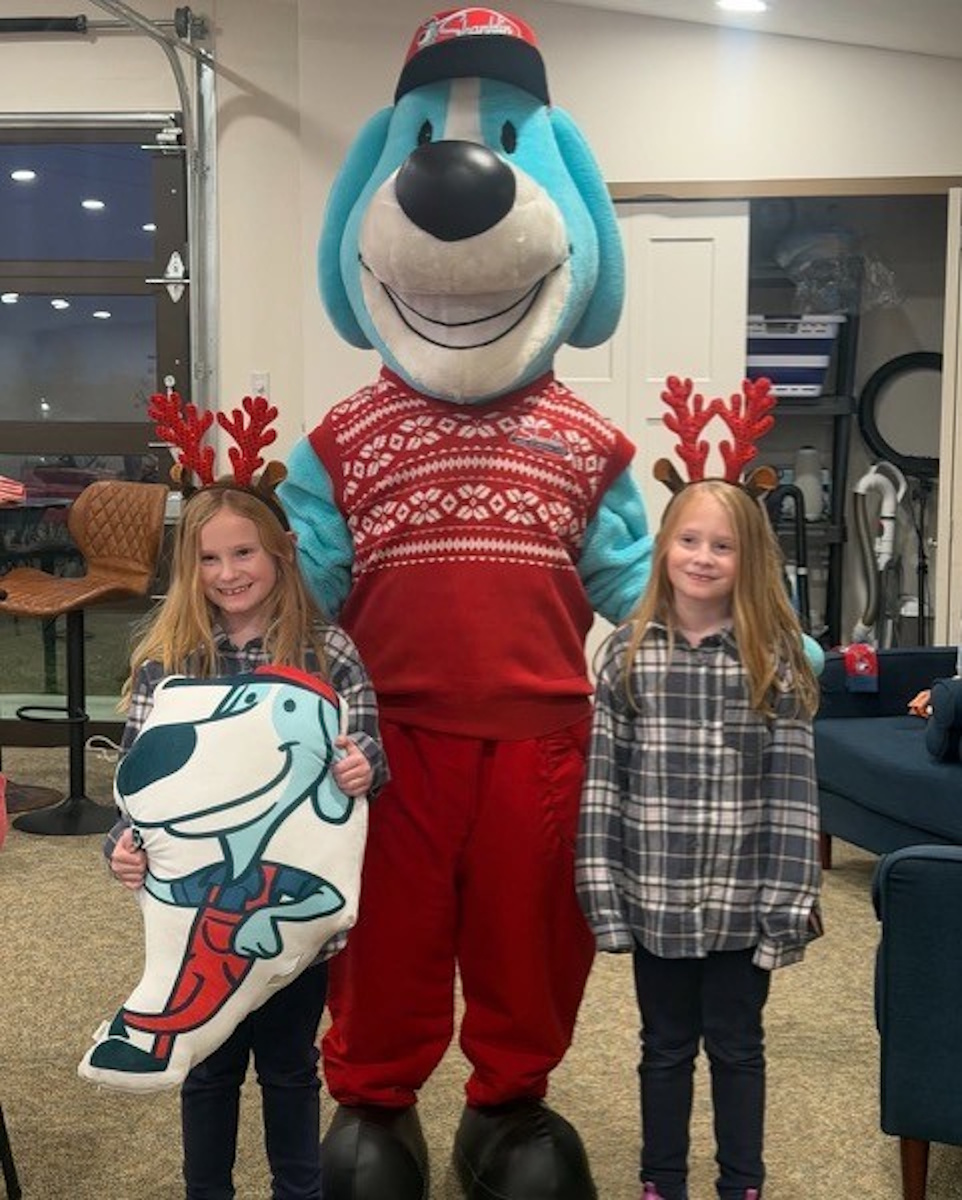
INTEGRATION: Hank has blended seamlessly with Shanklin’s overall brand identity, and kids have very much taken a liking to him. (Courtesy of Shanklin Heating, Air Conditioning, & Electric)
Is A Mascot Right For You?
If, at this point in the article, you’re wondering whether your company should add a mascot, the first step is understanding how you want your brand to be perceived. Premium? Family-friendly? Technical? Local? Whatever your direction, the mascot must support it.
Contractors should also avoid choosing a mascot because it’s cute or trendy, Williams said, or adding one without updating the broader system.
Instead, the best mascots come from authentic brand attributes — geography, values, company history, or even the company name itself.
When considering all of that, your mascot might just come naturally.
Williams said her team also evaluates the competitive landscape when guiding contractors to their mascot of choice. The goal: to select something a company can uniquely “own” in its market.
So, don’t be a copycat.
Instead, think about a mascot that seamlessly aligns with your logo and brand identity. And then, Shanklin said, make it fun.
“Something your team can genuinely rally around and your community enjoys seeing; a great mascot should strengthen internal culture while also creating positive, memorable moments whenever people encounter your brand,” Shanklin said.
Strategy And Integration Matter
When I think of a successful mascot integration, I think of the Michigan Wolverines. (And not just because, obviously, Go Blue.)
When the University of Michigan adopted the “Wolverines,” the nickname had already been tied to the state. In 1927, after U of M had leaned into the moniker, the mascot first appeared at football games — not as a costumed character, but as real wolverines coined Bennie and Biff. That didn’t last long.
Today, the wolverine has evolved into a developed brand symbol that appears across apparel, signage, and digital platforms. There may not be any real-life wolverines scampering around in the Big House these days, but fans are still proud to be one.
The lesson for contractors is this: successful mascots are integrated everywhere and consistently over time — strategically and intentionally.
In HVAC, that could mean appearing on trucks, uniforms, websites, digital advertising, and community events.
“A mascot that strengthens a brand is rooted in a clear story or meaning that naturally connects with the company’s identity and values,” said Williams. “It is visually distinctive and professionally designed so it can be instantly recognized and confidently applied across materials. Most importantly, they’re used intentionally rather than everywhere by default, supporting the brand by adding warmth and recognition while allowing professionalism and expertise to lead when needed.”
While Shanklin utilizes Hank the blue dog consistently to show the more personable side of the company, there’s a fine line.
“When we’re delivering a more direct or technical message, we’re intentional about scaling the mascot back and keeping the focus on professionalism and expertise,” Shanklin said. “This balance allows us to maintain credibility while still leveraging the warmth and approachability the mascot brings to our brand.”
Royal Air maintains that balance with a guide that defines how Reggie can and cannot be used.
“We work hard to keep our mascot use consistent. … Reggie is at events to engage with people, not pressure them,” Mahoney said.
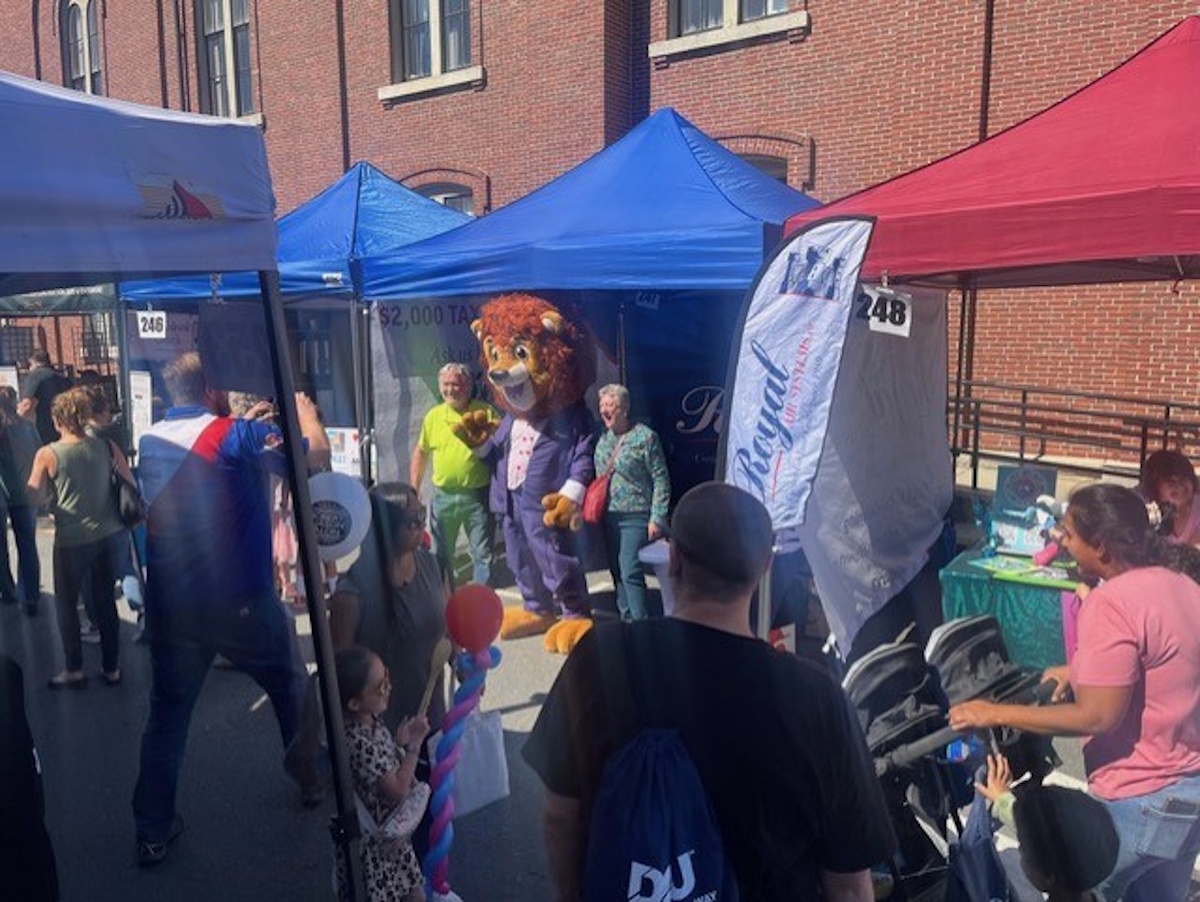
STAY TRUE: For Royal Air, Reggie has just been a continuation of who they are. So Reggie’s interactions, as pictured above, must remain in line with company culture. (Courtesy of Royal Air Inc.)
Royal Air has slowly been moving Reggie across all of its branding: uniforms, its website, social media, digital advertising, all while bringing the mascot to in-person, family-focused events.
And yes — that eight-foot lion is the star of the show.
Mascots As Long-Term Brand Assets
A mascot shouldn’t overwhelm the brand. One of the most important things for contractors to remember is that mascots are not the brand. They’re a brand asset.
“We typically lead with core brand elements first (name, colors, typography, professionalism), then let the mascot support recognition and warmth,” Williams said.
In practice, that means mascots may appear prominently on trucks, social media, advertising, and in community outreach, but maybe not so much in technical conversations around proposals or diagnostics.
Basically, your mascot shouldn’t be there during your service calls — as fun (or terrifying) as that may sound.
“The key is balance: credibility first, character second,” Williams said.
Mahoney said contractors considering a mascot should also be ready to step outside of their comfort zone.
“Be ready to have to use your checkbook to create your invitation to events,” Mahoney said. “Be prepared to feel uncomfortable, both in the suit and standing next to it. Be able to laugh at the mistakes and learn to create memorable moments that allow interactions with your community.”
If Nikki ever happened to wander into one of those community events and spot a mascot, I bet she’d walk right up to it. Which is exactly the point.
“Mascots are not required for a strong brand, but when strategically developed, they can become one of the most valuable recognition assets a contractor owns,” Williams said. “The companies that succeed with mascots treat them as long-term brand equity, not a marketing decoration. Consistency, story, and alignment are what transform a character into a trusted symbol.”
Mascot on the Mind?
Thinking about adding a mascot to your brand? Here are some key questions Williams said to ask yourself:
• What emotion do we want customers to feel about our company?
• Does this character reinforce our promise or distract from it?
• Could competitors easily have the same mascot?
• Will this still represent us well in 10-15 years?
