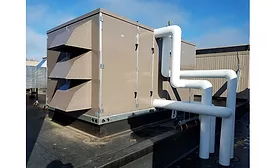
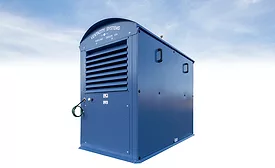
Both models feature a compact 16-inch chassis – ideal for ceilings and small spaces – and a best-in-class hydroscopic resin energy recovery core with no moving parts for maintenance savings and long-lasting comfort.
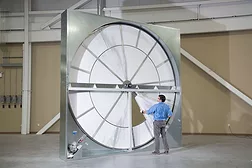
A primary reason for installing an ERV is to recover energy when there is a fresh air requirement for a building. As fresh air is brought into a building, the conditioned air is exhausted back outside to equalize the building’s air pressure.
This new line with Dynamic Seasonal Offset™ optimizes the energy recovery performance of HVAC systems where supply and exhaust air streams are on the same level.
As one of the leading research universities in the United States, Georgia Tech has an ongoing commitment to sustainable design and architecture. At their Atlanta campus, the University has invested in advanced Energy Recovery Ventilation (ERV) systems to provide comfortable and energy efficient indoor environments for more than 23,000 enrolled students.
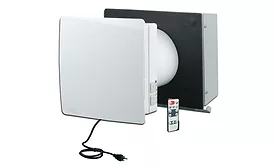
This energy recovery ventilator (ERV) is designed for new construction and renovation projects involving homes, apartments, offices, or commercial buildings. This compact unit is capable of exhausting stale air and supplying fresh filtered air.
Georgia Tech has an ongoing commitment to sustainable design and architecture. At their Atlanta campus, the University has invested in advanced Energy Recovery Ventilation (ERV) systems to provide comfortable and energy efficient indoor environments for more than 23,000 enrolled students.
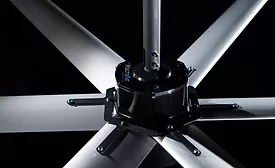
Manufacturers of all sizes are introducing energy recovery ventilators (ERVs); heat recovery ventilators (HRVs); blowers; air curtains; high-velocity systems; and high-volume, low-speed (HVLS) fans that push the industry forward in response to a demand for more efficient ventilation systems.
Most building owners/managers don't know to the degree to which they may see financial benefits from creating healthier buildings. This is a prime opportunity for contractors to fill the void and explain how to achieve healthier buildings through improved IAQ.
At up to 93 percent efficiency, Ventacity heat recovery ventilators (HRVs) and energy recovery ventilators (ERVs) deliver fresh outdoor air within a few degrees of room temperature, reducing heating and cooling loads and HVACR equipment energy requirements by up to 50 percent.