Key Factors for Selecting an ERV
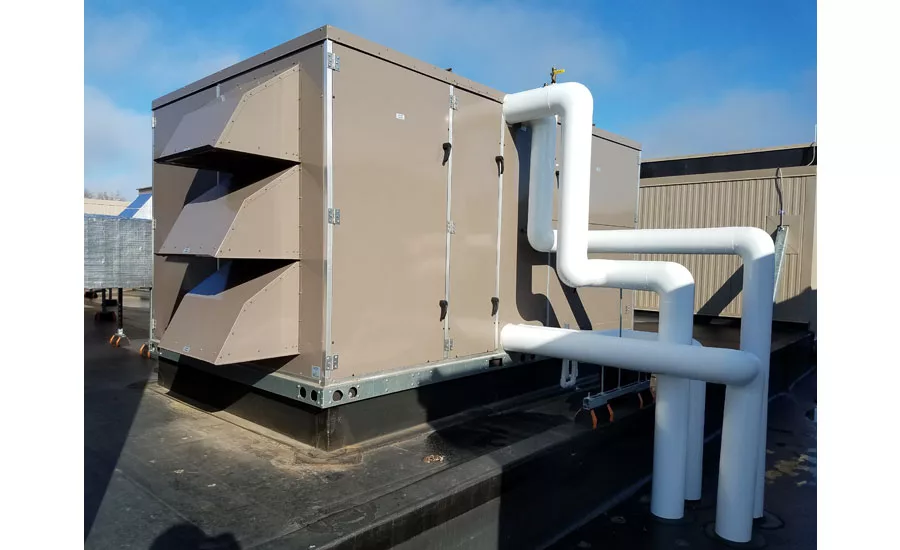
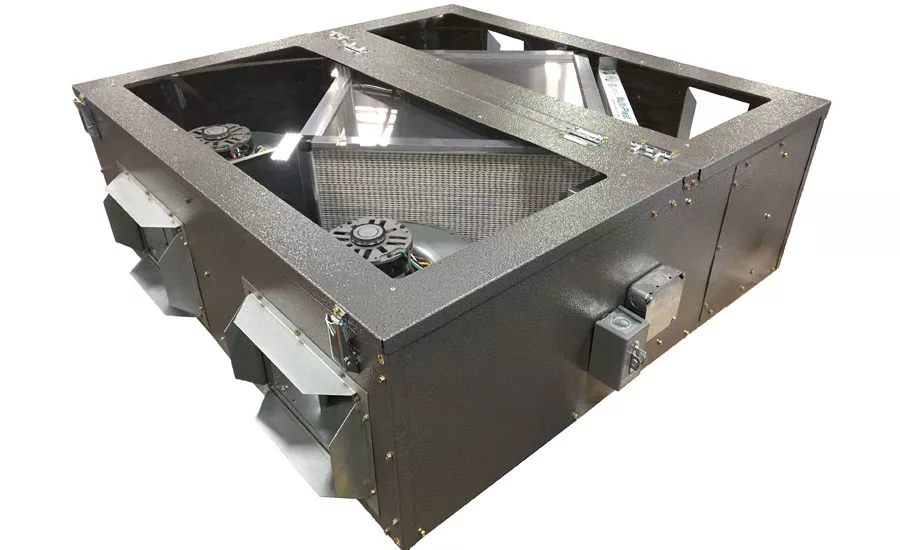
Energy recovery ventilators (ERVs) are designed to improve HVAC system performance by taking the energy from exhausted building air and using it to precondition incoming outdoor ventilation air. This preconditioning reduces the load demand on the HVAC unit while significantly lowering energy costs. When specifying an ERV, there are several factors that can help determine the optimal unit for the application. Functional and performance features are important, but considerations for installation, maintenance, and even long-term durability should not be overlooked.
WHY INSTALL AN ERV?
A primary reason for installing an ERV is to recover energy when there is a fresh air requirement for a building. As fresh air is brought into a building, the conditioned air is exhausted back outside to equalize the building’s air pressure. The air leaving a building has energy in it — warm energy in the winter and cool energy in the summer. An ERV can capture 70 percent or more of the energy from the air leaving the building and transfer it to the fresh air entering the building. This capturing of energy means a rooftop HVAC unit does not have to work as hard, which can result in lower utility bills. The rooftop unit can also be sized smaller since the ERV shares the workload.
In addition to energy savings, ERVs help reduce CO2 and improve indoor air quality (IAQ) by replacing stale air with fresh air, which helps keep occupants alert and healthy. Office and school environments typically have higher occupancy rates and require plenty of fresh air, making them ideal for ERV installation. ERVs also help dissipate odors and can help manage humidity levels by keeping moist air inside during winter and outside in the summer.
INITIAL REQUIREMENTS
Parameters for government regulations and building requirements help drive initial ERV sizing and specification to ensure the unit is large enough to satisfy standards for air movement and energy efficiency. For example, ASHRAE Standard 62.1 “Ventilation for Acceptable Indoor Air Quality” outlines the minimum standards for the amount of fresh air that must be brought into a building, while ASHRAE Standard 90.1 “Energy Standard for Buildings except Low-Rise Residential Buildings” mandates how much energy a building can consume. Properly sized ERVs can help fulfill both requirements for air movement and efficiency.
Key factors to consider during initial specification are the arrangement of the ductwork and the compatibility of other equipment, such as the HVAC unit and air handling units, working in tandem with the ERV. Online ERV calculation tools are available to help specifying engineers determine the proper ERV size and configuration. After those have been determined, there are several other areas of consideration to help select the optimal ERV system.
FUNCTIONAL DESIGN AND PERFORMANCE
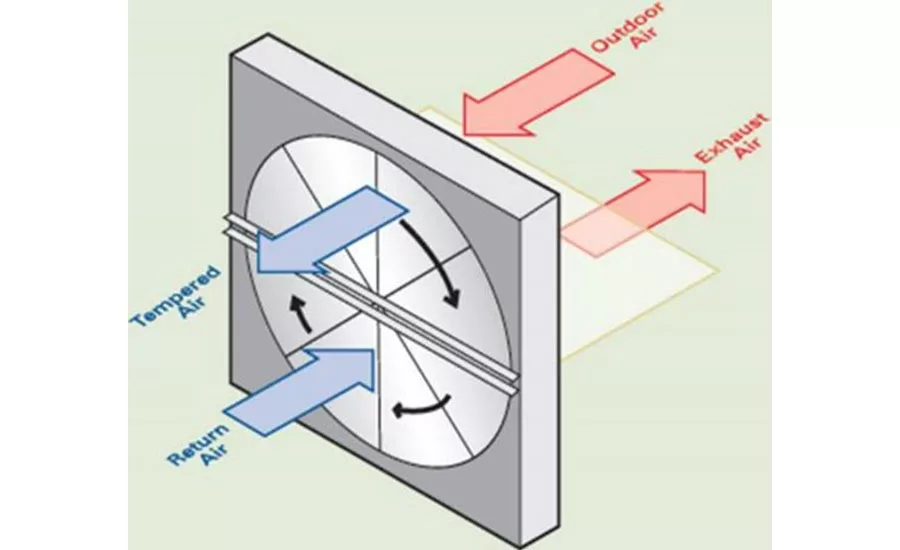
When looking at ERV functional design and performance, the main considerations are the controls and the internal components. Inside, the primary component of many ERVs is the energy recovery wheel. This wheel rotates between the exhaust and outdoor air streams and picks up heat and moisture from one stream and transfers it to the other. Some ERVs contain wheels with a stop-start-jog function that allows the unit to shut off automatically for economizer mode when outdoor conditions are optimal. In addition, some wheels are designed to pivot out of the airstream, eliminating pressure drop and placing the ERV into economizer mode. The wheel automatically detects the outdoor versus indoor temperature and adjusts accordingly.
Another performance factor to consider is whether the ERV is equipped with a variable frequency drive (VFD), or sometimes multiple drives. The VFD controls the electric motor inside the ERV (typically for a blower), adjusting the motor speed and reducing the number of amps being used, thereby saving energy. Also, the VFD provides better blower motor control, which allows for more precise control for incoming airflow. As an added benefit, selecting an ERV that uses silent blowers can reduce ambient noise and be less disruptive to the indoor environment.
Looking for quick answers on air conditioning, heating and refrigeration topics? Try Ask ACHR NEWS, our new smart AI search tool. Ask ACHR NEWS
Equally important are the communicating controls that tie the ERV into the rest of the building system. Most ERVs today are equipped to communicate with the building management system (BMS). An open-source protocol, like BACnet™, makes it easier to integrate the ERV with the BMS and allows for more functionality as equipment manufacturers develop new electronic-based features.
For enhanced functionality, ERVs can be equipped with a variety of electronic sensors that monitor for pressure, temperature, humidity, fresh air, exhaust, airflow, and filter use. Some manufacturers like Ruskin also offer sensors that can detect the level of CO2 in a space and adjust the ERV accordingly, further reducing energy costs and optimizing the building environment for its occupants. Additionally, selecting an ERV that can communicate effectively with a separate installed motorized intake damper offers another level of control over airflow for more efficiency.
Harsh climates can also impact ERV specification. In cold environments, a preheater system or low ambient kit can be used to prevent frost and ice buildup on the recovery module. When using a preheater system, it’s important for the unit to have adequate space between the preheat system and the wheel to allow air to circulate and cool before it hits the wheel.
Some design specifications may call for smaller indoor mini ERV units, which are ideal for reducing humidity or addressing CO2 levels in a classroom or meeting room. These units are different from outdoor models, since they sometimes contain static core plates with fewer moving parts. With these static core units, instead of a wheel moving between air streams to transfer energy, the air streams pass by each other through a series of channels or core plates. These plates or channels heat or cool the air in between and transfer energy. Static core plates can be metal, plastic, or even paper. The downside of paper cores is they can deteriorate over time and compromise a building’s IAQ. Look for static core plates that use 100 percent polymer construction for added durability. In general, ERV wheels are also available for these applications and tend to recover more energy, but also contain more moving parts with the potential for additional maintenance.
INSTALLATION AND MAINTENANCE
ERVs can be installed during new construction or retrofitted into an existing HVAC system. The level of installation difficulty depends on the type of ERV as well as the location of the ductwork and building configuration. By interfacing with the ERV’s communication controls, installers can perform diagnostic testing immediately to ensure the unit is installed properly and calibrated.
For retrofitting into an existing HVAC system, unitized ERVs are a good choice since they can be configured to utilize existing ductwork. Unitized ERVs are often the most cost effective products for energy recovery. They mount directly to the intake air section of a packaged rooftop unit (RTU) to avoid the use of roof curbs and additional roof penetrations. Unitized ERVs have adjustable legs to facilitate quick and easy installation. In addition, these unitized ERVs often come equipped with integrated building communication controls to allow for plug-and-play installation with existing HVAC systems.
Maintaining an ERV can often be managed by nontechnical personnel. However, there are a few key design factors that can make maintenance easier. Hinged or removable panels provide easy access to the unit’s wheel and filters. Energy recovery wheels that are segmented into separate pieces can be removed individually and make the unit easier to clean. Wheels that require removing the entire chassis for cleaning can increase maintenance time and may require a professional technician. In more advanced models, features such as a stop-start-jog function allow maintenance personnel to remotely remove condensation and clean the wheel. For durability, wheels made with a noncellulose based material with a hydrophobic resin can last almost indefinitely, saving time and replacement costs.
In more advanced units, built-in sensors can also play an important role in monitoring ERV performance for predictive maintenance. For example, wheel rotation sensors provide a remote method of verifying that the energy recovery wheel continues to rotate between the airstreams. Dirty filter sensors provide alarms for when filters need to be cleaned or changed. Temperature and pressure sensors located at strategic points in the airstreams can be used as a basis for a variety of predictive maintenance functions.
DURABILITY AND CONSTRUCTION
Most ERVs are designed to last 20 years or more. However, there are some construction features which may help the unit surpass that milestone. ERVs with double-wall construction offer durability and enhanced thermal protection, so less energy is lost while operating. In addition to durability, these design features also contribute to a quieter unit. Many advancements have been made to ERV systems over time that make modern versions extremely reliable with very little ongoing maintenance.
For outdoor applications in high-wind areas, consider installing an ERV with hurricane-proof roof curbs for added protection. Make sure the electrical components in the unit are protected from sparks that may occur when paired with a natural gas HVAC.
WHICH ERV IS RIGHT FOR YOUR PROJECT?
ERVs are a sound investment that can greatly reduce heating and cooling costs while creating a healthier indoor environment for a building’s occupants. ERV selection should be a calculated decision that includes consideration of the unit’s performance, maintenance requirements, durability and longevity. In addition to proper sizing and configuration, specifying engineers should evaluate the above criteria to determine which ERV system will provide the best return on investment and total cost of ownership over the life of the unit.
Publication date: 8/20/2018
Want more HVAC industry news and information? Join The NEWS on Facebook, Twitter, and LinkedIn today!
Looking for a reprint of this article?
From high-res PDFs to custom plaques, order your copy today!