California Heat Pump Partnership Aims to Scale Up Electrification of HVAC
Group plans coordinated ‘barrier-busting’ to reach 6 million electric heat pumps installed by 2030
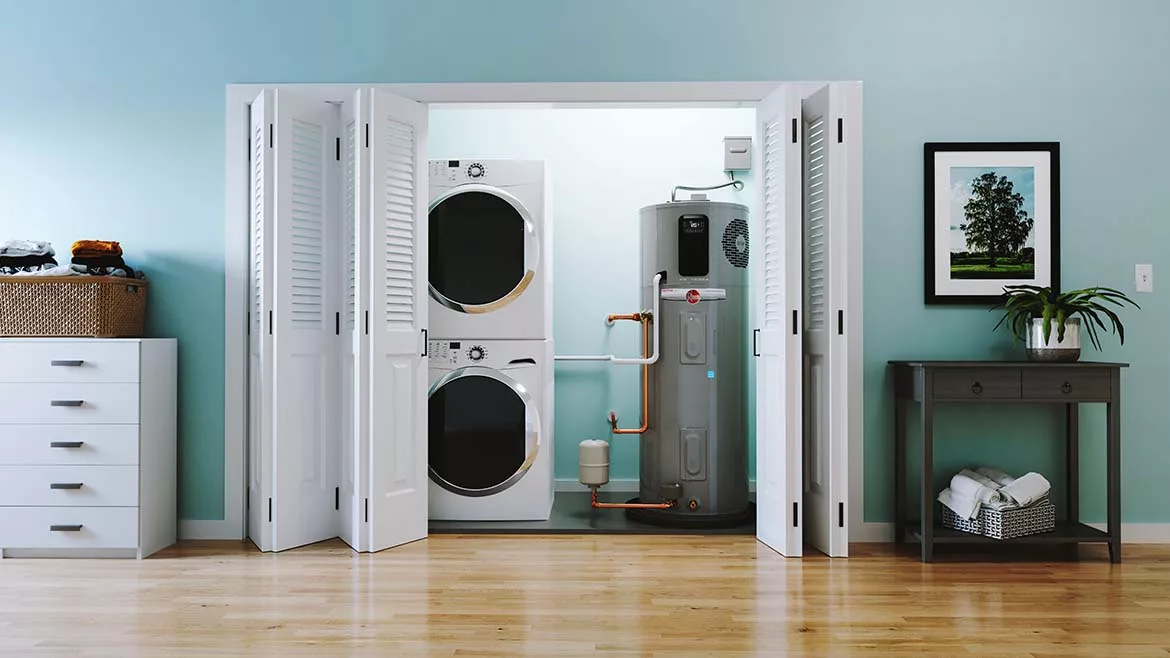
California, the world’s fifth-largest economy, currently has about 1.5 million heat pumps deployed. It’s on pace to install just under 200,000 heat pumps a year.
But, the state has a goal to install six million heat pumps by 2030. To leaders in the electrification movement, the current rate is not fast enough.
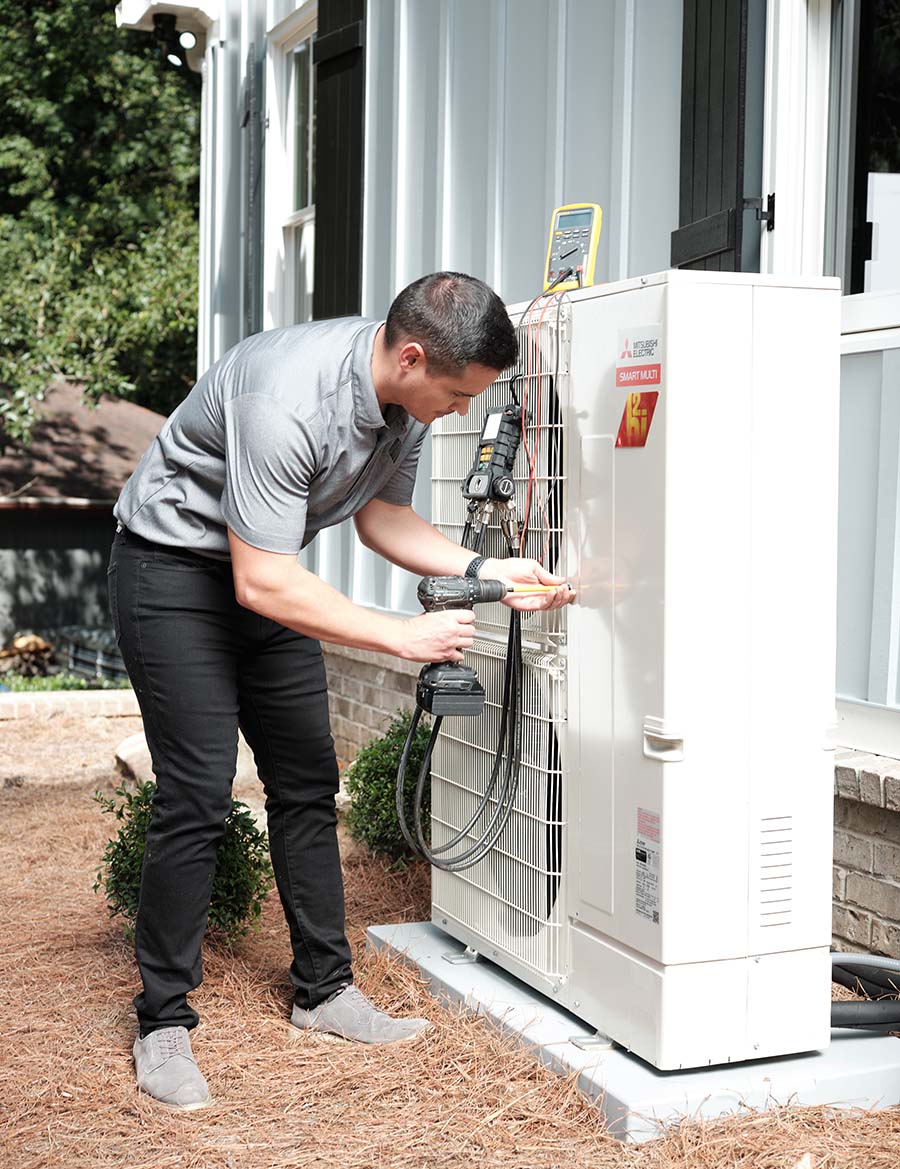
SPEED IT UP: The California Heat Pump Partnership’s goal is to quadruple the number of heat pumps installed each year, driving the clean energy economy through widespread heat pump adoption. (Courtesy of METUS)
Enter the California Heat Pump Partnership (CAHPP). A newly formed private-public partnership, it aims to bring together state agencies, manufacturers, distributors, utilities, and more to rapidly scale California’s heat pump market. Their goal is to quadruple the number of heat pumps installed each year, closing that 4.5 million gap to drive the clean energy economy through widespread heat pump adoption.
David Hochschild, chair of the California Energy Commission, said the partnership will help government and industry leaders do the “barrier-busting” necessary to make sure heat pumps are accessible to all Californians.
“California knows how to scale clean energy,” he said. “We've done this with electric vehicles, solar, wind, and battery storage — and now it's time to take the benefits of heat pump technology mainstream.”
A Heat Pump Blueprint
The CAHPP will develop a blueprint outlining how to address technical, market, and policy barriers to achieve California’s heat pump targets. The partnership will also deploy a statewide consumer marketing campaign through “The Switch Is On,” an initiative launched by the Building Decarbonization Coalition, to educate, inspire, and make switching to electric appliances easier for communities, contractors, and all those who live and work in buildings.
Stephanie Ziegler, director of environmental product strategy at HVAC distributor Ferguson, attended the CAHPP’s inaugural meeting as a board member and told The ACHR NEWS that the group’s first task was to understand the magnitude of the goal. Next, they’ll be coming up with a game plan on how to realize the goal.
“It was incredibly collaborative, free-flowing brainstorming, as we went through some of the data points that they were putting out there, even talking about ‘OK, how should we market this effort?’” she said. “What’s the ‘Got Milk’ campaign for this? — how do you make it easy for consumers, contractors to understand what it is that we're trying to accomplish and why it's good, and almost reframing what a heat pump is in a way that's more digestible and easier to understand.”
Among CAHPP’s members are:
- Heat pump manufacturers, including A. O. Smith, Bradford White, Carrier, Daikin, Fujitsu General America Inc., Johnson Controls, Lennox, LG, Mitsubishi Electric, Rheem, and Trane Technologies
- Distributor: Ferguson
- Electricity providers, including Pacific Gas and Electric, Edison International, Sacramento Municipal Utility District, and Ava Community Energy
- Policymakers representing the California Energy Commission, California Air Resources Board, California Public Utilities Commission, and the Office of Governor Gavin Newsom
- Innovation leaders: Los Angeles Cleantech Incubator
Here are four things that HVAC industry leaders participating in the CAHPP want to address as part of the “barrier busting” required to take heat pumps mainstream:
1. The name
“It’s not a very good descriptor of the technology.”
That’s a big concern of Dave Calabrese, senior vice president of government affairs, Daikin, and a board member of CAHPP. To put it simply, some people hear the word “heat” and don’t realize the systems provide cooling, too.
The other barrier, he said, is that some who have had experience with heat pumps in the past may not realize that today’s cold-climate models are light years ahead of grandpa’s heat pump that didn’t really work that well in the winter.
“Twenty years ago, the first heat pumps to come onto the market really had some problems,” he said. “And there are some people who have kind of a lingering feeling that the technology hasn’t improved” — although this concern, he said, does seem to be fading.
2. The awareness aspect
Surprise, surprise: HVAC products — even the most cutting-edge — aren’t usually top-of-mind for the American consumer. At CAHPP’s first meeting, one of the major discussion topics was how to raise that awareness.
Calabrese lived through this himself once before, back when he worked in the home appliance industry. At that point, people generally didn’t think about their refrigerator too much, but today, a fancy, shiny, stainless steel fridge is a highly desirable kitchen feature.
“It's a little different with an HVAC system,” he said. “So it's getting people aware of it, and desiring it” so that when the contractor comes in, the customer will be eager to hear about options — or even ask for it without being prompted.
Awareness also means getting the word out that heat pumps are for everyone, not just the affluent who can afford spiffy new appliances. And the best way to make heat pumps accessible, said Chris Day, vice president, global product strategy, marketing and training at Rheem, lies in establishing a robust, multi-year heat pump incentive program.
“Reducing the total cost of heat pump installations is a significant opportunity to grow the market,” he said. “California has approximately 14 million existing single-family and multifamily homes, so efforts must focus on scaling heat pump installs and streamlining state regulatory standards to ensure consistent adoption.”
3. The learning curve
Contractors, too, need to be up-to-date on all things heat pumps and eager to offer them to their customers. Making sure they are ready to handle the demand is a big piece of meeting California’s goal of 6 million heat pumps by 2030, said Ziegler.
“We can have lofty, mighty goals, but if the workforce that is intended to actually install these pieces of equipment aren't ready, or are resistant, it's going to fall flat,” she said. “So I want to make sure that the contractor is taken care of, in the sense that they understand what's coming their way, what it's going to take, and how do they actually fold this into the existing business model.”
According to Dana Fischer, senior director - regulatory strategy, Mitsubishi Electric US Inc., Heating and Air Conditioning Division, there’s “still a pretty big learning curve across the United States on heat pumps” — especially today’s heat pumps and their recent cold-climate advancements. The good news, he added, is that HVAC manufacturers already offer technical support and training that contractors can take advantage of.
“Part of the messaging in our involvement in California is to highlight that there are existing contractor bases and training centers that can accommodate a lot of what the policymakers are asking for,” he said, “so it's really beneficial for them to focus their efforts on enhancing existing networks, as opposed to reinventing the wheel.”
4. The grid
HVAC contractors and OEMs don’t control the country’s power grid, yet the role of electrical utilities play a massive role in the success or failure of the electrification movement — including the electrification of heating and cooling.
Electricity providers including Pacific Gas and Electric, Edison International, Sacramento Municipal Utility District, and Ava Community Energy are represented on the CAHPP board. Fischer, at METUS, said it’s “instructive for us, as OEMs, to hear the constraints that the utilities are under, and the concerns that the policymakers have to enact these programs and meet their goals.”
“From the outside, we hear about issues with the grid in different parts of the country, California included,” he said. “And we also know that the cost or the price of electricity and delivery in California is quite high, relative to the price of natural gas. One of the key hurdles for mass adoption is … not just messaging around the technology, but also doing the work to figure out how to make it economically rational for consumers to make the choice to electrify, and what the impacts are on disadvantaged communities.
“I’m no utilities expert, but it seems like a fair amount of the elevated rate is associated with infrastructure improvements that have been made, or are being made … for climate resilience,” he continued. And there’s a weird kind of circular logic at play. “If you have elevated electric rates, you're basically thwarting decarbonization, which is the whole point of making those upgrades in the first place. … We don't want to leave low-income homeowners on the gas grid, because eventually they're going to be holding up everything, and then the cost of natural gas is going to be really high. So we want to make sure that we're electrifying them first. But we also don't want them to pay higher costs now, even if we pay for the entire system [through incentives]. How do you reconcile those two desires?”
In the meantime, HVAC manufacturers are doing their best to maximize the benefits to both the grid and consumers. Rheem, for example, is incorporating flexible demand standards and demand-response capabilities into its heat pumps and heat pump water heaters.
Looking for a reprint of this article?
From high-res PDFs to custom plaques, order your copy today!