ACHR News
search
Ask ACHR NEWS AI
cart
facebook twitter instagram linkedin youtube
  • Sign In
  • Subscribe
  • Sign Out
  • My Account
ACHR News
  • NEWS
    • Breaking News
    • New HVAC Products
    • Featured Products
    • Manufacturer Reports
    • HVAC Data
    • Legislation
    • ACHR NEWS Centennial
  • RESIDENTIAL
    • Air Conditioners
    • Furnaces
    • Residential Heat Pumps
    • Ductless
    • Residential IAQ
    • Testing, Monitoring, Tools
    • Components & Accessories
  • COMMERCIAL
    • Air Handlers
    • Rooftop Units
    • Chillers and Cooling Towers
    • Commercial Heat Pumps
    • Boilers and Hydronics
    • VRF/Ductless
    • Commercial IAQ
  • REFRIGERATION
    • Refrigerants
    • Refrigerant Regulations
    • Leak Management
  • CONTRACTOR PRO
    • Geothermal
    • Homeowner Study
    • VRF and VRV Ductless
    • Unitary Trends
  • EDUCATION
    • Training and Education
    • Business Management
    • Service and Maintenance
    • Continuing Education
    • Market Research >
      • HVAC Brand Awareness Report
      • VRV, VRF, VRVZ Report
      • Unitary Trends Report
      • Water Heat Professionals Report
    • Webinars
    • Sponsor Insights
    • eProducts Info
    • White Papers
  • EVENTS
    • HVAC Contractor Forum
    • Industry Events and Webinars
  • MEDIA
    • Videos
    • AHR Expo 2025 Videos
    • Podcasts >
      • ACHR News Podcast
      • HARDI Podcasts
      • AHR Expo Podcasts
      • ACCA Podcasts
    • Interactive Spotlights
    • Quizzes
    • eBooks
    • HVAC Talkback
  • HVAC GROUP
    • ACHR NEWS >
      • Current Issue
      • Digital Edition
      • Subscribe
    • Distribution Trends
    • SNIPS NEWS >
      • Join SNIPS NEWS
    • Engineered Systems News >
      • Join ES News
    • HVACR Directory
    • Contests
    • Newsletters
    • Contact
    • Advertise
    • My Account

Tracking Down Airflow Problems

April 29, 2005
Have you ever had one of those customers you just can't seem to make happy? You've tried everything in your power and vast depth of your knowledge and expertise, but the person insists that the building just isn't comfortable?

The customer keeps saying, "I've been in other buildings/homes that are comfortable, and mine just doesn't feel right."

I guess it's still the technician in me that can remember these calls. "If it's broke, I can fix it," I'd say to myself; but everything was working! If I had used that mentality and walked away from this customer, the result would have been a phone call to the next contractor.

I never claim to know it all, but I have been around enough to know that when you find out what will make a customer happy, you're a hero. And, more importantly, I've learned that every customer is a little bit different.

Here's a tip that I have used that can possibly make you a hero, too.

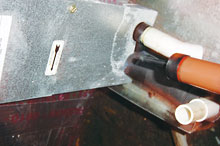
Technicians can use a smoke puffer to show the owner where leaks are in the system and what can be done to fix them. Typical problem spots can include flex connectors, like the one shown here.

Invest In Smoke Puffers

This visual effect will make you look like a guru. Stand at an outside door and leave it just cracked open. Puff some smoke at the crack. I've seen some buildings so negative you can't even see the smoke! Positive buildings are actually beneficial, if done properly. But for now, let's talk about buildings that really suck.

A little bit of common sense will go a long way here. Why is the building negative? In some cases, stack effect will cause this, and in other cases, it is caused by how air is mechanically removed from the building. It is the latter cause that I will focus on in this column.

Let's start with the common-variety restaurant. Make an inventory of all the equipment. Let's say that we have two packaged air conditioning systems on the roof; one exhaust fan and hood over the cooking appliances; a make-up air fan for the hood; and an additional exhaust fan for the restrooms.

If this building is negative, more air is being exhausted than is being made up, right? The typical service call from this customer could range from high utility consumption to high humidity levels and include sweating supply registers, carbon monoxide infiltration, smoke rollout from the hood, and a host of other problems.

Looking for quick answers on air conditioning, heating and refrigeration topics? Try Ask ACHR NEWS, our new smart AI search tool. Ask ACHR NEWS →

The most common call, at least down here in Texas, is "It's not cooling. My customers are hot!"

The puffer and a digital camera are excellent tools to use to document leaks. You can take pictures in the attic without the owner having to follow you up there.
The technician may find that one or both of the air conditioning systems is not working and gets them running, and now cold air is blowing out of the vents. The restaurant manager is happy again. Or is he?

Remember: The building is

the system. Check everything that affects your customer. It is very common for the technician to overlook the slipping or broken belt on the make-up air fan. Follow me now - if the building is perfectly balanced when all the fans are running, belts are tight, filters are clean, etc., what will happen when the make-up air system stops producing the air it should? The exhaust fan doesn't know any better; it is going to suck the air out it was designed to suck. Where is that air going to come from?

Get your smoke puffer out again and, this time, keep the doors shut. You can quickly ob-serve how tight the doors close now! Puff around the ceiling and walls, wherever there is a penetration - light fixtures, plumbing fixtures, plugs, grilles, etc.

Is the gas water heater inside the building? Puff around the vent connection. Does your puff come back at you? If it does, don't you think this has become a dangerous situation?

All right, the make-up air fan is running, the building is still negative. Let's run through some things.
Here, a technician conducts tests near the evaporator coil at case penetrations.

Additional Checks

First, you have to know that the make-up air fan is usually undersized to the exhaust cfm by approximately 20 percent. Most hood designs are slightly negative at the hood to ensure proper capture of grease and/or smoke, etc. Also, remember we have an exhaust fan in the bathroom. What this means is that if the building were to be perfectly balanced or preferably slightly positive, additional powered make-up air is required.

For the most part, this is accomplished by the air conditioning system(s). When packaged systems are used, outside air intakes can be installed easily. The air balancer sets the manual louver or minimum position of the economizer.

Now that we have some kind of an understanding of the building system, what functions and items have become important?

  • Both indoor blowers on the A/C systems must run whenever the hood system is on.

  • The blower belts and sheaves must be in good condition.

  • The A/C system's cooling coils and filters must be kept clean.

  • The outside air intake screens/filters must be well-maintained.

  • The outside air damper set point(s) must not be adjusted.

  • The make-up air fan and filters should be well maintained.

  • The air conditioning duct system should be tight. (Yes, we can apply these principles to homes as well.)

    Say we have a leak in the supply duct in the attic. Is the attic inside or outside the building system? The attic itself is technically outside. When air is being mechanically driven outside, we call this an exhaust fan! The home has become negative.

    Smoke tests conducted by windows and doors can provide visual proof of air movement for homeowners and building owners. Tests should be conducted when all the exhaust fans are on.
    What other items could we add to get this home to suck even more?

  • Bathroom exhaust fans.

  • Kitchen exhaust fans.

  • Clothes dryers.

  • Attic exhaust fans.

    There is a sermon for each of the above items I won't preach on now. The idea is to keep your mind and eyes open "outside the box."

    Supply air leakage doesn't have to be just a flex that blew off. Numerous small leaks can have the same effect.

  • Duct plenum connections to equipment.

  • Unsealed seams at plenum joints.

  • Flex connectors at plenum.

  • Flex connectors at the register box.

  • Unsealed register box to sheetrock/wall/ceiling structure.

  • Damaged vapor barrier on fiberglass duct board.

  • Unsealed openings on coil enclosures.

    Negative homes can experience their own problems, such as excessive dust, humidity levels, and power consumption. I have seen and heard of cases where a contractor was told by a homeowner, "It just doesn't seem to keep my house cool." The contractor would reply, "Well, we'll put in a bigger system." What effect will a bigger system have on a home that has supply air leakage?

    Now we have the extra capacity to overcome the additional heat load of the negative infiltration, but as soon as the sun goes down, the system is greatly oversized. The homeowner will turn the thermostat down because the humidity is not being removed by the now short-cycling system. To top it off, they still aren't comfortable and paying more to feel that way!

    This is a very nontechnical way to see if ducts are leaking: Turn on all the exhaust fans the home or building has (provided they vent to the outside) or put a box-type fan in the window, blowing air to the outside.

    Now take your puffer (or a cigarette) and hold it up to the supply registers of the A/C system. (The system should be off when doing this!) If you can see the smoke moving as through an airstream, the ducts leak.

    Your customers' buildings don't have to suck. They can be made to be happy. When they tell you "I never felt this comfortable before," it sure makes you feel good, doesn't it?

    Hull is vice president of service for Rosenberg Indoor Comfort, San Antonio. He is NATE certified and a graduate of the Universal Technical Institute. He is experienced in residential installation, maintenance and service, commercial refrigeration installation and service, and service management.

    Publication date: 05/02/2005

  • Share This Story

    Looking for a reprint of this article?
    From high-res PDFs to custom plaques, order your copy today!


    Recommended Content

    JOIN TODAY
    To unlock your recommendations.

    Already have an account? Sign In

    • HVAC-enrollment

      The Trades Are Back: HVACR Programs See Nearly 30% Enrollment Spike

      A new wave of future technicians is entering the pipeline.  
      News
      By: Matt Jachman
    • 2025 Top 40 Under 40

      2025 Top 40 Under 40 HVACR Professionals List

      The 11th annual Top 40 Under 40 list highlights those...
      HVAC Commercial Market
      By: Hannah Belloli-Oster
    • LG Ductless Mini-Split Systems

      The 9 Types of Heat Pumps

      As the U.S. moves toward electrification, heat pumps are...
      Air Source Heat Pumps
      By: Joanna R. Turpin
    Subscription Center
    • Create an Account
    • Start a Subscription
    • Manage My Account
    • Sign Up for Newsletters
    • Visit Customer Service
    • Update Preferences

    More Videos

    Sponsored Content

    Sponsored Content is a special paid section where industry companies provide high quality, objective, non-commercial content around topics of interest to The News audience. All Sponsored Content is supplied by the advertising company and any opinions expressed in this article are those of the author and not necessarily reflect the views of The News or its parent company, BNP Media. Interested in participating in our Sponsored Content section? Contact your local rep!

    close
    • Piggy Bank
      Sponsored byWatercress Financial

      Energy Prices, Inflation, and HVAC: What Today’s Homeowners Care About

    • Refrigerated Food
      Sponsored bySolstice Advanced Materials

      R-455A Refrigeration: A Cold Storage Solution for the Future

    • Airex Rooftop Units
      Sponsored byAirex Manufacturing Inc

      Consolidating Roof Penetrations: A Growing Trend in Multifamily HVAC Design

    Popular Stories

    Outdoor-condensing-units.jpg

    EPA Removes R-410A Installation Deadline

    HVAC-Price-Increase-graphic

    HVAC Price Increase List: June 2026

    Trump-Section-232.jpg

    Trump Reduces Section 232 Tariffs on HVAC Equipment to 15%

    ACHR NEWS Editor Chris Gray Presenting HVAC Minute 5-18-2026

    HVAC Manufacturers Fight Pricing Lawsuits

    R410A-Refrigerant-Cylinder.jpg

    Refrigerant Recovery is a Revenue Opportunity

    View The ACHR NEWS
    Centennial Anniversary Timeline

    The ACHR News Timeline Chart
    Submit a Letter
    Submit a letter to our editors.

    Events

    November 6, 2025

    Next-Gen Data Center Cooling: HVAC Innovation and Real-World Solutions

    On Demand As AI workloads and high-density computing push traditional cooling methods to their limits, the data center industry is accelerating the adoption of next-generation HVAC technologies.

    June 9, 2026

    Before You Go All In on AI: Set Up Your Business to Actually Win

    In this webinar, we'll walk you through exactly what to get in place before you add AI to your business. You'll leave with a clear picture of where you stand today and a practical action plan to set yourself up for real results.

    View All Submit An Event

    Poll

    Summer Staff

    Are you fully staffed for the summer season?
    View Results Poll Archive

    Products

    BNI Mechanical/Electrical Square Foot Costbook, 2026 Edition

    BNI Mechanical/Electrical Square Foot Costbook, 2026 Edition

    See More Products
    A2L Refrigerants - Free Webinar - May 21, 2026

    Related Articles

    • Common residential HVAC airflow problems and solutions

      See More
    • Common airflow problems when installing residential HVAC duct systems

      See More
    • By taking two pressure measurements across the coil, you can quickly determine if it will significantly restrict airflow.

      Duct Dynasty: Prevent Airflow Problems with Replacement Indoor Coils

      See More

    Related Products

    See More Products
    • HVAC/R Electrical Troubleshooting: Deciding where to begin DVD

    • Evaluating-and-Troubleshooting-Refrigeration-Systems-Video-Cover-210x300.jpg

      Evaluating Refrigeration Systems Troubleshooting & Identifying Problems CONTINUED

    • 0880690186-228x228.jpg

      Airflow in Ducts

    See More Products
    ×

    Sign Up. Stay Informed.

    The #1 trusted source for the HVACR industry since 1926

    SUBSCRIBE
    • RESOURCES
      • Advertise
      • Contact Us
      • Advisory Board
      • Classifieds
      • Submit a Letter
      • Directories
      • Store
    • ACCOUNT CENTER
      • Create an Account
      • Start a Subscription
      • Manage My Account
      • Sign Up for Newsletters
      • Visit Customer Service
      • Update Preferences
    • SERVICES
      • Marketing Services
      • Reprints
      • Market Research
      • List Rental
      • Survey/Respondent Access
    • STAY CONNECTED
      • LinkedIn
      • Facebook
      • Instagram
      • YouTube
      • X (Twitter)
    • PRIVACY
      • PRIVACY POLICY
      • TERMS & CONDITIONS
      • DO NOT SELL MY PERSONAL INFORMATION
      • PRIVACY REQUEST
      • ACCESSIBILITY

    Copyright ©2026. All Rights Reserved BNP Media, Inc. and BNP Media II, LLC.

    Design, CMS, Hosting & Web Development :: ePublishing