The Importance Of The Service Technician
The Food Marketing Institute (FMI) Energy and Technical Services Conference dealt in depth with such topics as the total cost of running a store, the role of commissioning a facility, managing refrigerants, and secondary loop technology, among other issues.
Throughout the two-and-a-half days of technical talk, speaker after speaker noted the role technicians play - even if there were times when performances of supermarket technicians came in for less-than-rave reviews.
Total Cost
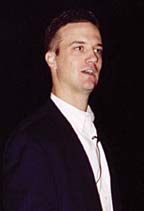
Jason LaRose, an associate at McKinsey & Co. of Charlotte, N.C., offered a cautionary tale for those who base refrigeration installation decisions on whatever installing contractor can do the job cheapest. He urged an audience of supermarket decision makers to factor in the total cost of ownership (TCO)."Do you buy a car that has the lowest upfront cost, but ends up costing a lot in repairs?" he asked. "Think about costs in terms of an iceberg, in which the first costs are only the top."
He put the onus for such decisions on the decision makers within a supermarket more so than on the installing contractor. "It is a question of what do I need versus what I ask suppliers for. It is a question of how much time does it take me to work with this vendor versus that vendor."
He noted that a complaint among many store operators deals with qualified technicians. "They say, ‘Hey, I don't have as good of a tech as I used to have,' or, ‘That store has a better tech.'"
He suggested that defining a good tech should not be determined by urban legends or stereotypes. "Top technicians who spend less on parts also have the most energy-efficient systems. The techs who are less skilled are buying more parts." LaRose said that often the technicians who are best able to service equipment so it is running most effectively are also the techs who are able to obtain just the right tools and components at the best cost.
In general, he noted that the selection process for vendors, be they contractors or suppliers of product, should result in a good relationship. "Don't have adversarial relationships with vendors. You work together to create a win-win relationship."
Looking for quick answers on air conditioning, heating and refrigeration topics? Try Ask ACHR NEWS, our new smart AI search tool. Ask ACHR NEWS
Commissioning
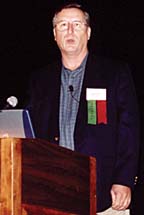
"Start-up is not commissioning," said Scott Carr, director of Energy Services for Ingersoll-Rand. Commissioning, he said, is a more complex, detailed and independent process in which every aspect of taking a supermarket from groundbreaking to welcoming customers is carefully planned and monitored, with that monitoring sometimes continuing for years thereafter.What that means is that in-stalling - and servicing - contractors need to be aware that a really big Big Brother is looking over their shoulders.
Carr said the purpose of commissioning is to "reduce equipment costs, increase equipment life, optimize use of equipment, and make customers happy and comfortable."
Often this process requires an outside organization, he said, whose personnel often deal with determining what the owner of the store wants in terms of, for example, energy savings. Decisions have to be made on what aspects of a store's operation are handled in-house and what is outsourced - and why.
Once installing and service contractors are picked, those people need to be involved to make sure they have a complete understanding of the situation.
James Kirk of A&P talked about the realities of commissioning. "It can be tough to pull together. Be as thorough as possible."
In commissioning projects he was involved in, he said the energy savings issue was realized by establishing a benchmark for new stores through the detailing of what was happening in existing stores. "We wanted every scrap of information we could get, right down to compressor plate information."
He even cautioned his peers to be careful when picking the outside commissioning organization. "Be aware that everybody and their brother-in-law are going to be in the commissioning business."
He said that once you choose your vendor, then you need to let everyone know what is expected. One key, he said, is a meeting with service contractors who are going to work on the equipment. "Spend a lot of time with them. They are in the trenches. They can sink your ship."
A byproduct of going back to review existing stores for benchmarking is finding out ways to improve the store. Carr also alluded to retro commissioning.
Kirk noted that over a three-and-a-half-month period, 153 stores were surveyed in detail and some 2,000 maintenance issues were uncovered, including those dealing with liquid level, head pressures higher than they should be, and suction pressures lower than they should be.
Managing Refrigerants
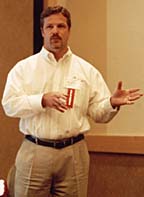
A presentation by Jim Peterson, vice president of Verisae, a Minneapolis-based software company, focused on the value of real-time refrigerant tracking that uses a computer, software, and Internet access."Refrigerant management is important because refrigerants are an expensive asset," he said. "When it is leaking, it is an on-going cost. We are trying to turn it into a fixed asset."
He noted a typical 100-store chain could have up to 400,000 pounds of refrigerant, which at $8 a pound could be a $2.4 to $3.4 million asset. Not monitoring inventory or leaking means trouble, he said. "You can't manage what you can't measure."
Refrigerant management means understanding trouble locations and monitoring service contracts more closely. "The first problem is ‘What do you own?' Refrigerant management can gather data for each system over 50 pounds."
Refrigerant management, he said, can also help deal with a range of issues, such as contractor turnover and EPA expectations.
A myriad of information can be input into a computer. That, he said, may be labor intensive, but it does allow managers to keep better track of service work. It can also help provide information requested by the EPA.
Secondary Loop
The on-again, off-again issue of secondary loop technology in supermarkets was revisited at the conference, this time with two managers of store systems offering real-world details of their work with the approach.To set the stage for their talks, Van Baxter of the Oak Ridge National Lab reported on secondary loop efforts throughout the world under the auspices of the International Energy Agency. Much of his report was based on a talk he had given a few weeks earlier at the International Congress of Refrigeration. That talk reported on work in Canada, England, Sweden, and Denmark. The presentation gave the audience the assurance that while secondary loop is still a work in progress; work is being done in that area.
Among current findings, Baxter said that while most of today's secondary loop has single-phase approaches, future configurations may be two-phase. He noted that current secondary loop refrigeration uses glycols with conventional refrigerants; future systems could find ice slurry in medium-temperature applications and CO2 in low-temperature applications.
Baxter said a prime goal of secondary loop is to reduce Total Equivalent Warming Impact (TEWI). If a tight, well-running system achieves that, it could temper the political hot potato related to global warming. "Then we won't have to worry about what refrigerant to use. The key is focusing on TEWI."
Eric Corrie of Shaw's Supermarkets said his company decided to try a secondary loop "because we wanted to see if what was being said works." A 65,000 square foot store targeted for construction in New Hampshire was chosen.
The configuration included
R-507, a glycol secondary refrigerant, discuss semi-hermetic compressors, air-cooled condensers, solenoid valves, and fluid pumps.
He said, "The contractor who did the installation had been doing direct expansion systems, so there was a learning curve." The installation of piping was a challenge because of the learning curve and because the project took place during a New England winter.
"The contractor at first was negative, but the work eventually went well."
1. Overall the charge of the HFC refrigerant was reduced by 30 percent over conventional direct expansion, although the cost of the glycol did offset much of the savings.
2. Energy costs did go up by 7 to 8 percent overall in the store. This was an issue, Corrie said, that could be improved with system improvements and better installation practices.
3. Product integrity was favorable and could well be a key to the future of secondary loop. Secondary loop was found to have "fewer temperature fluctuations issues especially in defrost. As a result there is the possibility of having longer product shelf life.
Corrie did say the issue of how long a product remains on a shelf for sale requires a store-wide decision, so upper management would have to buy into the extended shelf life before that could be used as a selling point for secondary loop.
4. Equipment costs were about 25 percent more than comparable direct expansion and installation was 12 percent more. Both could come down, he said, with later generations of equipment and with "more comfort on the part of installing contractors."
5. Maintenance has been favorable. Corrie said the equipment is working well and maintenance costs have been about 20 percent less than direct expansion after a year in operation.
"Would we install another secondary loop?" he asked. "The jury is still out. But probably we would after we address the negatives."
Rob Uhl, Senior Refrigeration Engineer, Safeway Inc., has worked with secondary loop systems. He noted such a configuration may cause concern among personnel within a store. Solenoids are used rather than TXVs, he said.
"Such a system creates a different maintenance perspective for technicians. While medium temps do run at constant temperature, low temp has temperature swing."
He noted isolation valves are also important, although there is a question on how many to use. Not enough may require more extensive shutdown if a problem arises. Too many valves could create more leakage problems.
In addition, he said, "leaks can be more difficult to find," and store personnel may mistake a glycol leak as a water leak and end up calling a plumber. "Service techs are key," he said. "Make sure they understand the system."
Publication date: 12/29/2003
Looking for a reprint of this article?
From high-res PDFs to custom plaques, order your copy today!