ACHR News
search
Ask ACHR NEWS AI
cart
facebook twitter instagram linkedin youtube
  • Sign In
  • Subscribe
  • Sign Out
  • My Account
ACHR News
  • NEWS
    • Breaking News
    • New HVAC Products
    • Featured Products
    • Manufacturer Reports
    • HVAC Data
    • Legislation
    • ACHR NEWS Centennial
  • RESIDENTIAL
    • Air Conditioners
    • Furnaces
    • Residential Heat Pumps
    • Ductless
    • Residential IAQ
    • Testing, Monitoring, Tools
    • Components & Accessories
  • COMMERCIAL
    • Air Handlers
    • Rooftop Units
    • Chillers and Cooling Towers
    • Commercial Heat Pumps
    • Boilers and Hydronics
    • VRF/Ductless
    • Commercial IAQ
  • REFRIGERATION
    • Refrigerants
    • Refrigerant Regulations
    • Leak Management
  • CONTRACTOR PRO
    • Geothermal
    • Homeowner Study
    • VRF and VRV Ductless
    • Unitary Trends
  • EDUCATION
    • Training and Education
    • Business Management
    • Service and Maintenance
    • Continuing Education
    • Market Research >
      • HVAC Brand Awareness Report
      • VRV, VRF, VRVZ Report
      • Unitary Trends Report
      • Water Heat Professionals Report
    • Webinars
    • Sponsor Insights
    • eProducts Info
    • White Papers
  • EVENTS
    • HVAC Contractor Forum
    • Industry Events and Webinars
  • MEDIA
    • Videos
    • AHR Expo 2025 Videos
    • Podcasts >
      • ACHR News Podcast
      • HARDI Podcasts
      • AHR Expo Podcasts
      • ACCA Podcasts
    • Interactive Spotlights
    • Quizzes
    • eBooks
    • HVAC Talkback
  • HVAC GROUP
    • ACHR NEWS >
      • Current Issue
      • Digital Edition
      • Subscribe
    • Distribution Trends
    • SNIPS NEWS >
      • Join SNIPS NEWS
    • Engineered Systems News >
      • Join ES News
    • HVACR Directory
    • Contests
    • Newsletters
    • Contact
    • Advertise
    • My Account

Sizing And Selecting Equipment

By Mark Skaer
May 22, 2003
Glenn Hourahan
PALM SPRINGS, Calif. — When it comes to system design principles for healthy buildings, Glenn Hourahan, P.E., believes the two fundamental objectives of environmental control are to provide desired temperature conditions and prevent adverse health and safety effects.

So, what does this mean to contractors?

“You have to design them right, size them right, install them right, and maintain them right,” stressed Hourahan, who provided a five-step approach to achieve this end during a presentation (“Standard of Care: Proper Indoor Environmental Quality”) he made at the 2003 Air Conditioning Contractors of America (ACCA) convention.

As vice president of research and technology for ACCA, Hourahan had a lot to squeeze in his 75-minute talk.

“You have to design to provide for wellness, rather than to prevent illness,” he said. “You should design to achieve fundamental requirements, rather than just to meet codes and standards. You should design for the last day of occupancy, rather than for initial occupancy. And, you should verify design with building diagnostic methods for virtual and actual building.”

Rules To Follow

Not too long ago, chemical contaminants from building materials and inadequate ventilation were the major contributors to poor indoor air quality (IAQ), said Hourahan. The “problems” were resolved, he pointed out, by reducing product emissions and increasing ventilation levels. Today, the IAQ focus has evolved to address microbiological contaminants, which can bring about both health and building structural concerns. As a result, today there is an increased attention to moisture and humidity management, said Hourahan, along with renewed attention to vapor barriers and the need to control indoor relative humidity.

“The IAQ drivers [today] are health awareness and health care costs, increasing concerns for humidity control, pressure to reduce building maintenance costs, occupant productivity, terrorism, and regulations,” said Hourahan.

In his estimation, the best way to design and operate healthy buildings is by following these steps:

1. Establish building design criteria.

2. Determine the design loads.

Looking for quick answers on air conditioning, heating and refrigeration topics? Try Ask ACHR NEWS, our new smart AI search tool. Ask ACHR NEWS →

3. Do not arbitrarily increase the load.

4. Ascertain system capabilities.

5. Evaluate latent loads.

Use The Manual

Concerning the first step, Hourahan said the HVAC system should match the building application.

“Before undertaking a load calculation, it is important to ascertain the type of HVAC systems that are compatible for a building and its use,” he said. “This includes determining special space requirements or occupant needs or expectations.”

According to Hourahan, one should know, among other items, duct location and level of sealing and insulation, ventilation or filtration needs for asthmatics, and appearance issues “that have an impact on the type of system and on how the mechanical equipment can respond to the design and building requirements.”

He added that the simple replacement of “like for like” is not always the best solution.

“This assumes that the original equipment was properly sized,” he said. “This approach doesn’t consider whether the building functions have changed or that there have been upgrades made to the building.”

This means the contractor/designer has to perform a load calculation. The best way to do this, he recommended, is using ACCA’s Manual J for residential buildings and Manual N for commercial buildings. The association just released its eighth edition for residential load calculation, which Hourahan noted includes an electronic spreadsheet that can be used in calculating a load according to the principles of Manual J-8.

In this process, Hourahan noted it is critical that the designer carefully evaluate building construction parameters and verify assumptions about the related building details. This includes envelope tightness, solar orientation, insulation type and level, duct tightness and location, glass type, and overhangs and shadings.

“Observing design conditions is an important step,” he added. “Outdoor design conditions should be the 1 percent cooling dry-bulb design point for the specific geographic location where the building is located. The indoor design conditions should be based on customer needs and requirements.”

This means also ascertaining sensible and latent loads.

“The load calculation is based on peak load conditions. For summer cooling, this generally occurs on a sunny, hot day, and the peak sensible condition results from the peak dry bulb observed. However, what happens during the evening when the sun sets? What if it is raining?”

Do Not Increase Load

What frustrates Hourahan most is the fact some designers/

contractors arbitrarily increase the load “for safety reasons” once a load calculation has been determined and the sensible and latent loads established.

“Adding a ‘just-in-case’ safety factor of 25 percent to whatever is not acceptable,” he said, asking the contractor crowd to avoid overly conservative assumptions on building construction parameters, avoid failing to include diversity factors, and avoid rounding up loads to next equipment size.

Step four — verifying system capacities — means selecting the right equipment, using manufacturer’s application data.

“It is crucial that the selected equipment has the capacity to handle the latent load — at full-load operation and part-load operation,” he said.

Some of the cautions one should be aware of include making sure ducts are correctly installed, that drain pans are properly positioned and plumbed, and not to use crawl spaces as plenums, he said.

“If standard equipment cannot satisfy full-load or part-load latent requirements, then consider different equipment types,” suggested Hourahan. “Equipment manufacturers offer innovative options and approaches for modulating moisture.”

On his list was optimized equipment that utilizes multispeed/variable-speed indoor fan units and compressors to enable longer system runtimes. There is also hybrid equipment that uses wraparound heat pipes, desiccant materials, or enthalpy control, he said.

In the end, Hourahan noted that the correct application of equipment and operational strategies can handle challenging comfort conditioning requirements and provide for proper moisture control. However, he added that many practices, procedures, and approaches used in the past do not provide adequate moisture control in geographic areas of moderate-to-high outdoor relative humidity.

“The correct application of equipment, operational strategies, and customer support can handle challenging comfort conditioning requirements and provide for proper IAQ,” he concluded.

Publication date: 05/26/2003

Share This Story

Looking for a reprint of this article?
From high-res PDFs to custom plaques, order your copy today!


Mark Skaer Senior Editor. E-mail him at markskaer@achrnews.com.

Recommended Content

JOIN TODAY
To unlock your recommendations.

Already have an account? Sign In

  • HVAC-enrollment

    The Trades Are Back: HVACR Programs See Nearly 30% Enrollment Spike

    A new wave of future technicians is entering the pipeline.  
    News
    By: Matt Jachman
  • 2025 Top 40 Under 40

    2025 Top 40 Under 40 HVACR Professionals List

    The 11th annual Top 40 Under 40 list highlights those...
    HVAC Contracting
    By: Hannah Belloli-Oster
  • LG Ductless Mini-Split Systems

    The 9 Types of Heat Pumps

    As the U.S. moves toward electrification, heat pumps are...
    Heat Pumps
    By: Joanna R. Turpin
Subscription Center
  • Create an Account
  • Start a Subscription
  • Manage My Account
  • Sign Up for Newsletters
  • Visit Customer Service
  • Update Preferences

More Videos

Sponsored Content

Sponsored Content is a special paid section where industry companies provide high quality, objective, non-commercial content around topics of interest to The News audience. All Sponsored Content is supplied by the advertising company and any opinions expressed in this article are those of the author and not necessarily reflect the views of The News or its parent company, BNP Media. Interested in participating in our Sponsored Content section? Contact your local rep!

close
  • Piggy Bank
    Sponsored byWatercress Financial

    Energy Prices, Inflation, and HVAC: What Today’s Homeowners Care About

  • Refrigerated Food
    Sponsored bySolstice Advanced Materials

    R-455A Refrigeration: A Cold Storage Solution for the Future

  • Airex Rooftop Units
    Sponsored byAirex Manufacturing Inc

    Consolidating Roof Penetrations: A Growing Trend in Multifamily HVAC Design

Popular Stories

HVAC-Price-Increase-graphic

HVAC Price Increase List: June 2026

Trump-Section-232.jpg

Trump Reduces Section 232 Tariffs on HVAC Equipment to 15%

Refrigerants-and-gauge.jpg

HVAC Industry Warns of Counterfeit Refrigerants Entering U.S. Supply Chain

Midea-training.jpg

HVAC Workforce Crisis Expands Beyond Technicians to Instructor Shortages

U.S. Supreme Court building

95% Furnace Efficiency Rule to Get New Hearing

View The ACHR NEWS
Centennial Anniversary Timeline

The ACHR News Timeline Chart
Submit a Letter
Submit a letter to our editors.

Events

November 6, 2025

Next-Gen Data Center Cooling: HVAC Innovation and Real-World Solutions

On Demand As AI workloads and high-density computing push traditional cooling methods to their limits, the data center industry is accelerating the adoption of next-generation HVAC technologies.

June 17, 2026

Decarbonization Without Disruption

This webinar will explore practical HVAC decarbonization strategies that minimize disruption while maximizing long-term performance and ROI.

View All Submit An Event

Poll

Summer Staff

Are you fully staffed for the summer season?
View Results Poll Archive

Products

BNI Mechanical/Electrical Square Foot Costbook, 2026 Edition

BNI Mechanical/Electrical Square Foot Costbook, 2026 Edition

See More Products
Decarbonization Without Disruption - Free Webinar - 6/17/2026

Related Articles

  • Sizing and Selecting Evaporative Condensers

    See More
  • Selecting HVAC Equipment Upgrades On The Web

    See More
  • Belimo SelectPro

    SelectPro Sizing and Selection Tool – Belimo

    See More

Related Products

See More Products
  • Tech_CommRef_Guide_Small.jpg

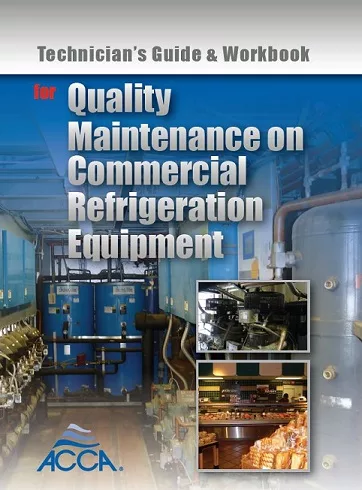
    Technician’s Guide & Workbook for Quality Maintenance on Commercial Refrigeration Equipment

  • Manual S.jpg

    Manual S® - Residential Equipment Selection (2nd Edition) [ANSI/ACCA 3 Manual S - 2014]

  • Manual B.jpg

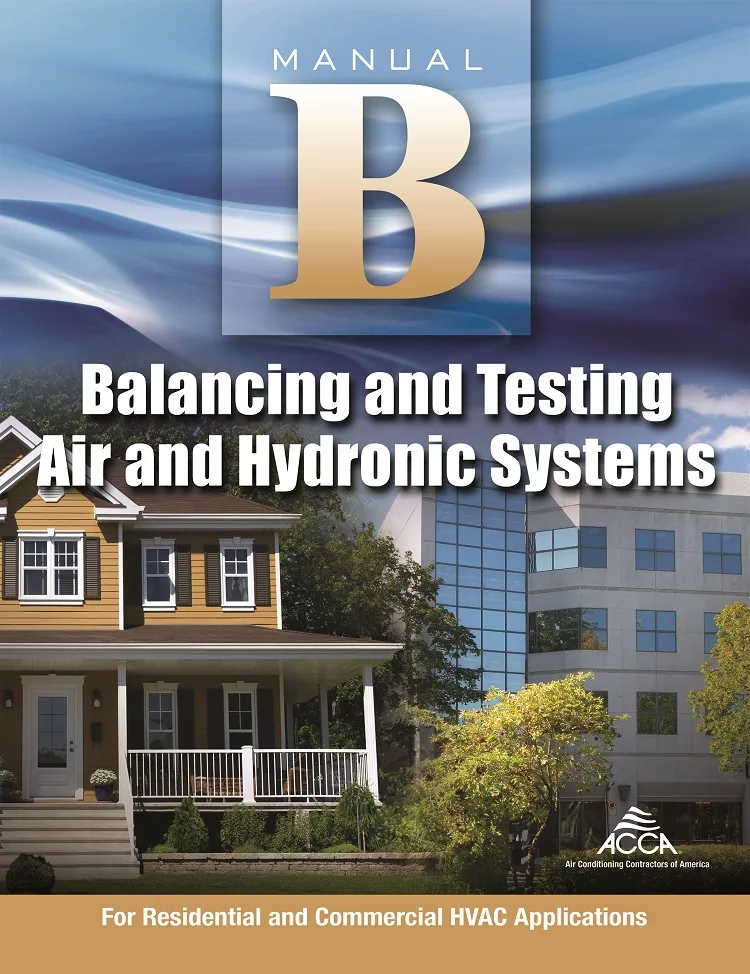
    Manual B - Balancing and Testing Air and Hydronic Systems

See More Products

Events

View AllSubmit An Event
  • July 16, 2025

    Let’s Talk: Condensing Equipment, (Acidic) Condensate, and the Code

    On Demand During this webinar, we will define what acidic condensate is, illustrate how it’s formed in today’s high-efficiency, gas-fired heating appliances, and hit on the damage it can cause if not treated.
View AllSubmit An Event

Related Directories

  • Crescent Parts and Equipment (Saint Louis, MO)

×

Sign Up. Stay Informed.

The #1 trusted source for the HVACR industry since 1926

SUBSCRIBE
  • RESOURCES
    • Advertise
    • Contact Us
    • Advisory Board
    • Classifieds
    • Submit a Letter
    • Directories
    • Store
  • ACCOUNT CENTER
    • Create an Account
    • Start a Subscription
    • Manage My Account
    • Sign Up for Newsletters
    • Visit Customer Service
    • Update Preferences
  • SERVICES
    • Marketing Services
    • Reprints
    • Market Research
    • List Rental
    • Survey/Respondent Access
  • STAY CONNECTED
    • LinkedIn
    • Facebook
    • Instagram
    • YouTube
    • X (Twitter)
  • PRIVACY
    • PRIVACY POLICY
    • TERMS & CONDITIONS
    • DO NOT SELL MY PERSONAL INFORMATION
    • PRIVACY REQUEST
    • ACCESSIBILITY

Copyright ©2026. All Rights Reserved BNP Media, Inc. and BNP Media II, LLC.

Design, CMS, Hosting & Web Development :: ePublishing