ACHR News
search
Ask ACHR NEWS AI
cart
facebook twitter instagram linkedin youtube
  • Sign In
  • Subscribe
  • Sign Out
  • My Account
ACHR News
  • NEWS
    • Breaking News
    • New HVAC Products
    • Featured Products
    • Manufacturer Reports
    • HVAC Data
    • Legislation
    • ACHR NEWS Centennial
  • RESIDENTIAL
    • Air Conditioners
    • Furnaces
    • Residential Heat Pumps
    • Ductless
    • Residential IAQ
    • Testing, Monitoring, Tools
    • Components & Accessories
  • COMMERCIAL
    • Air Handlers
    • Rooftop Units
    • Chillers and Cooling Towers
    • Commercial Heat Pumps
    • Boilers and Hydronics
    • VRF/Ductless
    • Commercial IAQ
  • REFRIGERATION
    • Refrigerants
    • Refrigerant Regulations
    • Leak Management
  • CONTRACTOR PRO
    • Geothermal
    • Homeowner Study
    • VRF and VRV Ductless
    • Unitary Trends
  • EDUCATION
    • Training and Education
    • Business Management
    • Service and Maintenance
    • Continuing Education
    • Market Research >
      • HVAC Brand Awareness Report
      • VRV, VRF, VRVZ Report
      • Unitary Trends Report
      • Water Heat Professionals Report
    • Webinars
    • Sponsor Insights
    • eProducts Info
    • White Papers
  • EVENTS
    • HVAC Contractor Forum
    • Industry Events and Webinars
  • MEDIA
    • Videos
    • AHR Expo 2025 Videos
    • Podcasts >
      • ACHR News Podcast
      • HARDI Podcasts
      • AHR Expo Podcasts
      • ACCA Podcasts
    • Interactive Spotlights
    • Quizzes
    • eBooks
    • HVAC Talkback
  • HVAC GROUP
    • ACHR NEWS >
      • Current Issue
      • Digital Edition
      • Subscribe
    • Distribution Trends
    • SNIPS NEWS >
      • Join SNIPS NEWS
    • Engineered Systems News >
      • Join ES News
    • HVACR Directory
    • Contests
    • Newsletters
    • Contact
    • Advertise
    • My Account
HVAC ContractingNewsService and MaintenanceRefrigerationRefrigerants

Refrigerant Leaks at Startup: Identifying and Preventing Common Issues

Extra precautions, like dry nitrogen pressure checks, can prevent major issues
By ACCA (Air Conditioning Contractors of America)
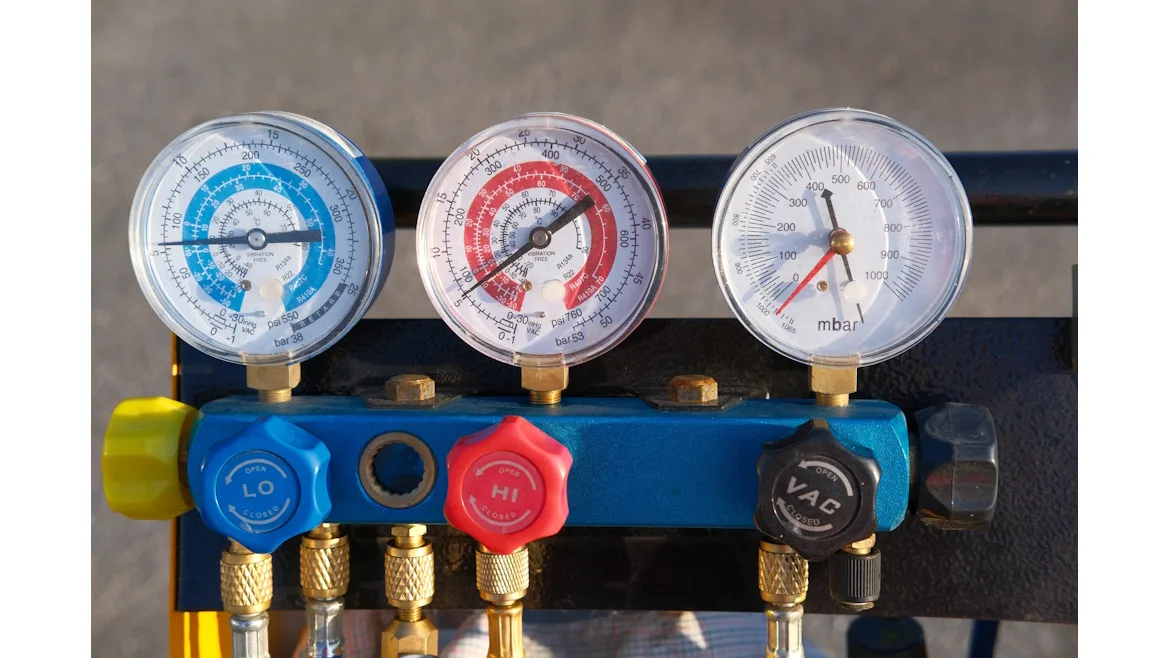
refrigerant-gauges.jpeg
Courtesy of kilimni/adobestock

LEAK PREVENTION: HVACR experts say taking extra steps like cleaning copper refrigerant lines before brazing can reduce costly callbacks. 

July 16, 2026

Now is the time of year when many HVACR contractors start to encounter refrigerant leaks in their customers’ equipment. It’s a common problem that’s discovered during annual tune-ups; refrigerant leaks don’t typically cause sudden failure, so customers are often unaware they exist.  

However, if ignored, leaks can lead to a gradual reduction in system performance and damage to internal components. 

Refrigerant leaks have specific, identifiable causes. Understanding how they develop and how to avoid them will reduce callbacks and ensure efficient cooling for your customer. We spoke with Anthony Maynor of RightTek HVAC Training and Rocky Berger II of ARS/Rescue Rooter to get their expert insights.   


Why Refrigerant Leaks Happen and Where They’re Found 

Environmental Wear 

Maynor says that refrigerant leaks are most often found with older systems. When equipment has been in service for five to 10 years, the indoor evaporator coil becomes a weak point. It rusts, and corrosion eats into the copper, creating pinholes that slowly leak refrigerant.  

“Ninety-five percent of the time, when there are leaks in the system, they almost always turn out to be at the indoor coil,” he says. 

Berger shed some light on why this occurs. He explained that indoor evaporator coils suffer from formicary corrosion, a chemical process that’s caused by the interaction of air, moisture, and volatile organic compounds. All homes have VOCs, but newly built houses have a very high concentration of them from building materials like flooring, carpeting, and paint.  

The tightly sealed building envelopes of modern homes prevent VOCs from venting, so they enter the HVACR system, accelerate corrosion in the indoor coil, and cause the pinhole leaks to develop over time.  

Looking for quick answers on air conditioning, heating and refrigeration topics? Try Ask ACHR NEWS, our new smart AI search tool. Ask ACHR NEWS →

“HVAC systems move the air in the home, so any toxic air passes through the coil,” Berger said. 

Poor Installation Practices 

If you have refrigerant leaks in a newer system, the likely cause is improper installation — specifically, improper brazing technique.  

“In general, it leads to poorly formed joints and weak joints that, even if they don’t leak on day one, with temperature change, expansion, contraction, vibration of things, weather, and other factors, eventually turn out to be a leak,” said Maynor. 

Some of the most common brazing mistakes that Maynor and Berger have seen include: 

  • Not flowing nitrogen: Running nitrogen through the copper refrigerant lines during brazing prevents oxidation. When contractors skip this step, scaling occurs inside the lines. This scale thickens with the refrigerant oil, clogging critical components. While it won’t necessarily cause leaks, it creates problems with refrigerant flow elsewhere. 
  • Not cleaning surfaces: The joint must be completely clean of oil and dirt before brazing. Debris can prevent the brazing material from fully adhering and wicking into the joint. 
  • Improper heating: Using enough heat and operating the torch at the correct angle is crucial for a solid joint. If the copper line is not hot enough, the brazing material will harden and not flow properly into the joint.  


Reduce Callbacks: How HVACR Contractors Can Avoid Leaks in the First Place 

Callbacks are a major inconvenience for HVACR contractors. They’re time-consuming and usually unpaid. If you’re installing a system for the first time or replacing major components, you need to follow proper techniques to ensure leaks don’t form. 

Preparation is Key 

Berger emphasized the importance of preparing the copper lines before brazing. Even though the lines look new, you need to clean them thoroughly.  

“Spend the extra minutes to clean all the dirt off it, scrubbing it with a wire brush or some emery cloth — both the joint and the pipe,” he says.  

He recommends using the right torch for brazing, one that can adequately heat the copper. Many techs cover service ports with wet rags while brazing, and while this is effective, it can also steal heat and reduce the quality of the braze. The joint must be hot enough to properly melt the filler metal. Berger mentioned that the industry is moving away from brazing and more toward press fittings to overcome these challenges. 

Always Perform a Dry Nitrogen Leak Test 

The best way to prevent installation errors is to test for leaks anytime you open the system.  

“If more people would take the time to do a good, thorough, standing dry nitrogen pressure check, we would find and catch a whole lot more leaks right on day one and get them before they become a callback or a chronic issue for a customer,” Maynor said.  

In over 23 years as a contractor, he did this test on every installation and rarely had leaks after installation. 

To get the most accurate reading, it’s very important to follow all the manufacturer’s recommendations for the test. With newer A2L refrigerants, you’re normally required to do at least a one-hour long-standing pressure test. Once you’ve determined there are no leaks, you can then start the vacuum pump and evacuate the system. 

Preventing Refrigerant Leaks with Proper Training 

While it may be difficult to prevent leaks from formicary corrosion, leaks caused by installation errors are entirely avoidable. According to Maynor, most of these mistakes are caused by a lack of training and experience.  

“A lot of folks that learn on the job, they’re trained by someone who’s doing the best they can based on their experience, but maybe they were never trained properly. You get into this season of what I call tribal learning, where one guy teaches the next, who teaches the next. If none of them on the front end ever learned the right techniques, then nobody after really learns the right techniques,” he said. 

The Air Conditioning Contractors of America provides resources to help HVACR contractors learn the correct installation techniques required for leak-free systems. Whether you’re interested in private training for your entire company or a self-paced program to expand your own knowledge, there are options available. Enroll in a class today. 

KEYWORDS: ACCA (Air Conditioning Contractors of America) refrigerant leaks refrigerant management troubleshooting and HVACR

Share This Story

Looking for a reprint of this article?
From high-res PDFs to custom plaques, order your copy today!


Air Conditioning Contractors of America (ACCA) represents the heating, ventilation, air conditioning, and refrigeration (HVACR) contracting industry. With thousands of member companies across the United States, ACCA develops industry standards, provides technical and business training, and advocates for policies that support contractors and promote quality, safety, and energy efficiency.

Recommended Content

JOIN TODAY
To unlock your recommendations.

Already have an account? Sign In

  • HVAC-enrollment

    The Trades Are Back: HVACR Programs See Nearly 30% Enrollment Spike

    A new wave of future technicians is entering the pipeline.  
    News
    By: Matt Jachman
  • 2025 Top 40 Under 40

    2025 Top 40 Under 40 HVACR Professionals List

    The 11th annual Top 40 Under 40 list highlights those...
    HVAC Light Commercial Market
    By: Hannah Belloli-Oster
  • LG Ductless Mini-Split Systems

    The 9 Types of Heat Pumps

    As the U.S. moves toward electrification, heat pumps are...
    HVAC Commercial Market
    By: Joanna R. Turpin
Subscription Center
  • Create an Account
  • Start a Subscription
  • Manage My Account
  • Sign Up for Newsletters
  • Visit Customer Service
  • Update Preferences

More Videos

Sponsored Content

Sponsored Content is a special paid section where industry companies provide high quality, objective, non-commercial content around topics of interest to The News audience. All Sponsored Content is supplied by the advertising company and any opinions expressed in this article are those of the author and not necessarily reflect the views of The News or its parent company, BNP Media. Interested in participating in our Sponsored Content section? Contact your local rep!

close
  • An illustration shows a house with a geothermal heating system. Pipes are depicted running underground.
    Sponsored byClimateMaster

    Residential Tax Credits Are Ending, But Demand Continues

  • Piggy Bank
    Sponsored byWatercress Financial

    Energy Prices, Inflation, and HVAC: What Today’s Homeowners Care About

  • Refrigerated Food
    Sponsored bySolstice Advanced Materials

    R-455A Refrigeration: A Cold Storage Solution for the Future

Popular Stories

price-raising-practices.jpg

Rising Costs Force Contractors to Take a Harder Look at Pricing

DOE-sign.jpg

HVAC Groups Support DOE’s Rulemaking to Cut Energy Efficiency Mandates

Data-Center-Inspection.jpg

Can HVAC Train Enough Technicians for the Data Center Boom?

HARDI lolgo navy

HARDI Distributors' Sales Down Nearly 5% in May

Daikin Nexio Max

Daikin Debuts New Inverter-Driven Commercial Heat Pump

View The ACHR NEWS
Centennial Anniversary Timeline

The ACHR News Timeline Chart
Submit a Letter
Submit a letter to our editors.

Events

November 6, 2025

Next-Gen Data Center Cooling: HVAC Innovation and Real-World Solutions

On Demand As AI workloads and high-density computing push traditional cooling methods to their limits, the data center industry is accelerating the adoption of next-generation HVAC technologies.

July 22, 2026

Designing VRF Systems Using A2L Refrigerant

In this session, we will cover how to design VRF systems for the U.S. market using new A2L refrigerants. These systems provide an advanced zoning solution by using inverter technology to deliver precise heating and cooling control across multiple zones and spaces.

View All Submit An Event

Poll

Summer Staff

Are you fully staffed for the summer season?
View Results Poll Archive

Products

BNI Mechanical/Electrical Square Foot Costbook, 2026 Edition

BNI Mechanical/Electrical Square Foot Costbook, 2026 Edition

See More Products
Designing Systems Using A2L Refrigerant - Free Webinar - 7/22/2026

Related Articles

  • Shurtape

    Troubleshooting Foil Tape Challenges: Common Issues for HVAC Installers and How to Solve Them

    See More
  • Preventing-Refrigerant-Leaks-in-Supermarket-Systems-1.jpg

    Ten Tips for Preventing Refrigerant Leaks in Supermarket Systems

    See More
  • Technicians Share 5 Common RTU Issues

    See More

Related Products

See More Products
  • Evaluating-and-Troubleshooting-Refrigeration-Systems-Video-Cover-210x300.jpg

    Evaluating Refrigeration Systems Troubleshooting & Identifying Problems CONTINUED

  • Lessons Learned in a Boiler Room: A common sense approach to servicing and installing commercial boilers

See More Products

Related Directories

  • Spectronics Corp./Spectroline Leak Detection

    Established in 1955, Spectronics Corporation is the inventor of UV fluorescent leak detection technology and manufacturer of leak detection tools for AC&R systems. Our fluorescent dyes and system additives are OEM-grade, universal (POE), co-solvent free, and NSF-certified.
×

Sign Up. Stay Informed.

The #1 trusted source for the HVACR industry since 1926

SUBSCRIBE
  • RESOURCES
    • Advertise
    • Contact Us
    • Advisory Board
    • Classifieds
    • Submit a Letter
    • Directories
    • Store
  • ACCOUNT CENTER
    • Create an Account
    • Start a Subscription
    • Manage My Account
    • Sign Up for Newsletters
    • Visit Customer Service
    • Update Preferences
  • SERVICES
    • Marketing Services
    • Reprints
    • Market Research
    • List Rental
    • Survey/Respondent Access
  • STAY CONNECTED
    • LinkedIn
    • Facebook
    • Instagram
    • YouTube
    • X (Twitter)
  • PRIVACY
    • PRIVACY POLICY
    • TERMS & CONDITIONS
    • DO NOT SELL MY PERSONAL INFORMATION
    • PRIVACY REQUEST
    • ACCESSIBILITY

Copyright ©2026. All Rights Reserved BNP Media, Inc. and BNP Media II, LLC.

Design, CMS, Hosting & Web Development :: ePublishing