ACHR News
search
Ask ACHR NEWS AI
cart
facebook twitter instagram linkedin youtube
  • Sign In
  • Subscribe
  • Sign Out
  • My Account
ACHR News
  • NEWS
    • Breaking News
    • New HVAC Products
    • Featured Products
    • Manufacturer Reports
    • HVAC Data
    • Legislation
    • ACHR NEWS Centennial
  • RESIDENTIAL
    • Air Conditioners
    • Furnaces
    • Residential Heat Pumps
    • Ductless
    • Residential IAQ
    • Testing, Monitoring, Tools
    • Components & Accessories
  • COMMERCIAL
    • Air Handlers
    • Rooftop Units
    • Chillers and Cooling Towers
    • Commercial Heat Pumps
    • Boilers and Hydronics
    • VRF/Ductless
    • Commercial IAQ
  • REFRIGERATION
    • Refrigerants
    • Refrigerant Regulations
    • Leak Management
  • CONTRACTOR PRO
    • Geothermal
    • Homeowner Study
    • VRF and VRV Ductless
    • Unitary Trends
  • EDUCATION
    • Training and Education
    • Business Management
    • Service and Maintenance
    • Continuing Education
    • Market Research >
      • HVAC Brand Awareness Report
      • VRV, VRF, VRVZ Report
      • Unitary Trends Report
      • Water Heat Professionals Report
    • Webinars
    • Sponsor Insights
    • eProducts Info
    • White Papers
  • EVENTS
    • HVAC Contractor Forum
    • Industry Events and Webinars
  • MEDIA
    • Videos
    • AHR Expo 2025 Videos
    • Podcasts >
      • ACHR News Podcast
      • HARDI Podcasts
      • AHR Expo Podcasts
      • ACCA Podcasts
    • Interactive Spotlights
    • Quizzes
    • eBooks
    • HVAC Talkback
  • HVAC GROUP
    • ACHR NEWS >
      • Current Issue
      • Digital Edition
      • Subscribe
    • Distribution Trends
    • SNIPS NEWS >
      • Join SNIPS NEWS
    • Engineered Systems News >
      • Join ES News
    • HVACR Directory
    • Contests
    • Newsletters
    • Contact
    • Advertise
    • My Account
NewsRefrigerationGuest ColumnRefrigerants

Guest Column

Why Deep Evacuation Is Not a Checkbox. It is System Protection

As systems evolve and improve in efficiency, the margin for error is only getting smaller
By Brian Doyle
technician-working.jpg
Courtesy of Brian Doyle

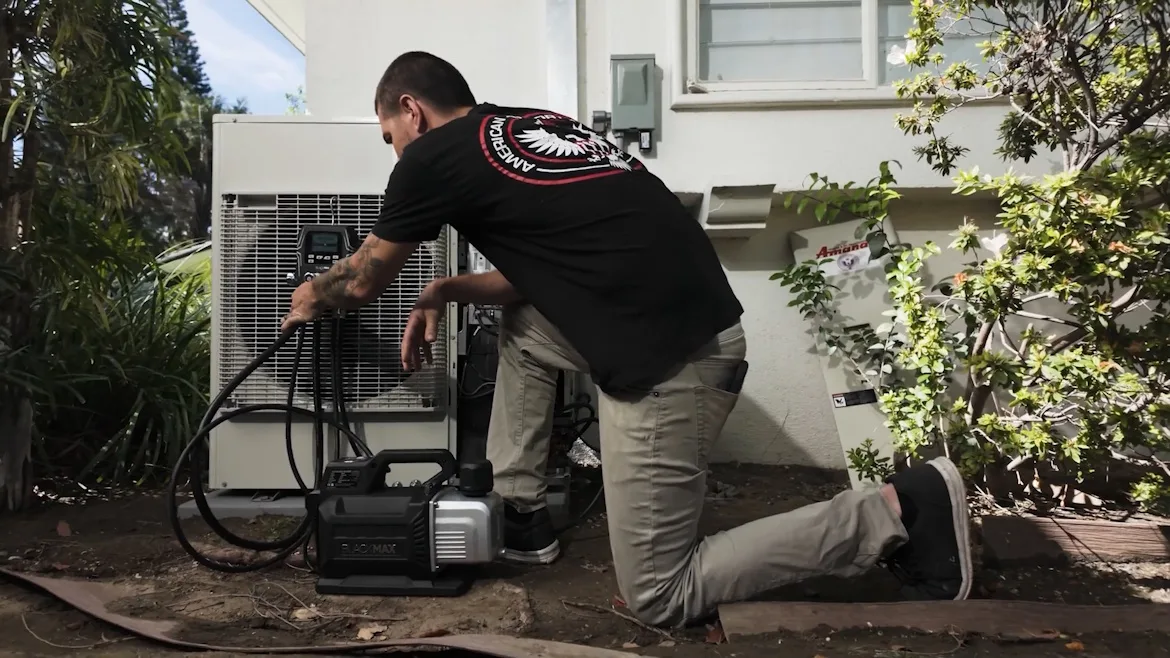
PREVENTATIVE MEASURE: As HVACR systems become more efficient and moisture-sensitive, proper evacuation is increasingly important to preventing contamination, callbacks, and premature failures.

July 14, 2026

In an industry focused on smarter controls, higher efficiency ratings, and ever-evolving refrigerants, one of the most critical steps in system installation has not changed. It is still evacuation. 

Yet despite decades of awareness, evacuation remains one of the most overlooked and inconsistently executed processes in HVACR. Moisture, non-condensables , and contamination continue to cause performance issues, callbacks, and premature system failure. 

As systems evolve and improve in efficiency, the margin for error is only getting smaller. 


Why Evacuation Matters More Today Than Ever 

Modern HVACR systems are far less forgiving than legacy equipment. 

Today’s systems rely heavily on POE oils and newer refrigerants, both of which are highly sensitive to moisture. Even small amounts of water contamination can form acids, degrade compressor components and shorten system life. At the same time, non-condensable gases such as air increase head pressure, reduce heat transfer efficiency, and force the compressor to work harder. 

What makes this more challenging is that modern systems operate with tighter tolerances and more complex designs. That creates more places for moisture to hide and increases sensitivity to contamination. Many systems, especially ductless and heat pump applications, also have limited or no replaceable filter driers. That means evacuation is often the only opportunity to remove moisture before startup. 

Evacuation today is not just about pulling a vacuum — it is about creating a clean, dry, and stable system before refrigerant is introduced. 

Looking for quick answers on air conditioning, heating and refrigeration topics? Try Ask ACHR NEWS, our new smart AI search tool. Ask ACHR NEWS →


The Mistakes That Still Happen In The Field 

Most evacuation issues are not caused by a lack of knowledge. They are caused by shortcuts. 

One of the most common mistakes is assuming that reaching a target micron level means the job is complete. In reality, hitting 500 microns does not guarantee the system is dry. Moisture removal takes time, and if moisture is still present, the vacuum level will rise once the system is isolated. 

Improper setup is another major issue. Restrictions in the evacuation path slow down the process and trap moisture inside the system. Small hoses, leaving Schrader cores in place or pulling through a manifold all reduce flow and extend evacuation time. 

Technicians also frequently place the micron gauge at the pump instead of the system, which gives a false reading of system conditions. 


Setup Drives Results 

Evacuation is not just about the pump. It is about flow. 

Large diameter hoses, core removal tools, and direct connections to both high and low sides significantly improve evacuation speed and effectiveness. Removing restrictions allows moisture to vaporize and move out of the system. 

Proper gauge placement is just as important. The only reading that matters is at the system, not the pump or at the digital manifold. It is best practice to place the micron gauge as far away from the vacuum pump as possible to ensure the most accurate readings. Technicians who focus on flow and measurement consistently achieve faster evacuations and more stable and reliable systems. 


The Tools That Support A Proper Evacuation 

Executing a true deep evacuation requires tools that improve visibility, reduce restrictions and help technicians verify actual system conditions. Accurate micron gauges provide real-time readings at the system, while properly maintained vacuum pumps help move air and moisture efficiently. 

For example, a digital vacuum gauge (such as the CPS VG200) paired with a capable vacuum pump (like the BlackMax VPBM series) can support faster, more consistent evacuations when used as part of a proper setup. The key is ensuring the tools used enable accurate measurement and unrestricted flow.  

When tools are built around how technicians work in the field, evacuation becomes more efficient and repeatable. 


Why Hitting A Number Is Not Enough 

A micron target is a checkpoint, not a finish line. 

The real validation is the decay test. Once the system reaches target vacuum, it must be isolated and observed. A slow, stable rise indicates a clean system. A rapid rise points to a leak or moisture still present. 

If the system cannot hold vacuum, it is not ready for refrigerant. 


Practical Best Practices 

A few fundamentals consistently separate high-performing systems from problematic ones: 

  • Use large diameter hoses and remove Schrader cores  
  • Connect to both high and low sides  
  • Place the micron gauge on the system as far away from the vacuum pump as possible 
  • Maintain vacuum pump oil  
  • Use nitrogen sweeps when needed  
  • Always verify with a decay test before charging. 


The Bottom Line 

Evacuation is the final cleaning step before refrigerant enters the system. It is the last opportunity to remove contaminants that impact performance from day one. 

As HVACR systems continue to evolve, the importance of doing this step correctly only increases. The technicians who treat evacuation as a precision process, not a checkbox, are the ones who deliver systems that perform as designed and avoid callbacks. 

And in today’s environment, that difference matters more than ever. 

KEYWORDS: evacuation refrigerant management Tools for HVACR

Share This Story

Looking for a reprint of this article?
From high-res PDFs to custom plaques, order your copy today!


Brian Doyle is a product, sales and operations leader with deep experience in HVAC, user-driven product innovation and distribution strategy. He is known for guiding organizations through growth phases by strengthening portfolios, sharpening market focus and aligning cross-functional teams around clear strategic priorities. As general manager at CPS Products, Doyle oversees North American operations and leads global growth initiatives. He leads engineering, marketing, product development, sales and operations to accelerate new product development, improve execution and efficiently bring new solutions to market. His leadership emphasizes a laser focus on the end-user, operational discipline, customer alignment and consistent quality and performance. Before joining CPS Products, Doyle held leadership roles at TTI Floor Care North America (Hoover, Dirt Devil), Milwaukee Tool and PepsiCo. His background across product, commercial and operations functions gives him a broad view of the way in which teams, markets and customer needs intersect – and how to strategically scale all three. 

Recommended Content

JOIN TODAY
To unlock your recommendations.

Already have an account? Sign In

  • HVAC-enrollment

    The Trades Are Back: HVACR Programs See Nearly 30% Enrollment Spike

    A new wave of future technicians is entering the pipeline.  
    News
    By: Matt Jachman
  • 2025 Top 40 Under 40

    2025 Top 40 Under 40 HVACR Professionals List

    The 11th annual Top 40 Under 40 list highlights those...
    HVAC Contracting
    By: Hannah Belloli-Oster
  • LG Ductless Mini-Split Systems

    The 9 Types of Heat Pumps

    As the U.S. moves toward electrification, heat pumps are...
    HVAC Residential Market
    By: Joanna R. Turpin
Subscription Center
  • Create an Account
  • Start a Subscription
  • Manage My Account
  • Sign Up for Newsletters
  • Visit Customer Service
  • Update Preferences

More Videos

Sponsored Content

Sponsored Content is a special paid section where industry companies provide high quality, objective, non-commercial content around topics of interest to The News audience. All Sponsored Content is supplied by the advertising company and any opinions expressed in this article are those of the author and not necessarily reflect the views of The News or its parent company, BNP Media. Interested in participating in our Sponsored Content section? Contact your local rep!

close
  • An illustration shows a house with a geothermal heating system. Pipes are depicted running underground.
    Sponsored byClimateMaster

    Residential Tax Credits Are Ending, But Demand Continues

  • Piggy Bank
    Sponsored byWatercress Financial

    Energy Prices, Inflation, and HVAC: What Today’s Homeowners Care About

  • Refrigerated Food
    Sponsored bySolstice Advanced Materials

    R-455A Refrigeration: A Cold Storage Solution for the Future

Popular Stories

HVAC-Price-Increase-graphic

HVAC Price Increase List: July 2026

price-raising-practices.jpg

Rising Costs Force Contractors to Take a Harder Look at Pricing

DOE-sign.jpg

HVAC Groups Support DOE’s Rulemaking to Cut Energy Efficiency Mandates

Industry-Ethics_-Service-Calls.jpg

HVAC Contractor Agrees to $300K Settlement Over Alleged Deceptive Sales Practices

Daikin Applied CEO Yu Nishiwaki

Daikin Applied Announces New Top Leadership

View The ACHR NEWS
Centennial Anniversary Timeline

The ACHR News Timeline Chart
Submit a Letter
Submit a letter to our editors.

Events

November 6, 2025

Next-Gen Data Center Cooling: HVAC Innovation and Real-World Solutions

On Demand As AI workloads and high-density computing push traditional cooling methods to their limits, the data center industry is accelerating the adoption of next-generation HVAC technologies.

July 22, 2026

Designing VRF Systems Using A2L Refrigerant

In this session, we will cover how to design VRF systems for the U.S. market using new A2L refrigerants. These systems provide an advanced zoning solution by using inverter technology to deliver precise heating and cooling control across multiple zones and spaces.

View All Submit An Event

Poll

Summer Staff

Are you fully staffed for the summer season?
View Results Poll Archive

Products

BNI Mechanical/Electrical Square Foot Costbook, 2026 Edition

BNI Mechanical/Electrical Square Foot Costbook, 2026 Edition

See More Products
Designing Systems Using A2L Refrigerant - Free Webinar - 7/22/2026

Related Articles

  • commercial-hvac-contractor.jpg

    The Gap Between 4.0× and 10.93× Is Not a Size Story

    See More
  • The Design of a Steam Plant is not a Lost Art

    The Design of a Steam Plant is not a Lost Art

    See More
  • Company size is not a factor when choosing pension plans

    See More

Related Products

See More Products
  • srepm.png

    System Recovery & Evacuation

  • A-Heat-Pump-Thats-Not-Delivering-Any-Air-DVD-Cover-218x300.jpg

    A Heat Pump That’s Not Delivering Any Air

  • new cover.jpg

    Profit is An Attitude: The Strategies You Need to Optimize Profits

See More Products

Related Directories

  • Andover Protection Systems LLC

    Scroll and Hermetic `explosion-proof` refrigeration compressors--UL-recognized for Classes I, II, III Groups BCDEFG Divisions 1 and 2; specialty industrial liquid chilling, air conditioning, heat recovery. Self-cleaning air filters.
×

Sign Up. Stay Informed.

The #1 trusted source for the HVACR industry since 1926

SUBSCRIBE
  • RESOURCES
    • Advertise
    • Contact Us
    • Advisory Board
    • Classifieds
    • Submit a Letter
    • Directories
    • Store
  • ACCOUNT CENTER
    • Create an Account
    • Start a Subscription
    • Manage My Account
    • Sign Up for Newsletters
    • Visit Customer Service
    • Update Preferences
  • SERVICES
    • Marketing Services
    • Reprints
    • Market Research
    • List Rental
    • Survey/Respondent Access
  • STAY CONNECTED
    • LinkedIn
    • Facebook
    • Instagram
    • YouTube
    • X (Twitter)
  • PRIVACY
    • PRIVACY POLICY
    • TERMS & CONDITIONS
    • DO NOT SELL MY PERSONAL INFORMATION
    • PRIVACY REQUEST
    • ACCESSIBILITY

Copyright ©2026. All Rights Reserved BNP Media, Inc. and BNP Media II, LLC.

Design, CMS, Hosting & Web Development :: ePublishing