Have Heat Pumps Had It? 1960s Series Questioned the Equipment’s Future
Chief engineers candidly weighed in on heat pumps, while contractors pushed back with praise from the field
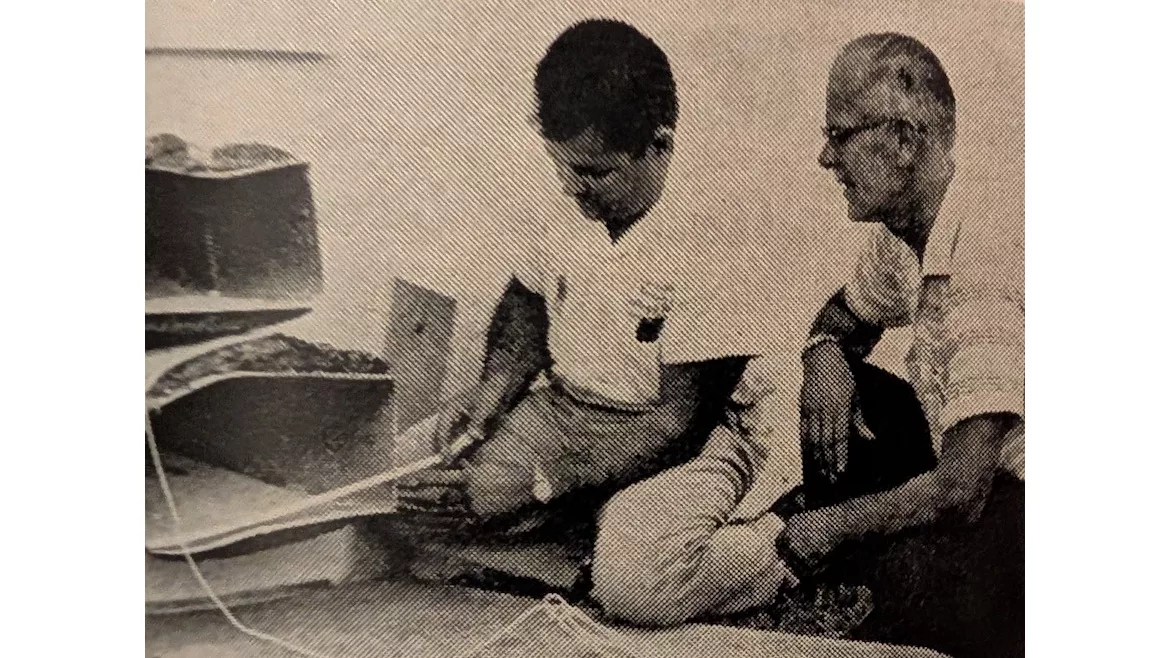
BOLD PREDICTIONS: An anonymous engineer from a major manufacturer didn't place a lot of confidence on the heat pump's future — "In our opinion, the residential air-source heat pump will never be an important factor in the air conditioning industry."
It’s apparently an age-old debate: what’s the best application for heat pumps, and where do they fit in the future of the HVAC industry?
In 1967, ACHR NEWS ran a series of articles trying to answer those questions, and the results revealed an industry that was anything but in agreement.
A NEWS survey of “chief engineers” from some of the industry’s biggest manufacturers did not paint an especially optimistic picture. Asked whether heat pumps would take over the heating-cooling industry, 98% answered no. Asked whether heat pumps would die out, 99% said no. Asked whether heat pumps would remain a minority of the total heating-cooling population, 99% said yes.
The first installment, titled “Have Heat Pumps Had It?,” opened with a series of familiar-sounding objections: heat pumps could only be applied in moderate climates, maintenance costs were too high, and low reliability was a fact of life.
The NEWS noted that similar statements had been made 10 and 15 years earlier. This time, however, the comments came from “a dozen chief engineers who were asked to be frank about today’s heat pumps.” To encourage candid responses, the engineers were granted anonymity.
The first question was geography.
“I recently had occasion to spend time in Florida and found that there are still a large number of heat pumps being sold with quite satisfactory results,” one engineer said. “However, this is a unique market in so far as that other energy sources for heating are either very costly or unavailable.”
Looking for quick answers on air conditioning, heating and refrigeration topics? Try Ask ACHR NEWS, our new smart AI search tool. Ask ACHR NEWS
That engineer said Florida’s minimum heating requirements helped explain the product’s use there. But farther north, another issue seemed to matter more.
“In the geographical area of Nashville, the general thinking among contractors is ‘no heat pumps for me,’” the engineer said.
Others were equally cautious.
“There are many areas in the country, particularly in the north, where heat pumps cannot be effectively and economically utilized,” another engineer said. “The need for reliable operation and supplemental heat would price them out of the market.”
Another said the heat pump had “logical application in California and other climates where the winter temperatures do not go below 40°F,” but argued that where winter temperatures dipped below 20°F, it was “an impractical way to provide heating.”
Reliability was another concern. Engineers cited defrost problems, compressor replacements, dirty outdoor coils, high head pressure, and shortened compressor life. One predicted that, in five to 10 years, the reliability of a heat pump would not differ from that of an air conditioner. Others were less confident.
When the NEWS asked how much market penetration heat pumps could reasonably expect, the answers were also restrained. Only one manufacturer expected the heat pump to take over the heating-cooling industry. The next-highest estimate, described as “the most optimistic,” was 30% saturation in 10 to 15 years.
Other comments placed heat pumps in narrower categories. Some engineers believed heat pumps would continue to perform in certain climates or benefit from utility promotion. Others saw water-source systems as more practical than residential air-source equipment.
“In our opinion, the residential air-source heat pump will never be an important factor in the air conditioning industry,” one engineer said. “The water-source heat pump does make sense in areas where there is an abundant supply of moderate temperature water.”
Another was blunter: “In our opinion, the air source heat pump will die out.”
The series also reflected concern over installation and service. One engineer said manufacturers were constantly being called upon for field service help because of the limited number of competent heat pump servicemen.
“Perhaps the greatest problem remaining with heat pumps are those related to installation and service,” another said. “We strongly believe that heat pumps should be installed only by qualified dealers who have the necessary training and experience to enable them to do a satisfactory job.”
The NEWS followed the series with an editorial noting that heat pumps were being pushed hard, despite some concerns from industry insiders.
“Mildly for 20 years, aggressively for the last ten of those 20, and very forcefully for the last two or three, heat pumps have been promoted … but sales continue to lag,” the editorial said. “While there is a percentage growth, the optimistic predictions that heat pumps would take over the heating-cooling market are almost never heard now.”
The editorial also suggested that some enthusiasm for heat pumps was coming from sales departments rather than engineers. The NEWS reported being told, in confidence, that some sales departments believed it was necessary to have a heat pump in the line, even if it did not sell or perform especially well. Sales managers, the editorial said, admitted they felt they had to carry heat pumps, “but we don’t try to sell them.”
But the HVAC industry did not let the story end there.
After the articles appeared, readers and contractors wrote to the editor, arguing that the NEWS had leaned too heavily on manufacturers and engineers.
Allen Trask, a mechanical engineer from Utica, N.Y., called it “incredible” that the dozen chief engineers were repeating comments about climate limitations, high maintenance costs, and low reliability that had been made 10 and 15 years earlier.
Trask argued that refrigeration systems already operated successfully in ways like heat pumps. He pointed to household refrigerators, defrost systems, and his own experience designing heat pumps in the late 1950s. He said there were “many thousands” of heat pumps running dependably in climates from Michigan to Florida.
A second letter, from H.C. Kitchens of Cole Refrigeration & Electric Co. in Columbus, Mississippi, was more direct. Kitchens said the articles repeatedly referred to engineers and manufacturers but not to the installing contractors, service people, or homeowners who were most closely associated with heat pumps.
“We are a small installing contractor-dealer and we are completely sold on the heat pump,” Kitchens wrote.
As evidence, he said two servicemen from the company serviced more than 500 heat pumps while also helping install new equipment and handling commercial refrigeration service across a four-county area. Those same two men had also serviced 480 heat pump units at an Air Force base housing area near the city.
“I will have to say that I don’t expect the heat pump to take over the entire market either,” Kitchens wrote, “but neither do I feel like saying that the air-to-air heat pump will die out. I feel that you are dead wrong.”
The exchange captured the central divide in the 1967 heat pump debate. Engineers worried about climate, reliability, service, and unrealistic promotion. Contractors who had success in the field argued that the technology was judged too harshly by people too far removed from day-to-day installations.
More than half a century later, that argument sounds familiar. The equipment has changed dramatically, but the issues remain recognizable: where heat pumps make sense, how they should be installed, how they should be serviced, and who gets to define their real-world performance.
Looking for a reprint of this article?
From high-res PDFs to custom plaques, order your copy today!