Wastewater Heat Fuels Interest in Thermal Energy Networks
Denver’s programs draw attention to lower-carbon heating and cooling alternatives

RISING ENERGY RESOURCE: Steam rising from the process areas during a cold day at the Robert W. Hite Treatment Facility.
HVAC systems are moving beyond the building envelope as wastewater heat recovery and thermal energy networks gain traction in U.S. cities.
For contractors, the shift signals a growing role in district-scale energy systems where heat exchangers, piping, controls, and heat pumps work together to move thermal energy between buildings and infrastructure.
In Denver, early-stage projects are offering a glimpse of how these systems could reshape heating and cooling design, maintenance, and collaboration across utilities and mechanical contractors.
The city of Denver recently drew national attention for its use of sewage heat recovery — or warm wastewater — to power heat pumps serving dense urban areas.
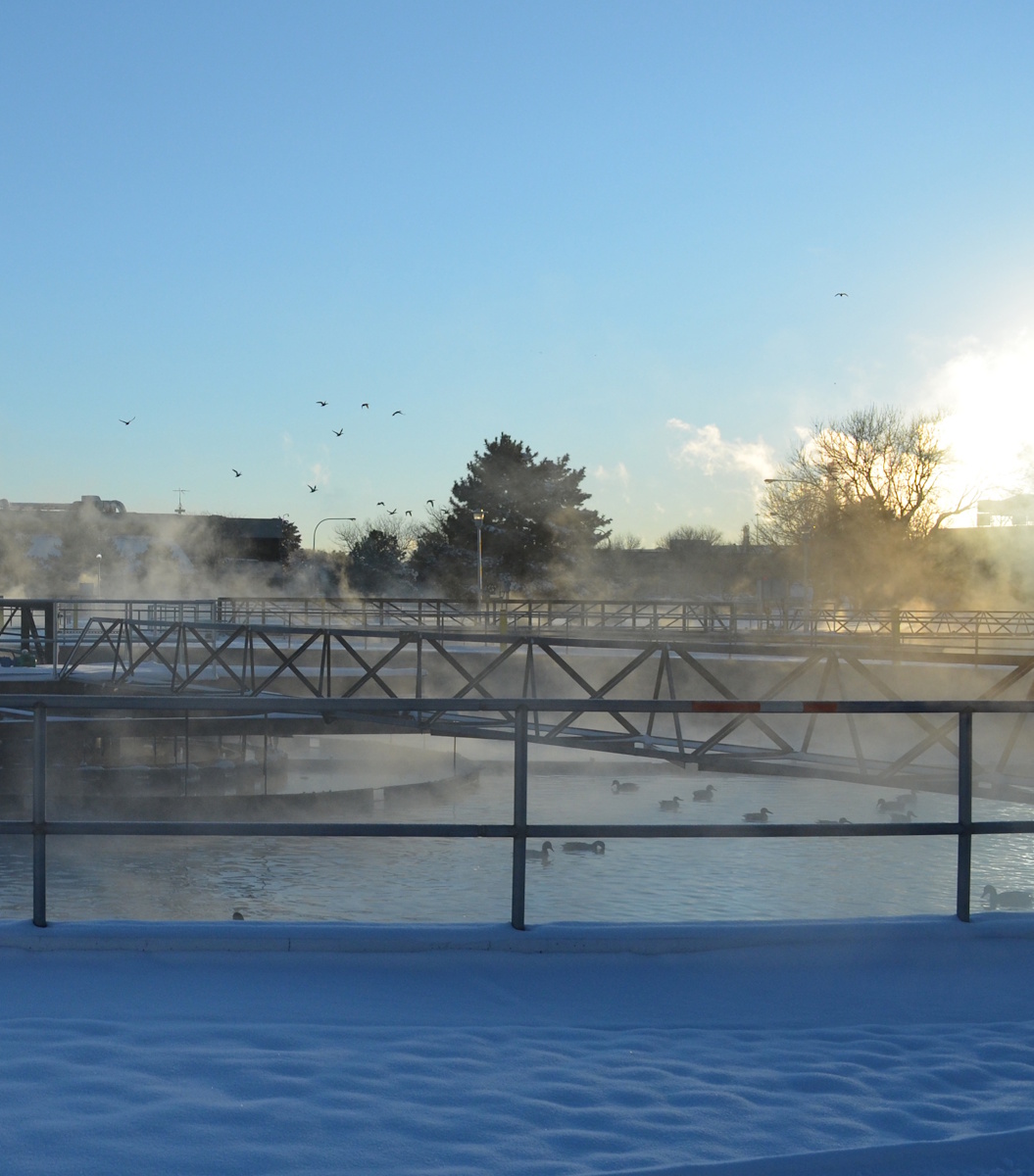
RISING ENERGY RESOURCE: Steam from the embedded heat of wastewater rises from clarifiers at the Robert W. Hite Treatment Facility on a winter day. (Courtesy of Metro Water Recovery)
As warm wastewater flows through large interceptor pipes, it creates usable thermal energy that can be captured through plate-and-frame heat exchangers and boosted by heat pumps for building heating applications.
Regional public wastewater utility Metro Water Recovery has expanded its wastewater thermal energy initiative to support campus- and district-scale loads as part of broader decarbonization efforts across the Denver metro area.
“Wastewater is a consistent and reliable source of thermal energy because communities continuously generate warm wastewater year-round through everyday activities such as showering and dishwashing,” said Blair Wisdom, energy manager for Metro Water Recovery.
Looking for quick answers on air conditioning, heating and refrigeration topics? Try Ask ACHR NEWS, our new smart AI search tool. Ask ACHR NEWS
“For Metro, wastewater thermal energy represents an opportunity to support decarbonization goals and promote resource recovery while helping address a regulatory challenge associated with reducing the temperature of our effluent prior to discharge into the South Platte River,” she said.
Interest in wastewater thermal energy and district thermal systems is growing as communities pursue electrification and decarbonization goals, she explained.
“Wastewater offers a stable, highly efficient thermal resource that can complement heat pump technologies and district energy systems, particularly in dense urban areas or large redevelopment projects. While adoption in North America is still emerging, there are already many successful systems operating internationally,” she said.
National Western Center As A Working Example
Denver’s National Western Center is also using sewer heat recovery and district-energy infrastructure to provide heating and cooling across its campus buildings.
The system was developed through EAS Energy Partners, a consortium led by Enwave Energy Corp. with infrastructure and engineering support from AECOM and Saunders Construction.
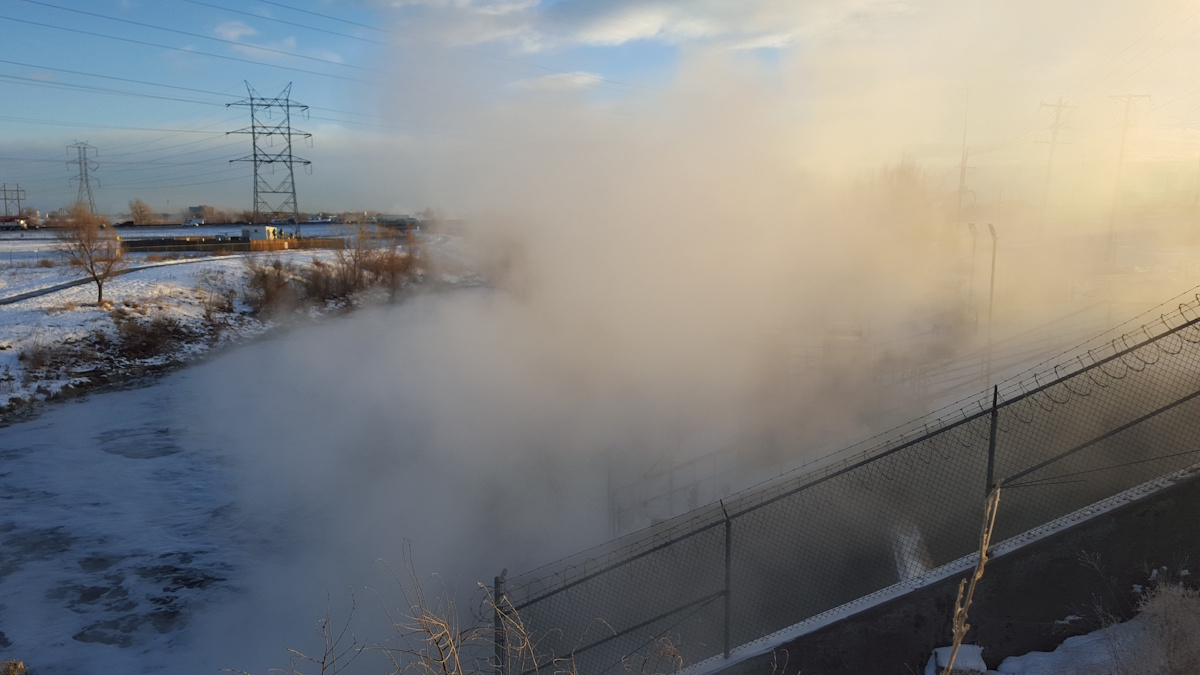
SOUTH PLATTE STEAM: Steam rises from the outfalls of the Robert W. Hite Treatment Facility, where treated water is returned to the South Platte River. (Courtesy of Metro Water Recovery)
Sewer heat recovery systems pull thermal energy from wastewater instead of burning natural gas. The 250-acre campus said it will avoid emitting an estimated 2,600 metric tons of carbon (CO2) per year.
Thermal energy networks, or TENs, remain an emerging technology in the United States, but pilot projects and district-scale systems are expanding in cities beyond Denver, including New York City, Boston, Syracuse, and Duluth, as utilities and municipalities explore lower-carbon heating and cooling alternatives.
TENs use shared networks of water-filled pipes to transfer heat into and out of buildings, allowing neighborhoods to share heating and cooling resources more efficiently.
Sources include wastewater systems, lakes and rivers, energy-intensive buildings, and stable underground temperatures.
Geothermal networks are a type of TEN that use shallow boreholes to capture relatively stable underground temperatures and distribute that energy throughout connected buildings.
The boreholes can also store excess heat underground for later use, effectively turning the earth into a thermal battery while helping reduce peak electricity demand.
Thirteen states are currently active in exploring or developing TEN initiatives: California, Colorado, Connecticut, Illinois, Maine, Maryland, Massachusetts, Minnesota, New Jersey, New York, Texas, Vermont, and Washington.
Fertile Ground For Wastewater Recovery Projects
Pilot projects for thermal energy networks aim to show how the systems can help reduce grid strain, replace aging natural gas infrastructure, and expand access to lower-emission heating and cooling technologies in urban neighborhoods, according to one advocacy group, the Building Decarbonization Coalition (BDC).
BDC tracks thermal energy network and building decarbonization initiatives in the U.S. and globally, including Denver’s wastewater-based TEN projects.
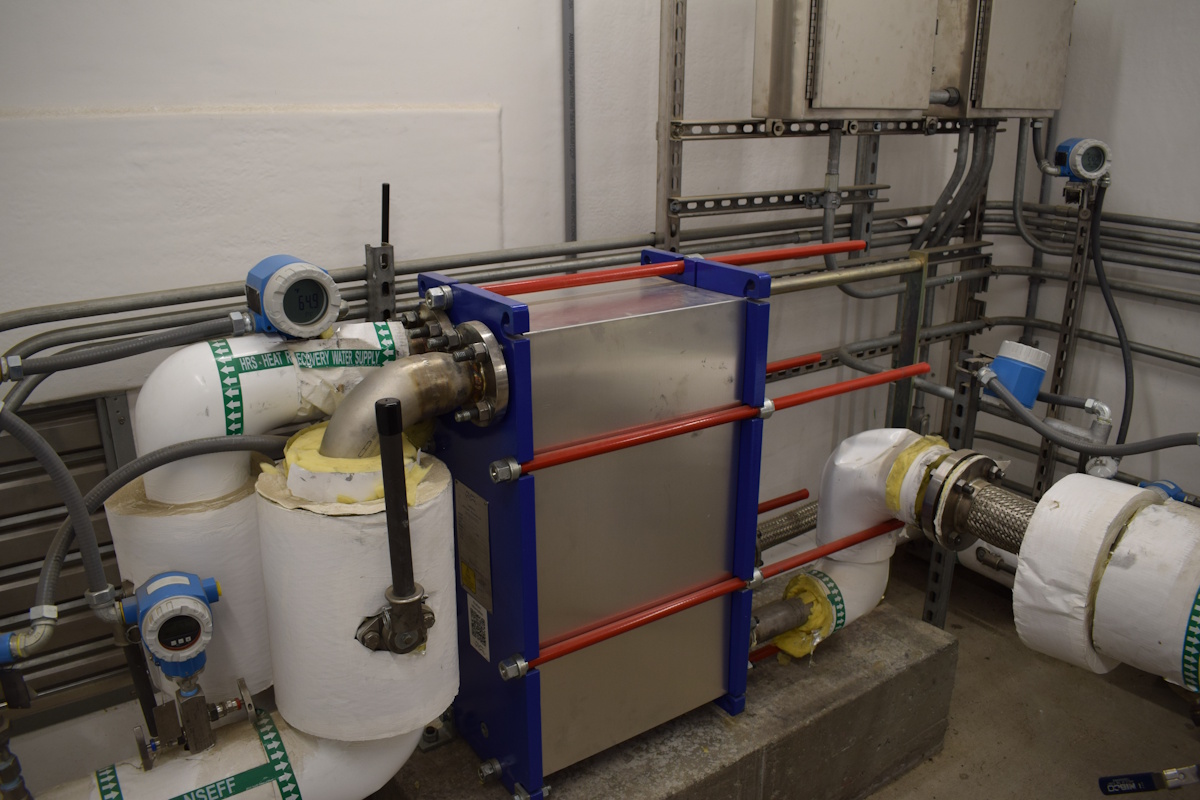
BUILDING THE INFRASTRUCTURE: The heat recovery pilot building at the Robert W. Hite Treatment Facility uses a heat exchanger and heat pump, demonstrating on-site wastewater thermal energy recovery. (Courtesy of Metro Water Recovery)
Denver’s Metro Water Recovery pilot has become a closely watched wastewater-based thermal energy network demonstration as cities explore alternatives to conventional natural gas infrastructure in dense urban areas.
“Metro’s efforts are primarily focused on feasibility evaluations, planning, and supporting infrastructure concepts rather than direct HVAC system installation. From the wastewater side, systems will involve heat exchangers, piping connections, pumping infrastructure, controls, and monitoring equipment,” said Wisdom.
Future Expansion With A Hub Concept
City officials plan to convert the Cherokee Boiler House into a central hub for the network. According to NPR, the pilot project is being funded through a combination of city funding and a state grant.
A 2025 feasibility study cited by Denver planners estimated the full build-out could cost between $280 million and $320 million and found the network may be up to 75% less expensive than other decarbonization strategies for the pilot buildings.
A small “micro-loop” connecting two buildings and a sidewalk snowmelt system could be operational within two years, with as many as nine buildings potentially connected by 2030, the same report stated.
Projects like this require collaboration among wastewater utilities, district energy operators, and mechanical and HVAC professionals with experience in heat pumps and thermal energy networks, Wisdom explained.
“One major takeaway is that wastewater utilities can play an important role in supporting community energy and decarbonization goals beyond traditional wastewater treatment services,” said Wisdom.
“These projects require strong partnerships and long-term planning because they sit at the intersection of water, energy, infrastructure, and development.”
As more pilot projects roll out, wastewater heat recovery and thermal energy networks are starting to push HVAC work outside the building and into district-scale systems — changing how design, controls, and long-term system work gets done.
Looking for a reprint of this article?
From high-res PDFs to custom plaques, order your copy today!