1953: Refrigeration Creates Mass Marketing of Frozen Dinners
HVAC solutions help solve growing populations and prevent food waste
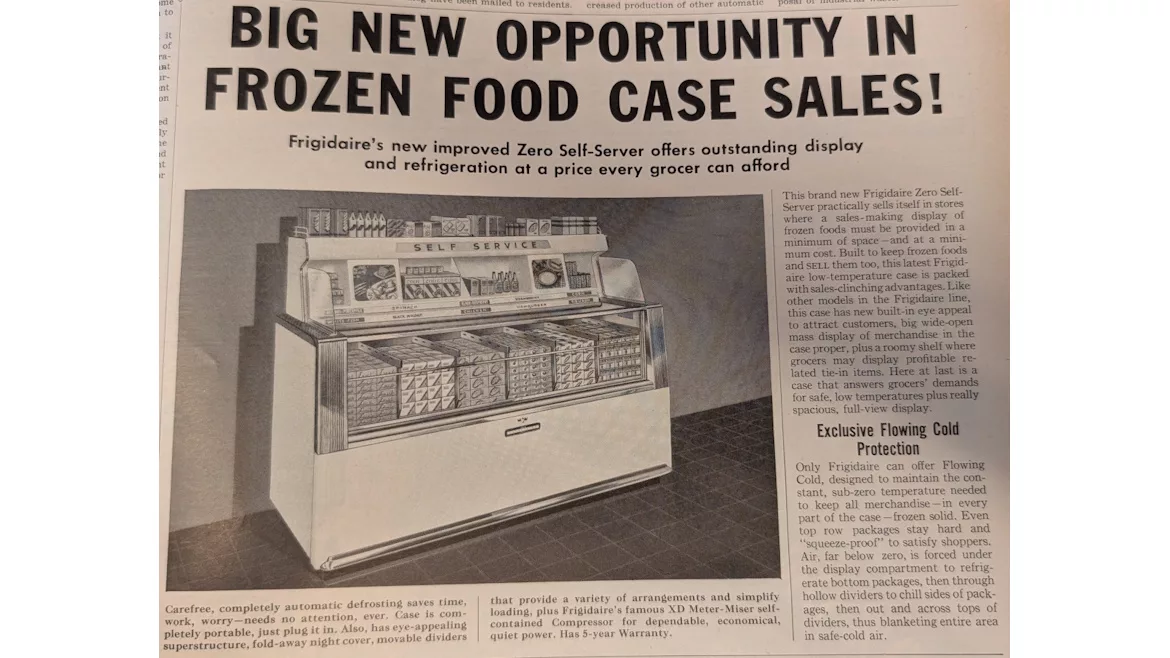
THE FROZEN FOOD FAD: Thanks to advancements in HVAC technology, frozen food became a staple in the United States starting in the 1950s.
The HVACR industry has long played an important role in comfort, but just as important is its contributions to the preservation and shipment of frozen food.
During the ACHR NEWS’ 100th anniversary, we’re digging into the archives to highlight some of the most important moments in HVACR. This includes the mass marketing of frozen dinners in the 1950s, which greatly aided in feeding a growing population and preventing food waste.
Frozen food has been around as long as people have attempted to store food in cold conditions. The early 1800s saw domestic iceboxes, only to be replaced by mechanical refrigeration in the late 1800s. In 1904, the American Society of Refrigerating Engineers was founded, which later became part of ASHRAE.
In the 1920s, Clarence Birdseye invented quick-freezing, which preserved the flavor and texture of food. This made it possible to ship and store food over long distances without spoilage. Birdseye worked with manufacturers and grocers to develop freezer display cases that would present frozen products while keeping them chilled.
Thanks to these developments, combined with the growth of supermarkets and the continued advancement of refrigeration in the 1930s and ‘40s, frozen dinners emerged as a household convenience in the post-World War II era.
By 1953, Swanson launched the frozen “TV dinner,” one of the most important moments in frozen food development. The individually packaged meals aligned with postwar suburbia and a culture fixated on television, and demand for convenient food rose.
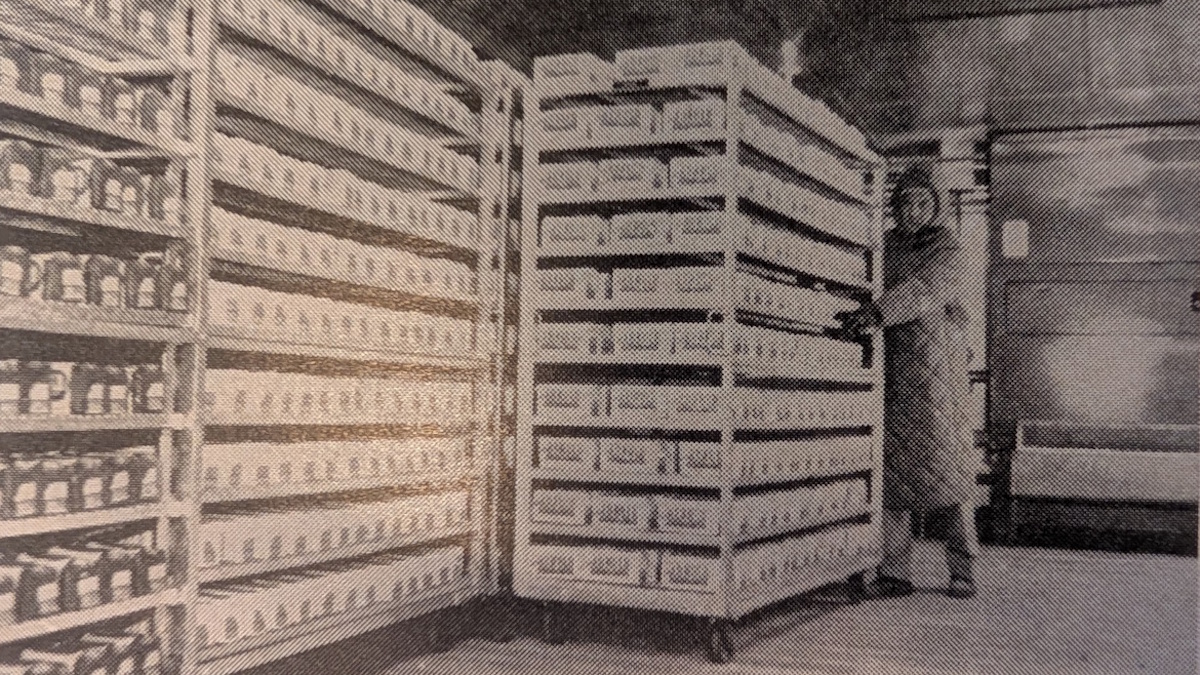
INDUSTRIAL FREEZING: A photo from the Sept. 13, 1954, edition of Air Conditioning & Refrigeration News showing how Arnold Barkers, Inc. of New York froze its bread for transport. (Staff photo)
The Air Conditioning & Refrigeration News reported on June 29, 1953, that restaurants were trending toward freezing cooked foods as well, which helped restaurant operators prepare food in advance for rush periods and develop a new take-home food business.
Looking for quick answers on air conditioning, heating and refrigeration topics? Try Ask ACHR NEWS, our new smart AI search tool. Ask ACHR NEWS
Andrew S. Seiler, head of Seiler Operations, Boston caterers, said he could buy food in larger quantities and prepare sufficient food ahead of time for his rush periods. His setup, using two chest-type freezers and a display freezer, ran $2,000 ($24,735 in 2026, factoring in inflation).
J. Fred Vollmer, then-president of the National Restaurant Association, said many restaurants were experimenting with the sale of their products through chain stores as well as through restaurant outlets.
“The take-home business could assume the form of one or more items to be sold, depending on the size of the restaurant,” Vollmer said.
In the same edition, Frigidaire advertised an improved “Zero Self-Server” for display and refrigeration, touting its portability, ease of operation, and carefree, completely automatic defrosting as a timesaver.
In the Aug. 24, 1953, edition, the National Frozen Food Merchandising Convention and Expo of 1954, held in New York Feb. 21-27, was billed as “the most ambitious frozen food exposition yet attempted by this growing industry.” There was a complete sellout of the exposition space, indicating a massive interest in the industry.
In the same edition, an article highlighted that a one-day frozen foods fair in High Point, North Carolina, drew more than 1,000 people. Several brands of home freezers were demonstrated, as were techniques for freezing beef, pork, veal, and lamb. Local appliance distributors “expressed gratification at the intense interest shown in freezers by the public.”
In the June 28, 1954, edition, a “big boom” was reported for pre-cooked frozen foods, predicting sales would exceed $100 million in three years. D.A. Swanson & Sons of Omaha reported it was producing more than 500,000 pre-cooked items daily, with a fourth plant scheduled to go into production later that year.
In its Sept. 13, 1954, edition, Air Conditioning & Refrigeration News highlighted what it claimed was the first refrigeration plant designed specifically for bread products. The full-scale operation was a bread freezing and storage plant for Arnold Bakers in Port Chester, New York. The article credits the company with pioneering the sale of quick-frozen bread on a commercial scale.
By 1957, data from the Department of Agriculture painted a rosy picture for frozen foods. Production of principal frozen foods in 1955 was 4.5 times that of 1946, and was 60% higher than 1954 production numbers.
“Large increases in production and demand for frozen foods are likely for years to come,” the department said.
This prediction came to pass. A story from the Jan. 7, 1957, edition reported findings from a study from the Super Market Institute. According to the study, 96% of typical supermarkets opened in 1956 had fully self-service meat sections, with an average of 90 lineal feet of display cases for meat and 80 feet for frozen foods.
Looking for a reprint of this article?
From high-res PDFs to custom plaques, order your copy today!