Fraud in HVAC: Why Companies Are at Risk and How to Prevent It
A strong company culture can reduce cases of fraud and theft
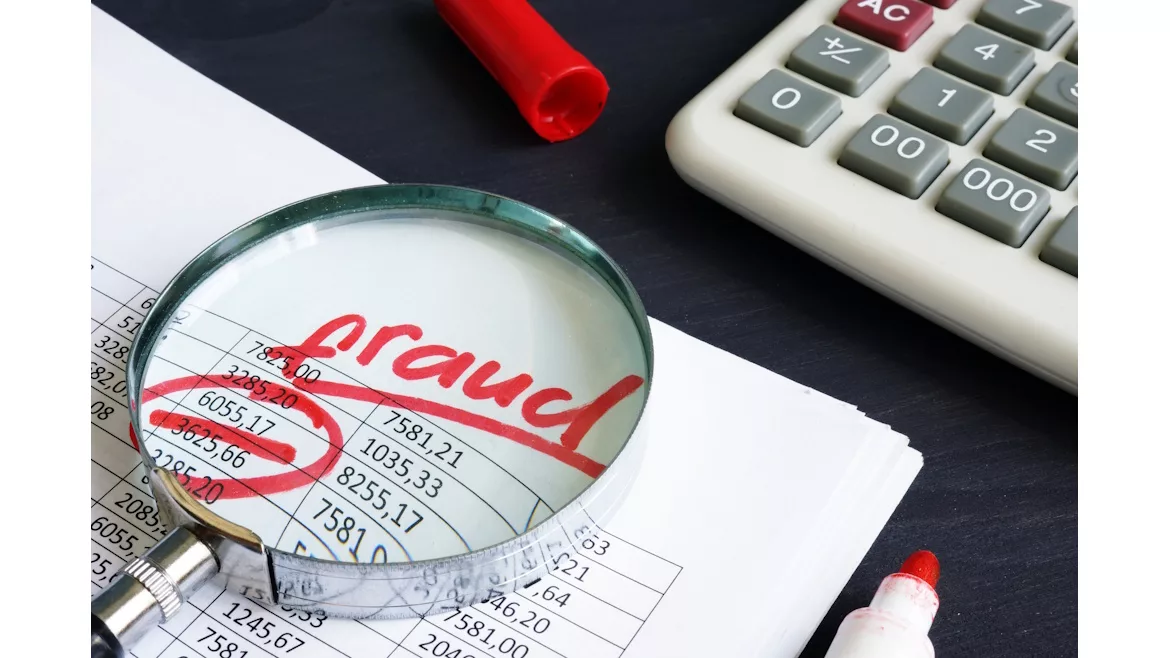
PREVENTING FRAUD: HVAC companies are not immune to fraud, with the median fraud case in the construction industry costing firms $250,000.
When outside agents attempt to defraud or steal from an HVAC company, it can be damaging. However, when the crime is committed by a trusted employee, it can be devastating.
Earlier this year, an HVAC Florida company discovered an employee was using a business credit card for personal expenses. Not long after, another HVAC company caught an employee stealing equipment and storing it off-site.
The instances show that HVAC companies are not immune to cases of fraud or theft and need to be on guard, as these crimes do more than simply hurt the bottom line.
“The contractor can suffer financial loss, business disruption, damaged customer relationships, and possible insurance, tax, or legal problems,” said Trent Cotney, partner at construction law firm Adams & Reese. “Even when the company is the victim, poor oversight can make the situation worse.”
Common Fraud Cases in Construction
According to the Association of Certified Fraud Examiners, construction is among the top five industries most prone to fraud. Its “2024 Occupational Fraud: A Report to the Nations” report shows the industry loses a median of $250,000 per fraud case.
The report indicates the following are the most common schemes in construction:
- Corruption. Accounting for 52% of cases, this can include bid rigging, bribery, purchasing schemes, and invoice kickbacks.
- Billing is the next leading cause, which can range from shell companies to personal purchases.
- Expense reimbursements, which are cases involving fictitious or mischaracterized expenses and multiple reimbursements.
- Noncash schemes, such as an employee stealing or misusing assets like equipment or materials.
- Skimming schemes involve employees personally taking cash from customers or from work completed by their employer.
- Payroll. These schemes usually involve making false claims for wages or commission, such as claiming to have worked more hours than they did or entering unapproved pay rate increases.
“Corruption can occur in a few different ways, such as conflict of interest and bribery,” said Laura Harris, senior research specialist with ACFE. “Conflict of interest schemes might happen when someone is not transparent in their connection to another party that might be used, such as a supplier or subcontractor.”
Looking for quick answers on air conditioning, heating and refrigeration topics? Try Ask ACHR NEWS, our new smart AI search tool. Ask ACHR NEWS
Bribery also takes the form of kickbacks and bid rigging.
“Kickbacks are when an external party ‘kicks back’ some money to the internal party that helped them acquire a contract or avoid a challenge,” Harris said. “Bid rigging is the manipulation of the bidding process to ensure a particular outcome.”
Regarding billing, Harris said an employee could set up a shell company and submit bogus invoices to the company in hopes of an easy payout. They might even collude with outsiders if they are the ones who receive and approve the invoices.
Cotney said in his experience, payroll fraud, misuse of company credit cards, kickbacks, stolen materials or equipment, and invoice manipulation are the most common schemes.
“In HVAC, side jobs using company resources and off-the-books payments are also common,” he said.
Factors in Fraud
Fraud psychology posits that opportunity, greed, lack of empathy, entitlement, and risk-taking behavior all play a role in someone defrauding their employer. While HVAC contractors aren’t expected to find solutions to the broader human condition, one tangible factor often influences which employees might commit fraud.
A person’s position in the company determines the duration and financial impact. ACFE’s report indicates managers account for 41% of cases and cause a median loss of $184,000, while employees make up 37% of cases and result in a median loss of $60,000. Owners/executives are only 19% of cases but generate the most loss with a median of $500,000.
Cotney said the HVAC industry is vulnerable to theft and fraud due to the nature of the business. By operating through field personnel with a high volume of small transactions, there are gaps between what happens in the field and what appears in the system.
There is also an increased risk when one employee or manager oversees multiple administrative tasks.
“Do not let one person control an entire process from start to finish,” Cotney said. “Separation of duties is one of the most effective ways to prevent fraud.”
ACFE’s report shows the median duration of employee-led fraud is eight months, a third as long as those perpetrated by owners or executives (24 months). Mid-tier managers had a median of 18 months.
Warning Signs
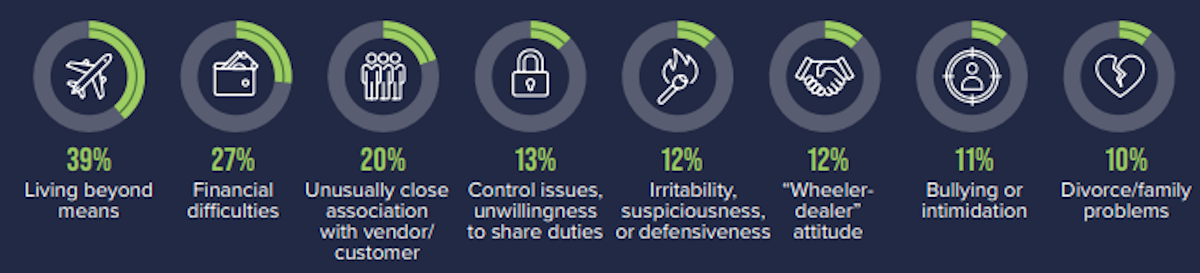
RED FLAGS: According to the Association of Certified Fraud Examiners, 75% of fraudsters display at least one of the eight most common behavioral clues shown here. (Courtesy of the Association of Certified Fraud Examiners)
Preventing fraud begins with recognizing some common red flags that could indicate foul play.
“Common red flags include unexplained inventory shrinkage and customer comments suggesting off-book work or direct side payments to technicians,” Cotney said.
Harris said employee behavior is another area to observe. The most common red flag is employees living beyond their means.
“Sure, someone can inherit money and then choose to buy a bigger home or luxury car, but many times people will also spend extravagantly when they have more money,” Harris said. “If a company knows what they are paying an employee, and that employee is living beyond the means of that pay, it might warrant a closer look at their activities.”
Other common warning signs include financial difficulties or being unusually close with a vendor or customer.
These red flags don’t necessarily mean an employee is involved in fraud or theft. Instead, it requires a closer look to see if there are issues.
Fraud Prevention
Harris said one of the most important steps companies can take to prevent fraud and theft is to build an ethical company culture. An open and transparent work culture can foster confidence in employees to report concerns.
“Tone at the top — that is, how owners and management act — will have an impact on lower-level staff,” Harris said. “If upper levels of management are seen as unethical or fraudulent themselves, employees might be less likely to report fraud because employees will be less likely to take fraud seriously if the company does not.”
ACFE’s study shows that the most common way fraud came to light was a tip from a whistleblower, accounting for 43% of cases. More than half of these tips come from employees, while only 21% are from customers and 11% from vendors. This supports the idea that a culture of trust and safety is paramount for HVAC contractors wishing to avoid fraud.
“Employees often fear retaliation, and it prevents them from saying anything,” Harris said. “A whistleblower will want to report to someone or somewhere that they feel comfortable sharing information, so companies should provide them opportunities, which may mean outsourcing, allowing tipster anonymity, or somehow investing in resources.”
She said a code of conduct can be a helpful reminder that the business takes its responsibility seriously, and having all employees sign and re-sign every year reinforces the importance of accountability.
Cotney affirmed that company culture plays a major role.
“Employees are far more likely to report misconduct when leadership takes ethics seriously, investigates concerns, and does not retaliate. A weak culture allows fraud to continue longer,” he said.
In that vein, when seeking to prevent fraud, Cotney says contractors shouldn’t respond with measures that damage culture or impair operations. This could be excessive surveillance, unnecessary approvals, or accusatory practices that treat employees as presumptive wrongdoers.
“The stronger approach is disciplined internal controls and targeted audits that improve accountability without undermining trust or speed,” he said.
Companies should also embrace best practices like regularly auditing inventory, conducting background and credit checks on potential employees, limiting check signatures, and creating a list of approved vendors and purchasers.
If preventative measures fail to stop an incident, contractors need to act quickly upon discovering it.
“Investigate the facts and involve legal counsel when needed. Document everything,” Cotney said.
Harris echoed this sentiment, saying contractors should report fraud to the appropriate organization, such as the Federal Trade Commission, the FBI, or the Better Business Bureau.
“Also look into local government, such as a state attorney general or local law enforcement. Trade organizations may also have resources available and should be informed if a member is not following the ethical standards of the industry,” she said.
Looking for a reprint of this article?
From high-res PDFs to custom plaques, order your copy today!