Guest Columm
Making Sustainability Sustainable
How to digitalize operations to achieve and maintain carbon reduction targets
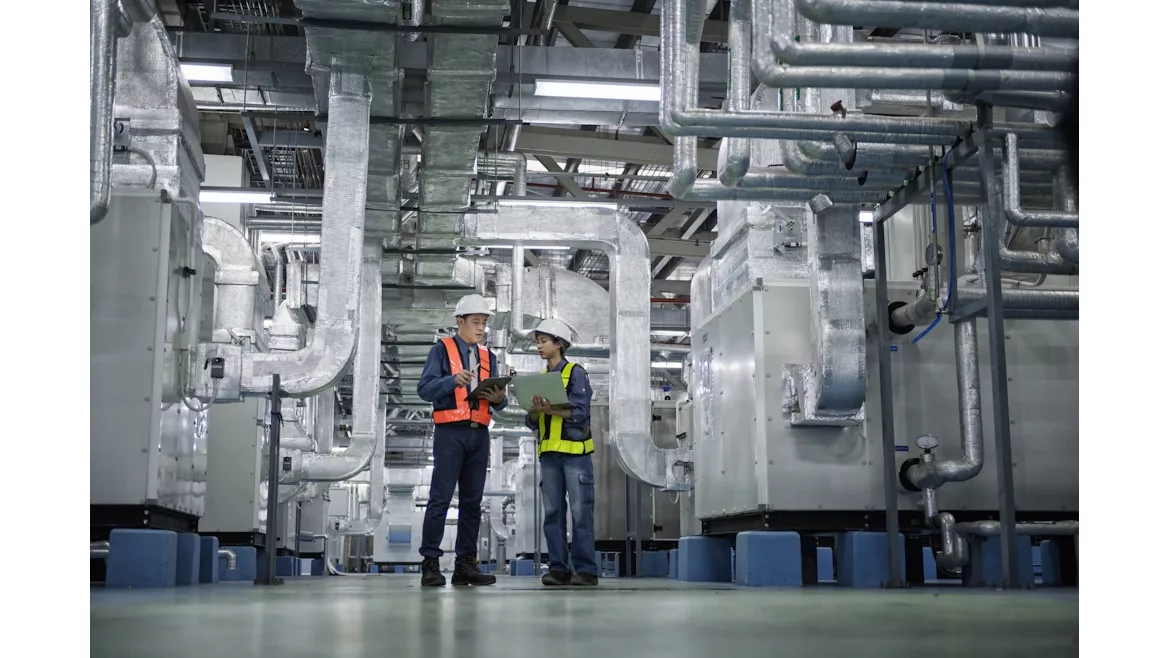
LOFTY GOALS: Net-zero commitments are rising, but real-world emissions reductions remain stubbornly slow.
Sustainability goals have become a core part of how modern organizations operate — and how investors, customers, and employees evaluate businesses. Many organizations have pledged deep carbon reductions, such as achieving net-zero emissions by 2050, and 50% reductions by 2030.
Still, transforming public promises into real-world performance remains a challenge. Energy prices are volatile, budgets and staffing are strained, infrastructure has aged, and deferred maintenance liabilities have increased. Despite these challenges, many organizations have already done the foundational energy efficiency work of lighting retrofits, building weatherization, and HVAC improvements. However, moving forward requires a more strategic approach that aligns operations, capital planning, digital tools, and innovative service models to help achieve and sustain carbon reductions.
In this paper, we examine how digitalizing operations and embedding outcomes-focused service agreements can help organizations establish a resilient foundation that helps protect investments, extend equipment life, achieve their targets, and adapt to an uncertain future.
Ambition vs. Reality: The Sustainability Gap
As many organizations have publicly committed to reducing greenhouse gas emissions, they have accomplished a wide range of energy efficiency projects. And yet, from 1990 to 2022, U.S. carbon emissions declined just 3%, and global carbon emissions rose again in 2023, reaching record levels.
The reality is that most companies have already completed the most accessible efficiency projects, and what remains is harder, more complex initiatives that often require steeper capital commitments and a longer path to return on investment.
In the future, success will require combining demand-side and supply-side strategies, using real-time data to prioritize efforts, and integrating processes to maintain the performance of past investments over time. Achieving net-zero emissions will require a shift in how organizations manage their infrastructure, allocate capital, and foster resilience.
5 Key Pressures Challenging Progress
The obstacles to achieving carbon reduction are not technical in nature; they’re financial, operational, and structural. The following are five of the most common challenges today’s organizations face and strategies to overcome them:
Challenge 1: The Need to Do More with Less
Looking for quick answers on air conditioning, heating and refrigeration topics? Try Ask ACHR NEWS, our new smart AI search tool. Ask ACHR NEWS
Facilities managers, energy leaders, and sustainability officers face increasingly tighter budgets and leaner teams, yet must deliver on public commitments.
How to overcome
Digital platforms provide visibility for organizations that need to make informed decisions, such as prioritizing capital investments, identifying underperforming assets, and maximizing the utilization of existing systems. With centralized data and actionable insights, leaders can shift from reactive operations to strategic asset management. Digital platforms provide a single source of truth for energy performance, asset condition, and system health, enabling smarter planning across sites.
Challenge 2: Energy Price Volatility
Global energy markets are increasingly volatile and unpredictable. While renewable energy adoption has accelerated, grid instability and supply constraints will continue to drive price fluctuation.
How to overcome
A digital energy strategy that integrates demand-side management, on-site generation, storage, and participation in energy flexibility markets can mitigate exposure to price volatility and even provide new sources of revenue.
Challenge 3: Deferred Maintenance Backlogs
Deferred maintenance doesn’t just increase the risk of equipment failure; it quietly erodes efficiency and shortens asset lifecycles. Systems that once performed at high levels degrade over time, often without anyone noticing until it’s too late.
How to overcome
By embracing digitalization for maintenance and monitoring, facilities teams can uncover and address issues before they become costly. Aligning workflows across facility teams and service providers ensures all stakeholders have a seat at the table. AI-enhanced continuous monitoring helps teams identify energy waste, diagnose failing equipment, and support a proactive approach to sustain efficiency improvements over time.
Challenge 4: Lack of Capital
Even when energy savings are clear, some organizations can struggle to justify upfront investments.
How to overcome
Performance-based models and energy-as-a-service arrangements are gaining traction as mechanisms to reduce or eliminate the need for upfront capital investment. Because they enable organizations to fund improvements using operational savings, they create both predictability and flexibility. Leveraging all available city, state, and federal rebates and tax incentives can help companies increase the scope of their efficiency investments.
Challenge 5: Institutional Knowledge Loss
Experienced facilities professionals are retiring, taking their institutional operational knowledge with them. The next generation of incoming workers are digital natives who expect better technology in the workplace.
How to overcome
Service agreements that combine human expertise with digital insights for remote diagnostics, automated alerts, and predictive maintenance tools allow smaller or less experienced teams to operate at a higher level. More than half of U.S. corporations have outsourced significant portions of their facilities and real estate processes for energy, sustainability, and decarbonization management.
Building Resilient Performance
Many energy projects begin with a focus on what to implement: more efficient equipment or components, renewable energy sources, and/or smart controls. Few, however, consider long-term service strategies that help ensure these new assets continue to perform as designed and expected.
You can’t sustain savings or systems without sustaining service. There are four areas where digital service agreements protect performance, preserve investments, and make sustainability sustainable.
Equipment Life Expectancy + Reliability
Infrastructure investments are often based on projected lifespan. A chiller should last 20 years, a rooftop unit 15 years. But these projections assume ideal conditions and consistent maintenance. In practice, equipment often falls short of its expected lifespan because it isn’t properly operated or maintained. In many cases, these assets remain in service below their rated efficiency, which can drain resources and result in unexpected failure. For example, failure to conduct regular preventative maintenance on electrical equipment can reduce its average lifecycle from 35 to 17 years.
A digital service agreement changes all of this. Remote monitoring, performance analytics, and data-driven diagnostics provide facilities teams with real-time visibility into how assets function, enabling them to intervene early and plan proactively. Not only does this extend the life of equipment, but it also boosts the efficiency and reliability levels businesses depend on.
Energy Performance Degradation
Guaranteed energy savings performance contracts are based on expected savings, which are then used to fund the overall infrastructure program. But what happens when energy performance degrades over time? A minor efficiency drop of 1% per year can compound over the equipment’s life expectancy, causing the performance contract to underdeliver on savings. This is one area the U.S. Government Accountability Office explored in some detail to help protect the financial integrity of these arrangements.
Digital platforms can track potential degradation before it affects the bottom line. Real-time monitoring reveals trends, uncovers issues, and supports resolution. Instead of discovering shortfalls after a costly utility bill or equipment failure, a data-driven service agreement provides facilities teams with the information they need to maintain energy performance targets.
Performance Contracting With Built-In Maintenance
Performance-based contracting has long been a powerful tool for funding energy and infrastructure improvements. But when maintenance is treated as a separate or optional component, those contracts become vulnerable. When the burden of maintenance falls to the equipment owner, and if that upkeep lapses, so too will the savings.
Bundling service and maintenance into the performance contract can bolster the integrity of these programs. A holistic approach that incorporates analytics, monitoring, and proactive maintenance helps ensure that infrastructure meets day-one expectations while delivering consistent results throughout its entire lifecycle. Rather than viewing service agreements as a drain on resources, organizations should treat them as an investment in achieving outcomes.
Bridging Skills Gaps
Service agreements provide much-needed support for aging infrastructure and deferred maintenance while also extending the reach of overburdened facilities teams. When a retiring workforce takes its knowledge with them — and younger employees join the team — digital platforms can bridge the skills gap.
Remote monitoring, for example, can alert teams to anomalies before they escalate into bigger problems. Analytics engines interpret performance data and identify areas for action. AI-enhanced digital dashboards give teams at every level a shared understanding of asset health and energy performance. In this way, service agreements provide insights and scalability that today’s sustainability leaders need to execute with fewer or less experienced workers on deck.
Digitalization: The Backbone of Sustainability Performance
Sustainability initiatives depend on data for more than compliance and ESG reporting. To truly sustain carbon reductions, organizations need access to evergreen data: real-time, trustworthy, and actionable data. A comprehensive, interconnected digital platform is the backbone of sustainability performance.
Cloud-based systems integrate disparate building systems (such as HVAC, lighting, and power) into a unified view, enabling continuous monitoring of performance, detection of anomalies, automation of responses, and benchmarking of progress across sites. This transforms operations from static and reactive to dynamic and proactive.
Digitalization also allows maintenance and service to evolve from schedule-based tasks to condition-based strategies. Instead of checking boxes, facilities teams have the information they need to prioritize maintenance based on real-time system behavior. This approach preserves efficiency, reduces downtime, extends asset life, and optimizes labor.
In short, you can’t manage what you can’t measure. And you can’t maintain what you can’t see.
AI and Workflow Integration: From Insight to Action
Digital systems collect and analyze growing volumes of performance data, and the next step is to transform insight into action.
Workflow integration platforms connect data, tools, and personnel into coordinated action. When combined with AI assistants, operators can identify critical issues faster, prioritize actions, and make better-informed decisions. This level of automation and intelligence helps ensure that the right data reaches the right person at the right time, driving measurable improvements in energy efficiency, system uptime, and operational productivity.
Plan for Outcomes, Not Activities
Traditionally, facilities planning focuses on activities, tasks, and calendars. Sustainability performance demands a shift away from this approach and toward outcomes-based models. Outcomes to consider include energy use intensity, building comfort, and indoor air quality levels.
Additionally, an outcome-based approach reframes infrastructure resilience as a core sustainability objective. That is, reliable systems, consistent comfort, and uninterrupted operations are just as central to sustainability as carbon reduction. Whether your goal is to keep data centers cool, classrooms comfortable, or laboratories safe for research, achieving these outcomes supports the broader mission of your organization.
Conclusion: Sustainability is Not a Milestone
Making sustainability sustainable requires continued attention, adaptation, and alignment. It’s not a milestone that can be achieved with a few capital investments. Organizations that succeed will combine infrastructure modernization with digital intelligence and service continuity to build operational and financial resilience into every phase of the journey.
Looking for a reprint of this article?
From high-res PDFs to custom plaques, order your copy today!