Dual Fuel Done Right: It Starts Before the Thermostat
Modern dual-fuel systems offer redundancy and energy flexibility, but success hinges on proper sizing, controls, and installation
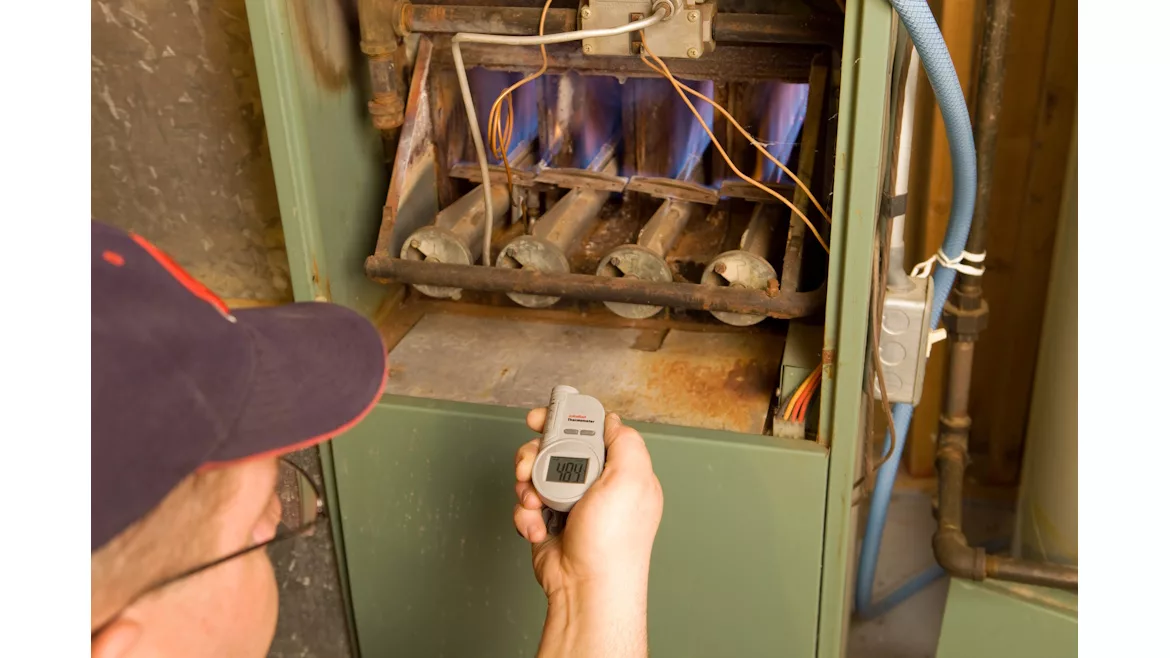
BEST OF BOTH WORLDS: Dual fuel configurations not only put the customer’s mind at ease, but are also a great way to add resiliency to an HVAC system.
More heat pumps were sold than gas furnaces in the U.S. in 2025, but not everyone is sold on heat pumps. Why? They’re apprehensive to place trust in technology they don’t understand.
There are concerns about cold-weather performance, and although those concerns are now basically unfounded, contractors are leaning into dual fuel solutions as a practical way to give homeowners more efficient comfort, and better peace of mind.
It was once more of a regional compromise, but dual fuel configurations are gaining traction across much of the U.S. market, thanks, in part, to the added sense of security they provide to the overall system.
While the technology is evolving to boost performance, the succuss, or failure, of a dual-fuel system hinges on the basic fundamentals — sizing, controls, and installation.
Deciding Factors on Dual Fuel
A dual fuel can be seen as “risk management” in a sense, safeguarding against spikes in either gas or electricity costs, while also serving as a backup if either system goes down in the dead of winter.
“There’s a redundancy built into dual fuel that you simply don’t get with a single-source system,” said Prentice Lattinville, project manager at Clean Air Quality Service. “You’re not asking one technology or one energy source to carry the entire house under every condition. That flexibility gives homeowners peace of mind.”
Lattinville said he was a big supporter of dual fuel, especially when installed correctly and sufficiently explained to the homeowner.
Looking for quick answers on air conditioning, heating and refrigeration topics? Try Ask ACHR NEWS, our new smart AI search tool. Ask ACHR NEWS
“From a real-world standpoint, dual fuel allows you to play the energy market,” Lattinville said. “If electrical rates spike but natural gas or fuel prices stay reasonable, then with a proper dual-fuel system, you can easily go back and forth from heat pump to fossil fuel. That flexibility alone can save homeowners money year over year.”
With modern technology like ECM blowers, variable-speed compressors, inverter-driven heat pumps, and smarter controls, dual-fuel systems have become far more refined. They’re quieter, and more efficient, than older generations. Lattinville said in his opinion, dual fuel is one of the best all-around solutions available today, but only if installed and engineered correctly, so homeowners can realize the true benefits of the system.
“Relying solely on a heat pump or just fossil fuels can be risky if conditions fall outside design or if power becomes unstable. Having a dual fuel system means you’re not fully dependent on one system. If something fails, the other source can still be used to protect the home (again, if designed correctly),” Lattinville said. “From a customer perspective, once people are properly educated on what dual fuel offers — like redundancy, energy flexibility, reliability, and long-term protection — most are willing to spend the extra money. They see it not as an upsell, but as insurance to protect their home and their family.”
Size Matters, More Than Ever
Most callbacks can often be traced right back to poor system design, lack of pretesting, and incomplete verification of existing conditions. Lattinville said one of the biggest problems in the field right now is technicians and owners skipping the basic fundamentals of an HVAC system during a replacement or conversion.
“Load calculations are assumed instead of verified, duct systems are reused without airflow validation, and total external static pressure is rarely measured before introducing new equipment,” Lattinville said. “When those baseline conditions are unknown, the system, especially a dual-fuel system with multiple operating modes, cannot be expected to operate within its design parameters, regardless of equipment quality. The result is reduced performance, comfort complaints, and avoidable callbacks.”
Here’s what Lattinville said technicians should be asking:
- Did we verify the existing load calculation is still valid?
- Did we confirm the ductwork can support the airflow for the Dual Fuel System?
- Did we perform proper external static pressure testing?
“Remember, dual-fuel systems demand more thought than straight replacements,” Lattinville said. “When techs and owners slow down, test properly, and design for the house conditions, callbacks drop dramatically, performance improves, and homeowners actually get what they paid for.”
From the manufacturer's perspective, Kim DeForrest, national sales manager - unitary products, Fujitsu, agreed that a heat load calculation should always be conducted for the application. Sizing of the heat pump should be based on the cooling load.
“Oversizing in cooling could lead to humidity or comfort issues,” DeForrest said. “The heat pump would heat until the balance point, after which the gas furnace provides additional heat in the winter.”
And when retrofitting a heat pump onto an existing gas furnace, it’s important to confirm that the furnace’s blower can deliver the required airflow for the heat pump’s tonnage and staging profile.
“A mismatched or non-modulating blower may reduce system capacity, degrade efficiency, and negatively impact comfort in both heating and cooling modes,” DeForrest said.
Quality Controls
The thermostat and changeover logic determine when the heat pump will operate, when the furnace will take over, and how smoothly that transition will take place. Controls are the key to the success or failure of these systems.
DeForrest said that while a proprietary thermostat would assist with diagnostics and more control functions on higher efficiency systems, most 24-volt thermostats would work on standard systems.
“Contractors would need a standard two-stage thermostat, allowing the heat pump to operate in the first stage and the gas furnace in the second stage,” DeForrest said. “Some smart thermostats use their logic to determine outdoor temperatures for the area, which can be used for setting the balance point of the system. Because a dual-fuel system has both a heat pump and a gas furnace, the balance point determines the most efficient and comfortable point to switch from electric heat pump operation to gas heat.”
Installation Checks
DeForrest noted that it’s critical that technicians test the heat pump in both heating and cooling modes, as well as check the furnace independently to ensure proper operation.
“An outdoor temperature sensor (remote sensor) should be installed,” DeForrest said. “This lets the system know the ambient outdoor temperature so it can automatically switch between heat pump and furnace at the proper ‘balance point.’ A thermostat’s balance point should be set for seamless transition between stages.”
If there are ever any questions, it’s best to contact the manufacturer. To help speed up the process, DeForrest suggests gathering the complete model information for the furnace, evaporator coil, outdoor unit, and thermostat before picking up the phone.
“These details identify the staging and control capabilities of each component,” DeForrest said. “In addition, the wiring schematics for both indoor and outdoor equipment are essential for diagnosing whether a malfunction is due to improper wiring or an internal component issue.”
Dual Fuel Done Right
When asked about how dual-fuel installation and overall understanding “clicked” for him, Lattinville said it really arrived not from a single source, but rather a combination of structured manufacturer training and plain-old field application.
“The starting point must be manufacturer-led education. Attending the manufacturer’s formal classes, both installation and troubleshooting courses, is critical,” Lattinville said. “That is where you learn how the equipment is designed to operate: control, staging strategies, airflow requirements, changeover parameters, and failure modes. That foundation matters because it comes directly from the engineers who built the product. Without that baseline, you’re guessing instead of applying the system as intended.”
From there, refresher material plays an important role. Manufacturer-produced online content — technical videos, webinars, service bulletins, and updated documentation — helps reinforce concepts and keeps technicians current as products evolve. This is very different from generic online advice. Content coming directly from the manufacturer reflects tested procedures, not personal opinions or one-off field fixes.
“That said, no class, no matter how good, can cover every scenario,” Lattinville said. “Once you step into the field, you encounter variations in duct systems, equipment, wiring practices, fuel availability, climate conditions, and homeowner behavior. This is where field experience becomes essential. Applying what you learned in training, measuring actual conditions, and seeing how systems respond in real environments is what turns theory into skill.”
If he could give some advice to manufacturers, Lattinville said they benefit greatly from consistently involving experienced field technicians earlier and more directly in the design refinement process.
“Not every piece of feedback can, or should be, used or result in a design change,” he said. “Also, most technicians would not understand the realities and constraints of manufacturing and what it takes to get equipment to production, then to the market. However, structured collaboration with technicians who regularly install, commission, and service the equipment would help identify recurring, high-impact issues that affect install time, reliability, and long-term serviceability.”
Technicians do bring practical, real-world insight into access, wiring layouts, control clarity, and documentation gaps that may not be fully apparent in controlled environments.
“By focusing on common pain points rather than individual preferences, manufacturers can prioritize improvements that meaningfully reduce installation errors, callbacks, and setup complexity while maintaining design integrity and production efficiency,” Lattinville said.
Looking for a reprint of this article?
From high-res PDFs to custom plaques, order your copy today!