State of the Industry
Cautious Confidence: Contractors Staring Down Price Pressures, Workforce Shortages, and AI Escalation in 2026
For many owners, the next phase is less about surviving transition and more about tightening systems, strengthening teams, and building durable competitive advantages
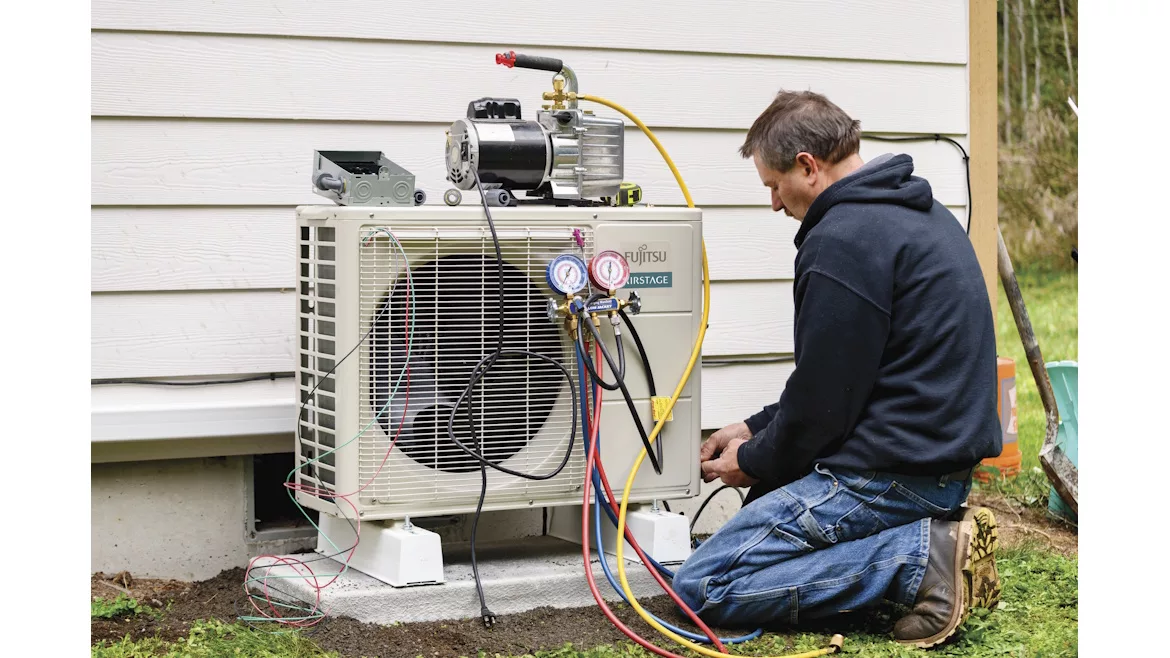
OPTIMISM: 2026 is shaping up to be less hectic than 2025, but it will have its own set of unique challenges.
2025 was defined by a chaotic refrigerant transition, constantly evolving code and efficiency changes, and a number of wild policy shifts. But heading into 2026, contractors are feeling something the industry hasn’t experienced in years — a moderate sense of familiarity and stability.
For Marco Radocaj, owner of Balance HVAC, the 2026 mindset is strikingly better than 2025’s.
“Last year was all about ‘the transition,’” he said. “Not that it was really anything significantly difficult, but the excessive attention was making a mountain out of a molehill. There was a lot of uncertainty, unfamiliarity, and new processes/procedures. It’s nice to feel comfortable going into the new year.”
That new comfort is being bred by increased experience. For technicians in the field, there were unknowns about performance data, troubleshooting procedures, and a bunch of new nomenclature to learn, but Radocaj said that’s all starting to get ironed out across the board, giving techs more certainty on the job and at the kitchen table.
“As confidence within the trade continues to grow, so does the confidence to explain these differences and advantages to customers in a more confident and uniform manner,” he said. “This makes things better for everyone.”
In St. Louis, while at a monthly meeting of SMACNA contractors, veteran contractor Butch Welsch of Welsch Heating & Cooling Co. took the questions posed to him by ACHR NEWS and used them to poll his peers about their expectations for 2026. In that market, roughly 95% of commercial HVAC and sheet metal work and about 85% of new residential construction HVAC work is performed by SMACNA union contractors.
“Looking ahead, the commercial contractors are cautiously optimistic about 2026 because of the number of large jobs that will be going forward,” Welsch reported. “As a group, they indicated about a 5% growth from 2025.”
Looking for quick answers on air conditioning, heating and refrigeration topics? Try Ask ACHR NEWS, our new smart AI search tool. Ask ACHR NEWS
On the residential, expectations are steadier.
“As a residential contractor, we feel that 2026 will be about the same as 2025,” Welsch said.
For Joanna Buglewicz, president and owner of Green Valley Cooling & Heating, the coming year feels like a continuation of strong, but demanding, growth.
“A new year always brings renewed focus, fresh goals, and meaningful projects that move our key initiatives forward,” she said. “We’re especially energized by the work we’re doing to strengthen internal efficiencies, elevate the customer experience, and continue building a culture that supports and develops our team.”
At the same time, she added, “Overall, 2026 feels like a year of momentum. One where we’re balancing healthy ambition with thoughtful planning so we can keep serving our community with excellence.”
Demand Dynamics Are Shifting
All three contractors said the demand in their markets is there, but it’s evolving under the weight of inflation and rising equipment costs.
2025 marked a clear shift in buying behavior, Buglewicz noted.
“The biggest change was a noticeable move toward more budget-friendly equipment,” she said. “With inflation, economic uncertainty, and overall cost sensitivity, many homeowners leaned toward lower-end system options rather than mid- or high-tier models. Customers were still committed to comfort, but they were far more price-conscious in how they approached replacement decisions.”
“Repair over replace” was also a clear trend, one she expects will bleed into 2026, at least in the near term.
“As equipment prices have risen industry-wide, many homeowners chose to extend the life of their existing systems rather than invest in a full replacement,” Buglewicz said. “We do expect some of these trends to continue, especially the emphasis on affordability and value. At the same time, we anticipate that as economic pressures stabilize and as aging systems reach a point where repair is no longer cost-effective, replacement demand will naturally rebound.”
In St. Louis, the service and replacement side of the business is already becoming more important as new construction retreats, which is something Welsch, whose business runs a mix of 40% new residential construction and 60% service and replacement, is taking into consideration.
“Our concern is that the new residential work is shrinking in our area, and therefore, we have to work harder to obtain the service and replacement work,” Welsch said. “So far, we have been successful, but we always worry if we will be able to continue to be able to increase the service business, given the number of non-union contractors with whom we compete.”
At the same time, consolidation is reshaping that competitive landscape. A “large number” of smaller non-union competitors in the area have been purchased by equity investors or larger out-of-town firms, Welsch said.
“In these cases, the business model for the contractors is completely different from ours, and we are receiving large numbers of customers who do not like the business operations of the new investors and are calling on us for services,” he said. “We feel that more and more of the customers from these companies will decide to change their service source, and we pledge the same home and locally owned and operated service that we have always provided.”
In this new market dynamic, it’s not only the customer who feels the cost side of the equation.
“The cost of the air conditioner itself has changed significantly since most people purchased their last system,” Radocaj said. “With tariffs, new refrigerants/parts, and the press for efficiency systems, this makes perfect sense to people within the HVAC industry.”
Radocaj expects that as this “new normal of pricing” becomes more familiar, it will eventually help level the playing field between contractors who load their prices with training, quality, and benefits, and those who simply race to the bottom.
Workforce Woes and Going to Bat for the Trades
One of HVAC’s most persistent problems, the workforce continues to be a challenge, but necessity is the mother of invention, and contractors are starting to attack it from new angles.
Commercial union contractors are seeing strong project backlogs, but are struggling to field enough technicians to tackle these jobs.
“The issue that concerns them the most is the fact that there are basically no Journeyman available through our labor partners, Local #36, SMART,” Welsch said. “So the availability of workforce for them is a serious issue.”
That reality has pushed his company to lean hard into apprenticeship and long-term development rather than relying on picking up helping hands from the hall.
“We work very hard at keeping our full number of apprentices so that we are continually developing our own future workforce,” he said. “As a company, we do not rely on the union hiring hall to provide us with quality performers. When only 30 or 40 people out of a 1,400-person local are seeking work, you are not getting the ‘cream of the crop’ by hiring them.”
Welsch’s current strategy is simple — hold on tightly to whoever they bring on.
“Since when we hire someone, it is our intention for that individual to be a permanent long-term employee of our company, we utilize other methods to find people if we need to add some,” Welsch said. “We put out the word, that we are in need of some type of worker, and we will usually get some calls.”
Another prong of the strategy is to steer young high school graduates away from the four-years and into trades programs.
“A person going to, even a middle-of-the-road college or university, is looking at $50,000 per year,” Welsch said. Even if that student only borrows half, “their student loan would be $100,000 to be repaid — if and when they can find a job in their chosen field.”
By contrast, a sheet metal apprentice in his market starts around 50% of the full journeyman package, has tuition covered, is paid while in school, and can be at 100% of the scale in five years.
“So, in five years, he is at the top of the scale, has no student debt to worry about, and then needs to make sure he works hard to produce a good day’s work for the day’s pay, and he can live a very successful life,” Welsch said. “This is an important story that needs to be told.”
Workforce shortages are also becoming an increasingly big factor that’s driving down profit.
“The biggest pressure I feel right now is having to overcome ‘low bids,’” Radocaj said. “As expectations for HVAC contractors continue to grow, competing with ‘low prices’ becomes increasingly difficult. Good technicians are not (and should not) be inexpensive; they require great pay, great benefits, great tools, and great training.”
Buglewicz, meanwhile, is focused on keeping people and culture aligned with rapid growth.
“We’re scaling quickly, and ensuring our internal systems, processes, and people keep pace is always top of mind for me,” she said. “Recruiting and developing the right talent, keeping communication tight, and protecting our culture as we grow are areas that naturally bring some anxiety, but they’re also what makes the work exciting.”
Customer Loyalty and Evolving Expectations
Even if an outfit is fully staffed and has all equipment available, they’re now fighting a battle on a new front — homeowners and building owners with “elevated customer expectations.”
That’s what Radocaj expects to be the big story in 2026.
“As prices continue to rise and the importance of the mechanical system as a part of the home's system continues to become more mainstream, I think customers across the board will expect more transparency with the work being performed, more professional interactions, and elevated levels of craftsmanship and expertise,” Radocaj said.
That, in turn, will ripple upstream.
“This will push manufacturers to produce better information with more access,” Radocaj said. “HVAC contractors will also have to raise their game to continue to meet customer expectations. All these things make the product and the trade better for everyone.”
In a market where more customers are choosing repair over replacement and leaning toward lower-tier systems, Buglewicz sees the contractor’s new role as part educator, part guide.
“Our role is to stay responsive, educate customers, and offer options that meet them where they are financially while still delivering long-term comfort and efficiency,” she said.
In St. Louis, service loyalty is also being shaped by ownership changes and business models. As more local shops are purchased by private equity or large out-of-town contractors, some customers are voting with their feet.
“We are receiving large numbers of customers who do not like the business operations of the new investors and are calling on us for services,” Welsch said. “We feel that more and more of the customers from these companies will decide to change their service source, and we pledge the same home and locally owned and operated service that we have always provided.”
Radocaj also added that the years of people like Brian Orr, Bill Spohn, and Allison Bailes preaching the good word are starting to pay off.
“Architects and general contractors are starting to see the importance of expecting more than just cold air from your air conditioning system and realizing how vital it is to see the entire home as a system, rather than a bunch of separate pieces,” Radocaj said. “With that, the more ascetic areas of our trade are starting to catch up as well. Designers are starting to see better ways to apply seamless looks (i.e., dry wall slot diffusers) in a more functional way, and custom grille manufacturers across the board seem to be providing more and better information.”
The Next Big Disruption: AI
In 2026, AI is set to have as much influence on the HVAC industry as physical equipment.
“Right now, the biggest workforce pressure isn’t tied to a specific job role — it’s the shift happening around AI and how it will shape the future of our industry,” Buglewicz said. “We’re already seeing technology capable of handling CSR functions, supporting dispatch, and creating efficiencies that can significantly reduce operational costs when paired with the right CRM.”
The tension, she said, is in adopting those tools without losing the human element that defines the company’s culture.
“As an owner, I’m expected to keep pace with technology, improve efficiency, and stay competitive,” Buglewicz said. “That creates a constant tension: how do we integrate AI in a way that enhances our business without sacrificing the human element that defines our culture?”
She expects that pressure to increase in 2026.
“My focus is on leveraging technology to support our people, not diminish their roles,” she said. “When we do that well, AI becomes a tool that strengthens our team rather than a threat to it.”
Policy Pain Points
Looking ahead to 2026, Buglewicz expects many of the major HVAC storylines to continue centering around politics and regulatory shifts, citing “evolving efficiency standards, refrigerant transitions, environmental policy, and election-year dynamics.”
“These changes create uncertainty for contractors and confusion for homeowners, especially as equipment costs rise and compliance requirements become more complex,” she added.
In the furnace space, Welsch is particularly concerned about the EPA’s move to terminate the manufacturing of gas furnaces less than 90% efficient beginning in 2028.
“This is a ridiculous policy, and the industry needs to join together to fight it,” he said.
Looking for a reprint of this article?
From high-res PDFs to custom plaques, order your copy today!