From A2L Chaos to AI Tools: Key Takeaways from the Latest AHR Trend Report
A2L adoption, expiring IRA credits, and deepening labor gaps put pressure on contractors to rethink pricing, training, and sales strategy.
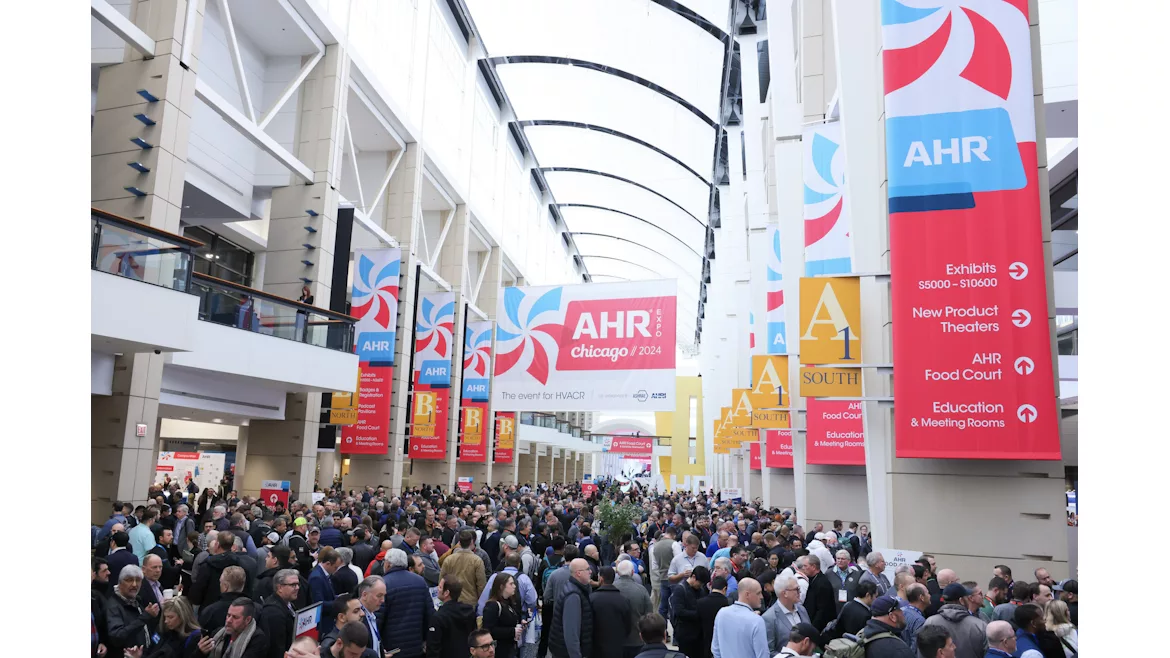
TRENDS: A2Ls, AI, and heat pumps are expected to be the big stories at AHR.
2025 was defined by a difficult A2L rollout, shifting tax credits, more workforce woes, and AI tools at every turn. For many in the industry, the past few years have felt like controlled chaos, and the 2026 AHR Expo Trend Report more or less confirms that sentiment.
Composed of perspectives from manufacturers, distributors, associations, and technicians, the report paints a picture of a fast-moving industry and re-emphasizes that those waiting for things to settle down are going to be waiting for a long time.
The A2L Transition Is Mostly in the Rear-View Mirror, Fallout Still Ongoing
On the equipment side of things, the report shows that the A2L transition is mostly complete — HARDI’s data indicates that by July 2025, A2L units represented 86% of distributor sell-through, with R-410A down to 14%. That is a near-complete channel flip in a short window.
At the same time, the report notes that R-454B shortages and tariff debacles are still hammering the supply chain and exposing how difficult it is to forecast when everyone is scrambling to change refrigerants at once.
“2026 will test the industry’s ability to adapt as much as it will reward those who’ve learned from the past two years,” said Talbot Gee, CEO of HARDI. “The refrigerant shortages of 2025 exposed the cost of weak forecasting and breakdowns in communication across the supply chain, but they also sharpened the industry’s awareness of what coordinated planning requires.”
HARDI’s commentary points out that tariffs and weak late-2025 cooling demand have left many distributors long on inventory and under margin pressure — and that has a way of trickling down to contractor pricing and terms.
Contractors would probably agree the rollout was messy even if, as PHCC notes, customer acceptance ended up being stronger and faster than many feared.
Looking for quick answers on air conditioning, heating and refrigeration topics? Try Ask ACHR NEWS, our new smart AI search tool. Ask ACHR NEWS
Cindy Sheridan, CEO of PHCC, stated that “last year’s concerns for acceptance of new products brought forth by the refrigerant transition were proven to have been overstated. Prompt market acceptance of A2L products has created other supply side concerns for equipment and refrigerant availability, prompting more repair of existing systems than is typical for most contractors.”
Evolving Incentives, Other Reforms
IRA tax credits were a part of many contractors’ sales playbooks, but that’s coming to an end. With credits like 25C ending Dec. 31, 2025, contractors need to communicate that to homeowners — and maybe leverage it into some quick year-end sales.
“With uncertainty around energy efficiency tax incentives set to expire at the end of 2025, there is an opportunity to work with building owners to act now … and take advantage of tax benefits while they’re still available,” Sheridan said
David Rames, senior product manager at Midea, said that since AHR Expo 2025, the One Big Beautiful Bill Act (OBBBA) has reduced the value of federal incentives like 25C and 45L, prompting a shift toward more affordable, installation-friendly heat pumps that still qualify for strong state and utility rebates, with up to $10,000 available in some areas.
The report also notes that EPA is sunsetting the Energy Star spec for central air conditioners effective February 1, 2026, which could change how familiar labels show up on some equipment.
Meanwhile, PHCC and others are pushing for reform of EPCA and more predictable efficiency rulemaking cycles, because constant step-ups and overlapping programs are burning out both contractors and customers.
Heat Pumps and Electrification More of a “Default”
One of the report's most consistent findings is that heat pumps are no longer a niche — ESCO highlights the rapid shift toward higher-performance, cold-climate equipment and emphasizes that the myth “heat pumps don’t work when it’s cold” has been debunked by modern inverter-driven systems and vapor injection technology.
John Schneider, president of Copeland’s Americas Business, said decarbonization has become one of the most critical priorities in the HVACR industry.
“This includes the electrification of heating and cooling systems, transitioning to more environmentally friendly, low-global warming potential (GWP) refrigerants, and safeguarding food and pharmaceuticals through an efficient and sustainable cold chain,” Schneider said. “The industry’s shift toward low-GWP refrigerants, including A2L classified refrigerants CO2 and R-290, demonstrates a clear commitment to aligning heating and cooling technologies with environmental standards and mitigating impact to the environment.”
For many contractors, that decarbonization push is showing up as a very practical question: how to make heat pumps work economically and reliably in a wider range of climates and applications.
The heat pump is also being increasingly paired with other gas systems to provide customers with a reliable alternative that’s driving down operational costs.
“Dual fuel systems that combine electric and gas energy sources provide a flexible opportunity to drive efficiency and lower operating and utility costs for both commercial building teams and homeowners,” Bosch noted. “Using this combination, building operators and homeowners can gain the advantages of electrification by using a heat pump for cooling and heating when the ambient conditions are conducive. If outdoor conditions drop below the heat pump’s operating range, the system will seamlessly transition to a gas furnace as auxiliary backup heating to maintain efficiency and comfort.”
AI All Around
AI, IoT, smart controls, and the like are going to continue to march into every corner of the industry.
HARDI called AI “one of the most transformative forces shaping the HVACR industry.
“Its ability to enhance forecasting, optimize energy efficiency, and strengthen supply chain visibility is already redefining how businesses operate,” HARDI said. “As the industry moves further into the refrigerant transition, AI will play an even greater role — helping companies anticipate demand changes, manage compliance requirements, and adapt seamlessly to evolving standards.”
In the field, techs are saying AI can’t be ignored.
“What I hear every day from techs, trainers, and contractors is the same: we need to step up our game,” said Trevor Matthews, founder of Refrigeration Mentor. “AI is becoming a tool we can’t ignore — whether it’s helping with diagnostics, flagging system issues early, or supporting newer techs in the field. But AI isn’t replacing people. It’s enhancing them. And to make that work, we need solid training — real training that builds confidence, not just theory.”
Workforce Woes Won’t Go Away
Probably the least surprising finding in the report is that the workforce issues aren’t going away, and things are likely to get more difficult.
ESCO cites Bureau of Labor Statistics data that roughly 40% of skilled trades workers are expected to retire in the next decade, while birth rates remain below replacement, and RSES notes that as knowledge demands go up, program hours are going down, and some employers still think they can put a “green” worker in a truck within weeks.
PHCC highlights progress on making Pell Grants available for short-term vocational training and continues to press for strong WIOA funding.
ESCO and RSES both stress that training is no longer optional if the industry wants advanced heat pumps and A2Ls to work as advertised.
Meanwhile, manufacturers like Midea and Rheem are investing in regional showrooms, academies, and trade-school partnerships specifically to get contractors’ teams hands-on with new technology.
Clifton Beck, manager of digital media at the ESCO Group, said these workforce issues are going to compound as consumer sentiment continues to shift from gas furnaces to heat pumps.
“The key element holding back its growth is the lack of qualified HVACR professionals who understand higher-performance heat pumps,” Beck said. “Today’s heat pumps are complex and sophisticated. Incorrect installation, and/or poor service leads to inefficiency, reduced lifespan, and disenfranchised consumers. That’s why training and certification are no longer optional — they’re mission critical.”
Looking for a reprint of this article?
From high-res PDFs to custom plaques, order your copy today!