Costly Killer: How HVAC Contractors Can Reduce Downtime at Mission-Critical Facilities
Preventive service, predictive tools, and modular retrofits are helping contractors reduce risk
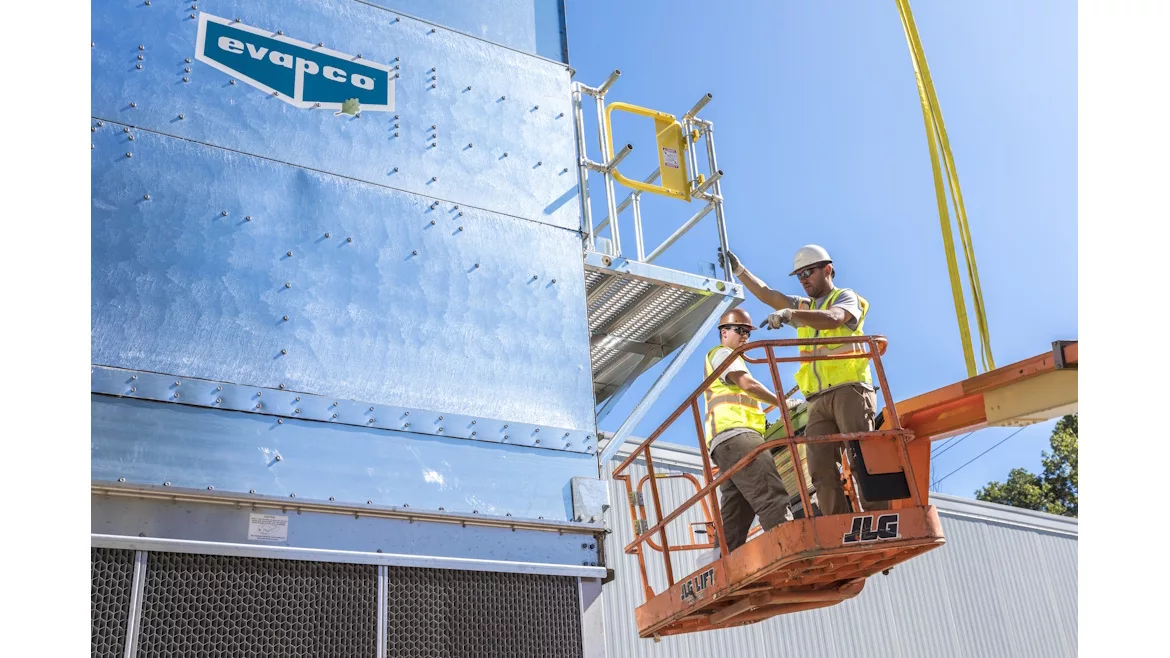
NOT OUT OF NOWHERE: HVAC equipment failure doesn’t just spring out of nowhere, and downtime can be avoided with a little predictive maintenance.
Time is money and, for industrial facilities and other critical infrastructure, downtime can lead to substantial loss of capital, angry customers, or even worse.
It can stop product lines, leave workers in unsafe conditions, put hospital patients at risk, and, in the case of facilities like data centers, cause massive downstream headaches for an untold number of people.
This reality is causing contractors, manufacturers, and facility managers to rethink HVAC systems to avoid any shutdowns in areas where reliability is paramount.
Speaking with ACHR NEWS, experts from Evapco, Trane, and Rheem shared their perspectives on what triggers downtime, how new predictive tools are being leveraged to keep things running, and some strategies that make necessary retrofits less disruptive.
What Triggers Downtime
Most failures of HVAC systems don’t just come out of nowhere — they’re usually the result of neglect, or even poor installation.
David Kardos, global manager – replacement market services at Evapco, pointed to the most avoidable aspects as the most likely suspects — inadequate preventative maintenance and the natural wear and tear of components as the root of many problems. Simple tasks like changing filters, greasing bearings, or replacing belts are often skipped until the system breaks, leading to costly downtime.
In concurrence, Troy Reineck, business development manager at Evapco, said that these problems not only reduce efficiency but also put stress on motors and compressors. For contractors, this means educating facility managers on the true cost of deferred maintenance — not just higher energy bills, but the potential for catastrophic failure.
Looking for quick answers on air conditioning, heating and refrigeration topics? Try Ask ACHR NEWS, our new smart AI search tool. Ask ACHR NEWS
“In a tough industrial environment, parts like compressors, bearings, and fans are continually stressed and fatigued and will inevitably fail,” Reineck said. “Refrigerant leaks are another major problem. They can be caused by corrosion or vibration, and once a system loses refrigerant, the compressor will overwork and eventually fail.”
Carrol Basham, regional sales manager, Rheem Commercial Air, added that improper installation remains a common cause of system failures. Units may be oversized, undersized, or misapplied because contractors weren’t trained on that specific equipment. Ductwork also gets overlooked, even when it’s a weak link in long-term performance. For contractors, this highlights the need to slow down during installs, verify system sizing, and invest in training that matches the product being installed.
For example, Eric DeLodder, over at Trane, brought up a case study involving an automotive plant, where aging infrastructure caused hot conditions, putting production quality at risk. The lesson for contractors here is that deferred upgrades in industrial facilities don’t just threaten comfort — they can put a client’s business model at risk.
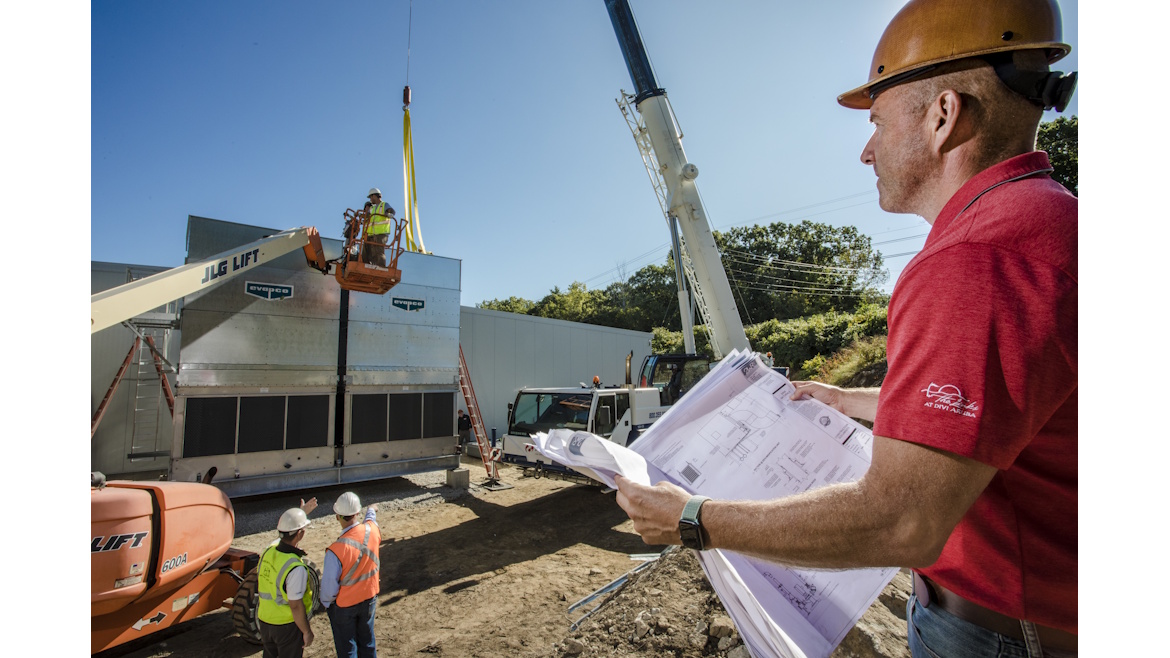
BIG EXPENSE: Downtime due to HVAC failure comes at a tremendous cost to the impacted business or facility. (Courtesy of Evapco)
Kardos added that while wear and tear can’t be stopped entirely, contractors can get ahead of it.
“Newer equipment is being built with better materials with higher tolerances, which will naturally increase lifespan,” Kardos said. “Even more importantly, new technologies like IoT sensors and data analytics are helping us identify issues before they become failures. We’re moving away from simply fixing things when they break and instead using real-time data to predict when maintenance is needed. This kind of proactive approach is a game-changer for avoiding downtime.”
Predictive Tools and Proactive Service
Thanks to new technology, the traditional HVAC service model is changing — it’s no longer “fix it when it breaks,” it’s now “fix it before it fails.”
At Evapco, Kardos explained that IoT sensors and data analytics now allow service teams to identify vibration, temperature, or energy anomalies early, scheduling maintenance before equipment goes down. For contractors, this represents both a challenge and an opportunity.
The challenge: building the skill set to interpret data, not just react to alarms. The opportunity: positioning predictive service contracts as a way to keep clients’ operations stable while securing long-term service revenue.
Trane compares its Connected Mechanical Service to a smartwatch for hospitals — always monitoring, always reporting. That analogy resonates for contractors: Predictive tools are no longer just “OEM extras.” They are a selling point for clients who can’t afford downtime.
Retrofitting Without Ruffling Feathers
While there are still a lot of folks in the HVAC industry who preach “they don’t make them like they used to,” the fact of the matter is that every system will eventually reach the end of its life, and when that happens, the goal is to reduce disruption during replacement.
Evapco recommends redundancy, either by adding backup components or installing new systems in parallel so the old one can run until the switch is complete. Reineck also pointed to modular cooling units and phased installations, which allow facilities to replace capacity in increments.
“Instead of replacing an entire system at once, facilities can install prefabricated, modular cooling units,” Reineck said. “This significantly reduces on-site labor and installation time. For example, some data centers use in-row or in-rack cooling units that can be added incrementally to address growing IT loads without a full system overhaul.”
Kardos added that when planning a major retrofit, facility managers should prioritize quality, redundancy, and a strategic maintenance program. They should also consider modular systems, as they offer the flexibility needed to minimize disruption.
Rheem approaches the problem from a design and supply perspective. Basham highlighted the value of “industry standard footprints,” which give contractors more flexibility in sourcing replacement equipment without forcing extensive site modifications. Equally important is working with local distributors and contractors who can provide parts and service quickly — especially in emergencies.
“Common footprint units provide more replacement options and better availability, leading to less downtime,” Basham said. “Additionally, choosing a local contractor and distributor who are focused on partnership can help reduce downtime, because in the event of a product issue, local support, as well as locally stocked parts, can play a big role in getting the unit running again quickly. “
At the data center level, retrofits are especially tricky. Trane’s Danielle Rossi explained that while a full system redesign offers the most efficiency, most operators choose targeted component upgrades to limit downtime and cost. For contractors, this is a reminder that retrofit strategy should be shaped by a client’s tolerance for disruption, not just by the efficiency gains on paper.
“While the more efficient method is to optimize the entire system, identifying the cooling design at the rack will dictate water requirements and, in many cases, will require additional and/or larger water feeds into the data center white space,” Rossi said. “These changes will typically require downtime of the facility and additional costs when compared with greenfield design. Most retrofits in the data center space have been focused on product and component replacement to help limit costs and downtime, while still being able to achieve better efficiency.”
Bill Your Business as a Strategic Partner
All three manufacturers are emphasizing planning ahead, and contractors should leverage their knowledge of how to keep things up and running as a way to deepen relationships with clients and secure steady, repeat business.
Basham compared proactive maintenance to doctor visits: routine checkups catch small problems before they escalate.
“Routine inspections and cleanings help uncover hidden issues early and keep equipment running efficiently. This is especially important because maintenance needs can vary depending on the environment, so frequency and focus areas should be tailored accordingly,” Basham said.
For contractors, that means structuring preventive maintenance agreements so clients see them as essential insurance against larger failures. Basham also stressed the value of engaging distributors early to ensure equipment is available when needed.
In other words, contractors shouldn’t just be installers — they should be planning partners who help facility managers forecast, budget, and schedule work to minimize risk.
Lessons From the Field
Real-world examples make these strategies concrete. Rheem is currently helping an Arkansas school district recover from hail damage that destroyed more than 130 rooftop units. Through coordination with a trusted contractor and distributor, 24 custom units with humidity control capabilities were installed before the school year began — avoiding student displacement.
In New York City, Trane’s Scott Lewin described the retrofit of a landmark NYC office tower, a 3.8-million-square-foot building that remained occupied throughout construction. Night work, pre-coordination, and phased logistics were critical to completing the project within a year, even while design details were still being finalized.
“Trane pre-coordinated many aspects of the project early on in the process," said Scott Lewin, North America energy services operations leader at Trane. "By doing this early, we were able to put an execution plan into place that considered the logistics of an occupied, dynamic facility such as 55 Water Street. This helped eliminate delays and conflicts later in the installation process. By taking on the responsibility, ownership, and accountability, we were able to complete this project within a year. It’s not easy when you consider that we started the demo before the design was 100% complete.”
Evapco pointed to hospital projects in Gettysburg and York, where redundancy and careful planning kept critical facilities online during complex retrofits.
Key Takeaways for Contractors
Downtime in mission-critical facilities is a fact of life, but it doesn’t have to be excessive or unmanageable for all involved.
The contractors who will thrive in these scenarios are the ones who:
- Champion maintenance — turning preventive work into a value proposition, not a cost.
- Leverage predictive tools — using sensors and analytics to strengthen service contracts.
- Think modular and redundant — designing retrofits that protect operations from start to finish.
- Act as planners — partnering with clients and distributors to ensure projects run smoothly.
The message is pretty clear — the contractor’s role needs to evolve past just fixing things after they break. Instead, it’s about demonstrating to clients the knowledge of how to keep things running through predictive maintenance, which can help avoid giant meltdowns in the future.
Looking for a reprint of this article?
From high-res PDFs to custom plaques, order your copy today!