UPDATED: Tax Credit Tug-of-War: Democrats Cite Technicality in Attempt to Keep 25C Alive Through 2032
The tax incentive for high-efficiency HVAC is supposed to expire, but Dems push to save it
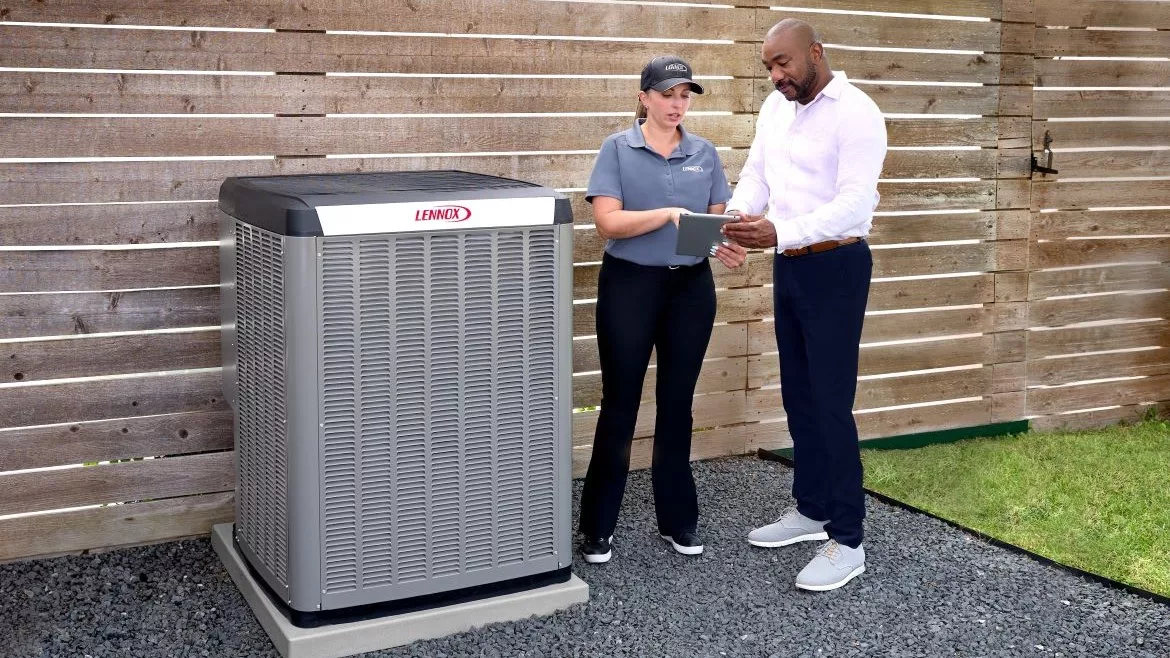
INCENTIVE'S FUTURE IN THE BALANCE: An effort by some Democrats to save the 25C tax credit, which can be applied to energy-efficient residential HVAC equipment through the end of the year, is unlikely to succeed, according to the vice president of government affairs at Heating, Air conditioning & Refrigeration Distributors International (HARDI). But House Democrats plan to press the issue.
Nineteen Democrats in the U.S. House of Representatives are citing what they say is a technicality as they try to save a 20-year-old federal tax credit that can be claimed for high-efficiency residential HVAC equipment.
The Energy Efficient Home Improvement Credit, known as 25C for its place in the tax code, is scheduled to expire after this year under the One Big, Beautiful Bill Act (OBBBA). The credit offers up to 30%, with annual caps, of the cost of qualified home energy-saving measures, such as heat pumps, high-efficiency a/c units, and new windows, doors, and insulation. The credit originated in 2005 and was expanded in 2022 by the Inflation Reduction Act (IRA), which also extended it through 2032.
Democrats on the House Ways and Means Committee recently wrote to Treasury Secretary Scott Bessent, who is also acting commissioner of the Internal Revenue Service (IRS), saying the OBBBA cited the wrong subsection, in Section 25C of the Internal Revenue Code, in canceling the credit. The IRA had moved the provision for 25C's expiration from subsection (h) of Section 25C to subsection (i).
The letter argues that the credit remains in effect through 2032 and calls on the IRS to affirm that. "Any suggestion that Section 25C has expired is not only legally incorrect but would also represent an unauthorized $21 billion tax hike on hard-working American families," the letter says, in part.
"Democrats argue that because the termination clause was no longer in subsection (h), Republicans' One Big Beautiful Bill amending subsection (h) to end the credit in 2025 was legally ineffective," wrote Alex Ayers, vice president of government affairs at Heating, Air Conditioning & Refrigeration Distributors International (HARDI), in a blog post.
However, Ayers' take is that the technicality on which the Democrats are pinning their hopes does not in fact exist and that 25C will almost certainly expire at the end of the year. Ayers doesn't want the Democrats' efforts to mislead consumers or contractors into thinking they'll be able to use 25C after this year. HARDI and other HVACR trade groups are aligned on the issue, he said.
"We would love to see incentives," Ayers said during a recent interview. "We don't want a consumer to feel they've been hurt by a contractor based on a press release."
Looking for quick answers on air conditioning, heating and refrigeration topics? Try Ask ACHR NEWS, our new smart AI search tool. Ask ACHR NEWS
Ayers said that, for reasons that are unclear to him, the change in the IRA that moved 25C's subsection (h) — the expiration date provision — to subsection (i) had not been written into "positive law" at the time the OBBBA was adopted in July. At that point, he said, the change remained in what's called "slip law," which, while valid, does not have the authority of positive law.
"At the time the law (OBBBA) was passed, subsection H contained the expiration date, and that's what was amended," Ayers said.
A Congressional source said Democrats were seeking clarification on the issue from the Office of the Law Revision Counsel (OLRC). The OLRC is in charge of accurately maintaining the U.S. Code.
The IRS, Ayers said, has issued guidance that says that 25C can be claimed only for equipment that is installed and put into service before the end of the year. The IRS is unlikely to change its position, he said. "The only out that we see is for House Democrats to try and file a lawsuit," which is also unlikely, he said.
"Time is running out for homeowners to take advantage of the credit, and (HARDI) members should encourage contractors to schedule qualifying projects as soon as possible to avoid installation delays in December," Ayers wrote in his blog post.
“Congress routinely enacts technical corrections. We would hate to see contractors or their customers put off important home upgrades in the hope that 25C will be available in 2026," said Sean Robertson, vice president of membership, advocacy, and events at ACCA. "With the IRS saying it intends to uphold Congressional intent, contractors should continue to use the December 31 deadline in marketing materials that lend urgency — driving more comprehensive systems upgrades through the shoulder season.”
But Rep. Jimmy Gomez, D-Calif., one of the leaders of the Democrats' effort to preserve 25C, said he'll keep working to protect it.
"I wrote the Home Energy Savings Act, which was signed into law through the IRA, because working families deserve to get real savings on their energy bills," Gomez said in an emailed statement. "Despite Republican efforts to repeal this tax credit, 25C is still the law of the land through 2032, and families should keep getting the savings they were promised. I led the fight to create this credit, and I'll keep leading the fight to protect it."
The IRS did not respond to a request for comment.
The 25C credit, which reduces the amount of taxes owed, is capped at $3,200 a year, with lower limits for specific equipment and improvements. The credit for a qualified heat pump, for example, is $2,000, while the credit for a qualified central a/c unit is $600.
More than 2.3 million households claimed a 25C credit in 2023, the year the IRA enhancements kicked in, and nearly 268,000 of those claims included an electric or natural gas heat pump, according to the U.S. Department of Treasury.
Looking for a reprint of this article?
From high-res PDFs to custom plaques, order your copy today!