Trane Upgrading Chiller Plant at University of Louisville
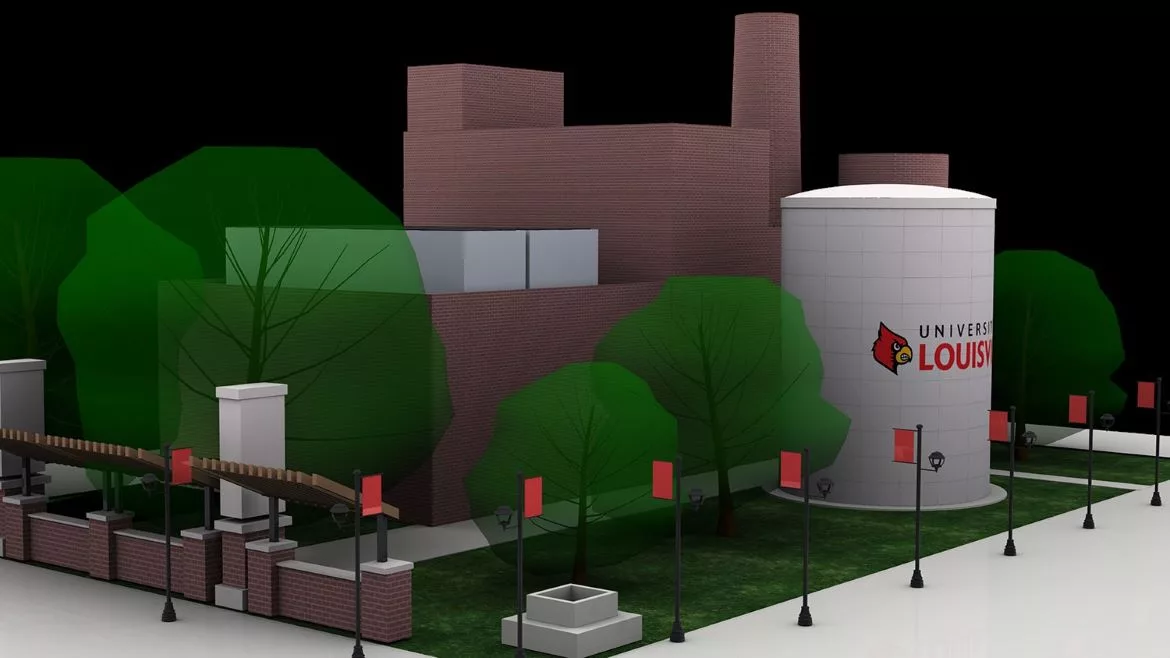
LOOKING AHEAD: A rendering of what the central utility plant at the University of Louisville's Belknap campus will look like once an ongoing updating project is complete.
DAVIDSON, N.C. — A transformative Trane Technologies infrastructure project is under way at the University of Louisville.
The project will upgrade the university’s chilled water system in the central utility plant that serves the Belknap campus, the university’s main education hub. This multi-year project will modernize critical university infrastructure, enhancing the comfort of students, faculty, and staff across more than 40 campus buildings, a Trane press release said.
When complete, the upgraded plant will deliver up to 12,000 tons of cooling capacity, helping provide a reliable, comfortable learning and research environment for decades, the press release said. Through the enhancements, the university is projected to achieve a reduction in energy consumption of more than 20%, the press release said. The project is a pivotal component in the university’s plan for achieving its ambitious Climate Action Plan goals for 2030.
This upgrade will replace major plant components, including chillers, cooling towers, primary pumps, and the energy-management system, with high-efficiency technology and artificial intelligence-ready automation. Since 2021, the university has leveraged Trane’s Intelligent Service energy-management program, harnessing building and energy data to support the university’s efforts to help reduce energy use and costs. The university is expanding this service to include the central utility plant, allowing automation and system optimization from day one.
“This project is a monumental step forward for the University of Louisville, directly impacting the daily lives of everyone on our Belknap campus,” said Sajid Mian, associate vice president for facilities management at the university. “Beyond simply replacing aging equipment, we are investing in a future-ready system that will provide unparalleled reliability, comfort, and energy efficiency. This is about creating an optimal environment for learning and living, ensuring our campus remains a vibrant and productive space.”
The benefits of the central utility plant upgrade, according to the press release, will include:
• Enhanced comfort and reliability: The project will bolster the cooling system’s resilience, supporting consistent, comfortable temperatures across the 43 campus buildings currently served by the plant, including critical research facilities that depend on the plant’s reliability.
• Future readiness: This is a generational investment, setting up the Belknap campus for the next 20 to 30 years with state-of-the-art technology, expanded capacity, and a robust infrastructure capable of meeting future demands.
Looking for quick answers on air conditioning, heating and refrigeration topics? Try Ask ACHR NEWS, our new smart AI search tool. Ask ACHR NEWS
• Smart, operator-centered controls and educational opportunities: The plant’s new control system will be AI-compatible and dashboard-driven, providing operators with real-time visibility into equipment status, energy use, load forecasts, and performance trends. This “command center” will offer invaluable educational opportunities and foster collaborations with academic departments, such as the J.B. Speed School of Engineering and the Sustainability program, allowing students to engage with cutting-edge energy-management technologies.
A centerpiece of the modernization is a thermal energy storage (TES) system that will include a chilled water tank of approximately 1 million gallons. This innovative system, sourced from a local manufacturer, will allow the university to produce and store cooling during off-peak hours and deploy it during peak summer demand. This will significantly reduce the run time of chillers that must operate during the hottest periods, helping reduce strain on the electrical grid and lowering energy costs.
The project will conclude with independent third-party commissioning to validate performance and ensure the upgraded plant meets operational, reliability, and efficiency targets. The project is expected to be substantially completed by the early summer of 2027.
Looking for a reprint of this article?
From high-res PDFs to custom plaques, order your copy today!