How to Maximize a CO₂ Refrigeration Retrofit with Carbon Credits
Reducing refrigerant emissions isn’t just good for the planet — it’s a potent financial opportunity
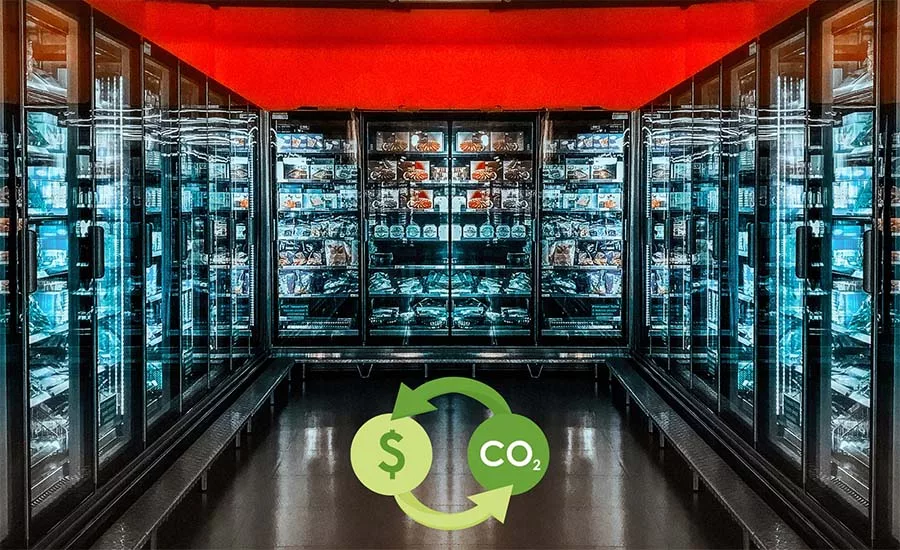
In the Middle East and North Africa, where summer temperatures regularly top 120°F, air conditioning isn’t just a luxury — it’s a lifeline. But keeping humans, and the food they consume, cool comes at a cost. The energy used to power cooling systems is surging, and the refrigerants they rely on are often some of the most potent greenhouse gases on the planet.
Without intervention, emissions from cooling could increase by 90% by 2050, creating a dangerous feedback loop — hotter temperatures drive higher demand for cooling, which in turn accelerates climate change. Breaking this cycle requires urgent action, and one promising solution is already taking shape: carbon credits.
By transitioning to ecofriendly refrigeration systems — such as CO2 (R-744) — companies can turn sustainability into a financial advantage by generating and selling carbon credits. But how does this work, what role do HVAC businesses play in this growing carbon market, and is this a feasible solution going forward?
How Do Carbon Credits Work?
At their core, carbon credits are tradable permits that represent the reduction, removal, or avoidance of one metric ton of carbon dioxide (CO2) or its equivalent in other greenhouse gases (GHGs). Organizations or individuals can purchase these credits to offset their own emissions, effectively funding environmental projects that reduce global carbon output.
Carbon credits first emerged in the early 2000s as a cost-effective way for businesses to meet regulatory emissions targets. The concept gained traction with the 1997 Kyoto Protocol, which introduced emissions trading as a mechanism to curb climate change.
Typically, carbon credits are traded in two ways: compliance markets and voluntary markets. While both serve the goal of reducing emissions, they operate in different ways.
Compliance markets are legally mandated by governments or international agreements. Companies in certain industries — such as energy, manufacturing, or transportation — are required by law to limit their emissions. If they exceed their allowable limit, they must buy carbon credits to offset the excess pollution.
Looking for quick answers on air conditioning, heating and refrigeration topics? Try Ask ACHR NEWS, our new smart AI search tool. Ask ACHR NEWS
For example, in California’s Cap-and-Trade Program, businesses that emit greenhouse gases must stay within a set emissions limit. If a company goes over its limit, it can buy carbon credits from another company that has reduced its emissions below its cap. This ensures overall emissions stay in check while giving businesses flexibility in how they meet their targets.
In contrast, voluntary carbon markets are not regulated by law. Instead, companies and individuals choose to buy carbon credits to meet their own sustainability goals or enhance their brand image.
As environmental awareness grows, many companies, with no legal obligation to reduce emissions, have begun to voluntarily purchase carbon credits. This gave rise to the voluntary carbon market, where businesses and investors support sustainability initiatives, such as renewable energy projects, forest conservation, and CO2 refrigeration transitions.
For example, imagine Company A is required by law to cut its emissions, but upgrading its infrastructure is prohibitively expensive. Meanwhile, Company B can achieve the same emissions reduction at a much lower cost, even though it isn’t required to do so. To solve this, Company A pays Company B to make the reductions on its behalf — creating a financial incentive for lower-cost emissions cuts. This system laid the foundation for today’s compliance carbon markets.
“Whoever is buying the credits — whether that’s a large tech company or pharmaceutical company — they are essentially subcontracting their emission reductions to retailers, cold storage companies, or industrial refrigeration companies,” said Adam Shorey, director of sales engineering at Therm Solutions. “The ‘polluter’ has a commitment it’s trying to meet, such as ESG carbon reporting, and, at the end of the day, they may be unable to hit that goal because the technology is not available. So, they shift their funding and buy immediate climate action today.”
Carbon Credit Marketplaces
Businesses that switch from high global warming potential (GWP) refrigerants to natural alternatives, like CO2, can generate carbon credits. These credits can then be sold, helping companies offset the cost of transitioning to greener technologies.
However, not all emissions reductions qualify as carbon credits. Regulatory organizations, such as the American Carbon Registry, oversee these projects, ensuring each carbon credit represents a genuine, quantifiable reduction in emissions.
Recent years have seen a surge in carbon trading initiatives, with states like Washington and Oregon launching cap-and-invest programs. As public demand for corporate responsibility grows, more businesses are turning to carbon credits as a strategic tool — not only to meet sustainability goals but also to gain a competitive edge in a carbon-conscious marketplace.
For a project to generate carbon credits that can be traded on the market, it generally must meet strict criteria, including:
- Additionality: The reduction must go beyond what is required by law or standard business practices.
- Verification: A third-party auditor must confirm that the emission cuts are real, measurable, and permanent.
- Approved Methodology: The project must follow recognized protocols to ensure its legitimacy and impact.
The Market Is Open for Business
Programs like Therm’s Refrigerant Carbon Credits™ (RCCs) are demonstrating that businesses can offset upgrade costs while significantly reducing their carbon footprints.
Therm’s food loss diversion carbon credit project is targeting grocery stores to reduce food waste at its source. Listed on Verra’s VCS Registry, this project redirects edible food intended for landfill from more than 1,300 grocery retail and 18 food distribution locations spanning seven U.S. states to donation centers, addressing the nation’s urgent climate and food access crises.
“Food waste is a complex problem for the industry, and historically grocers haven’t had a climate-friendly, cost-effective solution,” said Fritz Troller, CEO and cofounder, Therm. “Through carbon credits, Therm empowers grocers to adopt sustainable practices that benefit their operations, the environment, and the American people.”
The project expects to issue more than 112,000 metric tons of carbon dioxide equivalent (mTCO2e) annually in carbon credits, generated from the avoided landfill emissions. These carbon credits incentivize grocers to increase edible food donations, offering a practical solution to a significant environmental and humanitarian challenge.
“Decarbonizing the food supply chain by targeting food waste at its source — such as grocery stores — is a major opportunity for both people and planet,” said Troller.
Several supermarkets are already actively offering carbon credits on the market. This is especially true for those who have switched to CO2 refrigeration.
For example, DeCicco’s, a New York-based grocer, recently earned $66,000 by selling CO2 credits at its Bedford and Eastchester stores. The transaction follows a refrigeration upgrade at its Harrison location, which included the installation of a transcritical CO2 system with adiabatic gas cooling and geothermal precooling.
The store is also expanding the scope of its CO2 projects, utilizing R-744 to generate space heating and dehumidification via a direct CO2 heat reclaim coil linked to a transcritical CO2 refrigeration system at its Sleepy Hollow, New York, location.
Predicting the Future
In 2024, the carbon credit market was estimated at $2 billion and growing, according to carboncredits.com. The MSCI report revealed more than 6,200 carbon credit projects were registered worldwide. These projects issued 305 million tons of credits (MtCO2e) in 2024, bringing the total to over 2.1 billion credits since the 2016 Paris Agreement.
Last year, 180 million credits were retired in 2024, roughly the same number of project retired in 2023. Of the 2024 retired credits, 91% came from projects that reduce emissions (e.g., renewable energy or forest protection), and 9% came from projects that remove carbon from the atmosphere, such as reforestation.
Many experts expect a booming carbon credit market in 2025 and beyond.
“Depending on who you believe – and there are big names making these proclamations, like Morgan Stanley Barclay, Bloomberg, etc. — the market is expected to be between $50 billion and $250 billion,” said Shorey. “This space is destined for massive, massive growth.”
Carbon markets help make climate action financially viable for businesses while contributing to a more sustainable future. By providing financial incentives to manufacturers to rapidly transition to ultra-low GWP refrigerants, such as R-744, carbon credits can prevent a significant number of near-term emissions from HFCs, making an important contribution to climate action.
How HVAC Businesses Can Benefit from Carbon Credits
For HVAC and refrigeration businesses, participating in the carbon credit market isn’t just about reducing emissions — it’s a chance to unlock financial incentives, offset upgrade costs, and gain a competitive edge in a rapidly evolving industry. Here’s how companies can take advantage of carbon credits:
1. Transition to Low-GWP Refrigerants
Switching from high global warming potential (GWP) refrigerants, like HFCs, to natural alternatives such as CO2 (R-744,) is one of the most effective ways to generate carbon credits. Because CO2 refrigeration systems significantly reduce greenhouse gas emissions, businesses can quantify these reductions and convert them into tradable credits.
2. Partner with a Verified Carbon Credit Program
Not all emissions reductions automatically qualify for carbon credits. HVAC businesses should work with recognized organizations, such as Verra, the American Carbon Registry (ACR), Therm, or The Climate Action Reserve, to ensure their projects meet eligibility criteria. These organizations validate and certify emission reductions, making them tradable in compliance or voluntary markets.
3. Document and Verify Emission Reductions
To generate carbon credits, businesses must track and verify the emissions they’ve prevented. This typically involves:
- Conducting a baseline emissions assessment to measure current refrigerant-related emissions.
- Tracking system upgrades and calculating the GHG reduction impact post-installation.
- Hiring a third-party auditor to verify and certify the carbon credit potential of the project.
4. Sell Carbon Credits to Offset Costs
Once verified, businesses can sell carbon credits on the market to companies looking to offset their emissions. For example, corporations with net-zero commitments — such as tech companies, pharmaceutical firms, and retail giants — are often willing buyers. Revenue generated from selling credits can help offset the costs of adopting new refrigeration technologies, making sustainability investments more financially viable.
5. Gain a Competitive Advantage
Beyond financial incentives, participating in carbon markets can boost a company’s reputation as a sustainability leader. Businesses that proactively reduce emissions and adopt ecofriendly practices are more attractive to environmentally conscious clients, regulatory bodies, and investors. This can open doors to new business opportunities and partnerships.
Looking for a reprint of this article?
From high-res PDFs to custom plaques, order your copy today!