ACHR News
search
Ask ACHR NEWS AI
cart
facebook twitter instagram linkedin youtube
  • Sign In
  • Subscribe
  • Sign Out
  • My Account
ACHR News
  • NEWS
    • Breaking News
    • New HVAC Products
    • Featured Products
    • Manufacturer Reports
    • HVAC Data
    • Legislation
    • ACHR NEWS Centennial
  • RESIDENTIAL
    • Air Conditioners
    • Furnaces
    • Residential Heat Pumps
    • Ductless
    • Residential IAQ
    • Testing, Monitoring, Tools
    • Components & Accessories
  • COMMERCIAL
    • Air Handlers
    • Rooftop Units
    • Chillers and Cooling Towers
    • Commercial Heat Pumps
    • Boilers and Hydronics
    • VRF/Ductless
    • Commercial IAQ
  • REFRIGERATION
    • Refrigerants
    • Refrigerant Regulations
    • Leak Management
  • CONTRACTOR PRO
    • Geothermal
    • Homeowner Study
    • VRF and VRV Ductless
    • Unitary Trends
  • EDUCATION
    • Training and Education
    • Business Management
    • Service and Maintenance
    • Continuing Education
    • Market Research >
      • HVAC Brand Awareness Report
      • VRV, VRF, VRVZ Report
      • Unitary Trends Report
      • Water Heat Professionals Report
    • Webinars
    • Sponsor Insights
    • eProducts Info
    • White Papers
  • EVENTS
    • HVAC Contractor Forum
    • Industry Events and Webinars
  • MEDIA
    • Videos
    • AHR Expo 2025 Videos
    • Podcasts >
      • ACHR News Podcast
      • HARDI Podcasts
      • AHR Expo Podcasts
      • ACCA Podcasts
    • Interactive Spotlights
    • Quizzes
    • eBooks
    • HVAC Talkback
  • HVAC GROUP
    • ACHR NEWS >
      • Current Issue
      • Digital Edition
      • Subscribe
    • Distribution Trends
    • SNIPS NEWS >
      • Join SNIPS NEWS
    • Engineered Systems News >
      • Join ES News
    • HVACR Directory
    • Contests
    • Newsletters
    • Contact
    • Advertise
    • My Account
HVAC ContractingNewsBusiness ManagementStandards and Legislation

Loophole May Undercut Biden Proposal to Protect Workers From Heat

Rules Aside, Other Organizations Working to Protect HVAC Technicians From Heat Injury
By Dylan Kurt
Heat Stress
Getty Images
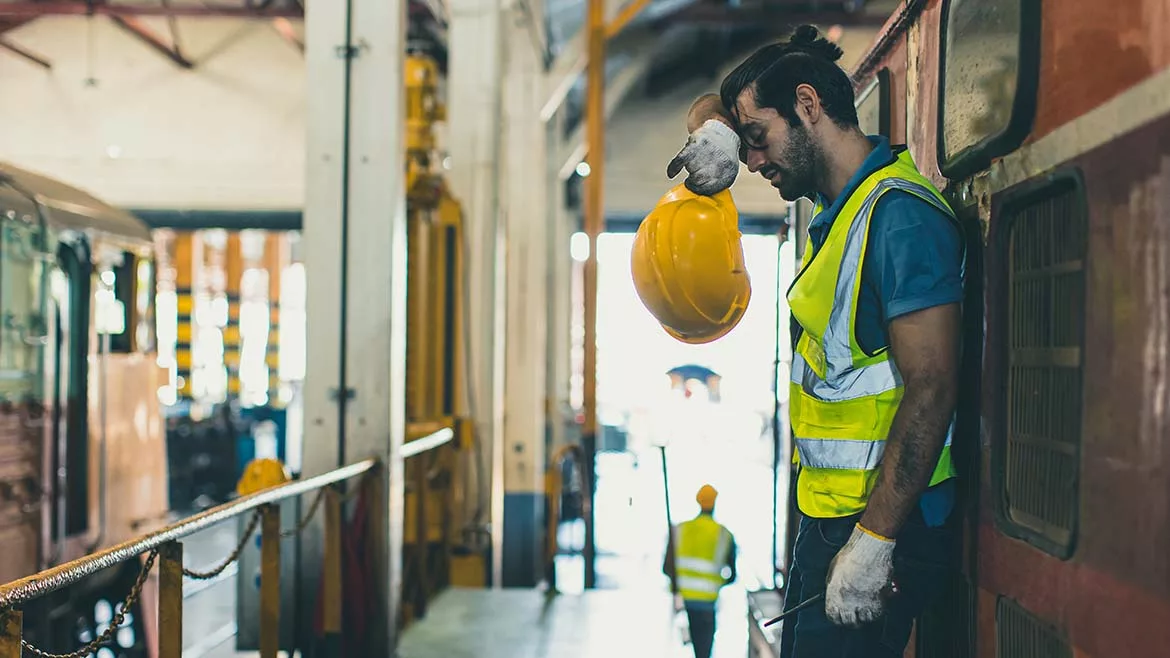
BEAT THE HEAT: With heat being one of the greatest risks to HVAC technicians, more steps are being taken to mitigate this threat. (Courtesy of Getty Images)
August 19, 2024

Following the announcement of a proposed rule by President Joe Biden that would address excessive heat in the workplace, there are now reports that a loophole could leave millions of workers unprotected.

According to reporting from Politico in July, that draft rule announced by Biden may be undercut by a 50-year-old loophole that the outlet says would impact 7.9 million workers.

When OSHA (the Occupational Safety and Health Administration) was conceived in 1972, Congress gave the agency authority over private companies, but not public employers. According to Politico, the States would have to opt in for public workers to be covered by OSHA.

While 23 states have thus far undergone that opt-in, the current legal theory is that public employees in states who did not, including HVAC technicians working for public entities, wouldn’t be covered under Biden’s proposed rule.

Under Biden’s proposal, if finalized, it would protect an estimated 36 million workers from heat exposure injuries on the job. Workers covered by the rule would include farmworkers, delivery workers, workers in factories/kitchens/warehouses, and tradespeople — including HVAC professionals, whose work often takes them into attics that can far surpass 100° on a summer afternoon.

"More people die from extreme heat than floods, hurricanes, and tornadoes combined," Biden said. "These climate-fueled extreme weather events don't just affect people's lives. They also cost money. They hurt the economy, and they have a significant negative psychological effect on people."

Politics and arguments over regulations aside, protecting technicians from potential heat-related injuries should be a top priority for contractors and luckily, there are new technologies that can help in that fight.

Looking for quick answers on air conditioning, heating and refrigeration topics? Try Ask ACHR NEWS, our new smart AI search tool. Ask ACHR NEWS →

Heat waves impacted much of the country during the summer of 2024. While that was bad news for anyone having to work in it, one association was using the scorching temperatures to beta-test a new app designed to assess outdoor occupation heat hazards.

AIHA – the association for scientists and professionals committed to preserving and ensuring occupational and environmental health and safety (OEHS) – announced the availability of its new "AIHA heat Stress Mobile App" during its Open Beta testing phase this summer.

“As the climate continues to change, AIHA recognized the need to better protect workers from heat stress—which is why our team of occupational and environmental health and safety experts worked so diligently to develop an app that can more accurately gauge heat stress risks in real-time unlike any tool offered previously,” said Lawrence D. Sloan, CEO of AIHA. “We encourage outdoor workers and employers, large and small, to test our new app during this Beta phase and provide us with feedback to help us fine-tune the app’s functionality to better protect workers from heat-related illnesses.”

The AIHA Heat Stress Mobile App is now available as a free download on both iOS and Android platforms and is currently available for open beta testing before a broader application launch expected in September 2024. AIHA has developed detailed instructions for users on how to provide feedback. This easy-to-use, free tool allows users to input information that will factor into their overall heat stress risk, including:

  • Location (multiple locations can be selected)
  • Intensity of workload (users can select light, moderate, heavy, very heavy)
  • Clothing type (uses can choose from six different options)
  • Cloud coverage (degree of sun exposure)
  • Preferred language (English, Spanish, French, or Portuguese)

Using data collected from local weather sources, the app calculates risk and delivers important notifications and reminders, including health recommendations such as rest breaks and water consumption based on an individual’s risk level, recommended heat stress prevention measures, warning signs of heat-related illness, and first aid recommendations to assist a worker in distress.

The AIHA app supports not only the outdoor workers who are monitoring their own heat-related risks, but it can also be used by managers who are able to input locations manually to track working conditions in real-time,” said Margaret C. Morrissey-Basler, Ph.D., Assistant Professor, Department of Health Sciences at Providence College and Chair of the AIHA’s Thermal Stress Working Group. “This allows managers to make decisions about the impact heat has on their workers’ health and safety and adjust workloads accordingly.”

Dr. Morrissey-Basler’s research has shown that workers experiencing heat stress do not perform their jobs as efficiently as workers not impacted by this type of heat exposure, which can negatively impact an organization’s bottom line. In addition, recent research has shown that there are more than 700 heat-related fatalities per year on average in the United States, making environmental heat exposure the leading cause of weather-related deaths.

Other professional organizations, like ACCA, are also working to ensure technician safety, and offered several tips for those who are going to be exposed to extreme heat.

“Staying safe on the job during extreme heat can be a challenge,” Kate Wessels, vice president of communications, marketing, and partnerships at ACCA, said.

Wessels said ACCA believes it is important for businesses to promote a culture of safety by putting measures in place that help mitigate the effects of extreme heat. Here are a few of our top tips:

  • Use a buddy system to help watch out for each other’s health.
  • Ensure that frequent breaks are scheduled, and ensure that everyone on the job stops to take breaks.
  • Rotate duties so that work and exertion are distributed.
  • Regularly drink water and electrolytes; take frequent sips while working.
  • Avoid caffeine, as it dehydrates the body.
  • Ensure that you and everyone on your team are trained to recognize the signs of heat-related illnesses.
  • OSHA has found that over 70% of heat-related deaths occur during a worker’s first week on the job. For anyone new to working in extreme conditions, it’s best to have an acclimatization period over 1-2 weeks of increasing exposure to heat to allow the body to adjust.
KEYWORDS: heat stress safety and HVAC

Share This Story

Looking for a reprint of this article?
From high-res PDFs to custom plaques, order your copy today!


Dylan kurt
Dylan Kurt is an editor with The ACHR News. He is an award-winning political journalist with a bachelor’s degree in Journalism from the University of Iowa. Growing up, Dylan spent a lot of time fetching tools and assisting his dad, who held professional licenses in HVAC, plumbing, electrical, and refrigeration, at his small plumbing and heating business.

Recommended Content

JOIN TODAY
To unlock your recommendations.

Already have an account? Sign In

  • HVAC-enrollment

    The Trades Are Back: HVACR Programs See Nearly 30% Enrollment Spike

    A new wave of future technicians is entering the pipeline.  
    Training and Education
    By: Matt Jachman
  • 2025 Top 40 Under 40

    2025 Top 40 Under 40 HVACR Professionals List

    The 11th annual Top 40 Under 40 list highlights those...
    HVAC Residential Market
    By: Hannah Belloli-Oster
  • LG Ductless Mini-Split Systems

    The 9 Types of Heat Pumps

    As the U.S. moves toward electrification, heat pumps are...
    HVAC Residential Market
    By: Joanna R. Turpin
Subscription Center
  • Create an Account
  • Start a Subscription
  • Manage My Account
  • Sign Up for Newsletters
  • Visit Customer Service
  • Update Preferences

More Videos

Sponsored Content

Sponsored Content is a special paid section where industry companies provide high quality, objective, non-commercial content around topics of interest to The News audience. All Sponsored Content is supplied by the advertising company and any opinions expressed in this article are those of the author and not necessarily reflect the views of The News or its parent company, BNP Media. Interested in participating in our Sponsored Content section? Contact your local rep!

close
  • An illustration shows a house with a geothermal heating system. Pipes are depicted running underground.
    Sponsored byClimateMaster

    Residential Tax Credits Are Ending, But Demand Continues

  • Piggy Bank
    Sponsored byWatercress Financial

    Energy Prices, Inflation, and HVAC: What Today’s Homeowners Care About

  • Refrigerated Food
    Sponsored bySolstice Advanced Materials

    R-455A Refrigeration: A Cold Storage Solution for the Future

Popular Stories

HVAC-Price-Increase-graphic

HVAC Price Increase List: July 2026

price-raising-practices.jpg

Rising Costs Force Contractors to Take a Harder Look at Pricing

DOE-sign.jpg

HVAC Groups Support DOE’s Rulemaking to Cut Energy Efficiency Mandates

Industry-Ethics_-Service-Calls.jpg

HVAC Contractor Agrees to $300K Settlement Over Alleged Deceptive Sales Practices

Data-Center-Inspection.jpg

Can HVAC Train Enough Technicians for the Data Center Boom?

View The ACHR NEWS
Centennial Anniversary Timeline

The ACHR News Timeline Chart
Submit a Letter
Submit a letter to our editors.

Events

November 6, 2025

Next-Gen Data Center Cooling: HVAC Innovation and Real-World Solutions

On Demand As AI workloads and high-density computing push traditional cooling methods to their limits, the data center industry is accelerating the adoption of next-generation HVAC technologies.

July 22, 2026

Designing VRF Systems Using A2L Refrigerant

In this session, we will cover how to design VRF systems for the U.S. market using new A2L refrigerants. These systems provide an advanced zoning solution by using inverter technology to deliver precise heating and cooling control across multiple zones and spaces.

View All Submit An Event

Poll

Summer Staff

Are you fully staffed for the summer season?
View Results Poll Archive

Products

BNI Mechanical/Electrical Square Foot Costbook, 2026 Edition

BNI Mechanical/Electrical Square Foot Costbook, 2026 Edition

See More Products
Designing Systems Using A2L Refrigerant - Free Webinar - 7/22/2026

Related Articles

  • General Contractors

    Adapting Construction Practices to Protect Workers and the Public in the Age of COVID-19

    See More
  • Bush Acts To Protect Pension Plans From Corporate Bankruptcy

    See More
  • Carrier logo II.jpg

    Donation to Protect IAQ for Essential Workers in L.A.

    See More

Related Directories

  • Air Conditioning Contractors of America

    ACCA, the national trade association furthering the interests of HVACR contracting businesses and the broader HVACR industry, serves more than 80,000 professionals and 3,000 businesses nationwide.
  • Heresite Protective Coatings LLC

    Building on over 90 years of experience in HVAC-R coatings, we continue to invest in R&D and testing services. We continue to develop the best protection for HVAC-R applications.
×

Sign Up. Stay Informed.

The #1 trusted source for the HVACR industry since 1926

SUBSCRIBE
  • RESOURCES
    • Advertise
    • Contact Us
    • Advisory Board
    • Classifieds
    • Submit a Letter
    • Directories
    • Store
  • ACCOUNT CENTER
    • Create an Account
    • Start a Subscription
    • Manage My Account
    • Sign Up for Newsletters
    • Visit Customer Service
    • Update Preferences
  • SERVICES
    • Marketing Services
    • Reprints
    • Market Research
    • List Rental
    • Survey/Respondent Access
  • STAY CONNECTED
    • LinkedIn
    • Facebook
    • Instagram
    • YouTube
    • X (Twitter)
  • PRIVACY
    • PRIVACY POLICY
    • TERMS & CONDITIONS
    • DO NOT SELL MY PERSONAL INFORMATION
    • PRIVACY REQUEST
    • ACCESSIBILITY

Copyright ©2026. All Rights Reserved BNP Media, Inc. and BNP Media II, LLC.

Design, CMS, Hosting & Web Development :: ePublishing