ACHR News
search
Ask ACHR NEWS AI
cart
facebook twitter instagram linkedin youtube
  • Sign In
  • Subscribe
  • Sign Out
  • My Account
ACHR News
  • NEWS
    • Breaking News
    • New HVAC Products
    • Featured Products
    • Manufacturer Reports
    • HVAC Data
    • Legislation
    • ACHR NEWS Centennial
  • RESIDENTIAL
    • Air Conditioners
    • Furnaces
    • Residential Heat Pumps
    • Ductless
    • Residential IAQ
    • Testing, Monitoring, Tools
    • Components & Accessories
  • COMMERCIAL
    • Air Handlers
    • Rooftop Units
    • Chillers and Cooling Towers
    • Commercial Heat Pumps
    • Boilers and Hydronics
    • VRF/Ductless
    • Commercial IAQ
  • REFRIGERATION
    • Refrigerants
    • Refrigerant Regulations
    • Leak Management
  • CONTRACTOR PRO
    • Geothermal
    • Homeowner Study
    • VRF and VRV Ductless
    • Unitary Trends
  • EDUCATION
    • Training and Education
    • Business Management
    • Service and Maintenance
    • Continuing Education
    • Market Research >
      • HVAC Brand Awareness Report
      • VRV, VRF, VRVZ Report
      • Unitary Trends Report
      • Water Heat Professionals Report
    • Webinars
    • Sponsor Insights
    • eProducts Info
    • White Papers
  • EVENTS
    • HVAC Contractor Forum
    • Industry Events and Webinars
  • MEDIA
    • Videos
    • AHR Expo 2025 Videos
    • Podcasts >
      • ACHR News Podcast
      • HARDI Podcasts
      • AHR Expo Podcasts
      • ACCA Podcasts
    • Interactive Spotlights
    • Quizzes
    • eBooks
    • HVAC Talkback
  • HVAC GROUP
    • ACHR NEWS >
      • Current Issue
      • Digital Edition
      • Subscribe
    • Distribution Trends
    • SNIPS NEWS >
      • Join SNIPS NEWS
    • Engineered Systems News >
      • Join ES News
    • HVACR Directory
    • Contests
    • Newsletters
    • Contact
    • Advertise
    • My Account
HVAC ContractingNewsService and MaintenanceTechnicalHVAC Residential MarketGuest ColumnFurnacesTraining and Education

How a Fan Center Works

Understanding the basics key to troubleshooting older furnaces
By Lianna Schwalenberg
Fan Center
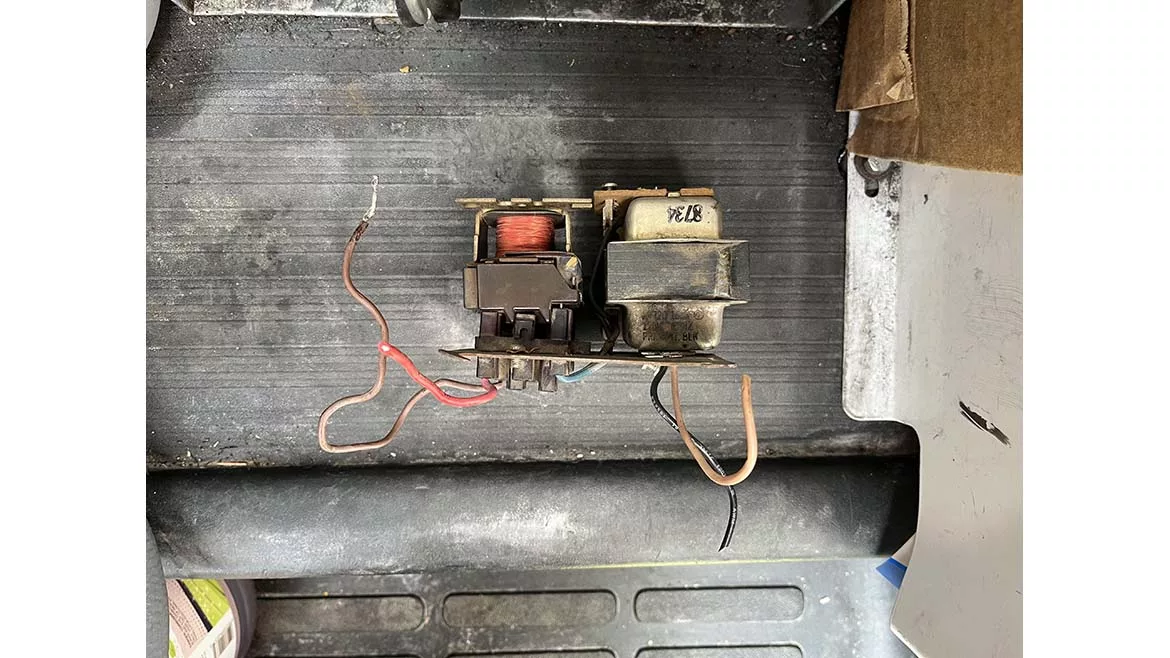
THE CENTER OF IT ALL: Pre-dating modern furnace control boards, fan centers were a way to separately turn on the fan without necessarily turning on the heat. (Courtesy of Lianna Schwalenberg)
July 13, 2024
✕
Image in modal.

The fan center’s purpose is to control when the indoor fan turns on. Before the integrated gas control board, the indoor fan on gas and oil furnaces would either turn on at the same times as the heat or with a time-delay relay. Fan centers came along as a way to separately turn on the fan without necessarily turning on the heat. This is why technicians will most likely run into fan centers on older furnaces where air conditioning was added later.

READ MORE ABOUT

• Service and Maintenance

• Furnace Troubleshooting

A fan center consists of a transformer with screw terminals which is solder connected to the coil of a relay, both of which are mounted together on a plate. It is not uncommon to find these on modern heat pumps, electric backup heat, and any application where the fan needs to use two stages or where various accessories need to turn on with the fan — or even a combination of both. Therefore, understanding the basics will go a long way for troubleshooting.


The Transformer and Relay

The transformer is typically a 120V primary and 24V secondary, but it’s not an ordinary transformer that technicians necessarily carry on their vans. The fan center transformer has RCWGY terminals designed for thermostat control wiring. The 24V secondary side is factory-connected to R and C, and C and G are factory-soldered into the coil of the relay. The relay plugs into a receptacle, making the relay field replaceable. The relay coil is usually 24V, and the relay is usually single-pole, double-throw (SPDT), meaning it has two sets of contacts — one normally closed and one normally open. If the fan only has one speed, the normally closed contacts will not be used.

If the fan does have two speeds, the low speed will be on the normally closed contacts and used for heating, while the high speed will be on the normally open contacts and used for cooling or constant fan. If the relay is only a single pole, single-throw (SPST), and the fan has two speeds, use only the high speed. In short, the high speed will always be on the normally open contacts. The relays that are double pole are used in applications to control auxiliary loads, such as electronic air cleaners and humidifiers. The transformer and relay receptacle are mounted on a 4x4 plate, which can be mounted on an outlet box sold separately to conceal the high voltage wires.


Installation Basics

The fan center will typically come with instructions that specify that the installer must be a trained, experienced service technician and that failure to follow instructions could damage the product or cause hazardous conditions. This warning should not be taken lightly, as there are many wrong ways to install a fan center, and it is highly recommended that the person installing it understands how the equipment works and how to safely handle electrical circuits.

Always disconnect line voltage power supply before removing wire nuts or making connections. When checking out operations after installation, be sure to operate the system for at least one complete cycle in heating and in cooling.

Figure 1 is a very basic wiring diagram for a single-speed furnace. The technician will notice that the primary side of the transformer is wired parallel to the indoor blower motor, and the limit and relay are in series with the motor. The “plenum switch,” also referred to as a “fan limit switch,” is not an included part but is often found in furnaces with fan centers. There are two switches inside the plenum switch device — one switch to cut the fan in and out when the plenum reaches certain temperatures, and a limit switch that can be wired to either cut power to the controls or cut power to the fan if the plenum gets too hot. The plenum switch consists of a bimetal helix that expands and contracts as its temperature changes, causing sets of contacts to make and break. The technician manually sets the cut-in, cut-out, and high-limit temperatures by adjusting pins on a dial. It is very important to push this dial in before moving the pins so as to not twist and damage the bimetal. Typical fan switch settings are 130-150° for “fan on,” 110-90° for “fan off,” and a typical limit setting would be 200°.

Looking for quick answers on air conditioning, heating and refrigeration topics? Try Ask ACHR NEWS, our new smart AI search tool. Ask ACHR NEWS →
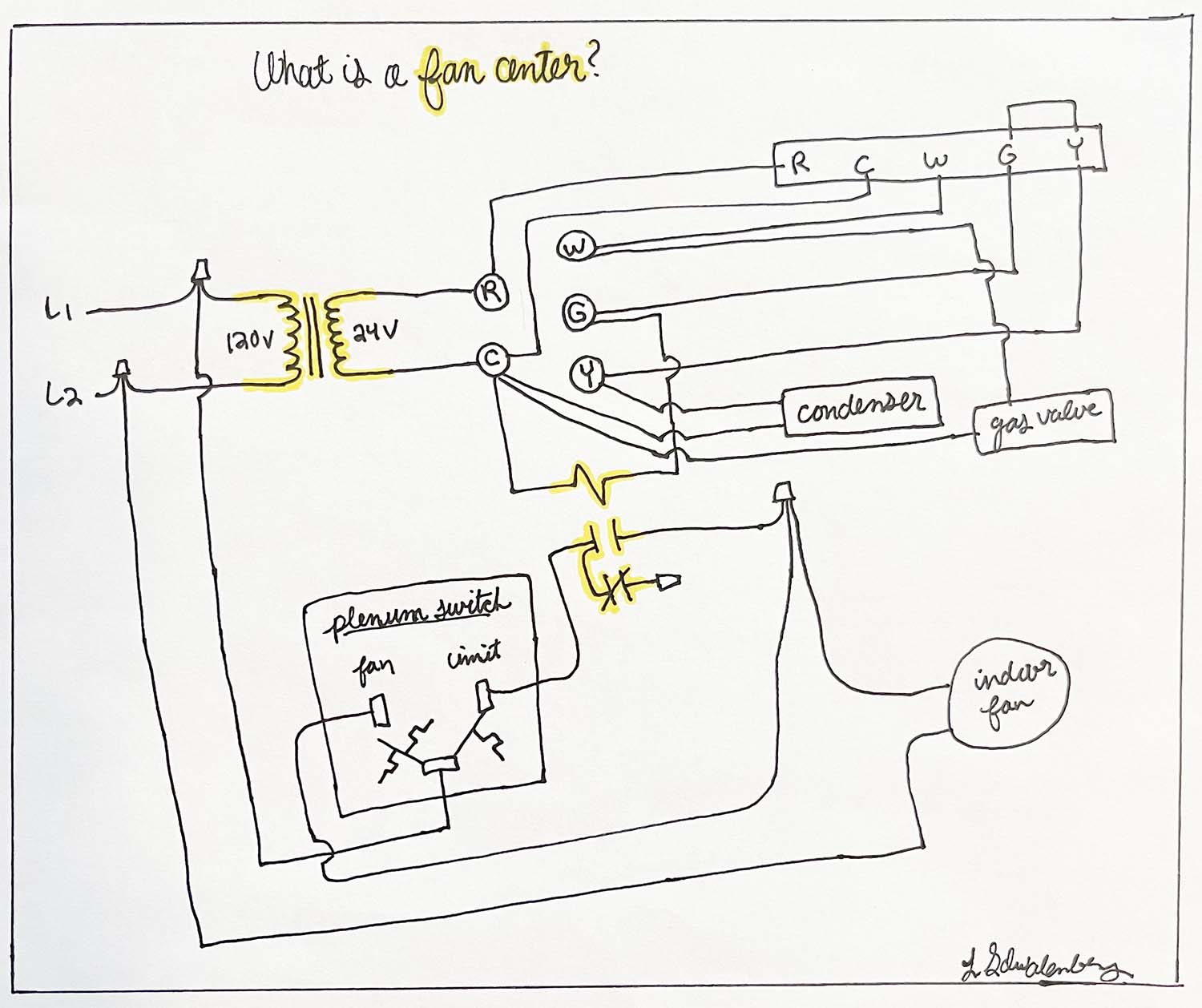
Fan Center Drawing.

Figure 1: When the relay coil is energized on a call between G and C, it closes the set of normally open contacts which closes the 120V circuit to power the fan. (Courtesy of Lianna Schwalenberg)


Sequence of Operations

The thermostat is the switch that will close the circuit between the secondary side of the transformer to whatever is being called — heating, cooling, or the fan. With this basic setup, there are three ways the fan will turn on: 1) when the plenum reaches above a certain temperature, 2) on a call for cooling when the fan is in auto, or 3) when the fan is set to be on continuously. This is still the same practice for controlling the fan in modern furnaces, but it is done with more electronics such as timers in control boards.

When the relay coil is energized on a call between G and C, it closes the set of normally open contacts which closes the 120V circuit to power the fan. The fan will remain powered, as long as the limit switch is closed and the relay coil is energized. Another way the fan will turn on is if the plenum reaches above a certain temperature, and the fan switch will keep the fan powered until the switch senses the temperature drops below the cut-out point. This is how the fan turns on and off in heating — it is solely based on the temperature of the furnace. Yes, this control is old-school, but these furnaces are still out there.

The fan will turn off when the plenum cools off, gets too hot, or the fan center no longer receives a call for G.
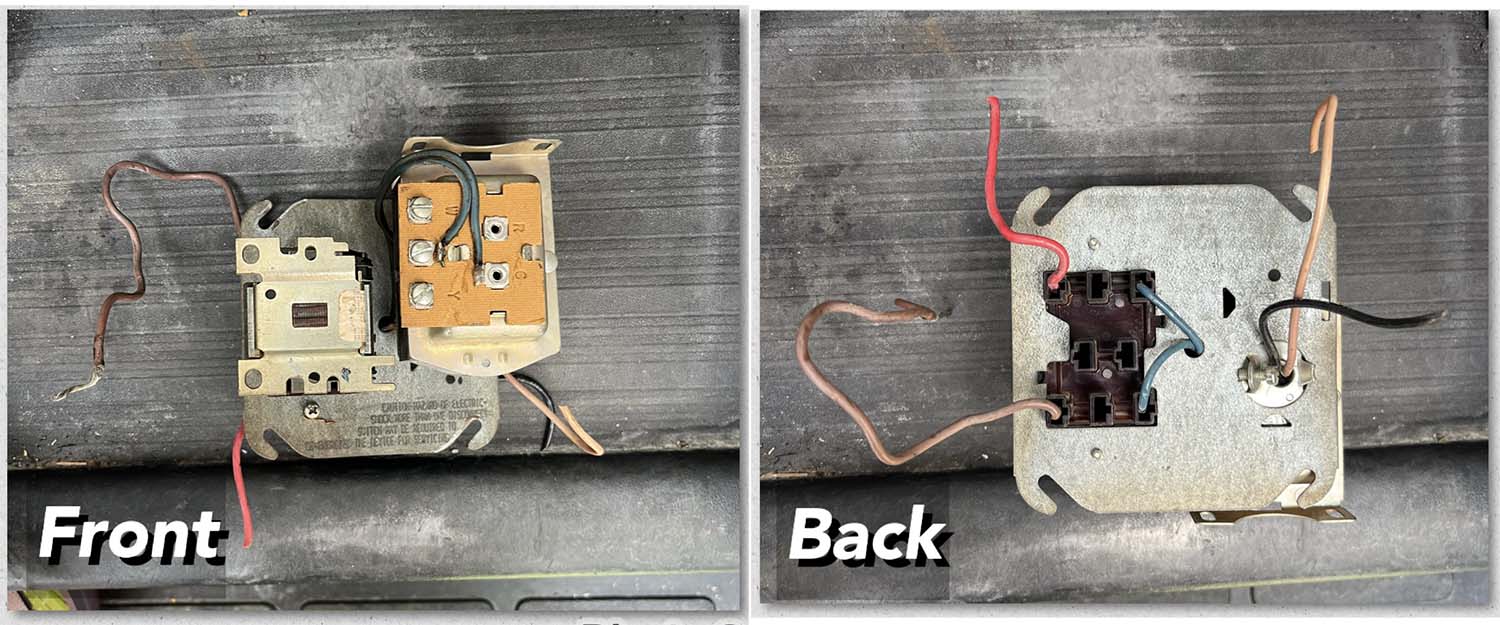
Fan Center Front and Back View.

Figure 2: Front and back view of a fan center which, pictured here, consists of a 120V primary/24V secondary transformer and a relay on a plug receptacle. (Courtesy of Lianna Schwalenberg)


“As with any component change-out, it is extremely important to pay attention to context clues. While transformers and relays can go bad, sometimes they are prematurely killed by a greater problem.”
- Lianna Schwalenberg
The K Company

Troubleshooting

Because the fan center only consists of two parts, troubleshooting is very simple — either the transformer has failed, or the relay has failed. The relay has failed if there is 24V measured across the coil and the contacts do not make. The relay coil could also be shorted where very little resistance is measured across the coil. As mentioned previously, the relay is field-replaceable, meaning the technician only needs to replace the relay and not necessarily the entire fan center. The transformer has failed if it has 120V measured supply into the primary and not 24V measured out, which can be checked at R and C on the transformer. If the transformer does not have a circuit breaker, any shorts in the circuit will permanently damage the transformer.

As with any component changeout, it is extremely important to pay attention to context clues. While transformers and relays can go bad, sometimes they are prematurely killed by a greater problem. Pay attention to all of the wires that are not being changed out and look for damages or shorts where metal is touching metal. Not all older furnaces have rollout switches to turn the unit off before a combustion issue causes damage. If heating is not needed, the technician can get the customer through the summer by disabling the call for heat.

KEYWORDS: furnace maintenance furnace troubleshooting troubleshooting and HVACR

Share This Story

Looking for a reprint of this article?
From high-res PDFs to custom plaques, order your copy today!


Lianna schwalenberg
Lianna Schwalenberg is an HVAC service technician at The K Company, located in Akron, Ohio. She specializes in residential service, but helps out with maintenance and repairs in commercial settings as needed.

Recommended Content

JOIN TODAY
To unlock your recommendations.

Already have an account? Sign In

  • HVAC-enrollment

    The Trades Are Back: HVACR Programs See Nearly 30% Enrollment Spike

    A new wave of future technicians is entering the pipeline.  
    News
    By: Matt Jachman
  • 2025 Top 40 Under 40

    2025 Top 40 Under 40 HVACR Professionals List

    The 11th annual Top 40 Under 40 list highlights those...
    News
    By: Hannah Belloli-Oster
  • LG Ductless Mini-Split Systems

    The 9 Types of Heat Pumps

    As the U.S. moves toward electrification, heat pumps are...
    HVAC Commercial Market
    By: Joanna R. Turpin
Subscription Center
  • Create an Account
  • Start a Subscription
  • Manage My Account
  • Sign Up for Newsletters
  • Visit Customer Service
  • Update Preferences

More Videos

Sponsored Content

Sponsored Content is a special paid section where industry companies provide high quality, objective, non-commercial content around topics of interest to The News audience. All Sponsored Content is supplied by the advertising company and any opinions expressed in this article are those of the author and not necessarily reflect the views of The News or its parent company, BNP Media. Interested in participating in our Sponsored Content section? Contact your local rep!

close
  • Piggy Bank
    Sponsored byWatercress Financial

    Energy Prices, Inflation, and HVAC: What Today’s Homeowners Care About

  • Refrigerated Food
    Sponsored bySolstice Advanced Materials

    R-455A Refrigeration: A Cold Storage Solution for the Future

  • Airex Rooftop Units
    Sponsored byAirex Manufacturing Inc

    Consolidating Roof Penetrations: A Growing Trend in Multifamily HVAC Design

Popular Stories

HVAC-Price-Increase-graphic

HVAC Price Increase List: June 2026

Trump-Section-232.jpg

Trump Reduces Section 232 Tariffs on HVAC Equipment to 15%

R410A-Refrigerant-Cylinder.jpg

Refrigerant Recovery is a Revenue Opportunity

Heat-pump-cutaway.jpg

PFAS Rules and A2L Building Codes Continue to Evolve

Kroger.jpg

Kroger to Spend $100 Million to Reduce Refrigerant Leaks

View The ACHR NEWS
Centennial Anniversary Timeline

The ACHR News Timeline Chart
Submit a Letter
Submit a letter to our editors.

Events

November 6, 2025

Next-Gen Data Center Cooling: HVAC Innovation and Real-World Solutions

On Demand As AI workloads and high-density computing push traditional cooling methods to their limits, the data center industry is accelerating the adoption of next-generation HVAC technologies.

June 9, 2026

Before You Go All In on AI: Set Up Your Business to Actually Win

In this webinar, we'll walk you through exactly what to get in place before you add AI to your business. You'll leave with a clear picture of where you stand today and a practical action plan to set yourself up for real results.

View All Submit An Event

Poll

Summer Staff

Are you fully staffed for the summer season?
View Results Poll Archive

Products

BNI Mechanical/Electrical Square Foot Costbook, 2026 Edition

BNI Mechanical/Electrical Square Foot Costbook, 2026 Edition

See More Products
A2L Refrigerants - Free Webinar - May 21, 2026

Related Articles

  • Breaking News - The ACHR NEWS

    Indoor Air Hygiene Solution Center Works to Help Reduce Viral Spread

    See More
  • Water Source Heat Pump

    How A Water-Source Heat Pump Works

    See More
  • Humidifier

    How a Bypass Humidifier Works

    See More

Related Products

See More Products
  • fanfelaysdvd.jpg

    Understanding Fan Relays and Multiple Speed Motors

  • front cover only.jpg

    How to Market Your HVAC Business

See More Products

Related Directories

  • Howe Corp.

    Howe manufactures flake ice making equipment for use with virtually any refrigerant including natural such as R-744, and R-717, Ice storage bins, Condensing units for our ice flakers.
×

Sign Up. Stay Informed.

The #1 trusted source for the HVACR industry since 1926

SUBSCRIBE
  • RESOURCES
    • Advertise
    • Contact Us
    • Advisory Board
    • Classifieds
    • Submit a Letter
    • Directories
    • Store
  • ACCOUNT CENTER
    • Create an Account
    • Start a Subscription
    • Manage My Account
    • Sign Up for Newsletters
    • Visit Customer Service
    • Update Preferences
  • SERVICES
    • Marketing Services
    • Reprints
    • Market Research
    • List Rental
    • Survey/Respondent Access
  • STAY CONNECTED
    • LinkedIn
    • Facebook
    • Instagram
    • YouTube
    • X (Twitter)
  • PRIVACY
    • PRIVACY POLICY
    • TERMS & CONDITIONS
    • DO NOT SELL MY PERSONAL INFORMATION
    • PRIVACY REQUEST
    • ACCESSIBILITY

Copyright ©2026. All Rights Reserved BNP Media, Inc. and BNP Media II, LLC.

Design, CMS, Hosting & Web Development :: ePublishing