Selling Smart HVAC on Comfort and Efficiency
Intelligent systems can increase customer satisfaction, meaning more referrals for contractors

Senior product marketing manager
Lennox Residential HVAC
The advent of smart home technology has revolutionized the way homeowners interact with their living spaces. And it will likely continue, as home automation is expanding in just about every area, from lighting to security to HVAC, offering residents unprecedented levels of convenience and control.
In addition to these benefits, smart, communicating HVAC technology offers the ability to optimize energy usage without compromising comfort. By leveraging data analytics and machine learning algorithms, many of these systems can intelligently regulate temperature, airflow, and humidity levels based on real-time conditions and user behavior. This proactive approach not only ensures a consistently comfortable indoor environment, but can also result in lower energy bills — both of which will be highly attractive to many homeowners.
Better Efficiency
When homeowners invest in a new HVAC system, they usually expect to see a reduction in their energy bills, and that expectation can often be realized if they opt for a smart system. As Christine Rasche, associate director of strategic business development at Carrier, noted, when paired with smart controls, smart HVAC systems, such as Carrier’s Infinity System, save on heating and cooling costs by making automatic adjustments and only turning on the system as needed, thus saving energy.
“Additionally, many of them offer energy tracking and reporting for increased awareness of energy use, and an occupancy sensing ability that automatically adjusts the system to maximize savings while homeowners are away,” said Rasche. “Smart scheduling such as ‘away’ mode, while homeowners are out of the house, can save on utility bills as well.”
When combined with variable-speed technology, smart systems continually adjust to provide the exact amount of heating and cooling needed within the home, allowing the systems to cycle less and run at more efficient operating points, leading to less energy use, said Justin Huntington, senior product marketing manager at Lennox Residential HVAC.
“While there are multiple factors involved, generally a smart HVAC system will provide a reasonable return on investment (ROI),” he said. “For example, the Lennox Ultimate Comfort System boasts an efficiency rating of up to 99% and 25.80 SEER2 due to its smart capabilities. These ratings not only prove sustainability, but also save hundreds of dollars from homeowners’ energy bills each year.”
While the ROI for a smart system will depend on the specifics of the installation and the installation cost, there is no question that this technology will optimize system performance and shorten the payback of the total smart HVAC system, said Jim Cahill, IoT solutions business leader at Daikin Comfort Technologies North America Inc.
Looking for quick answers on air conditioning, heating and refrigeration topics? Try Ask ACHR NEWS, our new smart AI search tool. Ask ACHR NEWS
“Daikin’s smart HVAC systems help optimize energy usage from the day of startup through to the system’s end of life,” said Cahill. “We do this via a mobile app that guides installers through the commissioning of the system on the day of installation.”
The app allows contractors to quickly set or adjust system parameters such as airflow and balance points, as well as helps installers calculate refrigerant charge and then verify the precise charge to ensure optimal performance and efficiency, said Cahill.
“Our smart connected systems help maintain efficiency beyond day of installation by having the Daikin Cloud continuously verify the charge integrity of the system. As long as one of our smart systems is connected to the Daikin Cloud, the performance of the system is tracked and ongoing insights are available to the installing/servicing contractor.”
Prajakta Surve, smart systems portfolio leader at Trane Technologies, agrees that smart HVAC systems play a vital role in optimizing energy efficiency and reducing utility costs.
“Smart HVAC systems, like Trane's, enable homeowners to create personalized schedules and automation rules for their heating and cooling preferences. By adjusting the temperature when the house is unoccupied or during sleeping hours, energy waste is minimized, resulting in lower utility costs,” said Surve. “Smart HVAC systems also come equipped with system monitoring features that provide dealers with real-time information on their customers’ equipment health. This allows dealers to proactively fix issues that could cause inefficient energy usage or wastage.”
Even though the ROI associated with smart HVAC systems can vary depending on factors like the cost of the system, energy prices, and usage patterns, Surve noted that many homeowners have found that the energy savings achieved through the enhanced control and optimization features of smart HVAC systems often justify the initial investment over time.
“By reducing utility bills and optimizing energy usage, homeowners can often recoup the cost of a smart HVAC system and continue to enjoy long-term energy savings and increased comfort,” she said.
Improved Comfort
Speaking of increased comfort, that’s another feature that homeowners expect to experience when they invest in a new smart HVAC system. According to Huntington, when variable-speed technology is incorporated, these intelligent systems can modulate the capacity they provide, allowing greater control over temperature and humidity levels within the home compared to traditional systems.
“Traditional systems cycle on and off to maintain the temperature set point. Typically, these systems will turn on when the temperature in the space exceeds 1°F of the set point and turn off when it exceeds 1°F of the set point in the other direction — meaning there is a 2°F swing in temperature while the unit cycles on and off,” said Huntington. “In contrast, smart HVAC systems can control the temperature within 0.5°F or better. They also have additional sensors and variable-speed fan motors that allow for special dehumidification modes, controlling humidity in the space in a way that traditional systems cannot.”
Having the ability to monitor and control humidity levels is particularly beneficial in humid climates or during seasons with fluctuating humidity levels, said Surve.
“Smart HVAC systems help prevent excessive moisture or dryness by maintaining the desired humidity range, enhancing overall comfort and IAQ,” she said. “Smart HVAC systems also offer zoning capabilities, allowing homeowners to create distinct temperature zones within their homes. This feature is especially useful for larger homes or multiple floors, allowing individual temperature control for different areas. Zoning ensures that each zone is heated or cooled precisely to the desired temperature, providing customized comfort for every part of the home.”
Smart HVAC systems can indeed play a crucial role in enhancing homeowner comfort by offering improved humidity control, said Rasche. This is made possible by variable-speed systems, which can adjust system operation to increase moisture extraction, ultimately making the homeowner feel more comfortable. And the higher the system tier, the more benefits the homeowner may experience.
“For example, our Infinity System Control for the Infinity System lets homeowners control temperature, humidity levels, airflow, ventilation, IAQ, and manage individual comfort zones from either the wall control or the mobile app,” said Rasche. “Additional features include real-time energy tracking, occupancy-sensing technology with programmable schedules, and smart home compatibility.”
Cahill noted that apart from regulating temperature and humidity levels, smart inverter-driven systems also provide homeowners with the added benefit of quiet operation, with sound levels as low as 45 dBA. He added that the inverter's capacity to run low and slow and continuously wick moisture from the indoor environment can greatly improve comfort for homeowners. There are additional benefits for homeowners as well.
“When these smart systems are connected to the Daikin Cloud, the system, its components, and its performance are transmitting system operational data,” said Cahill. “It’s possible to ascertain how a system is running, and as a system ages, identify changes in performance over time which allows us to provide insights and alerts to the servicing contractor and homeowner of the system.”
Contractor Benefits
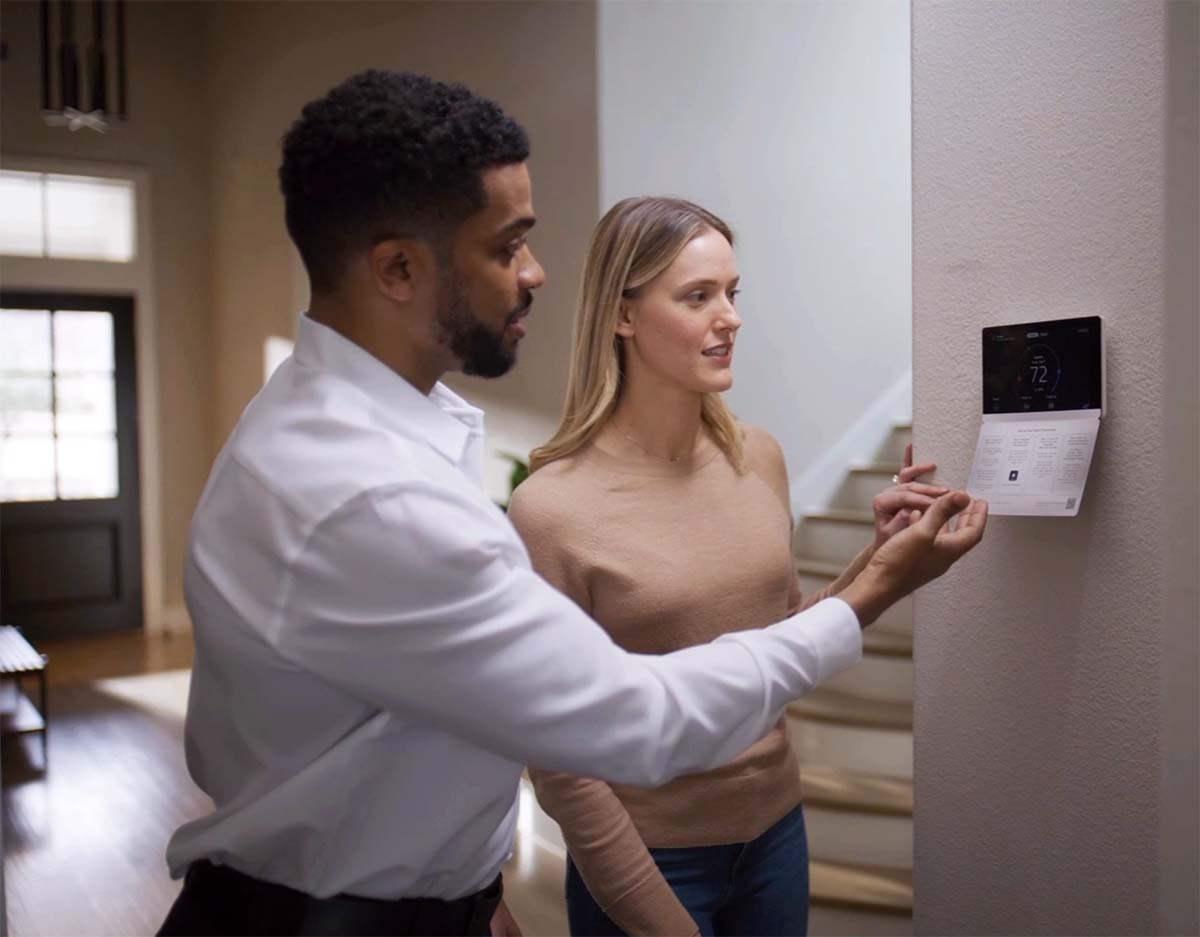
PEACE OF MIND: Smart HVAC systems offer integrated diagnostics, giving homeowners peace of mind that their systems are continually being monitored for optimal efficiency and performance. (Courtesy of Lennox)
While smart systems can provide better efficiency and improved comfort for homeowners, contractors can benefit from offering these systems as well. According to Surve, those benefits can include increased customer satisfaction leading to more referrals; upselling opportunities to boost profitability; and the ability to remotely monitor and diagnose a system, which allows contractors to detect and address issues proactively.
“By offering cutting-edge smart HVAC solutions, contractors can also demonstrate their expertise and commitment to staying current with industry trends, which enhances their reputation as innovative and reliable professionals,” she said. “In addition, contractors can leverage the smart HVAC system’s data on energy usage, performance, and system operations to provide valuable insights to homeowners, such as energy consumption patterns or system efficiency.”
Smart systems can also provide contractors with insights into systems by verifying system installation, setup, and charge on the day of installation, as well as provide notifications and alerts if/when systems need attention, said Cahill.
“Beyond the initial system installation, contractors who leverage connected smart systems can also enhance their preventive maintenance agreements with these connected systems. This essentially adds a new tier of service or increases the revenue generated from their top tier of service.”
One thing to keep in mind is that smart HVAC systems are interconnected and provide increased efficiency, comfort, and reliability because the components function in unison based on continuous feedback from all parts of the system, said Lee Smith, vice president of strategic marketing and environmental technology solutions at Daikin Comfort Technologies North America, Inc. This synchronization of system components necessitates a dedicated communication protocol, which is different from traditional thermostat switches.
“When specifying smart HVAC systems, a dedicated communication wire is needed, and depending on the manufacturer, it may not be compatible with solid core wire, so that is an area contractors need to keep in mind,” said Smith.
Another difference is that smart systems allow for total customizable comfort either at the unit or through the app, while non-smart systems have fewer options at the thermostat, said Rasche. That is why contractors installing a smart HVAC system should always recommend installing the corresponding controls.
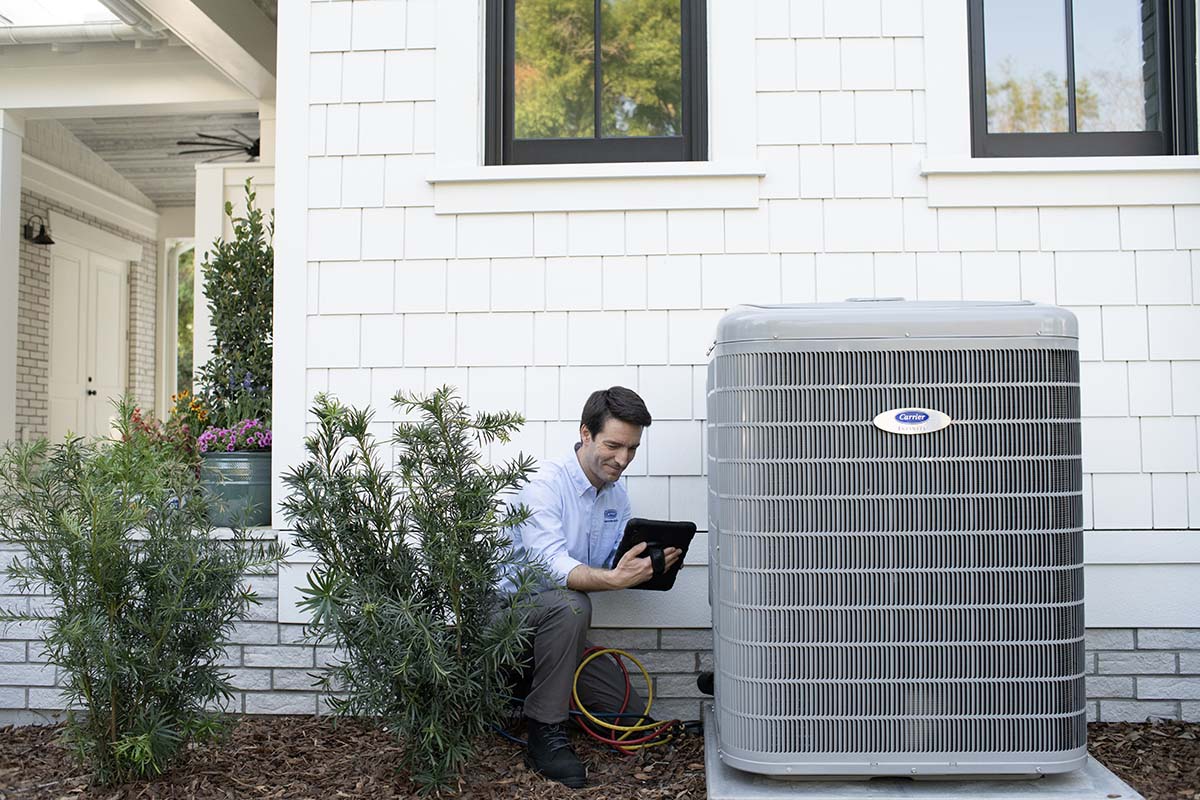
TOTAL COMFORT: Smart systems allow for total customizable comfort either at the unit or through the app. (Courtesy of Carrier)
“Homeowners will not experience the full benefits of a smart system without the correct controls, and there are sometimes rebates or cost savings associated with a full system,” said Rasche.
Contractors hesitant to provide smart HVAC systems or controls due to concerns about their complexity should rest assured that there is nothing to fear. While smart HVAC systems are more advanced than ever before, they provide easy installation, servicing, and troubleshooting, as all the tools are built into one unit, said Huntington.
“Thanks to these features, smart HVAC units can be easier to install and service than non-smart HVAC systems,” he said. “Traditional installation and service manuals are also provided with a smart HVAC system, in addition to easy-to-follow setup processes through smart thermostats, allowing contractors to use the method that works best for them, which makes installing and servicing a breeze.”
Looking for a reprint of this article?
From high-res PDFs to custom plaques, order your copy today!