ACHR News
search
Ask ACHR NEWS AI
cart
facebook twitter instagram linkedin youtube
  • Sign In
  • Subscribe
  • Sign Out
  • My Account
ACHR News
  • NEWS
    • Breaking News
    • New HVAC Products
    • Featured Products
    • Manufacturer Reports
    • HVAC Data
    • Legislation
    • ACHR NEWS Centennial
  • RESIDENTIAL
    • Air Conditioners
    • Furnaces
    • Residential Heat Pumps
    • Ductless
    • Residential IAQ
    • Testing, Monitoring, Tools
    • Components & Accessories
  • COMMERCIAL
    • Air Handlers
    • Rooftop Units
    • Chillers and Cooling Towers
    • Commercial Heat Pumps
    • Boilers and Hydronics
    • VRF/Ductless
    • Commercial IAQ
  • REFRIGERATION
    • Refrigerants
    • Refrigerant Regulations
    • Leak Management
  • CONTRACTOR PRO
    • Geothermal
    • Homeowner Study
    • VRF and VRV Ductless
    • Unitary Trends
  • EDUCATION
    • Training and Education
    • Business Management
    • Service and Maintenance
    • Continuing Education
    • Market Research >
      • HVAC Brand Awareness Report
      • VRV, VRF, VRVZ Report
      • Unitary Trends Report
      • Water Heat Professionals Report
    • Webinars
    • Sponsor Insights
    • eProducts Info
    • White Papers
  • EVENTS
    • HVAC Contractor Forum
    • Industry Events and Webinars
  • MEDIA
    • Videos
    • AHR Expo 2025 Videos
    • Podcasts >
      • ACHR News Podcast
      • HARDI Podcasts
      • AHR Expo Podcasts
      • ACCA Podcasts
    • Interactive Spotlights
    • Quizzes
    • eBooks
    • HVAC Talkback
  • HVAC GROUP
    • ACHR NEWS >
      • Current Issue
      • Digital Edition
      • Subscribe
    • Distribution Trends
    • SNIPS NEWS >
      • Join SNIPS NEWS
    • Engineered Systems News >
      • Join ES News
    • HVACR Directory
    • Contests
    • Newsletters
    • Contact
    • Advertise
    • My Account
NewsRefrigerationRefrigerants

Pressure, States, Conditions Major Components in R-744 Education

Flash gas bypass and high pressure valves are important aspects of CO₂ refrigeration systems
By Herb Woerpel
CO2 Refrigeration Technician
Getty Images
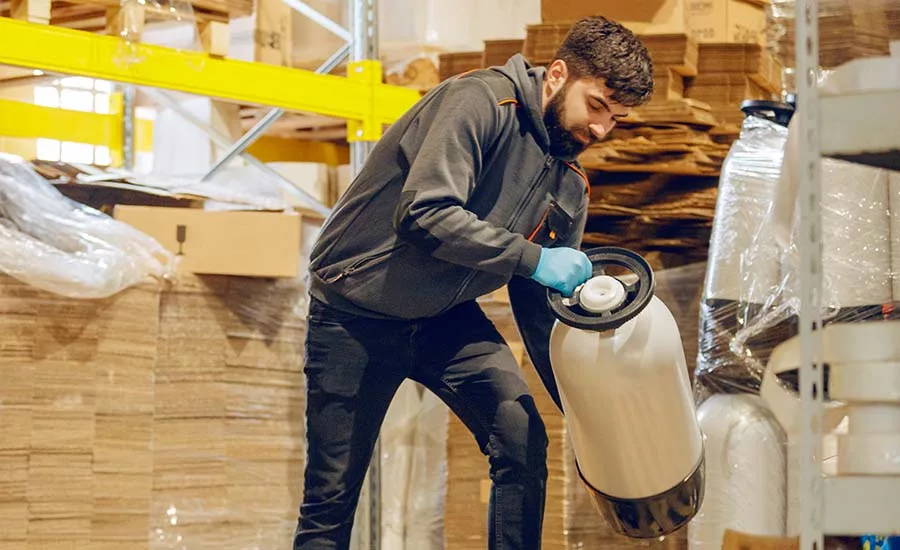
HEAVY GAS: When it comes to CO₂ refrigeration systems, pressure is among technicians’ chief concerns. (Courtesy of Getty Images)
December 22, 2023

CO₂ as a refrigerant (R-744) has been around since 1850. However, the emergence of lower-pressure, “safer” refrigerants, such as R-502, R-12, and R-22, drastically reduced its demand. Eventually, due to environmental concerns, each of the aforementioned gases has been phased out, and, ironically enough, R-744 — which boasts a global warming potential (GWP) of 1, has emerged as a viable replacement, especially in domestic, case-controlled refrigeration systems.

While CO₂ offers significant environmental benefits, it’s not without its warts, i.e., flammability rating, high-pressure operation, sensitivity to water contamination, and more.

As more and more case-controlled facilities turn to CO₂ refrigeration, HVAC contractors are tasked with adequately educating themselves on these systems so that they can meet the country’s budding installation and service needs.


Liquid, Vapor, or Gas?

Brett Wetzel, manager of technical troubleshooting and training, CoolSys, has 20-plus years of experience in the HVACR industry. For the last eight years, he’s served as a lead trainer for CoolSys, teaching technicians the ins and outs of the industry’s refrigerants.

Due to its emergence, he’s spent a lot of time deciphering R-744. Using that knowledge, Wetzel created “Introduction to CO₂ Refrigeration” and “Advanced TC-CO₂ Refrigeration” courses, which he is currently teaching to students in-person at the company’s training centers in Texas. These courses will be available at the company’s California training center in 2024.

“Over the last year, we’ve trained approximately 270 people on CO₂ refrigeration systems,” said Wetzel, who also serves as the host of the Advanced Refrigeration Podcast. “I try to emphasize the physics and numbers to really demonstrate how and why everything is working the way it is.”

When it comes to CO₂ refrigeration systems, Wetzel said pressure is among technicians’ chief concerns.

Looking for quick answers on air conditioning, heating and refrigeration topics? Try Ask ACHR NEWS, our new smart AI search tool. Ask ACHR NEWS →

“Once CO₂ hits a certain operating point, there’s no correlation relationship in the pressure-temperature [PT] chart,” he said. “It’s important to know whether the refrigerant is in a liquid or gas state, and, with CO₂, once we hit 87°F saturated, we’re unsure whether it’s in a plasma, vapor, or gas state. To figure that out, we either have to open it up or take scientific measurements.”

As a result, techs often struggle to understand the state of the gas as it migrates from the gas cooler through a high pressure valve (HPV) to the flash tank, said Wetzel.

“It’s a difficult concept to theorize because the math doesn’t necessarily add up,” he said. “If you have 75° saturated condensing temperature, that HPV is trying to control 5° subcooling, but then it opens up further and goes all the way down to 38° saturated in the flash tank. Theoretically, if the liquid is warmer than 38°, it should be a vapor, but, in this case, that doesn’t hold fully true.”

During subcritical operation, approximately 70% of the refrigerant is liquid while the remaining 30% goes to waste, he said.

“That HPV, or high pressure valve, is there to reduce the pressure,” said Wetzel. “It’s essentially trying to control subcooling when it’s subcritical.” In transcritical mode, the HPV starts modulating to maintain a setpoint defined by an equation to achieve a virtual subcooling using only the pressure input as a control point.

And in transcritical applications, liquid production reduces down to about 50-50 but can dip as low as 40% liquid production and 60% vapor.

“In this case, that’s why these systems run with more compressors on the medium-temperature side than the low-temperature side,” said Wetzel. “Once it hits transcritical, that extra mass of vapor has to be compressed by something, because we have to pull that gas down to 38° saturated, which is typically set for most flash tanks.”


Training Timeline

Wetzel is confident most experienced refrigeration technicians should be able to grasp the concepts of CO₂ refrigeration rather quickly.

“Most experienced technicians should attend a three- to five-day seminar, at the very least, depending on how knowledgeable they are,” he said. “There are a lot of new concepts involved. Technicians familiar with the intricacies of refrigeration system controls and sequences of operation will pick it up quicker than those who are not.”

Peter Savage, project manager, controls division, AAA Refrigeration Service Inc. in Bronx, New York, agrees, acknowledging the training timeline is highly dependent on a technician’s experience and curiosity.

“The electrical part of CO₂ refrigeration systems, as well as the controls, often trip up our newer guys,” he said. “Getting guys to understand what pressures and states should be running at what point in the cycle can be challenging.

“Guys need to be able to understand the sequence of operations from day one,” he continued. “These are complex systems. If a technician adjusts just one set point, it could have a major impact on many other aspects of the system’s operation down the line.”

While R-744 systems are complex, when it comes to the refrigeration cycle itself, they’re very similar to most other refrigeration equipment, said Savage.

“Whether it’s a CO₂ rack or an air conditioner on your roof, the refrigeration cycle is pretty much the same,” he said. “CO₂ units utilize flash gas bypass valves and HPVs, but those are really the only two components that differentiate them from ‘normal’ systems.”

While challenges do exist, Savage said techs should not be fearful of CO₂ systems.

“If you’re familiar with variable frequency drives, and those types of technologies, you should be fine,” he said. “And now’s the time to get acclimated with CO₂ because customers will be bidding on these systems very soon, if they’re not already. Acquiring the necessary education early will solve a lot of your problems.”

KEYWORDS: alternative refrigerants CO2 refrigeration flammable refrigerants refrigeration controls training technicians

Share This Story

Looking for a reprint of this article?
From high-res PDFs to custom plaques, order your copy today!


Dc herb author headshot
Herb Woerpel was a senior editor with The ACHR NEWS. He is committed to delivering practical, insightful information in an accessible, engaging way. Herb joined BNP Media in 2011. He most recently served as editor-in-chief of Engineered Systems and was previously employed as managing editor of The ACHR NEWS. Before joining BNP Media, he worked as a reporter with the Advance Newspapers, a subsidiary of MLive/The Grand Rapids Press. He holds a bachelor’s degree in news editorial journalism from Central Michigan University and boasts 16-plus years of professional journalism experience.

Recommended Content

JOIN TODAY
To unlock your recommendations.

Already have an account? Sign In

  • HVAC-enrollment

    The Trades Are Back: HVACR Programs See Nearly 30% Enrollment Spike

    A new wave of future technicians is entering the pipeline.  
    News
    By: Matt Jachman
  • 2025 Top 40 Under 40

    2025 Top 40 Under 40 HVACR Professionals List

    The 11th annual Top 40 Under 40 list highlights those...
    HVAC Light Commercial Market
    By: Hannah Belloli-Oster
  • LG Ductless Mini-Split Systems

    The 9 Types of Heat Pumps

    As the U.S. moves toward electrification, heat pumps are...
    HVAC Commercial Market
    By: Joanna R. Turpin
Subscription Center
  • Create an Account
  • Start a Subscription
  • Manage My Account
  • Sign Up for Newsletters
  • Visit Customer Service
  • Update Preferences

More Videos

Sponsored Content

Sponsored Content is a special paid section where industry companies provide high quality, objective, non-commercial content around topics of interest to The News audience. All Sponsored Content is supplied by the advertising company and any opinions expressed in this article are those of the author and not necessarily reflect the views of The News or its parent company, BNP Media. Interested in participating in our Sponsored Content section? Contact your local rep!

close
  • Piggy Bank
    Sponsored byWatercress Financial

    Energy Prices, Inflation, and HVAC: What Today’s Homeowners Care About

  • Refrigerated Food
    Sponsored bySolstice Advanced Materials

    R-455A Refrigeration: A Cold Storage Solution for the Future

  • Airex Rooftop Units
    Sponsored byAirex Manufacturing Inc

    Consolidating Roof Penetrations: A Growing Trend in Multifamily HVAC Design

Popular Stories

Lennox equipment

Platinum Equity to Sell Heat Controller to Lennox

HVAC-tech-van.jpg

Report: Only 65% of HVAC Technician Time is Billable Hours

HVAC Minute retail refrigeration system

EPA Final Rule’s Impact on R-410A Deadlines

Lovato-refrigerant-rooftop_AC_Units_.jpg

When Refrigerants Change, So Do the Contactors

Dealer_Couple2_Kitchen_Estimate.jpg

Predicting the Next Service Call

View The ACHR NEWS
Centennial Anniversary Timeline

The ACHR News Timeline Chart
Submit a Letter
Submit a letter to our editors.

Events

November 6, 2025

Next-Gen Data Center Cooling: HVAC Innovation and Real-World Solutions

On Demand As AI workloads and high-density computing push traditional cooling methods to their limits, the data center industry is accelerating the adoption of next-generation HVAC technologies.

July 28, 2026

How Top Home Services Companies Turn Every Conversation Into Predictable Revenue

In this webinar, we'll outline how top contractors are turning every conversation into predictable revenue by coaching every comfort advisor visit, not just the ones a manager rides along on.

View All Submit An Event

Poll

Summer Staff

Are you fully staffed for the summer season?
View Results Poll Archive

Products

BNI Mechanical/Electrical Square Foot Costbook, 2026 Edition

BNI Mechanical/Electrical Square Foot Costbook, 2026 Edition

See More Products
Designing Systems Using A2L Refrigerant - Free Webinar - 7/22/2026

Related Articles

  • Freezer Case

    Basic Refrigeration: Major Components in the System

    See More
  • Aldi

    Supermarket Scorecard Shows Trending Adoption of R-744 in US Stores

    See More
  • Cedar Valley Cheese Warehouse

    Discovering the Benefits of R-744

    See More

Related Products

See More Products
  • quick guide.png

    Quick Guide to Refrig Cycle, Refrigerants, Components

  • ghpm.png

    Gas Heating: Furnaces, Boilers, Controls, Components

  • pewtpm.png

    Pressure Enthalpy Without Tears Manual

See More Products
×

Sign Up. Stay Informed.

The #1 trusted source for the HVACR industry since 1926

SUBSCRIBE
  • RESOURCES
    • Advertise
    • Contact Us
    • Advisory Board
    • Classifieds
    • Submit a Letter
    • Directories
    • Store
  • ACCOUNT CENTER
    • Create an Account
    • Start a Subscription
    • Manage My Account
    • Sign Up for Newsletters
    • Visit Customer Service
    • Update Preferences
  • SERVICES
    • Marketing Services
    • Reprints
    • Market Research
    • List Rental
    • Survey/Respondent Access
  • STAY CONNECTED
    • LinkedIn
    • Facebook
    • Instagram
    • YouTube
    • X (Twitter)
  • PRIVACY
    • PRIVACY POLICY
    • TERMS & CONDITIONS
    • DO NOT SELL MY PERSONAL INFORMATION
    • PRIVACY REQUEST
    • ACCESSIBILITY

Copyright ©2026. All Rights Reserved BNP Media, Inc. and BNP Media II, LLC.

Design, CMS, Hosting & Web Development :: ePublishing