Pros and Cons: Leasing HVAC Fleet Vehicles Versus Owning
Is leasing or owning fleet vehicles the better option for you?
Deciding to lease or own fleet vehicles could be as simple as looking at the size of an HVAC business, its growth plan, its cash flow, and what it needs from its vehicles. However, there are many outstanding variables that may affect whether leasing or owning fleet vehicles is the best decision for the business at that current time, and what a contractor goes with may change as the business evolves.
executive vice president
Storer Services
Leasing or Owning
Currently, Storer Services in Shreveport, Louisiana, owns all 103 of its fleet vehicles, but they’ve been toying with the idea of switching over to a lease program. The company has averaged 18-20% growth over the last six years, and for every new technician they hire, they buy a new truck.
While Aaron Storer, executive vice president at Storer Services, said that owning the vehicles is the most profitable choice for the company, it’s a real drain on cash — especially considering all-around price increases since the pandemic. What used to cost Storer Services about $43,000 for a truck now costs around $70,000.
“This year, we have added 40 technicians, so about 40 trucks, maybe even a few more … so when you have that kind of growth, and you're paying cash for it, it basically sucks your cash out of your business to buy these trucks, and you don't have that cash available to do other things,” Storer said.
Genz-Ryan Heating, Cooling, Plumbing, & Electrical, serving the Minneapolis and St. Paul, Minnesota metro area, has dabbled in leasing their fleet vehicles, but it didn’t work out very well, according to company president Jon Ryan. Though they still have a few open leases that will be closed in a few months, they own the other 125-150 vehicles.
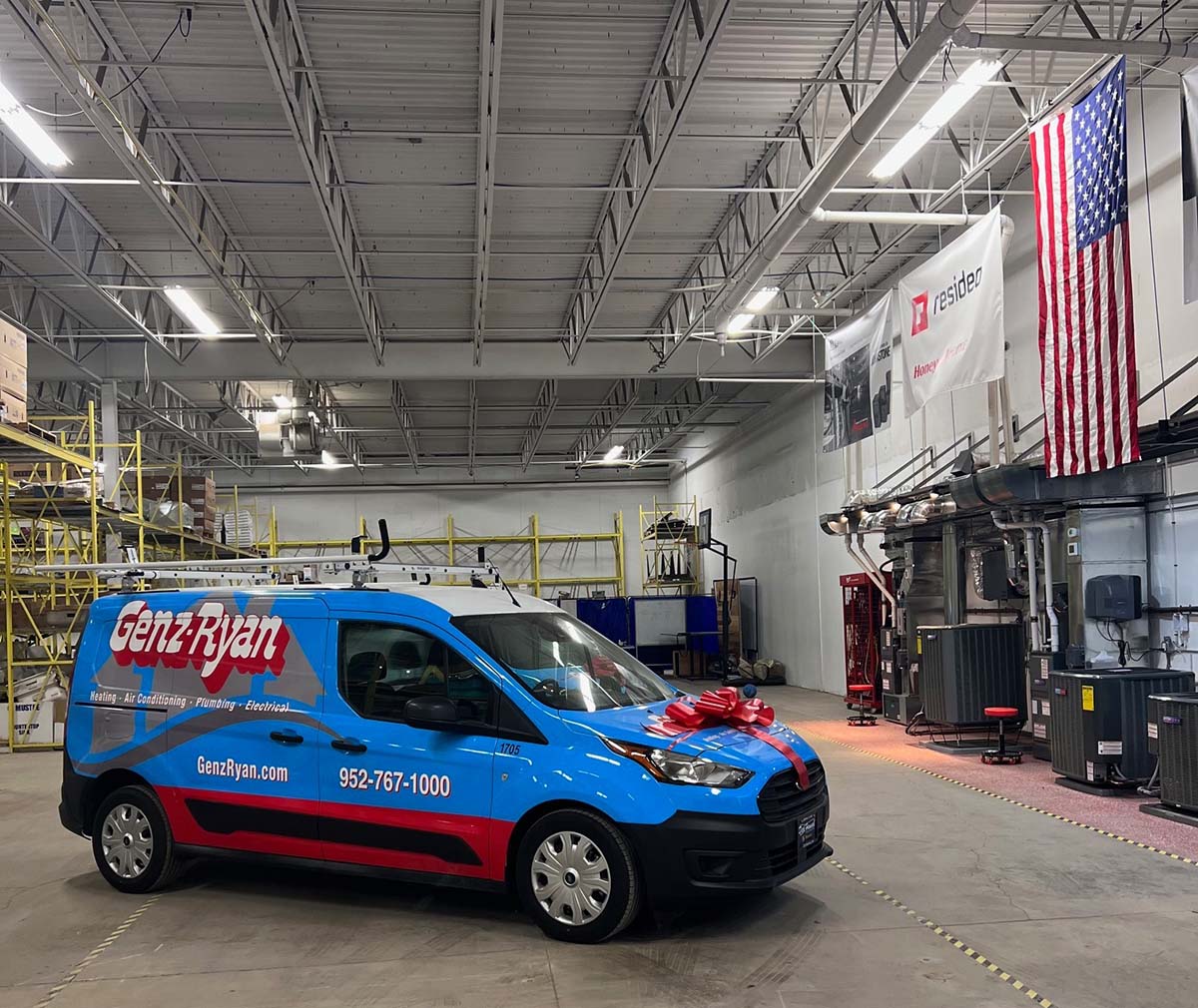
OWNING VEHICLES: For Genz-Ryan, owning fleet vehicles has provided much more flexibility. (Courtesy of Genz-Ryan Heating, Cooling, Plumbing, & Electrical)
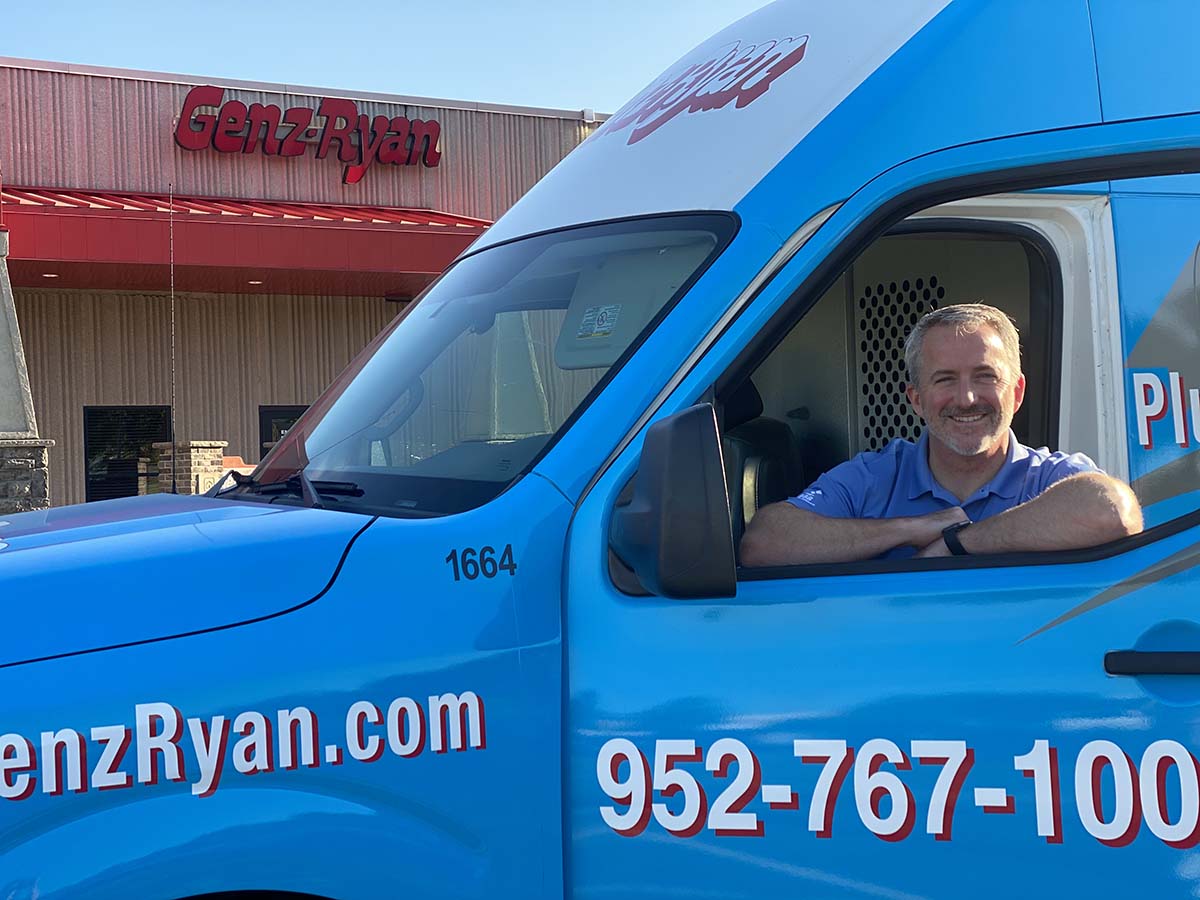
LEASE OR OWN: Whether or not a contractor should lease or own their fleet vehicles may come down to their cash position. (Courtesy of Genz-Ryan Heating, Cooling, Plumbing, & Electrical)
“You’re kind of locked into the terms of the lease … if your business changes in terms of what types of vehicles you need, or what you need from the vehicles — the [leasing] experience wasn't very good for us,” Ryan said. “We found that there is just a lot more flexibility with owning your vehicles.”
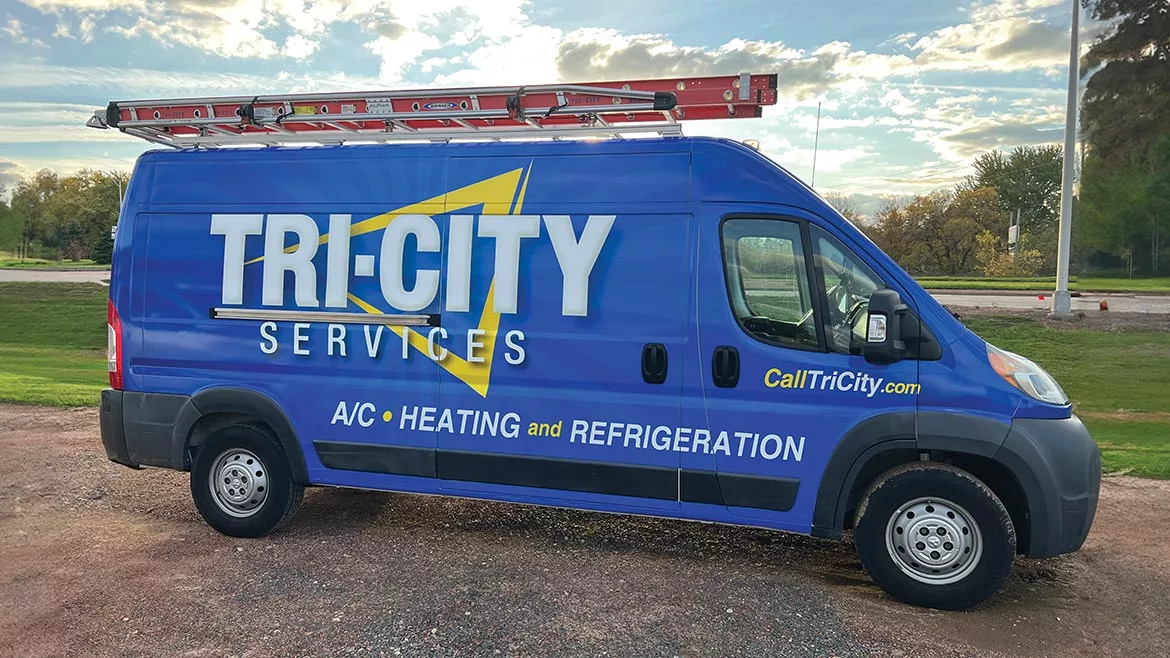
Over in Wisconsin Rapids, Wisconsin, Tri-City Services does things a little differently. The company leases its vehicles, but not in a traditional way. In fact, they’ve never leased from a traditional leasing company. Before implementing their current leasing plan, the company owned all their vehicles (and still owns some).
Looking for quick answers on air conditioning, heating and refrigeration topics? Try Ask ACHR NEWS, our new smart AI search tool. Ask ACHR NEWS
A little over a year ago, Tri-City Services created (and now owns) an LLC from which they “rent” their current 14 vehicles and two install trailers, according to Andrea Jensen, Tri-City president.
“We did this as an additional revenue stream as owners of the company, and someday, our building will be in this LLC also,” Jensen said. “If we're going to rent from someone, why not rent from ourselves?”
Jensen recommends doing the same thing for a lot of other small business owners.
“I think a lot of small business owners should consider doing this — it's an additional income for us and, of course, we pay income tax on profits, etc., and it’s all aboveboard,” Jensen said. “Our accountant and attorney set it all up for us. Just a different way of doing things. If we're going to pay someone a lease payment, I'd rather pay myself the lease payment as an additional source of income. We are still W2 employees of our company, but now we get some revenue off of our vehicle investments — and someday our building.”
Pros/Cons of Leasing
Whether or not an HVAC contractor decides to lease or own their fleet vehicles has everything to do with the details of their business and what’s needed from the vehicles. Both options come with pros and cons.
Some drawbacks of leasing include limited flexibility, changing interest rates, higher monthly payments, and leasing fees.
“When you lease, they’re going to provide the vehicle for you and then you just pay them monthly for the lease, and that ‘lease fee’ has their profit built into it, so at the end of the day, you end up paying more money to the leasing company, meaning you're less profitable by leasing,” Storer said.
And the continuing monthly payments to a traditional leasing company might be higher than if a traditional loan had been taken out to purchase fleet vehicles, Jensen said.
Yet for some businesses, the benefits of leasing might outweigh the drawbacks. For example, not having to come up with that cash upfront to buy a vehicle could make more sense for a rapidly growing business looking to allocate funds elsewhere — perhaps in new facilities, like Storer Services is toying with, or for a small business owner who doesn’t have as much access to cash flow, or one who wants to create additional income, like Tri-City Services, who has found great success with their current leasing plan.
“If there is maybe a slow month or two, we can also have the flexibility to not pay ourselves the full amount (just the loan payment amount) if need be — then catch up as we're able,” Jensen said.
Ryan said that those who lease have done their cost analysis, and they’ve determined that once a vehicle gets to a certain number of years or a certain mileage, the repairs needed and cost associated only increase.
“And [avoiding repair costs] was always really attractive,” Ryan said. “However, in the past two to three years, the challenge has been finding vehicles, because the manufacturers have had everyone on allocation.”
In addition, leasing vehicles allow for easier access to newer vehicles, which also means less money spent on maintenance.
“From a traditional lease company … your vehicles would be on a planned rotation for upgrades to keep it looking new,” Jensen said. “If [a contractor is] just starting out, a lease might be a great option because a newer vehicle tends to have fewer repairs, if any, so the responsibility of repairs is not on them.”
Leasing might be a good option for a company who can’t effectively manage the maintenance costs associated with owning the vehicles, or if they aren’t aggressively growing and worried about replacing and repairing vehicles.
Storer said it really boils down to what the contractor’s cash position is, how quickly they are planning to grow, and what the interest rates are.
“If interest rates are really high, you may be better off to leasing,” Storer said. “Other advantages to leasing are supply chain — the availability of vehicles — and it's a little bit easier to do that because you sign one agreement. If you're going to finance vehicles through a dealership, every single time you're having to do all the paperwork and run through financing, so it's a lot more time-consuming to own and finance than just lease.”
Pros/Cons of Owning
The drawbacks of owning include the draining on cash flow, not to mention maintenance costs for upkeep of vehicles. Additionally, it’s a challenge to find vehicles in buying condition and manage the vehicle-to-technician ratio.
Though the balance sheet will take a hit, and sourcing vehicles can be challenging, there are ways to manage that. Genz-Ryan takes advantage of dealers who do have the availability to get them vehicles.
“They’re also offering really good financing options,” Ryan said. “I think the highest rate we were paying for a 48-month-long was about 4.9%, and we even have some at 2.9% and a few that are still at 0% or .9%.”
Genz-Ryan is currently working with Enterprise, which has proven to be effective at sourcing the amount of vehicles required by the company.
“If you're buying 50 or more vehicles in a year, if you make that commitment, they can go directly to Ford or whatever manufacturer you want to work with and source those vehicles,” Ryan said.
Enterprise will also handle the logistics with companies Genz-Ryan wants to do their upfit, like their bins, graphics, and wrapping on the vehicles.
“And then they can also capitalize those expenses for us and roll them into a loan expense,” Ryan said.
However, if a contractor does not have a company to partner with to handle maintenance and upfit of the vehicles, it can be pricey.
“You may not upgrade your fleets as often, leading to higher repair bills,” Jensen said.
Perhaps the most compelling benefit of owning fleet vehicles is the most obvious: The vehicles end up being owned by the company.
“When you buy or finance, you’re buying the asset — you're taking a loan, in essence, so you have the asset that will depreciate, then you have to pay back the loan, and you have to pay interest on the loan that you took, but opposed to a lease where the asset is never yours,” Storer said.
Both Storer Services and Genz-Ryan “run the wheels off their vehicles,” meaning they use and repair them until they are no longer operable. This results in getting the absolute most out of each vehicle they own.
“As we get new vehicles, we're rotating our most senior and top-performing technicians into the new vehicles, and then those their older vehicles just cascade down the fleet,” Ryan said.
Again, it boils down to what the company’s cash position is. If a company has a strong cash position and isn’t planning for rapid growth, buying the vehicles could be the best option. If they have a strong cash position and are planning for rapid growth, leasing might be the best choice.Looking for a reprint of this article?
From high-res PDFs to custom plaques, order your copy today!