ACHR News
search
Ask ACHR NEWS AI
cart
facebook twitter instagram linkedin youtube
  • Sign In
  • Subscribe
  • Sign Out
  • My Account
ACHR News
  • NEWS
    • Breaking News
    • New HVAC Products
    • Featured Products
    • Manufacturer Reports
    • HVAC Data
    • Legislation
    • ACHR NEWS Centennial
  • RESIDENTIAL
    • Air Conditioners
    • Furnaces
    • Residential Heat Pumps
    • Ductless
    • Residential IAQ
    • Testing, Monitoring, Tools
    • Components & Accessories
  • COMMERCIAL
    • Air Handlers
    • Rooftop Units
    • Chillers and Cooling Towers
    • Commercial Heat Pumps
    • Boilers and Hydronics
    • VRF/Ductless
    • Commercial IAQ
  • REFRIGERATION
    • Refrigerants
    • Refrigerant Regulations
    • Leak Management
  • CONTRACTOR PRO
    • Geothermal
    • Homeowner Study
    • VRF and VRV Ductless
    • Unitary Trends
  • EDUCATION
    • Training and Education
    • Business Management
    • Service and Maintenance
    • Continuing Education
    • Market Research >
      • HVAC Brand Awareness Report
      • VRV, VRF, VRVZ Report
      • Unitary Trends Report
      • Water Heat Professionals Report
    • Webinars
    • Sponsor Insights
    • eProducts Info
    • White Papers
  • EVENTS
    • HVAC Contractor Forum
    • Industry Events and Webinars
  • MEDIA
    • Videos
    • AHR Expo 2025 Videos
    • Podcasts >
      • ACHR News Podcast
      • HARDI Podcasts
      • AHR Expo Podcasts
      • ACCA Podcasts
    • Interactive Spotlights
    • Quizzes
    • eBooks
    • HVAC Talkback
  • HVAC GROUP
    • ACHR NEWS >
      • Current Issue
      • Digital Edition
      • Subscribe
    • Distribution Trends
    • SNIPS NEWS >
      • Join SNIPS NEWS
    • Engineered Systems News >
      • Join ES News
    • HVACR Directory
    • Contests
    • Newsletters
    • Contact
    • Advertise
    • My Account
HVAC ContractingNewsService and MaintenanceRefrigerationRefrigerants

Preventing System Contamination

Poor service practices can lead to premature failure of refrigeration systems
By Joe Marchese
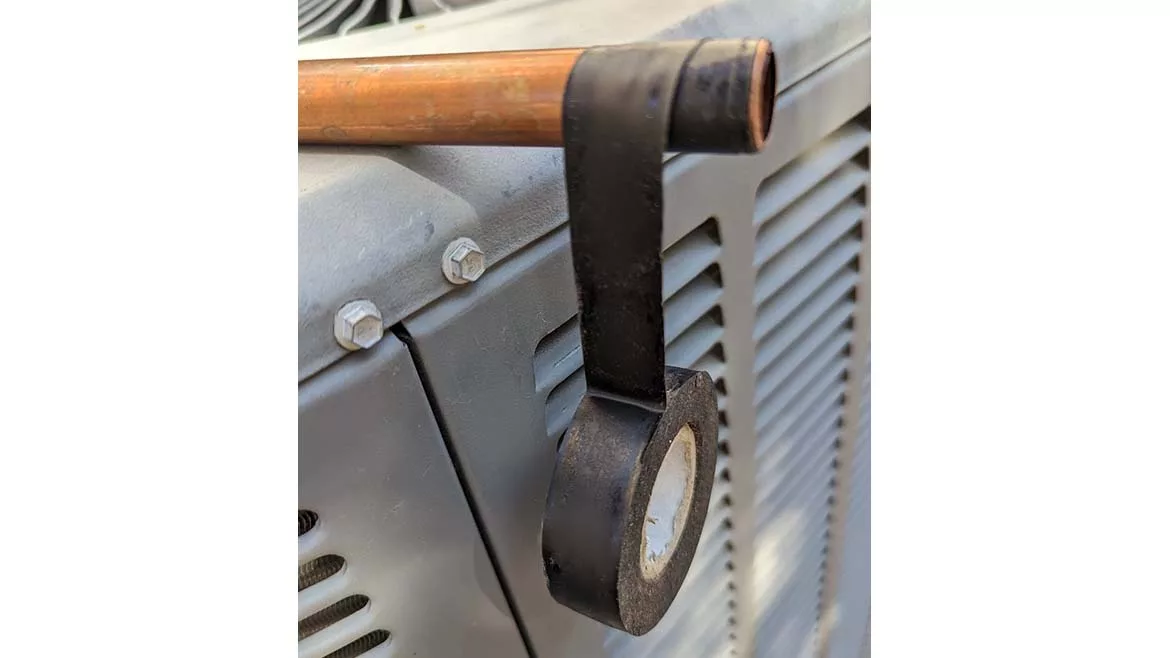
Electrical Tape on Tube End
RESEAL TUBES: Electrical tape can be used to reseal any unused tubing that may be used later.
October 26, 2023

Poor service practices can lead to contaminants entering a refrigeration system, resulting in premature failure. When installing and repairing refrigeration equipment, technicians should always follow good service practices to prevent any contaminants from entering the piping or system components.

READ MORE ABOUT

• Refrigeration

• Refrigerant Management

• Service and Maintenance

The most common system contaminant is atmospheric air; however, there are other potential contaminants that could also enter a system such as copper shavings, flux, copper oxide, dirt, and sandpaper particles. Atmospheric air contains oxygen, nitrogen, and water vapor. If oxygen and water vapor remain in a system, they could react with the compressor oil and the heat generated in the system and produce acids. Nitrogen left in the system will collect in the condenser and cause the system’s high-pressure side to operate at elevated pressures.

Atmospheric air will enter a system any time it is opened for repair or during its initial installation. Following proper evacuation techniques will remove this contaminant. Use a quality vacuum gauge and pump and follow the manufacturer’s recommendations for the required micron level to be achieved. Many manufacturers will recommend the system’s pressure be reduced to a vacuum level of 500 microns or below. Avoid taking shortcuts during this process.

When adding refrigerant to a system, atmospheric air can also enter through the refrigerant hoses and manifold. Remember to always purge the hoses and manifold before adding refrigerant.

Copper shavings, flux, copper oxide, dirt, and sandpaper particles that have entered the system could cause a refrigerant restriction or damage to a compressor. Again, always follow proper installation and repair procedures to avoid these contaminants from entering a system. For example, new ACR tubing comes with its ends sealed to prevent any contaminant from entering the tubing during transportation and storage. When installing this tubing, leave the tube ends sealed until it needs to be connected.

Any unused tubing that may be used later needs to be resealed. If possible, reuse the caps that were on the tubing originally. For years I have used electrical tape. To prevent the glue from the tape getting on the tube end while taping, I simply start wrapping the tube end with the non-glue side in contact with the tubing. Then after a few wraps, twist the tape and now wrap with the glued end in contact with the tape and not the tubing. This will eliminate any glue from the tape coming into contact with the tubing, which will make cleaning the tube end a lot simpler when it comes time to use it.

While preparing the tube ends for brazing, always be cautious of how you deburr and clean the ends. While cutting and deburring, position the tube end so no copper shavings enter it. Avoid using sandpaper to clean the tube end; a Scotchbrite pad is generally a better choice. If you do need to use sandpaper, position the end to avoid any of the grit from entering the tubing and wipe the tube ends with a clean, soft cloth to get rid of any grit.

Looking for quick answers on air conditioning, heating and refrigeration topics? Try Ask ACHR NEWS, our new smart AI search tool. Ask ACHR NEWS →

To prevent copper oxidation while brazing, sweep a non-oxidizing gas such as nitrogen through the tubing. A nitrogen sweep of 1 to 2 cfm through the tubing is an effective means of expelling any oxygen from the inside of the tubing, which will prevent the formation of oxidation on the inner walls. If oxidation develops inside the tubing, it can flake off and be carried throughout the system along with the refrigerant and oil.

And, of course, always change out the filter-drier any time the system is opened for a repair, and make sure one is installed on the system during the initial installation. A properly installed filter-drier will absorb any water vapor remaining in the system and filter out any particulates. However, do not rely on a filter-drier as a catch-all for sloppy repair or installation procedures. A filter-drier should be viewed as an additional precaution to guard against contaminants circulating throughout a system and not a replacement for following good service practices.

KEYWORDS: installing HVACR Piping Systems refrigerant management refrigerant retrofit refrigeration equipment Repairing HVACR

Share This Story

Looking for a reprint of this article?
From high-res PDFs to custom plaques, order your copy today!


Joe marchese

Joe Marchese is a senior field support engineer at Heatcraft Refrigeration Products. He can be reached at joe@koldcraft.com.

Recommended Content

JOIN TODAY
To unlock your recommendations.

Already have an account? Sign In

  • HVAC-enrollment

    The Trades Are Back: HVACR Programs See Nearly 30% Enrollment Spike

    A new wave of future technicians is entering the pipeline.  
    News
    By: Matt Jachman
  • 2025 Top 40 Under 40

    2025 Top 40 Under 40 HVACR Professionals List

    The 11th annual Top 40 Under 40 list highlights those...
    HVAC Residential Market
    By: Hannah Belloli-Oster
  • LG Ductless Mini-Split Systems

    The 9 Types of Heat Pumps

    As the U.S. moves toward electrification, heat pumps are...
    News
    By: Joanna R. Turpin
Subscription Center
  • Create an Account
  • Start a Subscription
  • Manage My Account
  • Sign Up for Newsletters
  • Visit Customer Service
  • Update Preferences

More Videos

Sponsored Content

Sponsored Content is a special paid section where industry companies provide high quality, objective, non-commercial content around topics of interest to The News audience. All Sponsored Content is supplied by the advertising company and any opinions expressed in this article are those of the author and not necessarily reflect the views of The News or its parent company, BNP Media. Interested in participating in our Sponsored Content section? Contact your local rep!

close
  • An illustration shows a house with a geothermal heating system. Pipes are depicted running underground.
    Sponsored byClimateMaster

    Residential Tax Credits Are Ending, But Demand Continues

  • Piggy Bank
    Sponsored byWatercress Financial

    Energy Prices, Inflation, and HVAC: What Today’s Homeowners Care About

  • Refrigerated Food
    Sponsored bySolstice Advanced Materials

    R-455A Refrigeration: A Cold Storage Solution for the Future

Popular Stories

HVAC-Price-Increase-graphic

HVAC Price Increase List: July 2026

price-raising-practices.jpg

Rising Costs Force Contractors to Take a Harder Look at Pricing

DOE-sign.jpg

HVAC Groups Support DOE’s Rulemaking to Cut Energy Efficiency Mandates

Industry-Ethics_-Service-Calls.jpg

HVAC Contractor Agrees to $300K Settlement Over Alleged Deceptive Sales Practices

Daikin Applied CEO Yu Nishiwaki

Daikin Applied Announces New Top Leadership

View The ACHR NEWS
Centennial Anniversary Timeline

The ACHR News Timeline Chart
Submit a Letter
Submit a letter to our editors.

Events

November 6, 2025

Next-Gen Data Center Cooling: HVAC Innovation and Real-World Solutions

On Demand As AI workloads and high-density computing push traditional cooling methods to their limits, the data center industry is accelerating the adoption of next-generation HVAC technologies.

July 22, 2026

Designing VRF Systems Using A2L Refrigerant

In this session, we will cover how to design VRF systems for the U.S. market using new A2L refrigerants. These systems provide an advanced zoning solution by using inverter technology to deliver precise heating and cooling control across multiple zones and spaces.

View All Submit An Event

Poll

Summer Staff

Are you fully staffed for the summer season?
View Results Poll Archive

Products

BNI Mechanical/Electrical Square Foot Costbook, 2026 Edition

BNI Mechanical/Electrical Square Foot Costbook, 2026 Edition

See More Products
Designing Systems Using A2L Refrigerant - Free Webinar - 7/22/2026

Related Articles

  • Water Contamination and Removal in Ammonia Refrigeration Systems

    See More
  • Tamper-Evident Straps Prevent Refrigerant Cross-Contamination in HVACR Systems

    See More
  • Water Contamination, Water Removal

    See More

Related Products

See More Products
  • srepm.png

    System Recovery & Evacuation

  • comfortcoolingdvd.jpg

    COMFORT COOLING REFRIGERATION SYSTEM TROUBLESHOOTING

  • Soldering and Brazing Refrigeration System Tubing.jpg

    Soldering and Brazing Refrigeration System Tubing DVD

See More Products

Related Directories

  • Griplock Systems

    Griplock's HVAC suspension system provides fast installation, height adjustment, and leveling of ductwork with tool-free adjustable grippers, saving time and money. SMACNA TRI verified.
×

Sign Up. Stay Informed.

The #1 trusted source for the HVACR industry since 1926

SUBSCRIBE
  • RESOURCES
    • Advertise
    • Contact Us
    • Advisory Board
    • Classifieds
    • Submit a Letter
    • Directories
    • Store
  • ACCOUNT CENTER
    • Create an Account
    • Start a Subscription
    • Manage My Account
    • Sign Up for Newsletters
    • Visit Customer Service
    • Update Preferences
  • SERVICES
    • Marketing Services
    • Reprints
    • Market Research
    • List Rental
    • Survey/Respondent Access
  • STAY CONNECTED
    • LinkedIn
    • Facebook
    • Instagram
    • YouTube
    • X (Twitter)
  • PRIVACY
    • PRIVACY POLICY
    • TERMS & CONDITIONS
    • DO NOT SELL MY PERSONAL INFORMATION
    • PRIVACY REQUEST
    • ACCESSIBILITY

Copyright ©2026. All Rights Reserved BNP Media, Inc. and BNP Media II, LLC.

Design, CMS, Hosting & Web Development :: ePublishing