METUS: Five Green Building Trends to Follow in 2023
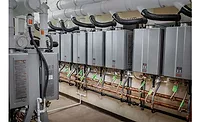
Diamond Service Group members serve as local customer contacts for troubleshooting and offer support and training for all Mitsubishi Electric systems sold and installed through the network.
Image courtesy of Mitsubishi Electric Trane HVAC US
SUNNYVALE, Calif. — Since the theme of Earth Day 2023 was “Invest in Our Planet,” it’s a great time to focus on ways to help make commercial buildings greener and more sustainable. The event took place April 22.
The Center on Global Energy Policy recently reported the buildings sector worldwide consumes approximately 30% of global energy — natural gas, electricity, and solid and liquid fuels for heating, cooling, lighting, equipment, and cooking. The commentary also pointed out the importance of decarbonization in the buildings sector.
Interest in ecofriendly commercial buildings is on the rise, especially with increasing reports of global warming and companies’ impact of using vast amounts of the planet’s resources. Couple this with rising scrutiny of organizations’ environmental, social, and governance (ESG) initiatives, building owners’ and other stakeholders’ reputations and revenue depend upon them taking steps to become more sustainable.
Knowing all this, here are five trends Mitsubishi Electric Trane HVAC US (METUS) believes will become more prevalent in 2023 and in the coming years in the U.S.
Inflation Reduction Act Upgrades Will Save Money and Reduce Emissions
The Inflation Reduction Act (IRA), signed into law in August 2022, is the U.S.’s largest climate investment initiative in the country’s history. With the IRA set to funnel hundreds of millions of dollars in rebates and tax credits for greener and more energy-efficient building upgrades, commercial builders, architects, engineers, and building owners will increasingly search for ways to take advantage of these lucrative incentives and the long-term energy savings accompanying them.
For example, the 179D commercial buildings energy efficiency tax deduction now offers base tax deductions to commercial building owners and designers of buildings that meet certain energy efficiency standards. Deductions work on a sliding scale of 50 cents per square foot for energy savings of 25% and up to $1 per square foot for energy savings of 50% or greater. Bonus deductions are on a sliding scale of $2.50 per square foot for energy savings of 25% and up to $5 per square foot of energy savings of 50% or greater. Depending on the size of a commercial project, and if it meets certain prevailing wage requirements, savings can be considerable.
Looking for quick answers on air conditioning, heating and refrigeration topics? Try Ask ACHR NEWS, our new smart AI search tool. Ask ACHR NEWS
Some industries are receiving specific incentives. For example, the 45L ITC benefits multifamily building contractors that build and sell homes that meet specified energy efficiency requirements. They can receive $500 per unit that meets Energy Star standards and $1,000 per unit for zero-energy-ready units. If certain labor standards are also met, incentives could increase to $2,500 and $5,000, respectively.
By installing energy-efficient and greener equipment, like all-electric heat pump HVAC systems, electric ovens, electric water heaters, and more, as well as technology to monitor energy consumption closely, more commercial builders and others mentioned above will be able to claim the IRA incentives.
Installation of More Energy-Efficient Equipment Set to Increase
As operators look closer at their buildings’ power usage, they are increasingly wanting to install more environmentally friendly and energy-efficient equipment. Some of this more energy-efficient equipment includes buildings switching to use all-electric variable refrigerant flow (VRF) technology, the fastest-growing segment of the commercial HVAC industry, as well as zoning and smarter system controls.
VRF technology allows a building to be divided up into zones for heating and air conditioning, ensuring energy is being used more efficiently only in the spaces where air is needed. For example, a hotel would be able to set back or turn off systems in unoccupied rooms, or an office building manager would be able to better control specific tenants’ heating and air conditioning. Additionally, if builders and building owners choose electric versions of VRF technology, they will also make their buildings greener by reducing dependence on fossil fuels. Zoning is made possible through systems controls becoming smarter and easier for building owners and managers to navigate.
To improve their equipment’s energy efficiency, savvy commercial builders, architects, engineers, and building owners are also taking a close look at their water heating needs. More on water heater trends is in the water conservation and water heating section below.
Renewable Energy Generation on the Rise
Commercial buildings will use more of their free outdoor space, such as roofs, for photovoltaic systems or solar panels. They will pair this renewable energy generation with energy storage. Generating, storing, and tapping into their own renewable energy will help reduce a building’s carbon footprint and utility bills — of particular importance since energy bills are becoming more expensive. For the commercial sector, the price of energy went up nearly 13% between January 2022 and January 2023.
By storing electricity through ultra-large batteries, for instance, buildings can use their reserves when needed. According to the U.S. Environmental Protection Agency (EPA), “electricity storage could help the utility grid operate more efficiently, reduce the likelihood of brownouts during peak demand, and allow for more renewable resources to be built and used.”
When builders combine solar panels with advanced, energy-efficient heat pumps, the savings can be sizeable since the sun is the source often powering the heat pumps instead of electricity. It is easy to see why this carbon emissions-reducing duo paired with energy storage are increasingly being used: When the sun is not shining, buildings can tap into their own electricity reserves, thus reducing energy bills.
Tenants of the Distillery North Apartments, a 28-unit multifamily complex in south Boston, benefit from sizeable utilities savings. Between the complex’s solar panels, positioning of the complex, and an energy-efficient HVAC system, heating and air conditioning bills hover close to $65 per unit annually in one of the country’s priciest cities to live. In fact, this site claims the prized Passive House status, signifying it requires little energy for year-round comfortable temperatures and makes conventional heating and air conditioning systems obsolete.
Building Materials Getting a Closer Look
Section 60503 of the IRA appropriates funding to the General Services Administration (GSA) for construction materials and products with substantially reduced levels of embodied greenhouse gas emissions, also known as low-embodied carbon rates, to be used on federal construction projects. These actions are expected to grow the market for even lower-carbon construction materials and prompt more industry innovation. As such, the buildings industry will increasingly use materials with low-embodied carbon rates.
The industry will also be looking at ways to improve window designs to decrease energy usage and even generate electricity. With many commercial buildings today having large and sometimes floor-to-ceiling windows on every floor, cooling costs and energy consumption can skyrocket on sunny and hot days as heat and light stream into the building. Builders will be looking for ways to reduce or offset these issues by increasing window glazing, or the number of panes in a window, which can greatly reduce a building’s energy usage. Some may also explore photovoltaic windows, which transform solar energy into power for the building and reduce energy use and associated carbon emissions by 40%.
Solid exterior walls may also become more prevalent, as well as solutions like fluid-applied membrane air barriers — material designed to control air movement of air throughout a building, waterproof and conserve energy.
Further, builders and other stakeholders will increasingly move away from developing ducted systems and instead install ductless HVAC systems, since they are cost-effective, easy to maintain, ultra-quiet and can save on energy expenses.
Water Conservation & Water Heating Continue Being Key
Builders will continue to look at rainwater capture and other water-conservation methods to decrease their burden on city and county water supplies, especially in the Western U.S. where water resources are stretched thin. Successive, compounding years of drought have led to reclamation facilities realizing below-normal inflows and water storage. Therefore, on-site water reuse systems, gaining traction nationwide, collect and treat water from on-site sources, like stormwater, wastewater, and rainwater. The systems then reuse non-potable water for things like outdoor irrigation and flushing toilets.
Additionally, the industry will install more smart water monitoring systems to provide owners and property managers with data surrounding water consumption. Benefits include the system alerting these stakeholders when leaks, malfunctions, or other upticks in water usage are detected so challenges can be swiftly addressed.
Other technologies being adopted to make water usage more sustainable include electric hot water heating systems, replacing gas-powered hot water heaters. Conventional methods for heating water can be expensive and use a lot of fossil fuel power. For example, in multifamily buildings, domestic hot water accounts for roughly 25% of annual energy usage, according to the U.S. Energy Informational Administration. More builders and building owners are considering installing electric heat pump water heaters to limit their dependence on fossil fuels and to provide greater energy savings than other electric water heating systems.
METUS Commits to Helping the Industry’s Sustainability Initiatives
“The commercial building industry owes it to the planet to prioritize making our buildings greener, and the IRA incentivizes everyone, from building owners to architects to commercial builders, to do so,” said Dennis Cobb, senior director of vertical markets at METUS. “By installing energy-efficient equipment, adopting renewable energy generation technology, outfitting properties with sustainable building materials, and paying closer attention to their water conservation and heating, everyone wins. Tenants, owners, and the planet benefit.
“At METUS, we are dedicated to providing the commercial building industry with highly effective, energy-efficient solutions, and over the coming decade, we will work with the industry to help it solve climate-change challenges — not contribute to them.”
For more information, visit www.metahvac.com.
Looking for a reprint of this article?
From high-res PDFs to custom plaques, order your copy today!