How Inverter Technology Revolutionized HVAC Systems
Inverter-driven compressors reduce energy usage and carbon emissions, while providing better comfort
Inverter technology is the unsung hero of the HVAC world. Initially used primarily in high-end and ductless HVAC equipment, it is now being incorporated into a wider range of systems. Air-source heat pumps (ASHPs), in particular, have benefited from the use of inverter-driven compressors, which adjust the heating or cooling output of the equipment to match the exact demand of the occupied space. In addition, inverters allow heat pumps to operate at lower speeds and consume less energy, resulting in significant energy savings and lower carbon emissions.
The development of cold climate heat pumps (CCHPs) was also made possible with the integration of inverter technology, allowing the compressor to adjust its speed and operate efficiently in subfreezing outdoor temperatures. One could easily argue that inverter technology has enabled heat pumps to become one of the most sustainable and energy-efficient heating and cooling solutions currently available.
How It Works
Inverter technology, also known as a variable-frequency drive (VFD) or a variable-speed drive (VSD), modulates the compressor, thus controlling the output of the HVAC system.
“Simply stated, inverter technology adjusts the speed of the compressor motor to specifically meet the load demands over a wide range of operating parameters versus a conventional system that runs the motor at 100% or 0% speed, with no options in between,” said Katie Davis, vice president of engineering and technology at Trane Technologies Residential HVAC and Supply.
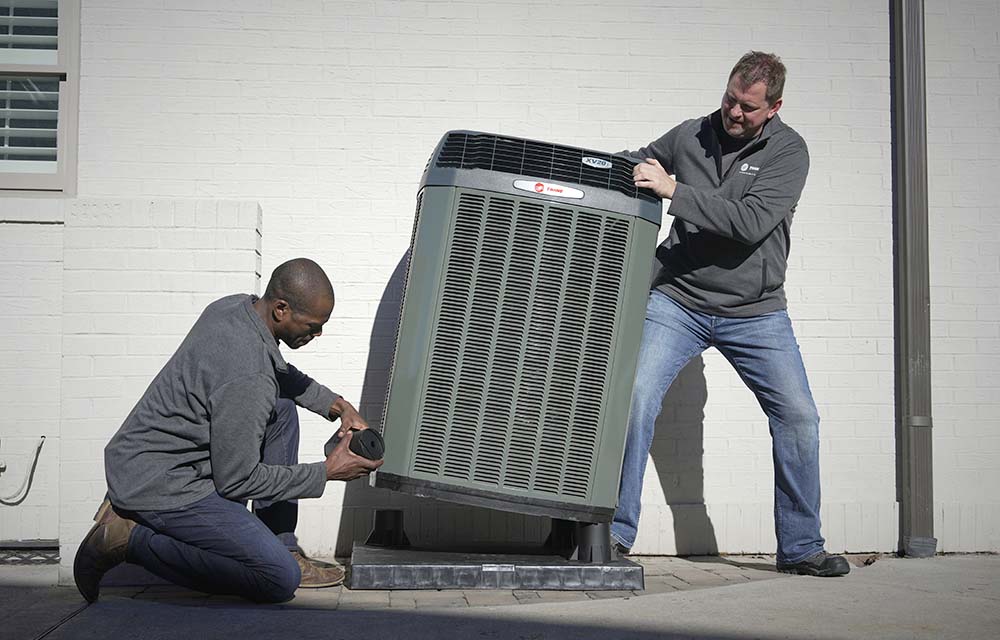
OPTIMAL COMFORT: Variable-speed systems are designed to operate and provide customers with the best in thermal comfort. (Courtesy of Trane)
For example, if the thermostat is set at 75°F in a conventional, single-speed system, and the temperature in the space increases beyond that set point, the compressor will run at 100% capacity until the temperature reaches the set point on the thermostat, said Davis.
“In a variable-speed system, the inverter technology adjusts the compressor motor speed to a set point that allows the desired temperature to be met,” she said. “With these types of systems, the compressor may only run at 25% speed, on and off, throughout the day, instead of 100% speed, on and off, throughout the day, to meet the same temperature requirements.”
The inverter is an electronic component that varies the frequency of the motor power supply, modulating the RPM of the compressor to manage its capacity or output. The inverter essentially instructs the compressor to operate at a specific speed to attain the desired room temperature within a designated timeframe, said Scott Salvage, vice president of residential product marketing at Daikin. In the event that the HVAC system is altering the temperature too rapidly or too slowly, the inverter adjusts the compressor's speed accordingly, increasing or decreasing it as necessary.
Looking for quick answers on air conditioning, heating and refrigeration topics? Try Ask ACHR NEWS, our new smart AI search tool. Ask ACHR NEWS
Salvage likens the inverter to the cruise control feature in a car, noting, “A typical single-stage HVAC system will turn on and off at 100% capacity only, which is like putting the pedal to the metal in the car. Compare this to using the car’s cruise control to maintain a desirable speed. There’s less wear and tear on your car, it’s less noisy, it’s more comfortable, and it surely provides better fuel efficiency.”

FULL COVERAGE: In North America, 100% of ductless and VRV solutions use inverter-driven compressors. (Courtesy of Daikin)
Inverter technology can be used with just about any type of compressor, including scroll, rotary, reciprocating, centrifugal, and screw compressors and in most types of residential and commercial HVAC systems. Salvage noted that outside of North America, inverters have been the required technology in many countries for a number of years. In North America, 100% of ductless and VRV/VRF solutions use inverter technology, he said, but the residential ducted sector accounts for less than 5% of the total market, and it is even less than that in commercial rooftop packaged systems.
Benefits
Inverter technology is likely to become even more popular, as it contributes to reducing the carbon footprint by reducing the energy demands of the HVAC system.
“Inverters provide for a controlled variation of output based on demand and load,” said Dennis Stinson, vice president of sales at Fujitsu. “Because load calculations require a system designer to consider maximum extremes, equipment is often oversized for the majority of operational demand. By aligning output with demand, energy usage can be reduced.”
Because inverter systems operate only at the speeds necessary to maintain the desired temperature, they often operate at a slower speed, which consumes less energy and increases efficiency, especially at part-load conditions. This ultimately provides a significant impact in reducing carbon emissions during operation, said Salvage.
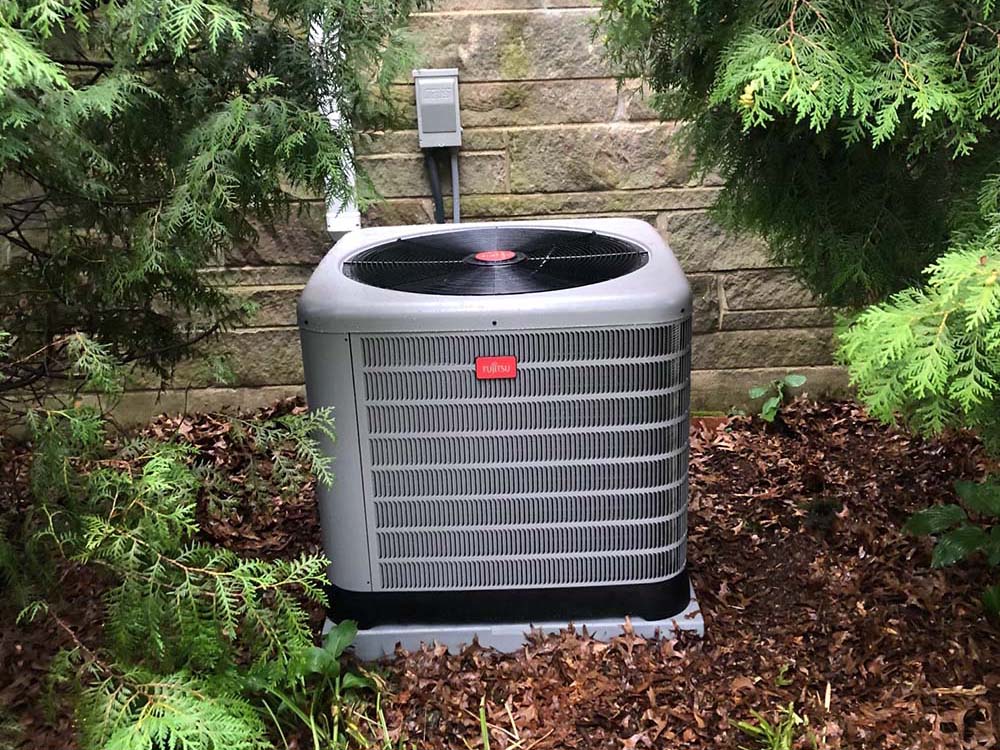
DUCTED BENEFITS: Fujitsu offers a full line of unitary heat pumps — including those with inverter technology — with models ranging from 1.5 to 5 tons in capacity, and with efficiencies up to 18 SEER. (Courtesy of Fujitsu)
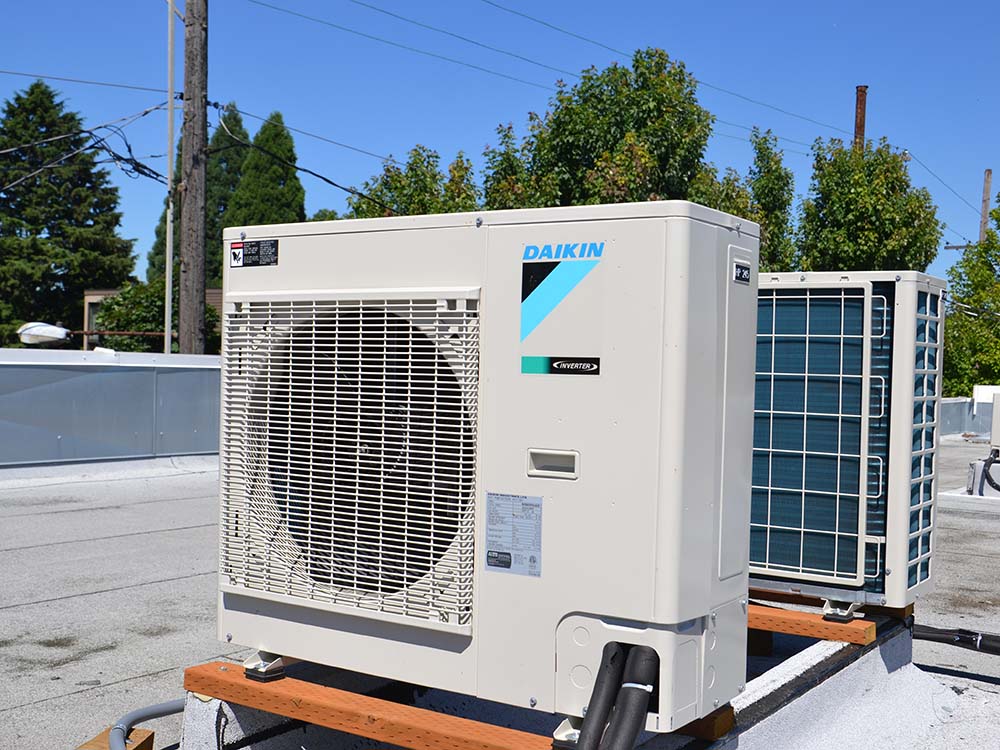
SLOW SPEEDS: Inverter systems operate only at the speeds necessary to maintain the desired temperature, and the slower speed consumes less energy and increases efficiency. (Courtesy of Daikin)
“In addition, most of the U.S. and Canada continue rely on fossil fuels for heating homes and buildings,” he said. “Inverter heat pump systems provide an alternative to fossil fuel heating by providing all-electric, energy-efficient heating in applications well below 0°F. It’s worth noting that 100% of products that meet the NEEP Cold Climate ASHP Specification are inverter-based solutions, reflecting the technology’s excellent ability to perform as an effective source of heat in cold climates.”
Inverter technology also results in better comfort, as it helps prevent the uncomfortable temperature swings that are often experienced with non-inverter single- or two-stage HVAC systems, said Salvage.
“An inverter system can reach the desired comfort setting quicker and can help minimize temperature fluctuations, providing greater comfort within the space. And because inverter systems typically operate for longer run cycles, the air in the home is filtered for longer periods, helping to improve IAQ.”
Systems utilizing inverter technology also do a better job of controlling humidity, said Davis. That’s because conventional systems may require homeowners or business owners to excessively cool a space in order to remove humidity during summer months, often resulting in an uncomfortable setting.
“Variable-speed systems (inverter technology) work to control temperatures around the clock without the need to change thermostat set points to remove humidity,” she said. “The wide variability of the compressor performance in a variable-speed system allows for excellent control of the humidity throughout the day.”
Inverter-driven systems are also among the quietest of all equipment choices when installed per manufacturer’s instructions and local governing codes, said Stinson. “This is often the equipment of choice in zero-lot subdivisions and other close quarter arrangements that are sensitive to noise.”
vice president of engineering and technology
Trane Technologies Residential HVAC and Supply
Installation and Retrofit
The installation of systems employing inverter technology is similar to that of conventional equipment, although Davis noted that there is a slight difference in the startup of variable-speed equipment due to the wide range of operating parameters that these systems allow.
“They are configured specifically for each home and/or business and take into account any added accessories like zoning systems that may need to be adjusted to the needs of the space,” she said. “Variable-speed systems are designed to operate and provide customers with the best in thermal comfort. The fans, motors, and other components are designed for the systems and associated applications.”
As such, inverter technology operates as part of a complete system, so it cannot easily be retrofitted into existing equipment.
“Within an inverter-based system, there are additional sensors and components that form the refrigeration cycle for means of capacity control and energy optimization,” said Salvage. “There is also an inverter drive PCB module, which is very different from the traditional PCB in non-inverter units. Given these conditions, it’s not really feasible to retrofit traditional systems on site with inverter technology.”
Even though it cannot be retrofitted into existing equipment, inverter technology is likely to become more prevalent in new systems as the U.S. embraces strategic electrification and addresses carbon emissions, said Stinson.
“Federal, state, and utility incentives, along with rising costs of traditional equipment to meet efficiency regulations, have made inverter technology a sound solution for all HVAC applications,” he said.
Davis agrees, noting that the future of variable speed systems is strong.
“The improved energy efficiency of these systems allows the industry to further the advancement of reducing carbon emissions. In addition, the ability to provide the consumer with an improved thermal comfort profile makes them a top choice in heating and/or cooling homes and businesses.”
Better Metrics
At the beginning of 2023, the Department of Energy (DOE) mandated changes to how energy efficiency in HVAC systems is measured and increased the minimum efficiencies allowed. Under the new standards, the minimum efficiency of residential equipment increased approximately 7%, or the equivalent of 1 SEER point. In addition, the revised test procedure resulted in new metrics of SEER2, HSPF2, and EER2 being used instead of SEER, HSPF, EER. However, some do not believe these metrics reflect the true energy savings that inverter technology can provide.
“Unfortunately, the efficiency benefits of inverter technology systems continue to not be adequately measured by the antiquated testing metrics of the newly adopted SEER2 and HSPF2 efficiency metrics,” said Scott Salvage, vice president of residential product marketing at Daikin. “Both the cooling efficiency (SEER2) and heating efficiency (HSPF2) are based on non-inverter technologies measured at 100% capacity. Inverter-based systems typically operate and consume electricity at considerably lower capacity levels; therefore, the efficiency benefits are not recognized by these new SEER2 and HSPF2 efficiency metrics.”
Salvage added that while the new energy standards established by the DOE will likely enhance efficiency, decarbonization, and grid optimization, even more significant advancements could be realized by encouraging the wider adoption of inverter technology in HVAC systems through tax rebates and other incentives.
Looking for a reprint of this article?
From high-res PDFs to custom plaques, order your copy today!