HVAC Systems Should Be Checked Before Buildings Reopen, Due to COVID-19
As occupants start returning to commercial spaces, equipment should be serviced and tested
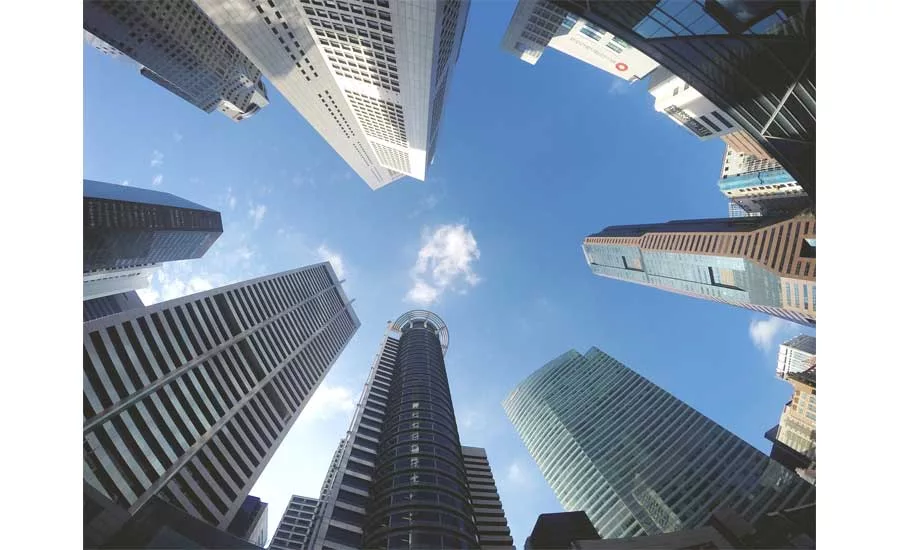
HVAC EVALUATION: As commercial buildings begin to reopen, owners/operators should first have their HVAC systems evaluated to ensure they are operating safely and efficiently.
The ACHR NEWS asked M. Dennis Knight, P.E., FASHRAE, principal/engineer at Whole Building Systems in Charleston, South Carolina, and member of ASHRAE’s Epidemic Task Force, about how contractors can help commercial building owners make sure their HVAC systems are operating safely and efficiently after COVID-19 restrictions are lifted and occupants start returning to work.
ACHR NEWS: Many commercial buildings are not currently occupied, and their HVAC systems may be running minimally or not at all. What maintenance should be performed on the equipment before occupants return to the building?
Knight: If a building’s HVAC systems have been operated minimally or shut down, we recommend that the systems go through a startup process in keeping with how the systems would be inspected, started up, and functionally tested for new construction. A good place to start would be to use the recommendations found in ASHRAE Standard 180-2018, Standard Practice for the Inspection and Maintenance of Commercial Building HVAC Systems. At a minimum, I would recommend the following:
- Always check with local building officials and authorities having jurisdiction to determine whether any type of inspection may be required before returning a system or component back into service. This can be especially true for high-pressure boilers and steam generators and for any interfaces or interconnections with life safety systems like the fire alarm system.
- Work with the original, licensed design engineer of record, if available, to help determine how the systems should be operating.
- Work with the licensed HVAC service providers and installing contractors, if available, to address any known issues of system deficiencies and deferred maintenance items.
- Visually inspect all equipment and all water and air distribution systems for signs of leaks; dust and dirt accumulation; damaged insulation systems; or possible fungal growth on coils, drain pans, inside casings, air distribution devices, and on ceilings and building finishes.
- For all air systems, check outdoor air intakes to make sure they are clear of debris and obstructions; clean bird and insect screens; and verify control dampers and actuators are functioning throughout their full control range. The same applies for control valves and actuators. Confirm that damper seals are intact; make sure all bearings are lubricated; that drive belts are in good condition and properly adjusted; and that direct drive fans and variable-speed drives are functioning properly.
- Owners should remember that chillers and boilers being turned off is not recommended. Sitting water grows stuff — and then, that sludgy, stagnant water costs more to pump and leads to decreased efficiency of the equipment; fouling of heat exchangers and coils; microbial corrosion; and reduced life of components.
- It is also key to check water quality during the shutdown, and it is vital to check on startup.

M. Dennis Knight
ACHR NEWS: If no maintenance is performed prior to startup, are there safety concerns for occupants returning to the building?
Knight: The answer to this question is “always.” This would be the case if a building has been shut down for a while, whether we were in an epidemic or pandemic crisis or not. If building systems have been shut down and not cared for, the integrity of systems can deteriorate rapidly. For example, backup power supplies and batteries can discharge or fail; sensors, including smoke detectors, can become covered in dust; and biological growth can occur in cooling towers, drain pans, stagnant domestic water systems, and heating and cooling water systems, as well as on dirty and contaminated filter media and duct linings, to name a few.
ACHR NEWS: How long before the building is occupied again should maintenance be performed?
Knight: I recommend that routine maintenance continue throughout a shut down or unoccupied period. I also suggest that expanded maintenance efforts to prepare a building for re-occupancy begin one to two weeks before the date planned to open the building to reduced or normal occupancy levels. This will depend on the size of the building or owner’s portfolio of buildings and the number of maintenance staff or contractors available to do the work. The ASHRAE COVID-19 Resource webpage has an extensive set of recommendations located in the Frequently Asked Questions section on the page dedicated directly to preparing a shuttered building for re-occupancy.
ACHR NEWS: After the service/maintenance is performed, what tests should be conducted to ensure the HVAC systems are safe and operating as designed?
Looking for quick answers on air conditioning, heating and refrigeration topics? Try Ask ACHR NEWS, our new smart AI search tool. Ask ACHR NEWS
Knight: I suggest building owners consider recommissioning their systems — or retrocommissioning them, if they were never commissioned in the first place. Recommissioning is a good idea if it’s been three to five years since the systems were initially commissioned anyway. Recommissioning should utilize all the existing documentation from that process.
For retrocommissioning, where the building was never commissioned, owners should consider engaging a commissioning provider (CxP) to help make sure the systems are operating as intended per the systems manual (if it exists). If it does not exist, the CxP should work with the facility’s staff in charge of this building, original design engineer, and as-built control documents to check that the systems are operating per the owner’s project requirements (OPR) and/or the engineer’s original design intent. This includes any changes to the building’s use and occupancy since it was originally turned over to the owner.
A CxP can prepare a commissioning plan, as well as create and oversee the functional performance testing (FPT) of the HVAC systems in the building. A key item that owners should include in this process is to create a systems manual, if one did not exist, as it will help them be prepared for a future epidemic. The owner should require the CxP follow ASHRAE commissioning standards and guidelines including the following:
- ASHRAE Standard 202, Commissioning Process for Buildings and Systems;
- ASHRAE Guideline 1.2-2019, Technical Requirements for the Commissioning Process for Existing HVAC&R Systems and Assemblies;
- ASHRAE Guideline 1.4-2019, Preparing Systems Manuals for Facilities;
- ASHRAE Indoor Air Quality Guide – Best Practices for Design, Construction and Commissioning; and
- ASHRAE Refrigeration Commissioning Guide for Commercial and Industrial Systems.
Another valuable reference for an owner seeking to contract commissioning services is the ASHRAE Strategic Guide to Commissioning, which is available as a free download from the Commissioning Essentials portion of the ASHRAE website.
Some basic commissioning and testing activities an owner should consider include, at a minimum:
- Verify equipment and components are in good conditioning and functioning;
- Verify systems are in good condition and functioning properly, including verifying space ventilation rates, and outside airflows are balanced to the correct values;
- Verify the BAS is in good condition, sensors are calibrated and communicating with the BAS, and that occupancy schedules, set points, and sequences of operation are functioning;
- For hot water systems (domestic hot water and heating hot water), operate the systems at a temperature of 140°F for several hours (minimum of two) with recirculating pumps operating at full flow. Follow the requirements in ASHRAE Standard 188-2018, Legionellosis: Risk Management for Building Water Systems; and
- For domestic water systems, consider disinfecting and testing the systems and outlets as if for a new building, then flush the systems thoroughly prior to allowing people to use them.
ACHR NEWS: For commercial buildings that were turned into makeshift hospitals during the COVID-19 pandemic, are there specific guidelines for cleaning/disinfecting HVAC equipment before the building returns to its intended purpose?
Knight: I am not a doctor and will not offer medical advice here, and ASHRAE does not get into the surface disinfection requirements other than how some HVAC items can help with disinfection. The Filtration and Disinfection section of the ASHRAE COVID-19 resource webpage is a good place to start for ideas — but it would be wise to utilize the guidelines created by infection control risk assessment (ICRA) specialists for surfaces and materials in the building.
However, if a non-healthcare building had been temporarily converted to a healthcare occupancy to either treat people with COVID-19 or to treat non-COVID-19 patients for other medical conditions, I suggest that the building go through an isolation or quarantine period similar to that of a person who has been exposed to the virus. The length of time for that quarantine should be for as long as the CDC, WHO, local, state, and federal departments of health and other healthcare and medical organizations believe the virus can be remain viable. During that period, I recommend the following additional requirements:
- HVAC systems be operated under normal occupancy schedules and under normal temperature and humidity control set points.
- Outside air ventilation rates should be increased to as much as the systems can accommodate (up to 100 percent), depending on outside climate conditions and the systems’ ability to maintain air handling system discharge air conditions, airflow rates, temperature, and humidity conditions necessary in order to maintain good thermal, humidity, and indoor air quality.
- Air filters should be clean and upgraded to at least MERV 13 (MERV 14 or better are preferred) if the system can continue to operate and provide pre-conversion airflows.
- Filter frames should be inspected to make sure the filters fit tight in the frames and are sealed to minimize air bypassing the filters.
- High touch areas should be disinfected with approved cleaning solutions and disinfectants. This would include air distribution devices (supply, return and exhaust air grilles and diffusers) throughout the facility.
ACHR NEWS: What message should commercial contractors be communicating to their customers now about restarting their HVAC systems?
Knight: Commercial HVAC contractors and service providers should spend time educating themselves and their staffs about the recommendations above, including becoming thoroughly familiar with the standards and guidelines referenced.
They should communicate often with their clients, make them aware of the resources cited in this article, and let them know specifically the services they are capable of providing to help them maintain their HVAC systems in good working order.
Additionally, they should make the necessary adjustments to their HVAC systems to help them minimize the risks associated with operating their building during stay-at-home orders, travel restrictions, and social distancing guidelines as these are relaxed or lifted by local, state, and federal authorities.
Building owners need trusted advisors more than ever right now. Highly competent, skilled HVAC contractors, and service providers can serve as one of an owner’s most valuable resources when planning to re-occupy a building after extended shut down or set back periods.
Submit a press release here!
Looking for a reprint of this article?
From high-res PDFs to custom plaques, order your copy today!