ACHR News
search
Ask ACHR NEWS AI
cart
facebook twitter instagram linkedin youtube
  • Sign In
  • Subscribe
  • Sign Out
  • My Account
ACHR News
  • NEWS
    • Breaking News
    • New HVAC Products
    • Featured Products
    • Manufacturer Reports
    • HVAC Data
    • Legislation
    • ACHR NEWS Centennial
  • RESIDENTIAL
    • Air Conditioners
    • Furnaces
    • Residential Heat Pumps
    • Ductless
    • Residential IAQ
    • Testing, Monitoring, Tools
    • Components & Accessories
  • COMMERCIAL
    • Air Handlers
    • Rooftop Units
    • Chillers and Cooling Towers
    • Commercial Heat Pumps
    • Boilers and Hydronics
    • VRF/Ductless
    • Commercial IAQ
  • REFRIGERATION
    • Refrigerants
    • Refrigerant Regulations
    • Leak Management
  • CONTRACTOR PRO
    • Geothermal
    • Homeowner Study
    • VRF and VRV Ductless
    • Unitary Trends
  • EDUCATION
    • Training and Education
    • Business Management
    • Service and Maintenance
    • Continuing Education
    • Market Research >
      • HVAC Brand Awareness Report
      • VRV, VRF, VRVZ Report
      • Unitary Trends Report
      • Water Heat Professionals Report
    • Webinars
    • Sponsor Insights
    • eProducts Info
    • White Papers
  • EVENTS
    • HVAC Contractor Forum
    • Industry Events and Webinars
  • MEDIA
    • Videos
    • AHR Expo 2025 Videos
    • Podcasts >
      • ACHR News Podcast
      • HARDI Podcasts
      • AHR Expo Podcasts
      • ACCA Podcasts
    • Interactive Spotlights
    • Quizzes
    • eBooks
    • HVAC Talkback
  • HVAC GROUP
    • ACHR NEWS >
      • Current Issue
      • Digital Edition
      • Subscribe
    • Distribution Trends
    • SNIPS NEWS >
      • Join SNIPS NEWS
    • Engineered Systems News >
      • Join ES News
    • HVACR Directory
    • Contests
    • Newsletters
    • Contact
    • Advertise
    • My Account
HVAC ContractingNewsService and MaintenanceHVAC Residential MarketIndoor Air QualityVentilationResidential Indoor Air QualityDuct Products

HVAC Maintenance and Service Before, During, and After Duct Leaks

Installed ductwork is better than it used to be, but a partial fix can breathe life into other issues
By Robert Beverly
Duct Leakage.

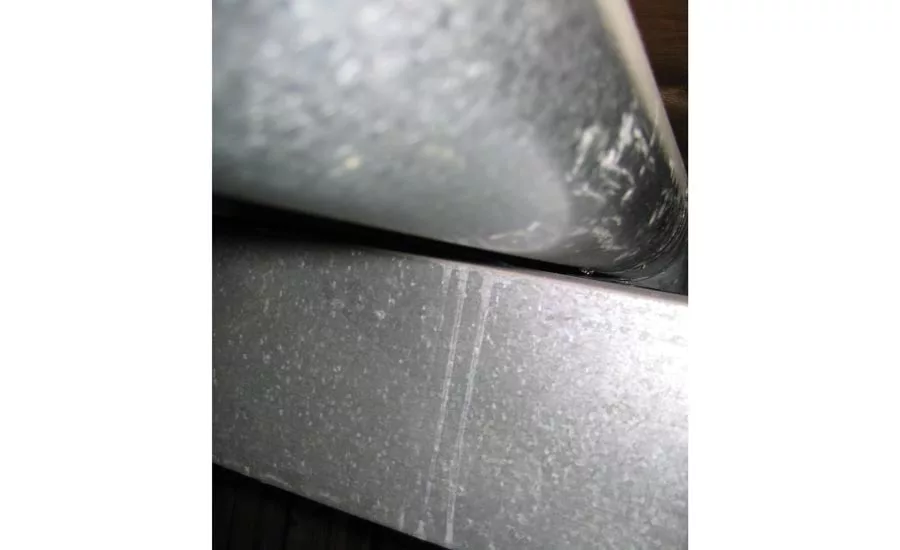
WHAT LEAKAGE ISN’T: Better design, installation, and enforcement has helped overall conditions, but SMACNA’S Mark Terzigni also reminds professionals that duct leakage is not a function of air volume but a function of pressure and the size of the hole. (Courtesy Phillip Stewart (CC by-SA 2.0))

September 7, 2021

Duct leakage isn’t everything. It used to be worse — really. That shouldn’t lull HVAC contractors into a false sense of complacency when it comes to fighting the problem, but context can help professionals direct their attention to where it is likely needed the most.

Code changes and more knowledgeable homebuilders have driven the new residential market toward much tighter duct systems, said Wes Davis, ACCA’s technical services director. The other side of that coin: the older the home, the better chance of leaky ducts due to sporadic adoption of duct sealing practices and enforcement of code requirements.

Staying with the big picture, the good news is that duct leakage truly isn’t everything when it comes to lost performance or even leakage. The bad news is that this doesn’t diminish the importance of avoiding duct leakage; it simply points to other factors to consider, too.

Mark Terzigni is SMACNA’s executive director of market sectors and construction technology. In 2019, he created a presentation slide deck about duct leakage and duct testing as the association’s director of engineering, technical services.

In that presentation, he emphasized that ‘duct leakage’ is not synonymous with ‘system leakage.’ System leakage comprises not just duct leakage but also equipment leakage and accessory leakage.

He continued that a VAV box is a good example. In addition to a damper, it may have coils, filters, electric reheat, and other options, he explained.

“Each of those items impact leakage rates,” Terzigni said.

Looking for quick answers on air conditioning, heating and refrigeration topics? Try Ask ACHR NEWS, our new smart AI search tool. Ask ACHR NEWS →

He also clarified the nature of the enemy in three bullet points:

  • Leakage is a function of pressure, and it is a function “of the size of the hole”;
  • Leakage is not a function of the volume of air; and
  • Leakage is not a function of conditioned floor space.

The entire presentation may be useful for contractors who conduct testing on a regular basis, as he discussed active versus static tests, testing condition and operating conditions, and questions like, “Why not use a % to fan flow?”

Terzigni added some tips regarding not the how but the when of duct testing. Test some of the system early on in the construction process, he advised for new builds. This, he said, can establish expectations across the team for testing and can also save money and time by identifying some potential issues early on when they are easier to fix.

“Too much or too little air can create the problems that the new code requirement attempted to correct. Without air balancing, the new code requirement will resolve nothing.”
— Wes Davis
Director of technical services ACCA

Codes and Testing

As ACCA’s Davis noted, the duct testing landscape is a little different thanks to IECC 2021. The latest IECC version “requires testing of duct leakage for ducts located within the thermal envelope, and not just leak testing for ducts outside the conditioned space,” he reminded.

The rationale of the code change is to avoid a scenario where the occupant pushes the thermostat further to achieve desired comfort and make up for conditioned air that is not making it to the intended space.

ACCA “found this rationale difficult to support,” David said, given the subjective nature of thermostat management. However, he pointed out that if ducts are constructed, designed, and sized properly (via Manual D, for example) in the first place, “there would be little leakage to make a difference.”

Back on the code side of things and the latest revision’s intention, Davis said that ACCA plans to propose an alternative process in lieu of leak testing: air balancing per the ACCA 5 QI Installation Specification.

Air balancing ensures the correct amount of air arrives at its intended destination, aligning with the stated motive behind the IECC’s testing change.

“Too much or too little air can create the problems that the new code requirement attempted to correct,” Davis explained. “Without air balancing, the new code requirement will resolve nothing.”


Beyond Duct Sealing

A line from Terzigni’s presentation put testing in further perspective.

“Testing ductwork does not reduce leakage. Sealing ductwork reduces leakage.”

Even then, the contractor can feel more confident but cannot relax entirely.

“I would say that once duct leakage is sealed, the biggest threat to the compressor is short cycling,” said Michael Robertson, senior account manager who works with compressor and motor business for LG Electronics U.S.A.

Robertson sees many times where the real problem is leaky ducts but a decision is made to treat the symptoms by installing higher tonnage equipment, leading to even greater inefficiencies.

Conducting an updated load calculation after duct sealing is the way to nip this and other associated problems in the bud. Robertson sees room for improvement on that front, though, describing load calculations as “the ‘kryptonite’ of the industry” since he sees them as often overlooked.

Davis echoes the need and the value of the task.

“Technicians need to check the system’s airflow during system start-up, during scheduled maintenance, and service calls,” he said.

“After all, clients deserve consistent competent service and forced air systems depend on the correct airflow. We believe it is a disservice to homeowners when technicians fail to measure airflow.”


Business of Doing Better

Skipping airflow evaluation earlier on can also be disservice to contractors, in Davis’ opinion.

“Tight ducts are only one piece of the puzzle,” Davis said, returning to a recurring theme.

“Contractors can help their bottom line and improve their customer’s comfort when they correct leaky undersized poorly installed duct systems. They also reduce callbacks and exposure to liability when they follow industry standards, code requirements, and use talented tradespeople to deliver the finished product.”

He considers that thorough duct evaluation to be crucial — before presenting options or a price for an installation.

The older the home, the more potential for leakage issues, as Davis noted earlier, but it is also worth remembering that similar materials do not necessarily degrade at the same pace, even on the same property. Ductwork subject to extreme temperature swings in attics or crawlspaces will degrade faster.

One other tip found its way into both Davis’ and Terzigni’s comments: Remember the returns.

“Leaks on return can introduce ‘raw’ air to the system. Supply leaks into conditioned space do deliver the ‘energy’ but not to the intended area,” Terzigni said.

Davis observed that efficiency and environmental climate aren’t the only victims in that case.

“Return duct leakage can introduce a wide variety of contaminants that can clog an evaporator coil or provide a food source for biological growths in the system,” he cautioned.

Construction and code improvements make it more likely than ever that a contractor will not encounter such a problem. Maintaining a watchful eye and thorough process can still reward both contractors and their customers, though, as long as technicians remember that duct sealing is a key step but not the end of the journey.

KEYWORDS: airflow management duct leakage duct systems maintenance for HVACR troubleshooting and HVACR

Share This Story

Looking for a reprint of this article?
From high-res PDFs to custom plaques, order your copy today!


Robert beverly achr

Robert Beverly has worked in HVAC press for BNP Media since 1998, serving as Engineered Systems' editor before joining The NEWS as a senior editor. In addition to covering legislation/regulatory issues and other assignments, he coordinates and edits Today's Boiler, the official magazine of the American Boiler Manufacturers Association. Robert likes music, the active tense, and air conditioning.

Recommended Content

JOIN TODAY
To unlock your recommendations.

Already have an account? Sign In

  • HVAC-enrollment

    The Trades Are Back: HVACR Programs See Nearly 30% Enrollment Spike

    A new wave of future technicians is entering the pipeline.  
    News
    By: Matt Jachman
  • 2025 Top 40 Under 40

    2025 Top 40 Under 40 HVACR Professionals List

    The 11th annual Top 40 Under 40 list highlights those...
    HVAC Commercial Market
    By: Hannah Belloli-Oster
  • LG Ductless Mini-Split Systems

    The 9 Types of Heat Pumps

    As the U.S. moves toward electrification, heat pumps are...
    Air Source Heat Pumps
    By: Joanna R. Turpin
Subscription Center
  • Create an Account
  • Start a Subscription
  • Manage My Account
  • Sign Up for Newsletters
  • Visit Customer Service
  • Update Preferences

More Videos

Sponsored Content

Sponsored Content is a special paid section where industry companies provide high quality, objective, non-commercial content around topics of interest to The News audience. All Sponsored Content is supplied by the advertising company and any opinions expressed in this article are those of the author and not necessarily reflect the views of The News or its parent company, BNP Media. Interested in participating in our Sponsored Content section? Contact your local rep!

close
  • Piggy Bank
    Sponsored byWatercress Financial

    Energy Prices, Inflation, and HVAC: What Today’s Homeowners Care About

  • Refrigerated Food
    Sponsored bySolstice Advanced Materials

    R-455A Refrigeration: A Cold Storage Solution for the Future

  • Airex Rooftop Units
    Sponsored byAirex Manufacturing Inc

    Consolidating Roof Penetrations: A Growing Trend in Multifamily HVAC Design

Popular Stories

Outdoor-condensing-units.jpg

EPA Removes R-410A Installation Deadline

HVAC-Price-Increase-graphic

HVAC Price Increase List: June 2026

Trump-Section-232.jpg

Trump Reduces Section 232 Tariffs on HVAC Equipment to 15%

ACHR NEWS Editor Chris Gray Presenting HVAC Minute 5-18-2026

HVAC Manufacturers Fight Pricing Lawsuits

R410A-Refrigerant-Cylinder.jpg

Refrigerant Recovery is a Revenue Opportunity

View The ACHR NEWS
Centennial Anniversary Timeline

The ACHR News Timeline Chart
Submit a Letter
Submit a letter to our editors.

Events

November 6, 2025

Next-Gen Data Center Cooling: HVAC Innovation and Real-World Solutions

On Demand As AI workloads and high-density computing push traditional cooling methods to their limits, the data center industry is accelerating the adoption of next-generation HVAC technologies.

June 9, 2026

Before You Go All In on AI: Set Up Your Business to Actually Win

In this webinar, we'll walk you through exactly what to get in place before you add AI to your business. You'll leave with a clear picture of where you stand today and a practical action plan to set yourself up for real results.

View All Submit An Event

Poll

Summer Staff

Are you fully staffed for the summer season?
View Results Poll Archive

Products

BNI Mechanical/Electrical Square Foot Costbook, 2026 Edition

BNI Mechanical/Electrical Square Foot Costbook, 2026 Edition

See More Products
A2L Refrigerants - Free Webinar - May 21, 2026

Related Articles

  • HVACR Trends - ACHR

    Chilled Beams and Duct Leaks in HVAC systems

    See More
  • Suggestions, Materials for Duct Leaks

    See More
  • Tuesday, Jan. 29, 2013: Aeroseal Seals Duct Leaks From the Inside

    See More

Related Products

See More Products
  • TechGuide_Cover_Only.png

    Technician’s Guide & Workbook for Duct Diagnostic & Repair

  • Green Tips for Building Maintenance Engineers

  • Tech_CommRef_Guide_Small.jpg

    Technician’s Guide & Workbook for Quality Maintenance on Commercial Refrigeration Equipment

See More Products

Events

View AllSubmit An Event
  • June 23, 2026

    HVAC Duct Sealing Mastics: Why Selection Matters

    In this webinar we will detail what HVAC material buyers and technicians need to know when selecting duct mastics, including matching mastic to substrate, alternatives to liquid mastic, and where UL 181 Listings fit into real world installations.
  • September 9, 2025

    How Maintenance Plays into the HVAC Decarbonization Trend

    On Demand This webinar will explore maintenance strategies for advanced HVAC systems, including VAVs and demand-controlled ventilation.
View AllSubmit An Event

Related Directories

  • DS3 Duct Saddles

    Mfg. of the quickest, easiest duct saddle support on the market. Installs after both ends of the strapping are already attached. 30% average airflow increase!
×

Sign Up. Stay Informed.

The #1 trusted source for the HVACR industry since 1926

SUBSCRIBE
  • RESOURCES
    • Advertise
    • Contact Us
    • Advisory Board
    • Classifieds
    • Submit a Letter
    • Directories
    • Store
  • ACCOUNT CENTER
    • Create an Account
    • Start a Subscription
    • Manage My Account
    • Sign Up for Newsletters
    • Visit Customer Service
    • Update Preferences
  • SERVICES
    • Marketing Services
    • Reprints
    • Market Research
    • List Rental
    • Survey/Respondent Access
  • STAY CONNECTED
    • LinkedIn
    • Facebook
    • Instagram
    • YouTube
    • X (Twitter)
  • PRIVACY
    • PRIVACY POLICY
    • TERMS & CONDITIONS
    • DO NOT SELL MY PERSONAL INFORMATION
    • PRIVACY REQUEST
    • ACCESSIBILITY

Copyright ©2026. All Rights Reserved BNP Media, Inc. and BNP Media II, LLC.

Design, CMS, Hosting & Web Development :: ePublishing