Make Sure the TXV Remote Bulb Is Properly Placed
Poor thermal contact with the suction line can cause problems
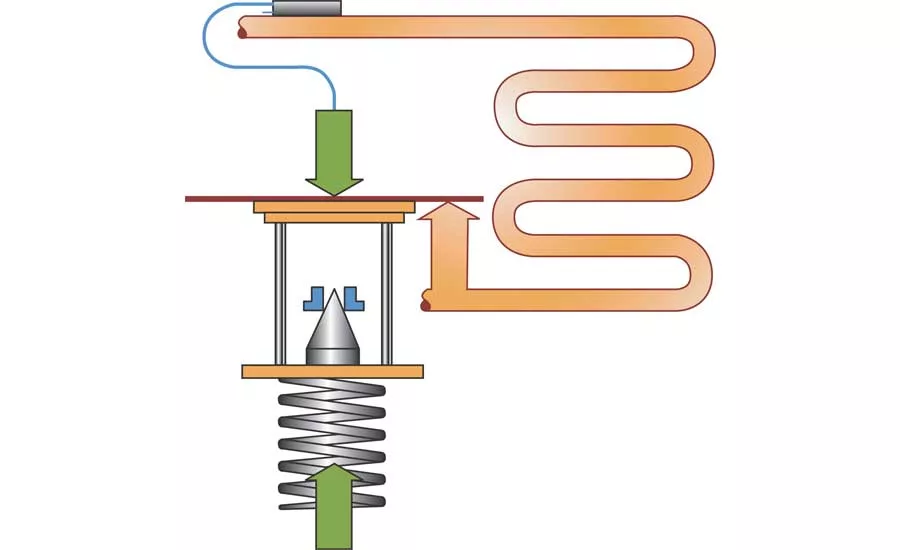
FIGURE 2. This diagram shows the forces of the TXV’s flexible diaphragm. Courtesy, Sporlan Division, Parker Hannifin Corp.
The thermostatic expansion valve (TXV or TEV) is a metering device located between the refrigeration system’s liquid line and the evaporator. It is a rather complex valve with a remote bulb feedback mechanism, which constantly tells the valve how full or void the evaporator is with vaporizing refrigerant. This article will explore the remote bulb and its proper placement on the system’s suction line.
The TXV is a dynamic valve that constantly modulates and meters just enough refrigerant into the evaporator to satisfy all heat loadings on the evaporator. A conventional TXV is shown in Figure 1. The basic TXV will control a set amount of evaporator superheat under varying heat loads. Three of the main functions of the TXV include:
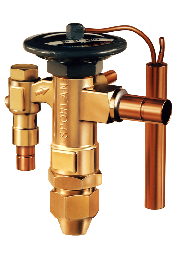
FIGURE 1. The basic TXV will control a set amount of evaporator superheat under varying heat loads. Courtesy, Sporlan Division, Parker Hannifin Corp.
- Providing a constant amount of evaporator superheat under varying evaporator heat load conditions, provided the range and capacity of the valve is not exceeded;
- Keeping the entire evaporator full of refrigerant under all heat load conditions; and
- Preventing floodback of liquid refrigerant to the compressor under varying evaporator heat loads.
Remember, the main function of the TXV is to meter the right amount of refrigerant into the evaporator coil under all heat loading conditions. By doing this, the valve controls a set amount of evaporator superheat to maintain an active evaporator and keep refrigeration and air conditioning systems running safe and efficient. It is important to remember that TXVs don’t control evaporator pressure, cycle the compressor, control system running time, or control refrigerated box temperatures.
The pressures acting on the TXV’s moveable diaphragm are:
- Remote bulb pressure (opening force);
- Spring pressure (closing force); and
- Evaporator pressure (closing force).
Remote Bulb Pressure
The remote bulb pressure is the only opening force acting on a conventional TXV’s diaphragm. A force diagram of the TXV’s flexible diaphragm is shown in Figure 2. Notice that the pressure from the volatile fluid in the remote bulb acts on the top side of the flexible bellows through the connecting capillary tube. This causes the valve to open as remote bulb pressure increases.
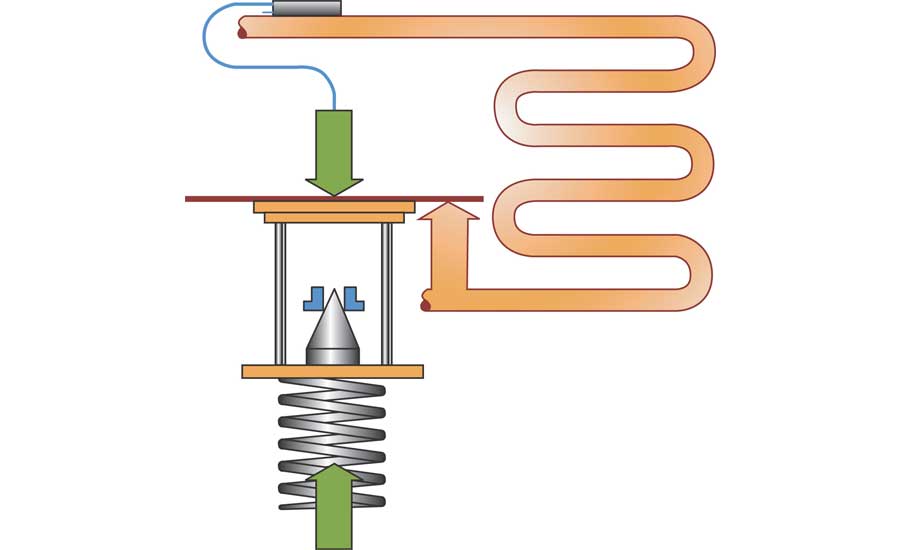
FIGURE 2. This diagram shows the forces of the TXV’s flexible diaphragm. Courtesy, Sporlan Division, Parker Hannifin Corp.
This changing pressure in the remote bulb is caused from the evaporator outlet temperature getting hotter or colder from varying heat loads on the evaporator, which affect evaporator superheat. The higher the superheat in the evaporator, the more fluid that will vaporize in the remote bulb because of its increased temperature. Since the conventional remote bulb is filled with a volatile fluid, this will cause higher pressures in the remote bulb that act on the TXV’s diaphragm and, in turn, will open the TXV more. Opening the TXV will let in more vaporizing refrigerant from the liquid line and have a tendency to fill out the evaporator with refrigerant. This action will bring the system’s superheat back to the original set point of the valve at the new heat loading on the evaporator.
The less the evaporator superheat, the more condensing of vapor that will take place in the remote bulb, thus decreasing its pressure and closing the valve more. The remote bulb is the TXV’s feedback mechanism for the amount of evaporator superheat within the evaporator. As soon as the TXV realizes that the evaporator superheat is changing, it will react and either open or close, putting more or less refrigerant into the evaporator from changing remote bulb pressures. This maintains a set amount of evaporator superheat under varying heat load conditions.

FIGURE 3. The TXV’s remote bulb is clamped firmly to the suction line for good thermal contact. Courtesy, Sporlan Division, Parker Hannifin Corp.
The remote bulb is clamped firmly to the suction line for good thermal contact. (See Figure 3.) Remember, the remote bulb is the TXV's feedback mechanism that gives the valve an indication of what the evaporator superheat is. If the remote bulb is outside the refrigerated space, it must be insulated with a good grade of waterproof insulation. The remote bulb is usually connected to the suction line with brass straps with bolts and nuts for strength. This prevents any heaving and breakage if water gets between the bulb and suction line and freezes.
Figure 4 shows a remote bulb with poor thermal contact with the suction line. In this scenario, the remote bulb will sense a combination of suction line temperature and ambient temperature. This will average out to be a higher temperature sensed by the remote bulb than if the remote bulb was secured to the suction line and insulated.
Looking for quick answers on air conditioning, heating and refrigeration topics? Try Ask ACHR NEWS, our new smart AI search tool. Ask ACHR NEWS
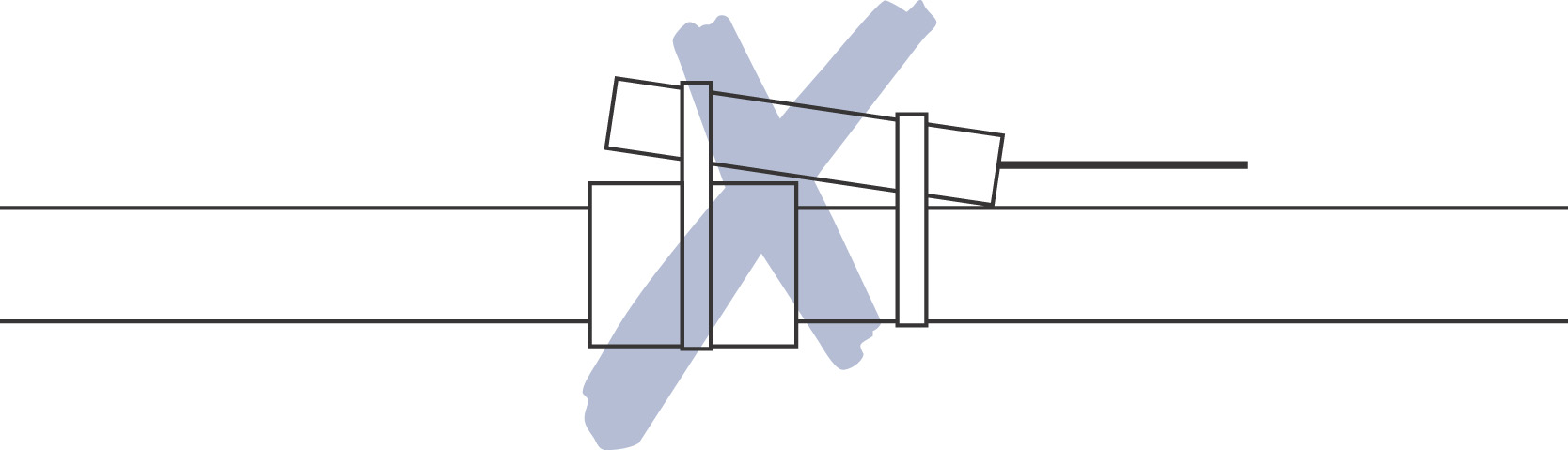
FIGURE 4. A TXV’s remote bulb with poor thermal contact with the suction line. Courtesy, Sporlan Division, Parker Hannifin Corp.
The higher temperature sensed by the remote bulb will cause a greater opening force on top of the TXV’s flexible diaphragm, causing the valve to open too far. This can cause the evaporator to lose all of its superheat and may even flood the compressor with liquid refrigerant. A telltale sign of this is a cold and sweating compressor crankcase. Temperatures and pressure readings in the evaporator will also show no evaporator superheat and a higher-than-normal evaporator (suction) pressure.
Remote bulbs come in a variety of charges for special applications. Please consult with the TXV manufacturer for specific information on remote bulb charges.
Spring Pressure
The spring pressure is a closing force that acts in the same direction on the bellows as the evaporator pressure. (See Figure 2.) When the spring pressure and the evaporator pressure equal the remote bulb pressure, the valve is said to be in dynamic balance or dynamic equilibrium and will neither open nor close until the evaporator heat loading changes. If the evaporator pressure rises or falls, the valve tends to open or close. Also, if the remote bulb pressures changes from changing superheat, the valve will open or close.
Spring pressure is preset in most valves by the OEM for a predetermined amount of evaporator superheat, usually between 6° and 10°F, depending on the system’s temperature application. This spring is often referred to as the superheat spring, since it is the only way a technician can change the amount of superheat in a TXV system. Increasing the spring tension by turning the spring adjustment clockwise will tighten the spring. This in turn will give the TXV more closing force and cause the superheat setting to increase, which will give the system more operating evaporator superheat.
There are some TXVs on the market whose superheat springs are non-adjustable and come with a set amount of superheat that cannot be changed by a technician. These TXV are usually used in applications where superheat settings are critical for proper performance as in some ice maker machines.
Evaporator Pressure
As heat loads on the evaporator change in time, so does the rate of vaporization of the refrigerant in the evaporator. Higher heat loads cause higher rates of vaporization of the refrigerant in the evaporator, which will increase evaporator pressure. Lower heat loads on the evaporator will decrease the rate of vaporization of the refrigerant and decrease evaporator pressure.
Evaporator pressure acts on the underside of the flexible bellows of the TXV. (See Figure 2.) This will cause the valve to close as the evaporator pressure increases. In fact, through a drilled passageway, called the internal equalizer, evaporator pressure from the evaporator’s coils entrance acts on the underside of the bellows. This evaporator pressure opposes the remote bulb's pressure.
Understanding how the TXV works will help technicians ensure it is installed and functioning correctly.
Looking for a reprint of this article?
From high-res PDFs to custom plaques, order your copy today!