Current Refrigerant Policies Focus On Phasing Down HFCs
Commercial refrigeration industry concerned with transition to low-GWP and natural refrigerants
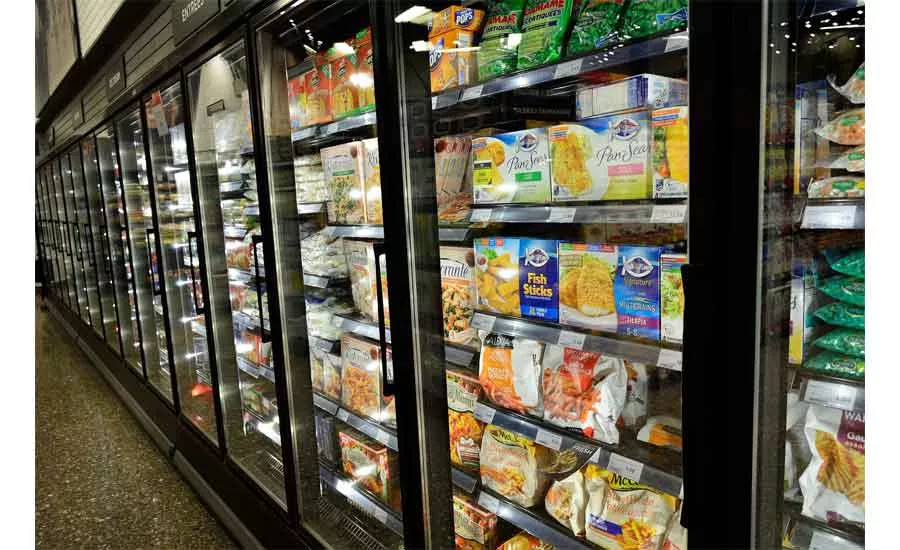
REFRIGERANT TRANSITION: One of the biggest issues in the commercial refrigeration market right now concerns the transition to low-GWP and natural refrigerants.
As with so many other events in 2020, the ATMOsphere America conference moved online this year, but the focus remained squarely on educating attendees about the benefits of using natural refrigerants in commercial and industrial refrigeration equipment. The first two days of the event featured educational sessions and panel discussions that covered issues in the food retail and cold chain sectors, while the third day was a Spanish-language session that focused on the Latin American market.
One of the biggest issues in the commercial refrigeration market right now concerns the transition to low-GWP and natural refrigerants, on which California has taken the lead. In one panel discussion, experts from Emerson, California Air Resources Board (CARB), and Environmental Investigation Agency (EIA) talked about the current state of refrigerant policies and standards in the U.S.
California Leadin’
Under regulations passed in 2016, California is committed to reducing HFC emissions by 40 percent below 2013 levels by 2030. To achieve that goal, the state has embarked on an aggressive phasedown schedule that would drastically reduce the use of HFCs in stationary refrigeration and air conditioning equipment. This includes a proposed GWP limit of 150 for new stationary refrigeration systems containing more than 50 pounds of refrigerant, starting on Jan. 1, 2022, and a GWP limit of 750 for all new stationary air conditioning systems (residential and commercial) starting Jan. 1, 2023 (although an extension to this deadline is being considered). The 750 GWP limit would also apply to new chillers, effective Jan. 1, 2024.
There are two ways that food retailers can achieve this goal, explained Glenn Gallagher, an air pollution specialist at CARB. National supermarket chains and retail food facilities with 20 or more stores in California must achieve a weighted average GWP of less than 2,500 by 2026. Or they can reduce their greenhouse gas potential (GHGp) by 25% or more by 2026.
“Weighted average GWP means the sum of the charge in pounds of all the refrigerants multiplied by the GWP, divided by the charge in pounds,” he said. “The GHGp is the charge size in mass multiplied by each refrigerant's GWP. The easiest way to achieve the first one is to use a lot of low-GWP refrigerant, while you can achieve GHGp by reducing your charge size quite a bit and still using higher-GWP refrigerant. All stores must achieve an average GWP of less than 1,400 by 2030, or reduce their GHGp by 55% or more by 2030.”
Gallagher noted that there may be more regulations coming for refrigeration and air conditioning equipment, as the governor has directed California to achieve carbon neutrality, or net zero greenhouse gas emissions, in the state by 2045.
“This is a huge undertaking, and the role of HFCs and other non-CO2 greenhouse gases in achieving carbon neutrality is still being determined,” he said. “We're not exactly sure how they're going to be counted … but all the indicators point towards using only the lowest GWP refrigerants available. Right now, we have not announced additional regulations, but I think it's pretty obvious that to meet that carbon neutrality goal, there will be additional refrigeration and air conditioning regulations. I think it's inevitable.”
Looking for quick answers on air conditioning, heating and refrigeration topics? Try Ask ACHR NEWS, our new smart AI search tool. Ask ACHR NEWS
Federal Regulations
Jennifer Butsch, regulatory affairs manager at Emerson, offered a recap of U.S. federal regulations regarding refrigerant policy, noting that they have faced many legal headwinds over the past few years. She explained that the Environmental Protection Agency (EPA) initially passed SNAP [Significant New Alternatives Policy] Rules 20 and 21, which would phase down higher GWP HFCs in some commercial and air conditioning equipment. In response to a court challenge in 2017, the Federal Court vacated SNAP Rule 20 on the basis that the EPA didn't have authority to regulate non-ozone depleting substances. In response, the EPA released a guidance document stating that they would not enforce the HFC delistings under SNAP Rules 20 or 21.
“The SNAP program and the ability to regulate HFCs and how they're going to handle Rules 20 and 21 at the federal level, remains to be seen,” she said. “At this point, we're waiting for further response from the EPA on this.”
However, there is some good news, she noted, as EPA proposed SNAP Rule 23 earlier this year, which provided three additional alternatives for commercial refrigeration, R-448A, R-449A, and R-449B, subject to narrow use limits. The industry is currently awaiting EPA's final rule on this SNAP listing. The new rule demonstrates that EPA is continuing to evaluate new refrigerants and list additional substitutes as available, which is what the industry needs in order to move forward, said Butsch.
“Lacking federal regulations, U.S. states have really stepped up and taken action on refrigerant regulations,” she said. “The U.S. Climate Alliance, which consists of 25 states, has really led on climate policy and in general, refrigerant regulations. So far, the majority of that has been through the adoption of SNAP Rules 20 and 21, which California was the first to adopt into state law.”
There are also two bipartisan bills in Congress that would align the production and consumption of HFCs with the Kigali Amendment, said Rajan Rajendran, vice president at Emerson. In addition, the bills would give authority to the EPA to regulate HFCs, which would help promote technology investment and jobs.
“A federal approach would lead to a lot more consistency and a lot more certainty, and that's what these two bills aim to do,” he said. “We think that the general model could be that California may take a little bit of a lead, but the rest of the country won’t be that far behind.”
Changing Standards
Christina Starr, senior policy analyst at Environmental Investigation Agency (EIA), explained how the Montreal Protocol (which phased out CFCs) has been the biggest driver of refrigerant policy to date, but that is changing. Instead, she said that net zero emissions will become the biggest driver in the decades ahead.
“More than 20 countries have these net zero targets in place, and this has some significant implications for refrigerants,” she said. “It takes about 15 to 20 years to replace refrigerants in existing systems in the installed base. And if you think about it, to achieve net zero emissions from refrigerants, we really should be out of all HFCs in new equipment starting around 2030, which is one decade from now. Right now, we're not on track to do that.”
But there are market barriers to replacing HFCs with low-GWP mildly flammable (A2L) or flammable (A3) refrigerants, including outdated standards that limit charge sizes, making it either infeasible or not cost effective or energy efficient to design with these refrigerants, said Starr. However, she contends that updated standards could allow increased charge sizes, while maintaining safety, through requirements that would prevent the accumulation of a flammable concentration of refrigerants in the rare event of a catastrophic leak. These would include ensuring sufficient airflow, robust design/leak tightness, leak detection and shut-off valves, and room size/installation requirements.
“There are two key proposals in the standards world right now for commercial refrigeration and for air conditioning,” she said. “The air conditioning proposal, IEC 60335-2-40, has a target publication date next year in 2021, while refrigeration proposal (IEC 60335-2-89) has been already adopted at the IEC level and is in the process of trickling into the national and regional standards.”
As far as the commercial refrigeration proposal is concerned, there are some key differences between what was adopted by the IEC and what is now being considered for adoption under Underwriters Laboratory (UL) and in Canada as well, she said. One of the key differences is that the IEC allows the use up to 500 grams of R-290 per circuit — or 13 times the lower flammability limit (LFL) — for any self-contained equipment. In the UL standard proposal, there is a differentiation between equipment that has doors or drawers such as icemakers, which is limited to eight times the LFL, or 300 grams of R-290. For self-contained equipment without doors, the proposed UL limit is 500 grams of R-290.
“We expect the commercial refrigeration standard under UL to be published early to mid-next year, and we also expect to see an EPA SNAP listing rule proposed in 2021,” said Starr. “Those changes will then be adopted into ASHRAE 15, and subsequently, model and state building codes.”
Looking for a reprint of this article?
From high-res PDFs to custom plaques, order your copy today!